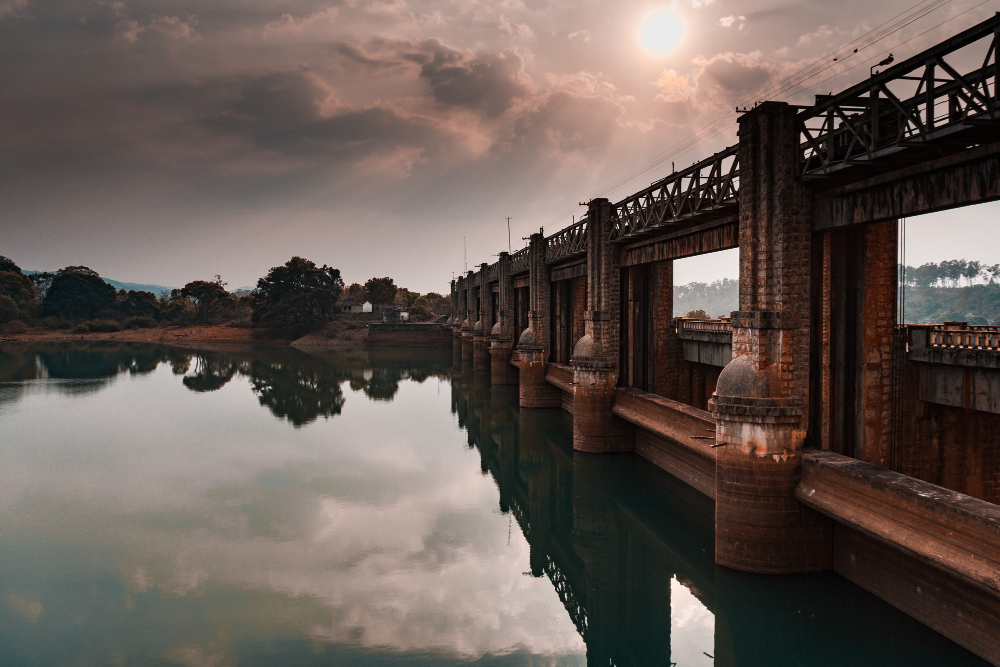
Vijayawada sits where the Krishna River breaks through the Eastern Ghats into the delta. The terrain divides from here in two directions — boulder plateau to the west with forts and rock-cut caves, and flat alluvial plain running east toward the coast. The places to visit near vijayawada under 100 km cover both landscapes, and they feel considerably different from each other.
This guide covers seven destinations across that radius, organized by direction rather than category. The close heritage cluster sits within 40 km. The coastal and delta options extend to 90 km. Both directions reward an early start and a well-planned day.
Places to Visit Near Vijayawada Under 100 km
The character of what lies near Vijayawada within 100 km is defined by the Krishna River and its history. The river created the delta that enabled centuries of trade, sustained ancient Buddhist settlements, and produced the Amaravati sculpture school — one of the most sophisticated artistic traditions in South Asian history. The places to visit near Vijayawada under 100 km are, in most cases, connected to that riverine history in ways that become clear once you’re on the road and looking at the terrain.
The Close Heritage Cluster: Within 40 km
Undavalli Caves — 8 to 10 km from Vijayawada
Undavalli is the kind of place that surprises visitors who arrive expecting a small cave and find instead a four-storey rock-cut structure carved from a single sandstone hill, with a monolithic recumbent Vishnu on the top floor that is among the largest carved stone figures in Andhra Pradesh. The caves are associated with the Vishnukundina dynasty, dated broadly to the 5th and 6th centuries CE.
The ground floor contains ruins of stone pillars. The first floor carries sculptures of Lord Ganesha and other deities. The second floor is largely bare but structurally interesting for its beam and bracket detail. The third and fourth floors hold the main shrine and the recumbent Vishnu respectively — the Vishnu figure is carved lying down in the anantashayana position, worked directly from the living rock with a scale and finish that establishes Undavalli as something more significant than a local heritage stop.
The Archaeological Survey of India maintains the site. The surrounding area — the slope below the caves looks across paddy fields to the Krishna River — is particularly good in the early morning before the tour groups arrive. Undavalli is close enough to Vijayawada to be the first stop on a day that continues to Kondapalli or Amaravati.
- Timings: 9 AM to 6 PM. Entry fee: Archaeological Survey of India rates apply.
- Best time: November to February. Summers are warm but the interior of the caves stays cool.
Mangalagiri — 12 km from Vijayawada
Mangalagiri is home to the Narasimha Swamy Temple, one of the more significant Vishnu shrines in the coastal Andhra region, situated on a hill with a steep stairway approach. The deity here is Panakala Narasimha — the form of Narasimha who is believed to accept jaggery water (panakam) as his prasad rather than cooked food. This specific ritual form makes the temple unusual within its broader tradition.
The climb up the steps takes about 20 to 30 minutes for most visitors. The view of the surrounding plains and the Krishna River corridor from the hilltop is good. Mangalagiri has grown significantly as a town given its position between Vijayawada and Amaravati (the new Andhra Pradesh capital being developed nearby), which means the road to the temple approach is well-maintained but increasingly urban in character.
Kondapalli Fort — 20 km from Vijayawada
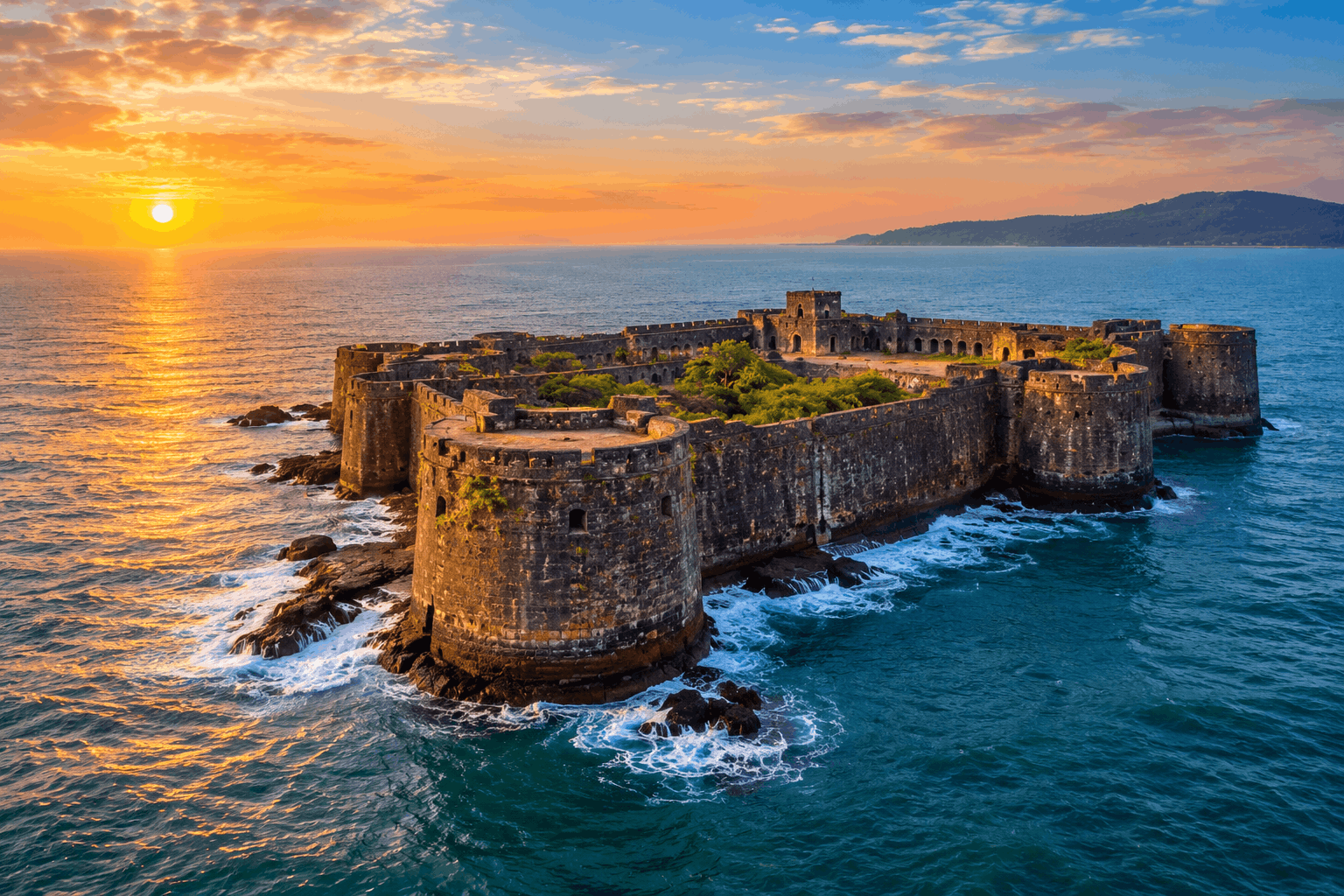
Kondapalli Fort sits on a hill in the Eastern Ghats foothills about 20 km from Vijayawada’s center. Built in the 14th century by the Reddy kings and subsequently held by the Bahamani Sultanate, the Vijayanagara Empire, and eventually the Nizams and the British, the fort carries the layered architecture of each occupation period. Granaries, a mosque, a Durbar Hall, and a temple complex exist within the same fortified perimeter.
The panoramic view of the Krishna River plains from the fort ramparts is the most immediately rewarding thing about the site. The climb is moderate — steep in sections but manageable for most visitors.
Beyond the fort, the village of Kondapalli is the origin of the distinctive Kondapalli wooden toys — painted wooden figures of animals, mythological characters, and rural scenes crafted from tella poniki wood, a soft but durable local timber. These toys are a Geographical Indication-tagged product of Andhra Pradesh. The craftsmen’s workshops in the village allow visitors to see the making process, which involves carving, jointing, and applying natural dyes. The toys are available directly from the craftsmen at prices considerably below what retail markets charge.
- Fort entry: Nominal fee. Open during daylight hours.
- Best time: October to March for the fort climb. The toy workshops are active year round.
Amaravati — 38 km from Vijayawada
Amaravati is one of those sites that the scale of its significance takes time to absorb. Between approximately 250 BCE and 300 CE, this site on the Krishna River’s southern bank was the center of a Buddhist civilization — the Satavahana capital and later the Ikshvaku capital — that produced one of the most refined sculptural traditions in Indian history. The Amaravati Mahachaitya, a stupa built during this period, was covered in carved limestone panels depicting the life of the Buddha. Most of those panels are now in the Madras Museum, the British Museum, and the National Museum — what remains at Amaravati is the site, a partial reconstruction, and the Amaravati Archaeological Museum.
The museum is worth the trip independently of the stupa site. It holds original sculptures, panels, and architectural fragments that convey the sophistication of what was built here — the Amaravati style of Buddhist sculpture, with its distinctive curved figures, narrative panels, and decorative richness, is different enough from the Gandhara or Mathura schools to register as its own visual language.
Amaravati is also significant because the new capital of Andhra Pradesh is being developed on its outskirts — a context that gives the ancient site an unusual juxtaposition with construction machinery and government architecture.
- Museum timings: 10 AM to 5 PM. Closed Fridays.
- Entry: Nominal archaeological site fee.
- Best time: October to February.
- Note: The Amaralingeswara Swamy Temple, a significant Shaivite shrine, is adjacent to the stupa site and worth including in the same visit.
The Delta and Coast: 40 to 90 km
Uppalapadu Bird Sanctuary — 35 km (Near Guntur)
Uppalapadu is a small wetland area near Guntur that draws migratory birds in significant numbers between November and February. Painted storks, spot-billed pelicans, white ibis, and several species of cormorant and heron nest here or pass through. The numbers in peak season — pelicans in particular reach thousands during the nesting period — make Uppalapadu one of the more visually dramatic bird sanctuaries in Andhra Pradesh for its modest size.
The sanctuary is accessible from both Vijayawada and Guntur. For those combining it with an Amaravati visit, the routing works well — Vijayawada to Amaravati, then south to Guntur and east to Uppalapadu, returning to Vijayawada. The timing works because the morning light at Uppalapadu is the best for bird photography.
- Best time: November to February. Peak nesting and migration period.
- Entry: Free or nominal. Sunrise visits are best for photography.
Machilipatnam (Bandar) — 65 km from Vijayawada
Machilipatnam is one of the oldest port cities in South India. Its history as a trading post runs from the Satavahana period through to European colonization — the Dutch, French, and British all established factories here between the 16th and 18th centuries. The remnants of the Dutch cemetery and the East India Company-era structures remain visible to those who look for them.
The city gives its name to the Machilipatnam (or Bandar) style of Kalamkari — the art of painting on cotton fabric using natural dyes, with designs drawn from Hindu mythology. The Kalamkari work produced in Machilipatnam uses block printing combined with hand-painted detail, which distinguishes it from the pen-based Srikalahasti Kalamkari style. Several artisan workshops and cooperatives in the town allow visitors to see production in progress and purchase fabric directly.
Machilipatnam’s beach — long, flat, and largely free of commercial development — is the quiet coastal option for those who want the Bay of Bengal without the crowd density of better-known Andhra beaches.
- Best time: October to March.
- Drive from Vijayawada: Approximately 65 km on NH16. Well-maintained road.
Suryalanka Beach — 90 km from Vijayawada
Suryalanka is a beach in the Bapatla district, approximately 90 km from Vijayawada. It sits at the mouth of the Krishna River as it enters the Bay of Bengal, which gives the shoreline a specific geography — river on one side, open sea on the other, and a strip of sand between them that is quiet on weekdays and moderately populated on weekends. The Andhra Pradesh Tourism Development Corporation (APTDC) operates a beach resort here, which makes it one of the more organized beach stays in the region for those planning an overnight stay.
- Best time: October to February. Monsoon months bring heavy surf and access restrictions.
- Note: The road to Suryalanka passes through the Krishna River delta’s agricultural interior, which is worth driving slowly for the landscape.
When to Visit Places Near Vijayawada Under 100 km
Vijayawada sits in Andhra Pradesh’s coastal zone and experiences hot summers and a dual monsoon pattern. The practical visiting window depends on which type of destination you are targeting.
| Destination Type | Best Months | Avoid |
| Heritage (Undavalli, Kondapalli, Amaravati) | October to March | April to June (heat on exposed sites) |
| Birding (Uppalapadu) | November to February | Outside migration season |
| Coastal (Machilipatnam, Suryalanka) | October to February | Monsoon months (June to September) |
| Fort visits (Kondapalli) | November to February | Summer peak (March to May) |
October through February is the optimal window for covering all destination types in a single trip plan. The fort climb at Kondapalli and the outdoor stupa area at Amaravati are both significantly more pleasant in cooler weather.
How to Reach Vijayawada
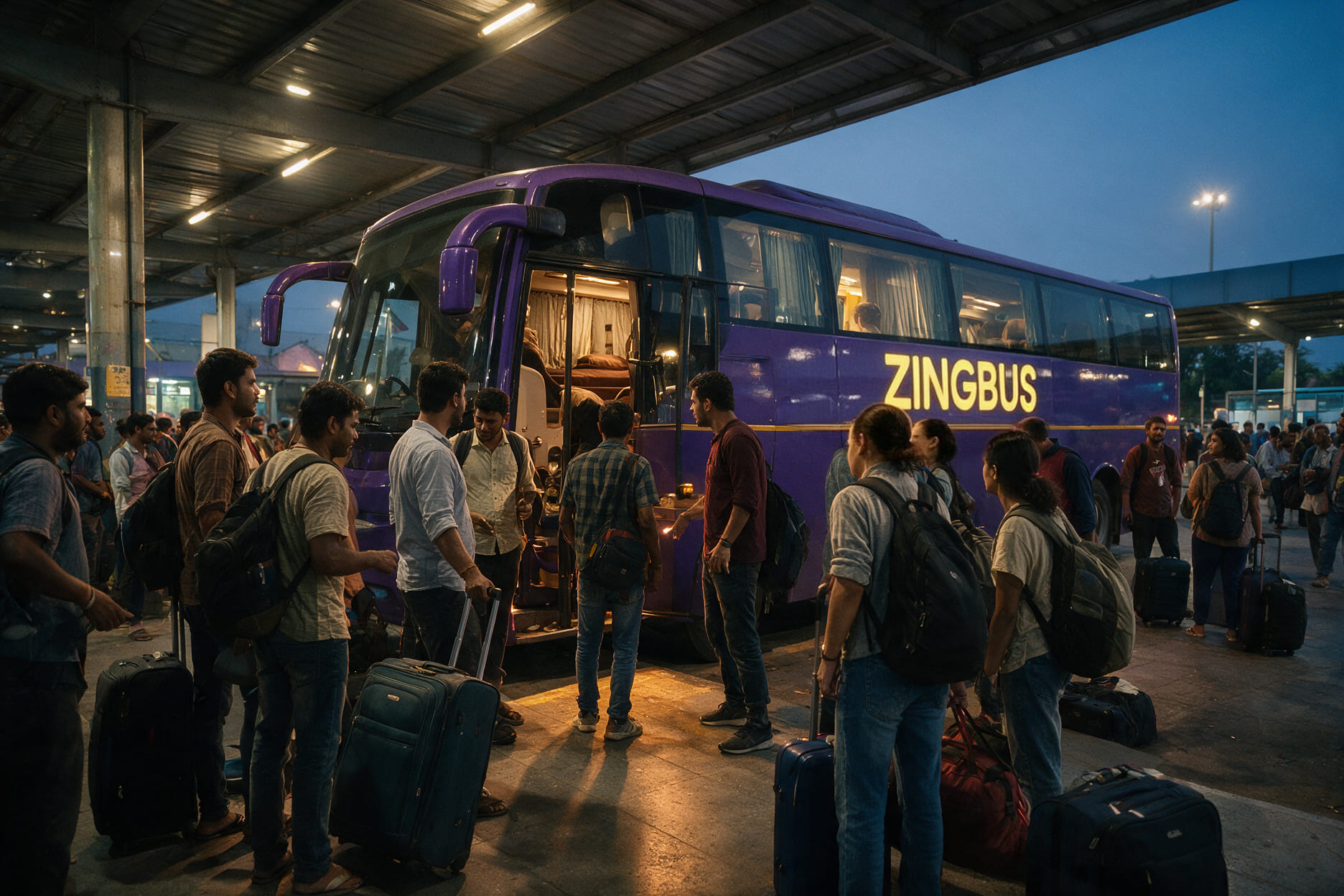
Vijayawada connects to Bangalore, Hyderabad, Chennai, Visakhapatnam, Rajahmundry, Tirupati, and other cities via zingbus, with 50+ city connections available daily. Book your Vijayawada bus on the zingbus website or app. The city’s main bus stands and railway junction are well-connected within Vijayawada, and hired cabs are readily available for the day trips covered in this guide.
For all seven destinations listed here, a hired cab from Vijayawada is the most practical option. Undavalli, Kondapalli, and Mangalagiri have local transport options but a cab gives full flexibility for combining two stops in a single day.
You Might Also Like
- 25 Must-Visit Places in India That Earn Their Spot on Every Travel List — A broader India travel reference for readers planning an Andhra Pradesh circuit that goes beyond the Vijayawada radius.
- How to Plan a Road Trip: A No-Nonsense Guide for Indian Travellers — Relevant for anyone turning the Machilipatnam or Suryalanka drive into a longer coastal Andhra trip.
- Women Bus Travel Safety in India: Practical Guide for Solo and Night Bus Travel — Useful for solo female travellers planning overnight buses to or from Vijayawada for this kind of trip.
Practical Notes Before the Drive
- Undavalli Caves are best visited before 9:30 AM on weekends. By mid-morning, tour groups from Vijayawada arrive and the inner cave spaces get crowded quickly.
- The Kondapalli toy workshops operate on weekdays most reliably. Call ahead or visit the Andhra Pradesh State government handicrafts outlet near the fort entrance for confirmed availability.
- Amaravati Museum’s Friday closure is worth noting if you are building a multi-stop weekend itinerary. Plan Amaravati for Saturday or Sunday if possible.
- The road from Vijayawada to Machilipatnam on NH16 is good but passes through several mid-sized towns where speed slows significantly. Allow extra time beyond the map estimate.
- Uppalapadu Bird Sanctuary requires very early arrival — before 7 AM — for the best bird activity. Pelicans and storks are most active at first light.
- Suryalanka Beach’s APTDC resort requires advance booking during December and January. Walk-ins on weekends are often not accommodated.
- Machilipatnam’s Kalamkari workshops are scattered across the town. A local guide or a call to the Andhra Pradesh Handloom and Handicrafts Development Corporation office in the town center will get you to the working ateliers rather than just the retail shops.
Vijayawada’s 100 km Circle Carries 2,500 Years of Uninterrupted History
The places to visit near Vijayawada under 100 km are not the typical South Indian heritage circuit. They are specific to this stretch of the Krishna River: a Buddhist stupa tradition that produced some of the finest carved stone in Asia, a rock-cut cave monastery from the 5th century, a hill fort that was held by every major regional power for a thousand years, and a port city that connected this region to Dutch spice routes and French colonial trade. Behind all of that history is a coast and a delta that have been feeding populations here since before the stupa builders arrived.
The places to visit near Vijayawada under 100 km reward the kind of travel that starts with a question rather than a checklist. What happened here? Why did they choose this hill for the caves? Why did the Satavahanas build their capital on this bend of the river? The sites themselves are where you find out, if you arrive with enough time to look properly.
Frequently Asked Questions
What Are the Best Places to Visit Near Vijayawada Within 100 km?
The best places to visit near Vijayawada within 100 km include Undavalli Caves (8 to 10 km) for 5th century rock-cut architecture, Kondapalli Fort (20 km) for the hilltop fort and traditional wooden toys, Amaravati (38 km) for the ancient Buddhist stupa site and museum, Machilipatnam (65 km) for Kalamkari heritage and the Bay of Bengal coast, and Uppalapadu Bird Sanctuary (35 km) for migratory birds in season.
What Are Undavalli Caves Near Vijayawada?
Undavalli Caves are a 5th and 6th century rock-cut temple complex carved from a single sandstone hill, approximately 8 to 10 km from Vijayawada. The four-storey structure includes Hindu deity sculptures on multiple levels and a monolithic reclining Vishnu figure on the upper floor — one of the largest carved stone figures in Andhra Pradesh. The Archaeological Survey of India maintains the site, which is open from 9 AM to 6 PM.
What Is Kondapalli Fort Famous For?
Kondapalli Fort, approximately 20 km from Vijayawada, is famous for two things: the 14th century hill fort itself, which carries architectural layers from Reddy, Bahamani, Vijayanagara, Nizam, and British periods; and the traditional Kondapalli wooden toys made in the village below — Geographical Indication-tagged hand-painted wooden figures that are available directly from the craftsmen at the artisan workshops.
Is Amaravati Worth Visiting from Vijayawada?
Yes, Amaravati is worth a dedicated visit from Vijayawada. At 38 km, it is one of the most historically significant Buddhist sites in India — the ancient Satavahana capital and home of the Amaravati Mahachaitya, whose carved panels represent one of the finest sculptural traditions in South Asian history. The Archaeological Museum holds original sculptures and artifacts that convey the scale of what was built here.
What Is Machilipatnam Famous for Near Vijayawada?
Machilipatnam, approximately 65 km from Vijayawada, is famous for two things: its history as one of South India’s oldest port cities, with Dutch, French, and British colonial-era structures still visible; and Machilipatnam Kalamkari, a style of block-printed and hand-painted textile art on cotton fabric using natural dyes, depicting Hindu mythological scenes. Artisan workshops in the town allow visitors to see the production process and purchase fabric directly.
How Far Is Amaravati from Vijayawada?
Amaravati is approximately 38 km from Vijayawada by road. The drive takes about 45 to 60 minutes depending on traffic through the Guntur district highway. Amaravati is also the site of Andhra Pradesh’s new capital city being developed nearby, so the road infrastructure in this corridor is well-maintained and improving.
What Is the Best Season to Visit Places Near Vijayawada Under 100 km?
October to February is the best season for the places to visit near Vijayawada under 100 km. Heritage sites like Undavalli and Kondapalli Fort are more comfortable to explore in cooler weather. November to February is the peak season for migratory birds at Uppalapadu Bird Sanctuary. The coastal destinations — Machilipatnam and Suryalanka Beach — are at their most pleasant between October and February.
What Is Uppalapadu Bird Sanctuary Near Vijayawada?
Uppalapadu Bird Sanctuary is a wetland area near Guntur, approximately 35 km from Vijayawada. It is known for its migratory bird population between November and February, particularly painted storks, spot-billed pelicans, white ibis, and various heron species. The pelican nesting season at Uppalapadu draws thousands of birds and is one of the more dramatic wildlife spectacles in coastal Andhra Pradesh.
Is Suryalanka Beach Accessible as a Day Trip from Vijayawada?
Yes, Suryalanka Beach is accessible as a day trip from Vijayawada at approximately 90 km by road. The beach sits at the Krishna River delta where the river meets the Bay of Bengal, and it is one of the quieter and more organized beaches in Andhra Pradesh. The APTDC beach resort here provides facilities. The drive passes through the Krishna delta’s agricultural interior, which is visually interesting in itself.
What Are the Heritage Sites Near Vijayawada Within 100 km?
Heritage sites near Vijayawada within 100 km include Undavalli Caves (8 to 10 km), a 5th century rock-cut monastery; Kondapalli Fort (20 km), a 14th century hill fortress; Mangalagiri Narasimha Swamy Temple (12 km); Amaravati (38 km), the ancient Buddhist stupa capital; and Machilipatnam (65 km), with Dutch-era structures and colonial trading post history.
What Is Special About Kondapalli Toys?
Kondapalli toys are traditional hand-painted wooden figures crafted in Kondapalli village, approximately 20 km from Vijayawada. Made from tella poniki — a soft, workable local timber — the figures depict animals, mythological characters, and rural scenes, finished with natural dyes in bright colours. They carry a Geographical Indication tag, certifying their geographic and craft authenticity, and can be purchased directly from artisan families at the village workshops.
Does zingbus Connect Vijayawada to Destinations Within 100 km for Day Trips?
zingbus connects Vijayawada to over 50 cities including Bangalore, Hyderabad, Chennai, Visakhapatnam, Rajahmundry, and Tirupati. For day trips to destinations within 100 km — Undavalli, Kondapalli, Amaravati, Machilipatnam, and Uppalapadu — a hired cab from Vijayawada gives the most flexibility. Check available Vijayawada buses on the zingbus website or app for your onward intercity travel.