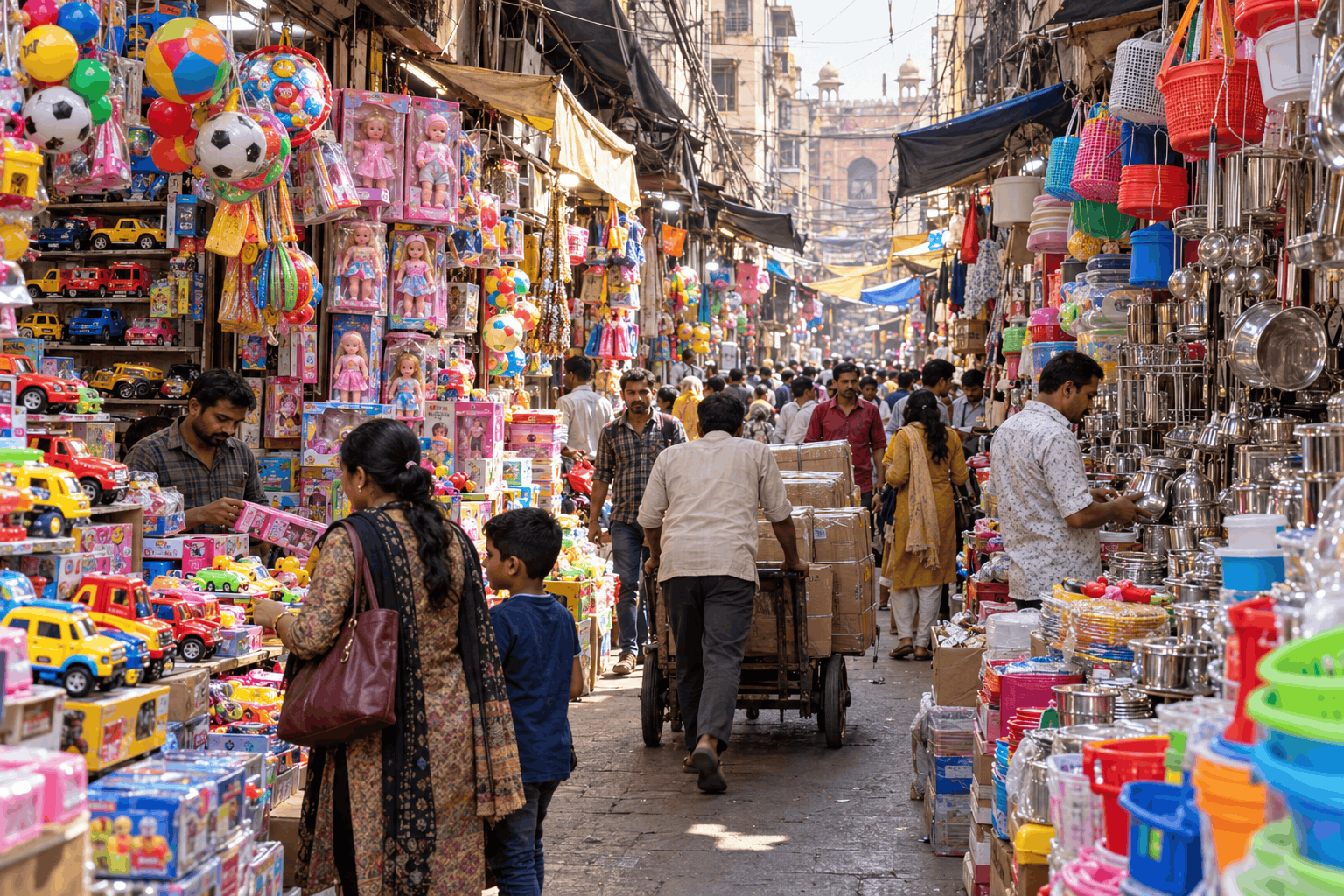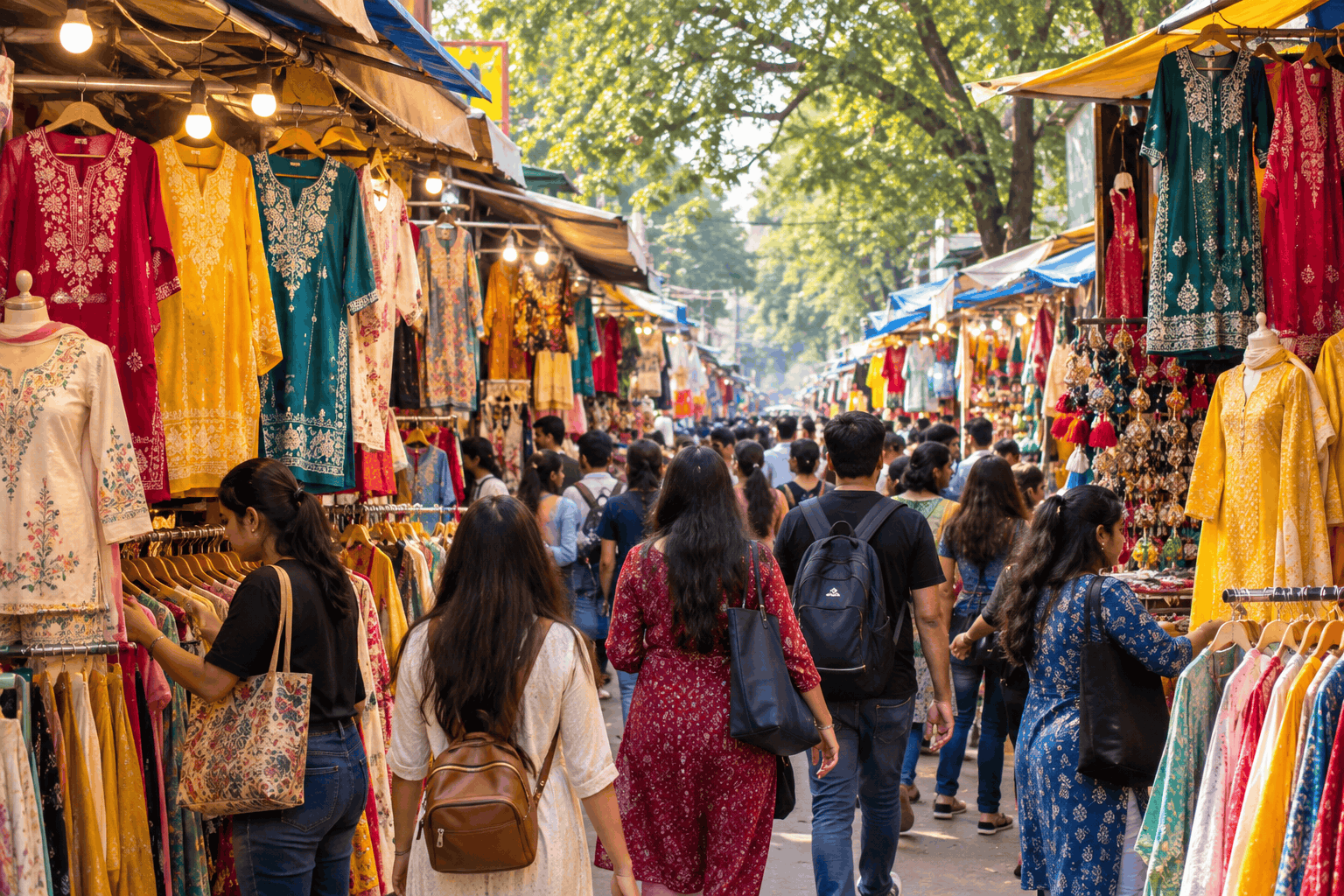
Sarojini Nagar is Delhi’s busiest street shopping market for everyday fashion. During Diwali, the stock shifts. The summer casuals and western wear that dominate the stalls year-round share space with festive kurtas, ethnic tops, embroidered dupattas and budget lehenga sets. The market does not transform into a puja item destination or a decoration hub. It stays what it is, a fashion and clothing market, but the fashion tilts ethnic for the season.
This matters for planning. If you need festive clothes at budget prices, Sarojini handles that. If you need diyas, decorations, puja items or wholesale lighting, you need Sadar Bazaar or Chandni Chowk. Knowing the difference saves a trip.
How the Market Changes During Diwali
The sarojini nagar diwali shopping window brings three visible changes. The stock mix shifts towards ethnic and festive wear starting roughly 10 days before Diwali. Several stalls that normally carry western wear switch to festive inventory because the demand shifts. And the crowds, which are heavy on any Saturday, become significantly denser during the Diwali fortnight.
Sarojini Nagar Diwali Shopping: What to Buy, What to Skip and How to Manage the Crowd
The guide below covers what the market genuinely offers during Diwali, what price range to expect, and how to shop without losing a full day to the crowd.
What to Buy at Sarojini During Diwali
Festive Kurtas and Ethnic Tops
This is the strongest category. Short kurtas, long Anarkali-style kurtas, embroidered ethnic tops and printed kurtis for Diwali house visits, office parties and family gatherings are available at Rs 200 to Rs 800. The designs change every season, and the Diwali stock includes sequin work, zari borders and festive colours that the regular inventory does not carry.
The quality varies stall to stall. Check stitching at the seams, look for loose threads, and try items on where possible. The Rs 200 to Rs 400 range is where the value sits for daily-wear festive kurtas. Above Rs 600, the Lajpat Nagar and Chandni Chowk options offer better construction.
Budget Lehenga and Chaniya Choli Sets
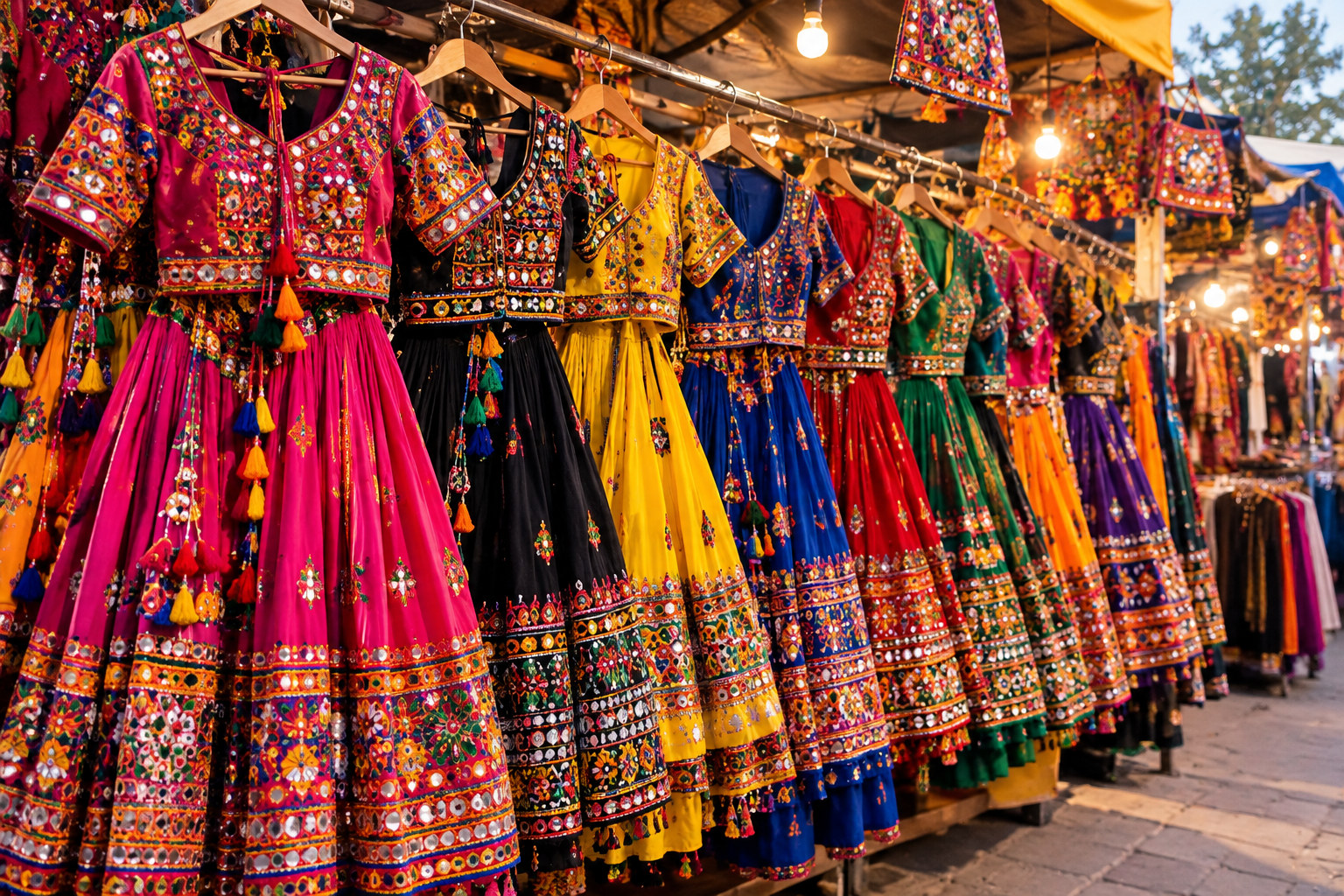
During Navratri and Diwali, several stalls stock budget lehenga sets and chaniya choli sets at Rs 500 to Rs 1,500. These are functional for a single event. They are not the quality you would get at Chandni Chowk or Lajpat Nagar at double the price, but for a one-time dandiya night or a Diwali party, they serve the purpose.
Dupattas and Stoles
Embroidered dupattas, bandhani prints and sequin-work stoles are available at Rs 100 to Rs 300. These work as standalone accessories and as Diwali gift items.
Accessories
Oxidised jewellery sets, junk jewellery, clutch bags, embroidered potli bags and festive hair accessories are stocked at prices between Rs 50 and Rs 300. The oxidised jewellery section is competitive with Janpath in terms of variety.
What to Skip at Sarojini During Diwali
Diyas and decorations. Sarojini does not carry meaningful Diwali decoration stock. Go to Sadar Bazaar.
Puja items. Lakshmi Ganesh idols, puja thalis, kalash and religious items are not Sarojini’s domain. Chandni Chowk and Sadar Bazaar handle this.
LED lights and electrical decorations. Bhagirath Palace is the market for this.
Sweets and dry fruit gift boxes. Chandni Chowk and Bengali Market are the sweet markets.
Heavy ethnic wear for weddings. Sarojini’s strength is budget fashion. For wedding-grade lehengas and suits, Chandni Chowk, Lajpat Nagar and Karol Bagh offer better quality at their respective price points.
Timing and Crowd Management
- Best time to visit: Weekday mornings, 10:00 AM to 12:00 PM. The market opens around 10:00 AM and the first two hours are the least crowded window.
- Worst time to visit: Saturday and Sunday afternoons during Diwali fortnight. The crowd density makes browsing difficult and bargaining nearly impossible.
- Extended hours: During Diwali week, some stalls stay open later than the usual 8:00 PM closing. The extra hour does not mean fewer people.
- Weekly off: Sarojini Nagar is open every day including Sundays. There is no fixed weekly off, though Monday sees fewer stalls compared to other days.
- Bargaining: Expected at every stall. Start at 40 to 50 percent of the quoted price. During Diwali week, sellers bargain less aggressively because the demand is high. Early-week shopping gives more bargaining room.
What the Existing Guide Covers
For the full Sarojini Nagar experience beyond Diwali, including timings, parking, metro access, and the complete product range, the Sarojini Nagar Market timings and shopping guide on the zingbus blog covers everything year-round.
NOTE: Prices are approximate and may vary based on season, demand, and availability.
Common Questions About Sarojini Nagar Diwali Shopping
Is sarojini nagar diwali shopping worth the crowd?
For budget festive kurtas at Rs 200 to Rs 800, Sarojini offers the best value in Delhi. Visit on a weekday morning to avoid the worst crowds.
What festive clothes can I find at Sarojini during Diwali?
Festive kurtas, ethnic tops, budget lehenga sets, embroidered dupattas and sequin-work stoles are the main Diwali stock additions.
Does Sarojini Nagar sell Diwali decorations?
Sarojini does not carry meaningful decoration stock. Go to Sadar Bazaar for diyas, torans, rangoli materials and LED lighting.
What is the best day to visit Sarojini during Diwali?
Weekday mornings between 10:00 AM and 12:00 PM offer the best browsing experience with manageable crowds and stronger bargaining.
How much do festive kurtas cost at Sarojini Nagar?
Festive kurtas range from Rs 200 to Rs 800 depending on the embroidery, fabric and design. The Rs 200 to Rs 400 range offers the best value.
Is Sarojini open on Sundays during Diwali?
Sarojini Nagar is open every day including Sundays. During Diwali week, some stalls extend beyond the usual 8:00 PM closing.
Can I buy Diwali gifts at Sarojini Nagar?
Embroidered dupattas at Rs 100 to Rs 300 and oxidised jewellery sets at Rs 50 to Rs 300 work as affordable Diwali gift options.
How does Sarojini compare to Lajpat Nagar for Diwali shopping?
Sarojini is cheaper for basic festive wear. Lajpat Nagar offers better construction and a wider ethnic range at 20 to 30 percent higher prices.
Should I bargain at Sarojini during Diwali week?
Bargaining is expected but sellers negotiate less during peak Diwali demand. Early-week visits give more room than the final Saturday rush.
What should I avoid buying at Sarojini for Diwali?
Skip Sarojini for puja items, decorations, heavy ethnic wear and sweets. Each of these has a dedicated market elsewhere in Delhi.
You Might Also Like
- Sarojini Nagar Market: Timings and Shopping Guide: The complete year-round Sarojini guide covering timings, parking, metro access and product range.
- Diwali Shopping in Delhi 2026: Which Market Sells What: The product-to-market map for all Diwali shopping across Delhi’s markets.
- 15 Cheapest Markets in Delhi for Shopping: The full guide to Delhi’s most affordable shopping markets.