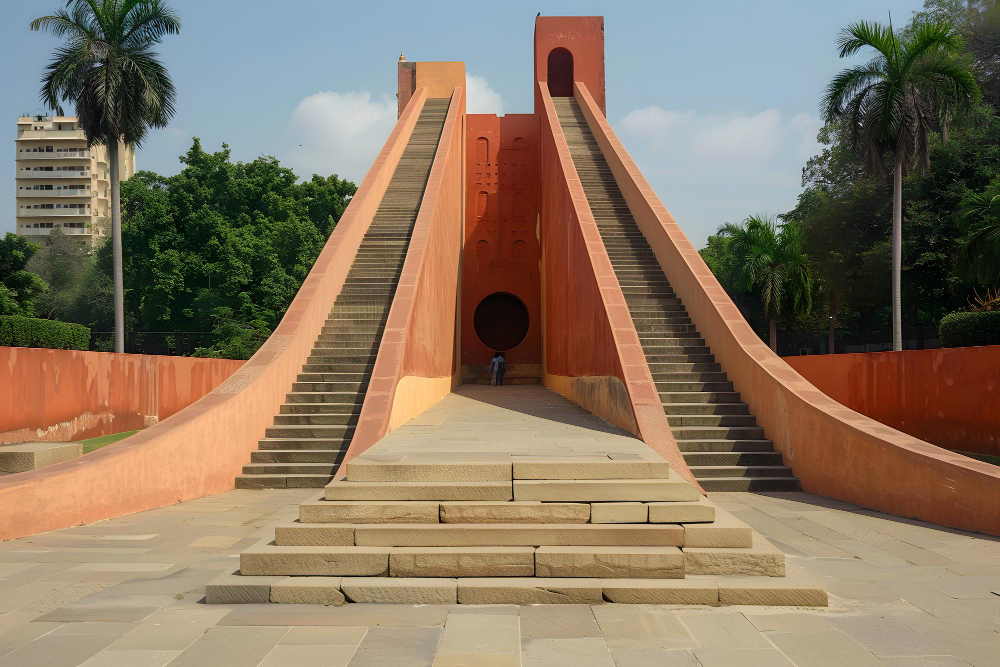
The 18th century astronomical instruments take about 40 to 60 minutes to walk through properly. Then you step out onto Sansad Marg, and within a 3 km radius sit a Sikh gurudwara with free meals for 10,000 people daily, a stepwell that feels like a portal to a different century, the President’s house, a war memorial, and one of the country’s finest museum collections. Most places to visit near jantar mantar delhi go unvisited not because people do not know about them but because nobody organises them by how far they actually are from the observatory gate.
This guide arranges every nearby attraction by walking distance from Jantar Mantar’s entrance on Sansad Marg. Stops under 1 km come first, followed by sites between 1 and 3 km, and then the wider half-day extensions up to 5 km. Entry fees, timings, and time needed at each stop are included so you can plan a 2-hour walk, a 4-hour sightseeing round, or a full Central Delhi day from a single starting point.
Places to Visit Near Jantar Mantar Delhi: Expanding Radius Walking Guide
Before mapping the nearby stops, here are the current details for Jantar Mantar itself.
| Detail | Information |
| Location | Sansad Marg, near Connaught Place, New Delhi |
| Timings | 9:00 AM to 6:00 PM, all days |
| Entry Fee (Indian) | Rs 20 (online via ASI), Rs 25 (at gate) |
| Entry Fee (Foreign) | Rs 250 (online), Rs 300 (at gate) |
| Children Under 15 | Free |
| Photography | Allowed (free for still; Rs 25 for video) |
| Nearest Metro | Patel Chowk (Yellow Line, ~600 m), Rajiv Chowk (Yellow/Blue, ~800 m), Janpath (Violet Line, ~700 m) |
| Time Needed | 40 to 60 minutes |
The observatory was built in 1724 by Maharaja Sawai Jai Singh II of Jaipur to measure time, predict eclipses, and track the movements of celestial bodies. The 13 instruments spread across approximately 1,500 square metres include the Samrat Yantra (a massive sundial), the Ram Yantra (cylindrical structures for measuring altitude and azimuth), and the Misra Yantra (a hybrid instrument combining multiple measurement functions). A guided walk helps because the instruments are not self-explanatory; the ASI signboards cover basic functions, but a local guide (Rs 200 to Rs 500) explains the geometry in a way the signs do not.
Stops Within 1 km: Walk Straight from the Gate
Four attractions sit within a 10 to 15 minute walk from Jantar Mantar’s entrance. These are the places to visit near jantar mantar delhi that require no transport, no planning, and no additional tickets beyond what is already in your pocket.
Connaught Place (500 m, 6 Minutes)
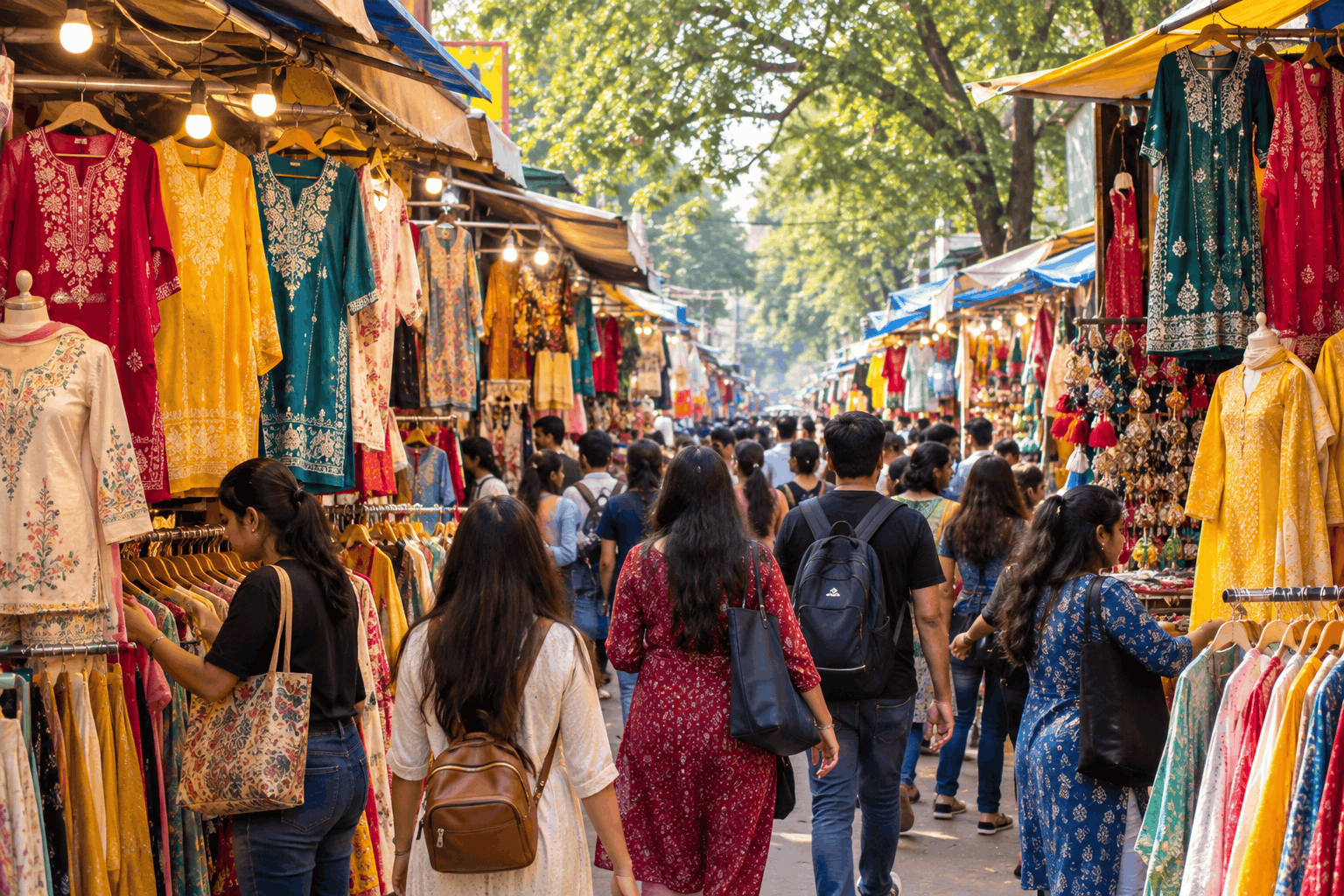
Connaught Place sits directly north of Jantar Mantar and functions as the commercial heart of New Delhi. The circular colonnaded market, built in the 1930s during British rule, is divided into an inner circle (Block A to N), middle circle, and outer circle. Shopping ranges from Khadi India and cottage industry emporiums to international brands. The real draw for sightseeing visitors is the architecture itself: the white colonnaded walkways, the radial street design, and Central Park at the centre with the Indian flag.
The food options at CP are extensive enough to anchor an entire meal stop. The restaurants in Connaught Place guide covers 25+ options from Rs 60 street snacks to Rs 2,000 fine dining. For cafe culture specifically, the cafes in CP guide covers Indian Coffee House, Wenger’s, and 18 other spots.
- Timings: Shops 10:00 AM to 9:00 PM (most closed Sundays). Restaurants open later.
- Entry: Free
- Time needed: 30 minutes to 3 hours depending on whether you eat and shop
Hanuman Mandir (400 m, 5 Minutes)
One of Delhi’s oldest temples sits on Baba Kharak Singh Marg, just 400 metres from Jantar Mantar. The temple is believed to pre-date the city of New Delhi and is dedicated to Lord Hanuman. Tuesday evenings draw the largest crowds for aarti. The temple is small and can be covered in 15 to 20 minutes, but the atmosphere on festival days (Hanuman Jayanti, Diwali) transforms the entire street.
- Timings: 6:00 AM to 10:00 PM
- Entry: Free
- Time needed: 15 to 20 minutes
Gurudwara Bangla Sahib (700 m, 10 Minutes)
This is the landmark that visitors often call the most unexpectedly moving stop in Central Delhi. The white marble gurudwara with a golden dome sits 700 metres from Jantar Mantar on Ashoka Road. The site is associated with the eighth Sikh Guru, Guru Har Krishan, who stayed here in the 17th century and provided water to the sick during a cholera epidemic. The Sarovar (sacred pool) reflects the dome, and the langar (community kitchen) serves free meals to approximately 10,000 people every day, regardless of religion, caste, or nationality. Visitors are welcome to eat at the langar. Cover your head, remove shoes, and wash your hands before entering.
Nobody talks about this part: the langar kitchen is visible from a gallery above, and watching the volunteer-run operation feeding thousands from massive steel vessels and conveyor-style chapati machines is as impressive as any heritage monument in the radius.
- Timings: Open 24 hours (langar available throughout the day)
- Entry: Free
- Time needed: 30 to 45 minutes
Central Park and Palika Bazaar (500 m, 6 Minutes)
Central Park sits in the middle of Connaught Place’s circular layout and holds the tallest Indian flag in Delhi (207 feet). Palika Bazaar, the underground market directly beneath the park, sells electronics, clothing, shoes, and accessories at negotiable prices. The market is air-conditioned and stays cool even in Delhi’s summer. Bargaining is expected and prices drop significantly from the first quote.
- Timings: Park open all day. Palika Bazaar 10:30 AM to 7:30 PM (closed Sundays)
- Entry: Free
- Time needed: 20 to 45 minutes
Heritage and Museum Stops: 1 to 3 km Away
The next ring of places to visit near jantar mantar delhi requires either a brisk 15 to 25 minute walk or a short auto/metro hop. These are the stops that turn a 2-hour visit into a 4 to 5 hour Central Delhi day.
Agrasen ki Baoli (1.5 km, 20 Minutes Walk)
A 14th century stepwell tucked behind the high-rises of Hailey Road. The baoli has 103 steps arranged in three descending levels, with arched corridors running along both sides. The structure was originally a water reservoir and community gathering point. The visual impact comes from the symmetry: the steps narrow as they descend, creating a dramatic perspective that draws photographers and filmmakers. The hidden gems Delhi guide covers Agrasen ki Baoli alongside other offbeat stops in the city.
- Timings: 7:00 AM to 6:00 PM, all days
- Entry: Free (ASI protected)
- Time needed: 20 to 30 minutes
National Museum (2.3 km, Auto Rs 30 to Rs 50)
India’s largest museum sits on Janpath, approximately 2.3 km south of Jantar Mantar. The collection spans 5,000 years: Harappan civilisation artefacts, Gandhara Buddhist sculptures, Mughal miniature paintings, Chola bronzes, medieval textiles, and a gallery dedicated to Indian musical instruments. The museum is vast enough that attempting everything in one visit leads to fatigue. Pick two or three galleries based on interest and spend 90 minutes rather than rushing through 30 galleries in the same time. The places to visit in Delhi guide covers the National Museum alongside the full city itinerary.
- Timings: 10:00 AM to 6:00 PM (closed Mondays)
- Entry: Rs 20 (Indians), Rs 650 (foreigners)
- Time needed: 1.5 to 3 hours
Gandhi Smriti (2 km, Auto Rs 30 to Rs 50)
Formerly known as Birla House, this is the site where Mahatma Gandhi spent the last 144 days of his life and was assassinated on 30 January 1948. The room where Gandhi stayed has been preserved exactly as it was. The prayer ground in the garden marks the exact spot of the assassination with a stone pathway showing his final footsteps. The museum inside holds personal belongings, photographs, and a multi-media presentation on the freedom movement.
- Timings: 10:00 AM to 5:00 PM (closed Mondays)
- Entry: Free
- Time needed: 45 minutes to 1.5 hours
India Gate and Kartavya Path (2.5 km, Auto Rs 40 to Rs 60)
The 42 metre war memorial stands 2.5 km from Jantar Mantar at the eastern end of Kartavya Path (formerly Rajpath). The monument commemorates 70,000 Indian soldiers who died in World War I and the Third Anglo-Afghan War. The Amar Jawan Jyoti (eternal flame) burns at the base. The lawns surrounding India Gate are open for walking, and the ice cream and corn vendors along the pathways are a Delhi institution. Evening visits (after 5:00 PM) offer cooler temperatures and the monument lit up against the sky.
- Timings: Open 24 hours (best visited early morning or evening)
- Entry: Free
- Time needed: 30 to 60 minutes
The Wider Circle: 3 to 5 km for a Full Day
Three additional stops extend the Jantar Mantar walking day into a proper Central Delhi heritage circuit. These require an auto, metro, or e-rickshaw.
Rashtrapati Bhavan and Mughal Gardens (2.8 km)
The official residence of the President of India sits at the western end of Kartavya Path. The building has 340 rooms and sits in a 330 acre estate. The Mughal Gardens (now called Amrit Udyan) open to the public during specific periods (typically February to March for the flower display). Guided tours of the main building and the change of guard ceremony on Saturday mornings are available with advance booking through the Rashtrapati Bhavan website.
- Timings: Tours by advance booking only
- Entry: Free (booking required)
- Time needed: 1 to 2 hours
Lakshmi Narayan Temple / Birla Mandir (2.6 km)
A large Hindu temple built in 1939 and inaugurated by Mahatma Gandhi with the condition that it be open to people of all castes. The Orissan-style architecture, the multi-deity shrines, and the garden with a small waterfall make it a peaceful stop in an otherwise busy area. The temple is on Mandir Marg, accessible from Jantar Mantar by auto in 10 minutes.
- Timings: 4:30 AM to 1:30 PM, 2:30 PM to 9:00 PM
- Entry: Free (no photography inside)
- Time needed: 30 to 45 minutes
Nehru Planetarium (3 km)
Located inside Teen Murti Bhavan, the planetarium offers sky shows explaining constellations, planets, and astronomical phenomena. Given that Jantar Mantar is an astronomical observatory, the planetarium creates a natural extension: 18th century observation instruments in the morning, 21st century projection dome in the afternoon. Shows run at fixed times throughout the day.
- Timings: Shows between 11:30 AM and 4:00 PM (closed Mondays, check schedule)
- Entry: Rs 80 (adults), Rs 50 (children)
- Time needed: 1 to 1.5 hours including one show
Where to Eat Between Sightseeing Stops
Central Delhi has food options at every price point within the Jantar Mantar radius. The practical approach is to eat once during the walk rather than saving everything for the end.
Under Rs 200 per person: Wenger’s on Connaught Place for pastries, patties, and cold coffee. Street chaat vendors on Janpath for gol gappas and aloo tikki (Rs 30 to Rs 80). Gurudwara Bangla Sahib langar for a free vegetarian meal.
Rs 200 to Rs 600 per person: Indian Coffee House in Connaught Place for dosas and filter coffee under Rs 100. Saravana Bhavan on Janpath for South Indian thali. United Coffee House on E Block for a heritage dining room with continental and Indian mains.
Rs 600 and above: Farzi Cafe for Indian molecular gastronomy. Kwality Restaurant for a 1950s-era North Indian institution. For a comprehensive list with addresses and pricing, the restaurants in Connaught Place guide covers the full range. For evening plans after sightseeing, the places to visit in Delhi at night guide covers CP nightlife, Hauz Khas, and Chandni Chowk after dark.
How to Reach Jantar Mantar Delhi
Jantar Mantar sits in the centre of New Delhi’s government and commercial district, making it one of the most connected heritage sites in the city.
By Metro: Three metro stations serve the area. Patel Chowk (Yellow Line) is the closest at approximately 600 to 700 metres. Rajiv Chowk (Yellow and Blue Lines interchange) is about 800 metres and is the most connected station in the Delhi Metro network. Janpath (Violet Line) is approximately 700 metres. Metro trains operate from 5:00 AM to 11:00 PM.
By Bus: DTC buses from across Delhi stop at Palika Kendra and Janpath, both within walking distance. For travellers arriving in Delhi from other cities, Kashmere Gate ISBT is approximately 6 km from Jantar Mantar (20 minutes by metro on the Yellow Line). The Delhi bus booking page covers intercity routes and boarding points. Travellers can also check live schedules on the zingbus app.
By Auto or Cab: From anywhere in Delhi, ask for “Jantar Mantar” or “Parliament Street near CP.” App-based cabs (Uber, Ola) and prepaid autos from metro stations cost Rs 30 to Rs 80 for short distances within Central Delhi.
You Might Also Like
- Best Places to Visit in Delhi: First-Timer’s Guide — The full Delhi sightseeing guide covering Old Delhi, South Delhi, and Central Delhi with metro routes, entry fees, and a practical itinerary.
- Hidden Gems Delhi: 20 Offbeat Places Locals Love — Agrasen ki Baoli, Mehrauli Archaeological Park, Sunder Nursery, and 17 other stops that standard tourist lists miss.
- Cafes in CP: 20 Must-Visit Spots — Indian Coffee House to specialty brewers, covering every cafe in the Connaught Place circle for post-sightseeing coffee stops.
- Places to Visit in Delhi at Night — Monuments after dark, CP nightlife, Chandni Chowk street food, and Hauz Khas Village for extending the Jantar Mantar day into an evening.
What Most Visitors Get Wrong About This Area
They underestimate walking distances. The map says 2 km, but Delhi heat, traffic crossings, and crowded pavements make 2 km feel like 4. Carry water, wear comfortable shoes, and do not attempt all 12 stops in a single day. Pick 5 to 6 based on interest and save the rest for another visit.
They skip Gurudwara Bangla Sahib. Many visitors walk past it because it does not appear on the typical “Delhi monuments” list. The langar experience alone justifies a 30-minute stop, and the white marble and golden dome photograph better than most ticketed monuments.
They visit the National Museum on Monday. The museum is closed on Mondays. So is Gandhi Smriti. If your Jantar Mantar day falls on a Monday, adjust the route to focus on Agrasen ki Baoli, India Gate, the gurudwara, and Connaught Place instead.
They go to India Gate at noon. The lawns have no shade. Between April and September, midday temperatures cross 40 degrees Celsius. Visit before 9:00 AM or after 5:00 PM when the monument is lit and the temperature drops.
They forget that Jantar Mantar closes at 6:00 PM. Start at Jantar Mantar in the morning, work outward through the radius during the day, and end with India Gate or CP in the evening. Starting at India Gate and leaving Jantar Mantar for the end risks arriving after the gate closes.
Note: Entry fees and timings are approximate and may change. Always check ASI and official websites for current information before visiting.
Twelve Stops, One Metro Station, Zero Wasted Hours
The places to visit near jantar mantar delhi cover 300 years of history, three religions, a presidential estate, and one underground market, all within a radius you could technically walk in 45 minutes if Delhi’s pavements cooperated. They rarely do.
But the density of what sits around this single ASI monument is what makes it the best starting point for any first visit to Central Delhi. Start at the observatory, expand outward by distance, eat somewhere between the third and fifth stop, and end wherever the light is best.
Frequently Asked Questions
What Are the Best Places to Visit Near Jantar Mantar Delhi?
The best places to visit near jantar mantar delhi include Connaught Place (500 m), Gurudwara Bangla Sahib (700 m), Hanuman Mandir (400 m), Agrasen ki Baoli (1.5 km), National Museum (2.3 km), Gandhi Smriti (2 km), India Gate (2.5 km), Rashtrapati Bhavan (2.8 km), Lakshmi Narayan Temple (2.6 km), and Nehru Planetarium (3 km).
What Is the Entry Fee for Jantar Mantar Delhi?
The entry fee for Jantar Mantar Delhi is Rs 20 per person for Indian visitors when booked online through the ASI website, and Rs 25 when purchased at the gate. Foreign visitors pay Rs 250 online or Rs 300 at the gate. Children under 15 years enter free.
What Are the Timings of Jantar Mantar Delhi?
Jantar Mantar Delhi is open from 9:00 AM to 6:00 PM on all days of the week. There is no weekly off. Tickets can be purchased online through the Archaeological Survey of India website or at the gate counter.
Which Is the Nearest Metro Station to Jantar Mantar?
The nearest metro station to Jantar Mantar is Patel Chowk on the Yellow Line, approximately 600 to 700 metres away. Rajiv Chowk (Yellow and Blue Lines interchange, ~800 m) and Janpath (Violet Line, ~700 m) are also within walking distance.
Can You Visit Agrasen ki Baoli and Jantar Mantar on the Same Day?
Yes, Agrasen ki Baoli and Jantar Mantar can be visited on the same day since the stepwell is only about 1.5 km from the observatory. The walk takes approximately 20 minutes. Agrasen ki Baoli is free to enter and takes about 20 to 30 minutes, making it easy to combine with a Jantar Mantar visit.
Is Gurudwara Bangla Sahib Worth Visiting Near Jantar Mantar?
Gurudwara Bangla Sahib is one of the most worthwhile stops near Jantar Mantar, located just 700 metres away. The white marble gurudwara with a golden dome offers a peaceful atmosphere, a sacred pool, and a community kitchen (langar) that serves free meals to approximately 10,000 people daily. Entry is free and it is open 24 hours.
How Far Is India Gate from Jantar Mantar?
India Gate is approximately 2.5 km from Jantar Mantar. An autorickshaw covers the distance in about 10 minutes and costs Rs 40 to Rs 60. Alternatively, it is a 25 to 30 minute walk along Kartavya Path (formerly Rajpath). Evening visits are recommended for cooler temperatures and the illuminated monument.
Is the National Museum Near Jantar Mantar Open on Mondays?
No, the National Museum is closed on Mondays. It is open from 10:00 AM to 6:00 PM on all other days. Gandhi Smriti, another nearby attraction, is also closed on Mondays. Plan your Jantar Mantar area visit on a Tuesday through Sunday if you want to include both museum stops.
How Many Hours Do You Need to Visit Jantar Mantar and Nearby Places?
A visit to Jantar Mantar itself takes 40 to 60 minutes. Adding Connaught Place, Gurudwara Bangla Sahib, and Agrasen ki Baoli creates a 3 to 4 hour walking circuit. Including India Gate, the National Museum, and Gandhi Smriti extends it to a full 6 to 8 hour day.
Is Jantar Mantar Delhi Safe for Solo Visitors?
Yes, Jantar Mantar and the surrounding Central Delhi area are generally safe for solo visitors. The Connaught Place zone is one of the most heavily policed and well-lit areas in Delhi. Standard precautions apply: stay on main roads after dark, keep belongings secure in crowded areas, and use metro or app-based cabs for late returns.
Can You Take Photographs Inside Jantar Mantar?
Yes, still photography is allowed inside Jantar Mantar without any additional charge. Video filming requires a fee of Rs 25. The best photography times are early morning (9:00 AM to 10:00 AM) when the light is soft and the stone instruments cast long shadows, and late afternoon (4:00 PM to 5:30 PM) for golden hour tones.
What Should You Wear When Visiting Gurudwara Bangla Sahib?
Visitors to Gurudwara Bangla Sahib should cover their heads (scarves are available free at the entrance), remove shoes (deposit facility available), and wash their hands before entering. Modest clothing is appropriate. Shorts and sleeveless tops are discouraged. The marble floors can be hot in summer and cold in winter, so plan footwear accordingly.
Is Palika Bazaar Near Jantar Mantar Worth Visiting?
Palika Bazaar is an underground air-conditioned market approximately 500 metres from Jantar Mantar. It sells electronics, clothing, shoes, bags, and accessories at negotiable prices. The market is worth visiting if you enjoy bargaining and want affordable shopping in a unique setting. Start at 50 percent of the quoted price and negotiate from there. Closed on Sundays.
Can You Combine Jantar Mantar with Nehru Planetarium?
Yes, combining Jantar Mantar with Nehru Planetarium creates a meaningful pairing since both relate to astronomical observation. Jantar Mantar covers 18th century instruments, while the planetarium offers modern sky shows. Nehru Planetarium is approximately 3 km from Jantar Mantar and shows run between 11:30 AM and 4:00 PM (closed Mondays). Entry is Rs 80 for adults and Rs 50 for children.
What Is the Best Time of Year to Visit Jantar Mantar Delhi?
The best time to visit Jantar Mantar Delhi is October to March, when temperatures range from 8 to 25 degrees Celsius and outdoor walking between nearby attractions is comfortable. April to June brings extreme heat (often above 42 degrees), making extended walking tours difficult. July to September is monsoon season with unpredictable rain.