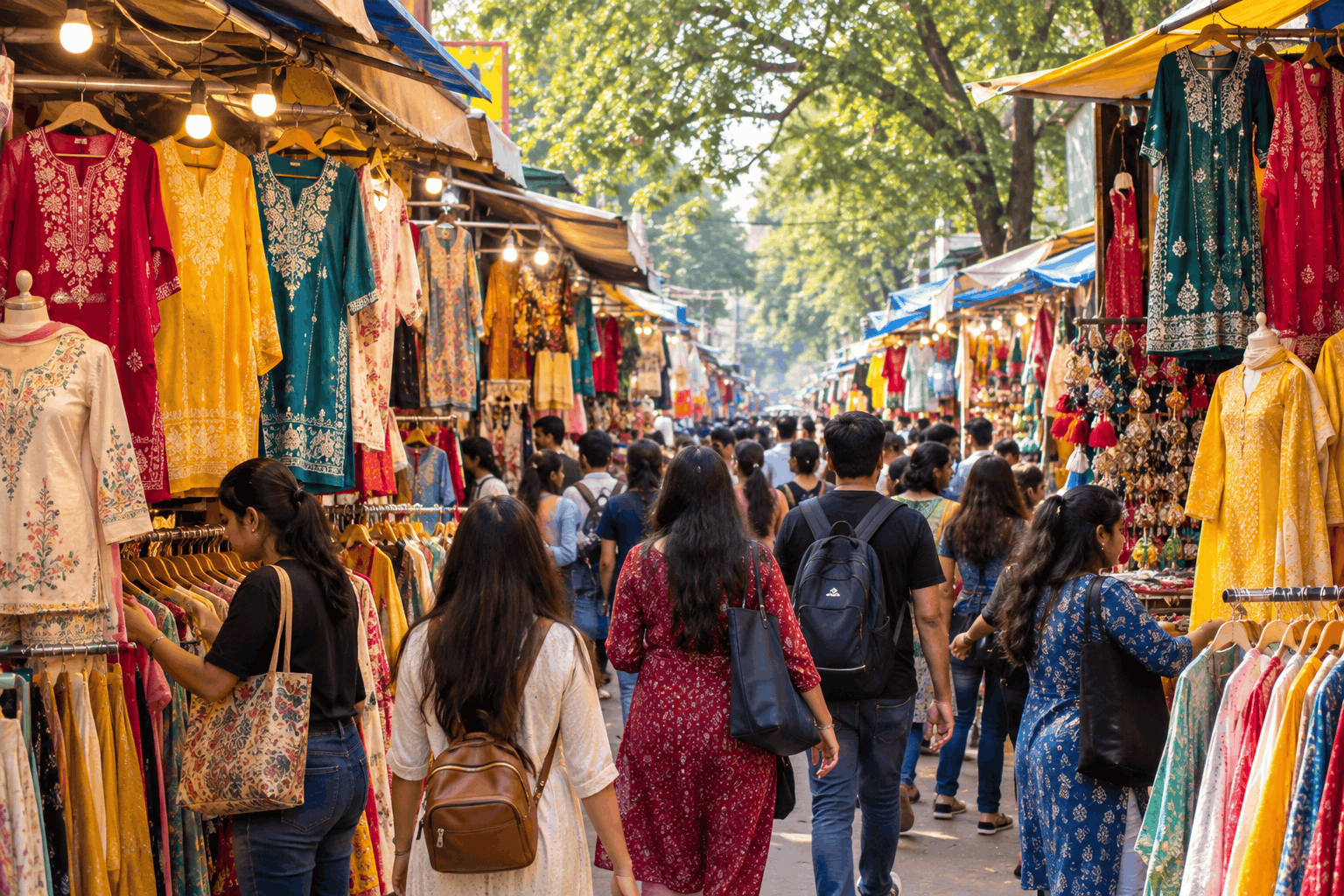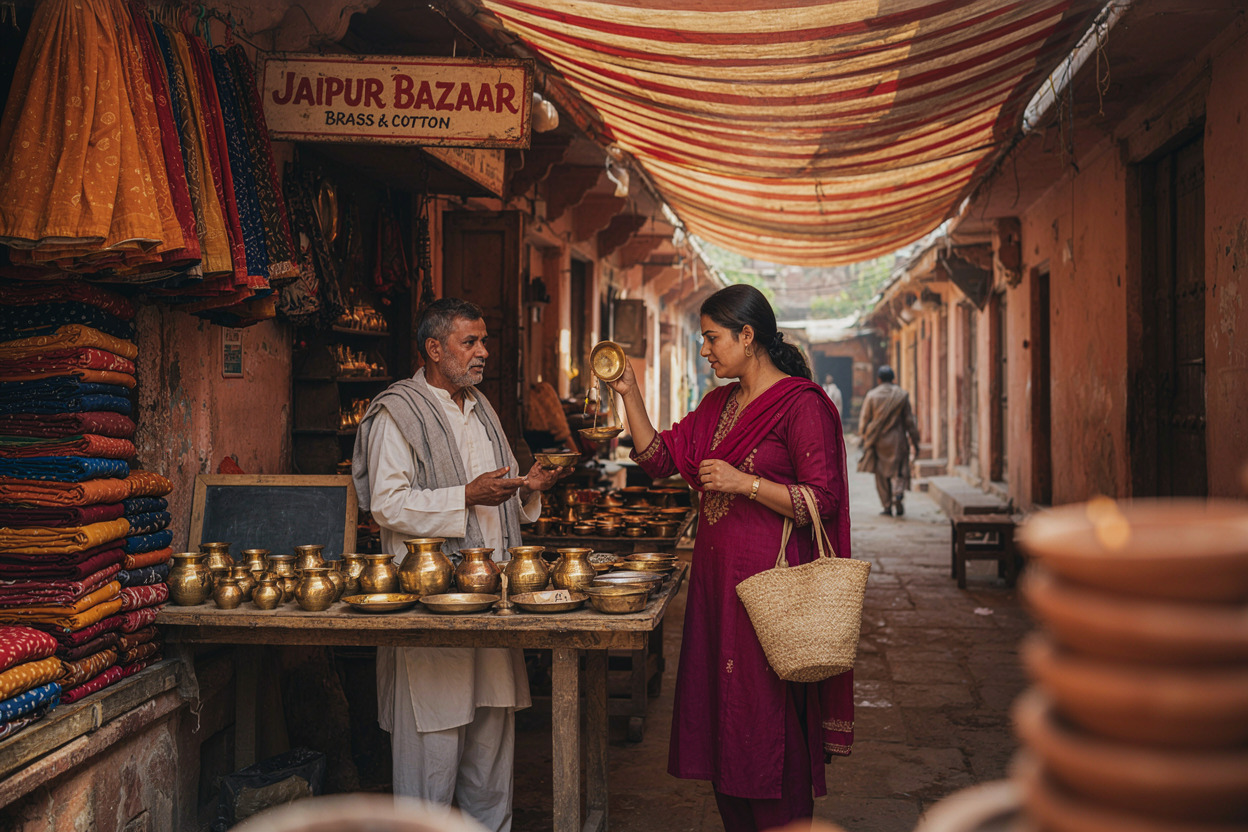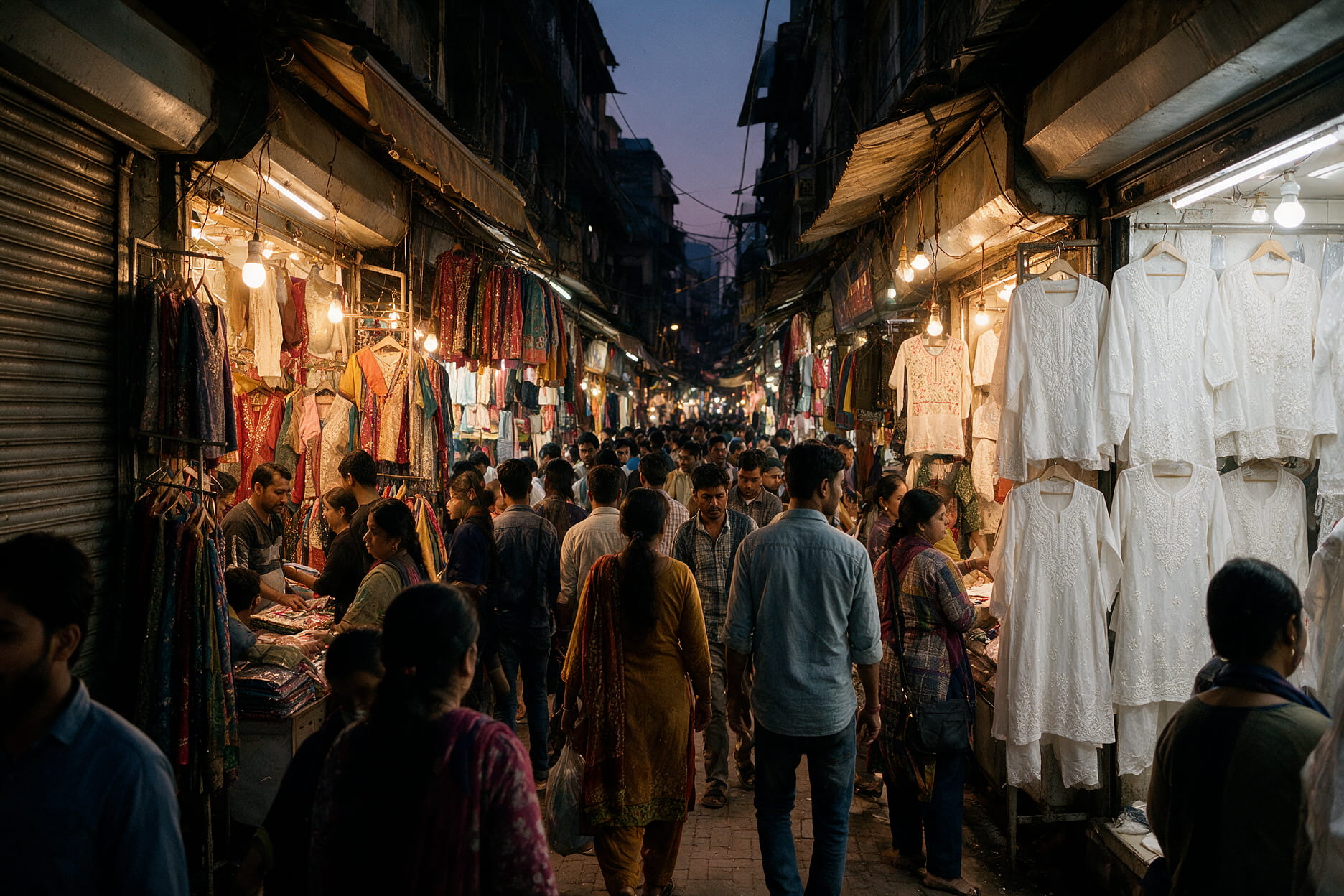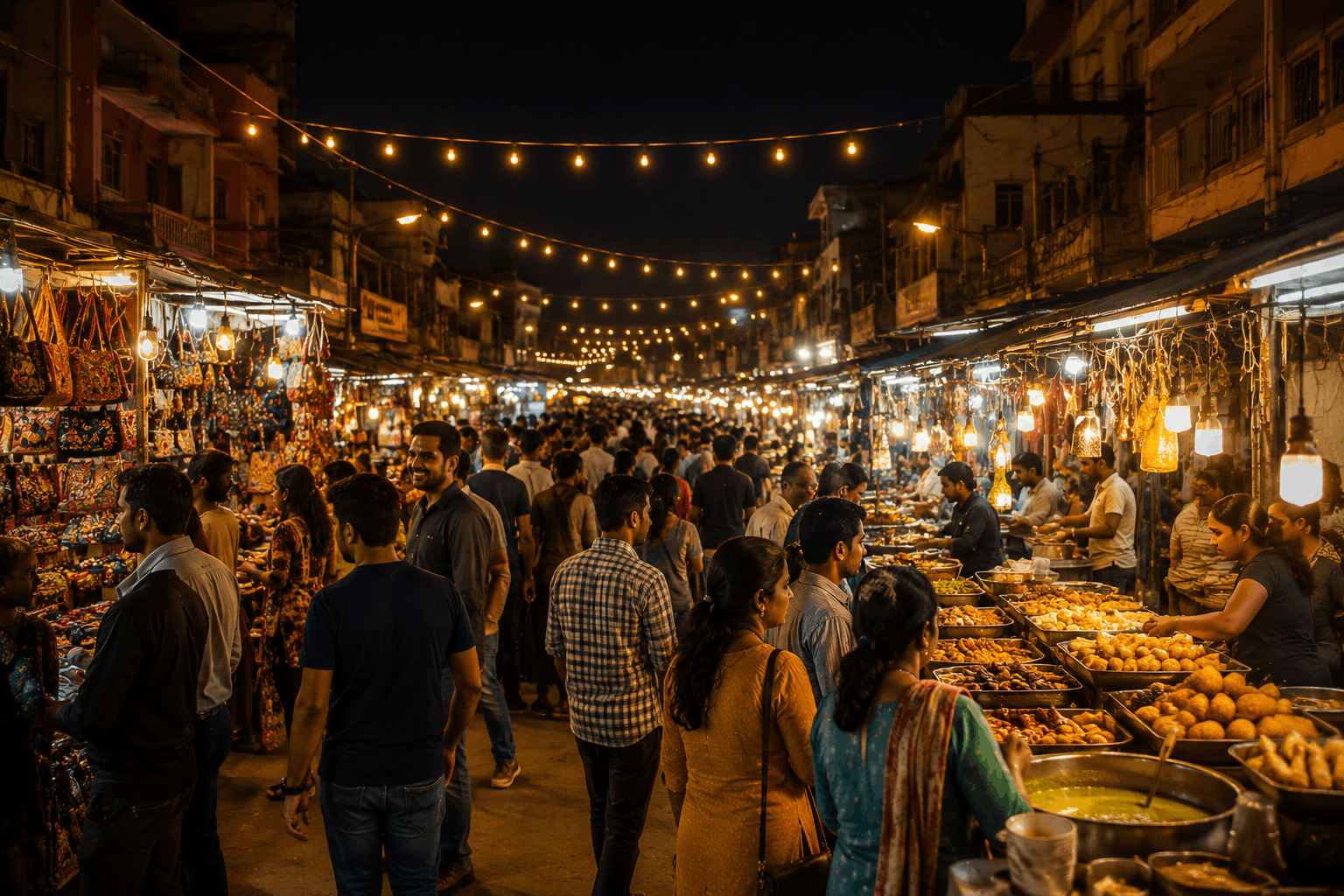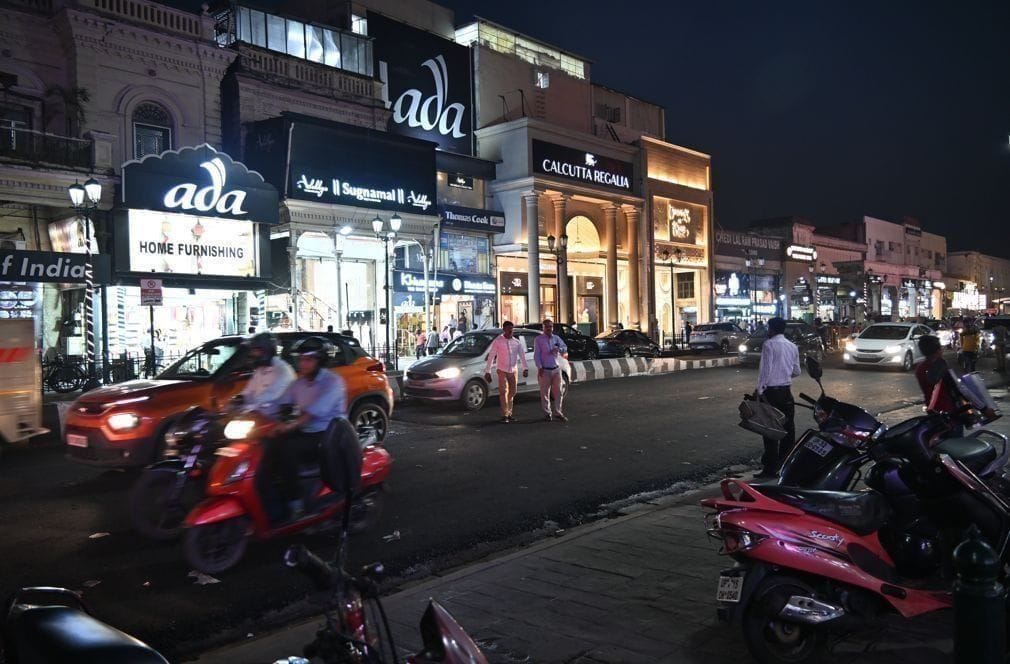
The street lamps along the main stretch are Victorian reproductions. The buildings behind them are painted in uniform pink and cream. The market they line was designed in the 1840s to sell imported goods from Japan, China, and Belgium, and today it sells Chikankari kurtas, Lucknawi ittar, basket chaat, and refurbished laptops from the same postcode. Knowing the hazratganj lucknow market timings before your visit is what keeps a shopping trip from turning into a walk past closed shutters on the wrong day.
This guide covers the actual opening and closing hours, the days to avoid, a product by product breakdown of what Hazratganj does better than any other market in Lucknow, the food stops that locals treat as landmarks, and the fastest way to reach from every transport hub in the city. Heritage sites within walking distance are included because, at Hazratganj, history and commerce share the same pavement.
Hazratganj Lucknow Market Timings, Shopping and Complete Visitor Guide
Hazratganj was originally established as a marketplace called “Ganj” in 1827 during the reign of Nawab Nasiruddin Haider. In 1842, the prefix “Hazrat” was added in honour of Nawab Amjad Ali Shah, who was widely addressed as “Hazrat” by the people of Lucknow. The market functioned as a commercial hub where elite residents of the Nawabi court gathered to shop and socialise.
After the British took control of Awadh following the 1857 revolt, much of the original market was rebuilt. The British modelled the new street after Queen’s Street in London, adding stone pavements, uniform building facades, colonial lamp posts, and tree-lined walkways. For a period, the area was restricted to European residents and renamed “Queen’s Way.” After independence, it reverted to Hazratganj and opened to all.
That layered history still shows. The General Post Office (GPO) building, one of the oldest colonial structures on the street, sits opposite modern retail complexes. Victorian era lamp posts stand next to LED signboards. The architecture moves between Mughal arches and glass storefronts within a few hundred metres. Hazratganj was also renamed “Atal Chowk” in memory of former Prime Minister Atal Bihari Vajpayee, though locals and visitors continue to use the original name.
When the Market Opens, When It Closes, and the Day Most Shops Stay Shut
Getting hazratganj lucknow market timings right matters because the market runs on a specific daily rhythm that varies between branded showrooms and smaller lane shops.
- Opening time: Most shops on the main MG Marg stretch begin opening between 10:00 AM and 10:30 AM. Government emporiums like Gurjari and Gandhi Ashram open closer to 10:00 AM. Smaller lane shops and Janpath Market stalls tend to open by 11:00 AM.
- Closing time: The main market stays active until 10:00 PM to 11:00 PM. Restaurants and cafes push closer to 11:00 PM. During festival seasons, particularly around Diwali and Eid, some shops extend hours further.
- Weekly off: Most branded showrooms and government emporiums remain open all seven days of the week. However, a significant number of smaller independent shops, particularly in the side lanes and Janpath Market area, close on Sundays. If your visit depends on smaller shops or lane-side vendors, avoid Sunday.
- Entry fee: None. Hazratganj is an open public market and commercial zone.
| Detail | Information |
| Opening Time | 10:00 AM to 10:30 AM |
| Closing Time | 10:00 PM to 11:00 PM |
| Partial Closure | Sunday (smaller shops and lane vendors) |
| Entry Fee | Free |
| Best Shopping Hours | 5:00 PM to 9:00 PM |
| Best Season | October to March |
The evening window between 5:00 PM and 9:00 PM is the most active period. Temperatures drop, foot traffic builds, and the lamp-lit stretch of the main road has a visual character that the afternoon hours lack. October through March brings the most comfortable weather for walking the market, and this window also overlaps with Lucknow’s festival and wedding season, when Chikankari shops carry their deepest inventory.
What to Buy at Hazratganj
Hazratganj operates at a higher price point than Aminabad or Chowk, but it compensates with consistency, authenticity verification, and a shopping experience that does not require aggressive bargaining. Each product category below has a specific section of the market where it is best found.
Chikankari and Lucknawi Textiles
Chikankari is Lucknow’s signature craft, and Hazratganj is one of the most reliable places to buy it. The hand embroidery technique uses white thread on fine cotton or muslin fabric, creating patterns that range from simple floral motifs to densely worked panels covering the entire garment. Kurtas, sarees, dupattas, and dress materials are the primary product forms.
Gurjari (the Gujarat state emporium) and Handloom Emporium carry government-backed textiles with fixed prices and authenticity assurance. Gandhi Ashram stocks Khadi and handloom Chikankari. For private Chikankari retailers, several shops along MG Marg and inside Janpath Market carry GI-tagged (Geographical Indication) pieces that come with stamped origin certificates from the Lucknow Chikan Association. Prices for a basic Chikankari kurta start around Rs 500 and climb into the Rs 3,000 to Rs 10,000 range for finely worked sarees and bridal pieces. The reverse side of the genuine hand Chikankari is roughly mirror-symmetric. If the back looks messy and uneven, the embroidery is machine-done.
Ittar and Traditional Fragrances
Lucknawi ittar (natural oil-based perfume) is a Nawabi-era tradition that Hazratganj still carries. Sugandhco, one of the more established names in the perfume business, operates a showroom on Janpath in Hazratganj. The shop stocks its own brand of ittars, incense sticks, room fresheners, and dried flower sachets alongside traditional attars in rose, jasmine, sandalwood, and khus variants. Small bottles start at Rs 100 and go up significantly for concentrated, aged preparations. Ittar is sold by weight or by volume, so confirm the measure before paying.
Books, Stationery and Rare Finds
Hazratganj has one of the strongest bookshop concentrations in Uttar Pradesh. The British Council Library sits on the main road. Several independent bookshops stock everything from competitive exam guides and academic texts to rare, out-of-print Urdu and Hindi literary works. Ram Advani Booksellers, while no longer operating from its original location, built a legacy of rare book retail that shaped the literary identity of this stretch. Stationery shops carrying imported pens, diaries, and writing supplies also populate the side lanes.
Electronics and IT Goods at Naza Market
Naza Market, located within the Hazratganj complex, is the second most recognised market for computer and IT goods in North India after Nehru Place in Delhi. It houses genuine hardware and software retail stores selling laptops, desktops, peripherals, printers, and networking equipment. Prices are competitive, and many shops offer assembly, repair, and configuration services. Warranty and invoice verification is important here, as some shops also sell refurbished or unbranded goods alongside authorised products. Ask for a printed invoice with brand warranty details for any significant purchase.
Handicrafts and Government Emporiums
Beyond textiles, Hazratganj carries Zardozi work (gold and silver thread embroidery), brass and copper utensils, marble inlay pieces, and traditional Lucknawi shoes. Janpath Market inside Hazratganj has a cluster of handicraft and souvenir shops carrying smaller items like embroidered clutches, Zardozi bookmarks, miniature Nawabi-style artefacts, and Chikankari table runners. Government emporiums on the main road carry fixed-price selections of state-specific handicrafts from across India, making them useful for gift shopping without the bargaining variable.
Note: Prices are approximate and may change based on season, demand, and availability.
Food You Should Not Leave Hazratganj Without Eating
Lucknow’s food identity and its market culture are inseparable, and Hazratganj sits at the centre of both. The food options here split between legendary sit-down restaurants that have served the city for decades and street food counters where the queue length signals the quality.
Royal Cafe is the most recognised food name at Hazratganj. The basket chaat (also called tokri chaat) is the signature dish: a deep-fried potato lattice basket filled with aloo tikki, papdi, bhalla, curd, tamarind chutney, green chutney, sev, pomegranate seeds, and a dusting of chaat masala. The Hazratganj outlet is the original, established in 1991, and sits opposite Sahara Ganj Mall on Shahnajaf Road. A full platter costs between Rs 150 and Rs 250. The restaurant also serves North Indian mains, kebabs, and biryani, but the chaat is why people come.
Bajpayee Kachori Bhandar has been operating since 1975. The kachori comes crisp, stuffed, and served with a sabzi side. This is a standing-and-eating kind of stop, best suited for a quick fill between shopping rounds. Budget Rs 50 to Rs 100 per person.
Moti Mahal is one of the older sit-down restaurants in the area, serving dosas, chole bhature, chaat, sweets, kulfi falooda, and lassi under one roof. A meal for two costs approximately Rs 300 to Rs 600.
Shukla Chaat Bhandaar serves classic Lucknawi chaat: gol gappe, aloo tikki, dahi bhalla, and papdi chaat. The portions are generous and the prices sit in the Rs 50 to Rs 150 range.
Tunday Kababi operates an outlet in the Hazratganj vicinity. The galawati kebab, made from finely minced meat tenderised with raw papaya, is the city’s most famous non-vegetarian street food. Two pieces with a paratha cost around Rs 100 to Rs 150.
The practical approach is to eat between shopping sessions rather than saving everything for the end. Starting with kachori at Bajpayee, moving to a chaat stop mid-afternoon, and finishing with basket chaat at Royal Cafe in the evening covers the essential Hazratganj food trail across a single day.
How to Reach Hazratganj from Anywhere in Lucknow
Hazratganj sits in the geographic centre of Lucknow, and every major transport hub connects to it within 15 to 30 minutes.
By Metro
Hazratganj Metro Station on the Lucknow Metro provides direct access to the market. The station exit opens within walking distance of the main MG Marg stretch and Royal Cafe. Metro trains operate from approximately 6:00 AM to 10:00 PM. The metro connects Hazratganj with CCS Airport, Charbagh, and other parts of the city.
From Lucknow Junction (Charbagh Railway Station)
Lucknow Junction is approximately 3 to 4 km from Hazratganj. An autorickshaw takes about 15 to 20 minutes and costs around Rs 50 to Rs 100. The Lucknow Metro also connects Charbagh to Hazratganj directly, making the metro the fastest and most predictable option during peak traffic hours.
From Charbagh Bus Stand
Charbagh Bus Stand sits adjacent to Lucknow Junction and is the main intercity bus terminal. The distance to Hazratganj is the same 3 to 4 km. Travellers arriving in Lucknow from Delhi on the Delhi to Lucknow bus route or from other North India cities can take the metro or an auto directly from the bus stand to the market. zingbus operates daily AC buses on this route with Food on Bus service available, where hot meals are served at the seat during the journey.
From Chaudhary Charan Singh International Airport
The airport is approximately 15 to 18 km from Hazratganj. A cab or app-based ride takes 30 to 45 minutes depending on traffic. The Lucknow Metro connects the airport to Hazratganj directly, making it the most affordable and congestion-free option for reaching the market.
Heritage Landmarks Within Walking Distance of Hazratganj
Hazratganj is not an isolated market. It sits in a zone of Lucknow where some of the city’s most visited heritage sites are accessible on foot or by a short auto ride.
- The Residency: Located approximately 2 km from Hazratganj, The Residency is a ruined complex that served as a refuge for British inhabitants during the 1857 uprising. The grounds are maintained as a historical park and carry visible marks of the siege, including cannonball damage on the walls. Entry costs Rs 25 for Indian visitors and Rs 300 for foreign nationals.
- Bara Imambara and Bhulbhulaiya: About 3 to 4 km from Hazratganj, the Bara Imambara is a grand Mughal-era structure built in 1784. The central hall is one of the largest unsupported arched constructions in the world. The Bhulbhulaiya (labyrinth) on the upper level is the most popular visitor attraction.
- Rumi Darwaza: An imposing 60-foot gateway standing between Bara Imambara and Chota Imambara. It serves as one of Lucknow’s most photographed landmarks and sits about 3 km from Hazratganj.
- GPO Building: The General Post Office stands directly on the Hazratganj main road and is one of the oldest colonial-era buildings in the area. It does not require a separate visit since you walk past it while shopping.
For a broader look at Lucknow’s attractions and bus connectivity, the Lucknow bus booking page covers routes, boarding points, and seasonal travel information for the city.
You Might Also Like
- Chandni Chowk Market Timings and Shopping Guide — Delhi’s oldest and largest market, covering sub-market zones, closed days, what to buy lane by lane, and how to reach from any intercity bus terminal.
- Janpath Market Delhi: Timings, Closed Day and Shopping Guide — A budget shopping strip near Connaught Place with Tibetan jewellery, block-printed fabrics, and oxidised accessories at street-side prices.
- Lajpat Nagar Market Timings and Shopping Guide — South Delhi’s go-to market for ethnic wear, wedding shopping, and street food, with a full weekly off and zone-by-zone breakdown.
What Regulars Know That First-Time Visitors Don’t
Hazratganj rewards visitors who plan around a few patterns that repeat across almost every trip report from the area.
Chikankari quality varies sharply between Rs 500 and Rs 3,000. The difference is not just in design complexity. It is in fabric weight, thread count, and whether the embroidery was done by hand or machine. Genuine hand Chikankari shows a clean reverse that almost mirrors the front. Machine-done versions have loose threads and uneven gaps on the back. Government emporiums and GI-tagged shops eliminate this risk, but private shops require this check before purchase.
Bargaining at Hazratganj is limited compared to Aminabad or Chowk. Most branded showrooms and government stores operate on fixed pricing. In the side lanes and Janpath Market area, 10 to 20 percent off the quoted price is realistic. This is significantly less than the 30 to 45 percent negotiation range at the older bazaars in the walled city area.
The Ganjing Carnival happens on the second Sunday of every month. This street festival transforms the main Hazratganj stretch with cultural performances, street food stalls, live music, and local craft displays. If your visit coincides with a second Sunday, the carnival adds an entirely different layer to the experience.
Sunday closures affect smaller shops, not the main road. Branded showrooms, restaurants, and government emporiums on MG Marg operate seven days a week. The hazratganj lucknow market timings shift on Sundays mainly for independent lane-side shops and Janpath Market vendors. If your visit falls on a Sunday, stick to the main road and you will find most of what you need.
UPI is standard across the market. Google Pay, PhonePe, and Paytm are accepted at almost every shop, restaurant, and food stall in Hazratganj. Cash in small denominations is still useful for autorickshaws outside the metro station and for the occasional street vendor.
Where Nawabi Commerce Still Sets the Pace
The part of the hazratganj lucknow market timings that no guide captures fully is the evening transformation. At 5:30 PM, the same stretch that looked like a quiet government office corridor at noon turns into one of the most active pedestrian zones in Uttar Pradesh. The lamp posts light up, Royal Cafe starts its dinner rush, the Chikankari shops pull fresh stock to the front displays, and the pavement fills with families walking between food stops and textile stores. That shift is what makes Hazratganj more than a shopping destination. It is the part of Lucknow that has been performing the same role for nearly 200 years. Travellers heading to Lucknow from Delhi, Noida, Varanasi, or other cities can check schedules and fares on the zingbus app and plan the arrival around a full evening at this market.
Frequently Asked Questions
What Are the Hazratganj Lucknow Market Timings?
The hazratganj lucknow market timings are approximately 10:00 AM to 11:00 PM on most days. Branded showrooms and restaurants open by 10:00 AM and stay active until 10:00 PM or later. Smaller lane-side shops and Janpath Market vendors may close earlier and are also more likely to remain shut on Sundays.
Is Hazratganj Market Open on Sunday?
Hazratganj Market is partially open on Sunday. Main road showrooms, government emporiums, and restaurants operate as usual. However, many smaller independent shops in the side lanes and Janpath Market area remain closed on Sunday. For a full shopping experience across all sections, visit on any other day of the week.
What Is Hazratganj Famous For?
Hazratganj is famous for Chikankari hand-embroidered textiles, Lucknawi ittar (traditional oil-based perfumes), Zardozi work, handicrafts, books, and electronics at Naza Market. It is also known for its colonial-era Victorian architecture, basket chaat at Royal Cafe, and its status as the most prominent commercial hub in Lucknow.
How Far Is Hazratganj from Lucknow Railway Station?
Hazratganj is approximately 3 to 4 km from Lucknow Junction (Charbagh Railway Station). An autorickshaw covers the distance in about 15 to 20 minutes. The Lucknow Metro also connects Charbagh to Hazratganj Metro Station directly.
What Is the Best Time to Visit Hazratganj?
The best time to visit Hazratganj is between 5:00 PM and 9:00 PM, when the market is fully active and the evening atmosphere is at its best. Seasonally, October to March offers the most comfortable weather for walking the market and exploring the nearby heritage sites.
Is Bargaining Common at Hazratganj?
Bargaining at Hazratganj is limited compared to older Lucknow bazaars like Aminabad or Chowk. Government emporiums and branded showrooms operate on fixed prices. In the side lanes and Janpath Market, 10 to 20 percent off the quoted price is a realistic negotiation range.
What Is the Nearest Metro Station to Hazratganj?
The nearest metro station to Hazratganj is Hazratganj Metro Station on the Lucknow Metro. The station exit is within walking distance of the main MG Marg shopping stretch, Royal Cafe, and the GPO building.
What Should You Eat at Hazratganj?
The essential food stops at Hazratganj include basket chaat at Royal Cafe (the market’s most famous dish), kachori at Bajpayee Kachori Bhandar (operating since 1975), galawati kebab at Tunday Kababi, chaat at Shukla Chaat Bhandaar, and dosas and sweets at Moti Mahal. Budget Rs 100 to Rs 500 per person depending on where and how much you eat.
How Do You Check if Chikankari Is Genuine Hand Embroidery?
Genuine hand Chikankari can be identified by checking the reverse side of the fabric. Handwork produces a nearly mirror-symmetric pattern on the back, with clean, even thread lines. Machine-done embroidery shows loose threads, uneven spacing, and a noticeably messier reverse. Government-tagged and GI-certified pieces come with origin stamps from the Lucknow Chikan Association.
What Is Naza Market in Hazratganj?
Naza Market is an electronics and IT goods market located within the Hazratganj complex. It is the second most recognised computer market in North India after Nehru Place in Delhi. Shops sell laptops, desktops, peripherals, networking equipment, and accessories at competitive prices. Always verify warranty and invoice details before purchasing.
Is Hazratganj Safe for Solo Travellers?
Hazratganj is generally safe for solo travellers, including women. The market stays well-lit and active until late evening, with a visible police presence and heavy pedestrian traffic. Standard precautions apply: keep belongings secure, stay on main roads after 10:00 PM, and use app-based cabs or the metro for late returns.
How Far Is Hazratganj from Lucknow Airport?
Hazratganj is approximately 15 to 18 km from Chaudhary Charan Singh International Airport. A cab takes 30 to 45 minutes depending on traffic. The Lucknow Metro also connects the airport to Hazratganj Metro Station directly, making it the most affordable option.
What Is the Ganjing Carnival at Hazratganj?
The Ganjing Carnival is a street festival held on the second Sunday of every month along the Hazratganj main road. It features cultural performances, street food stalls, live music, local craft exhibitions, and community activities. If your visit coincides with the second Sunday, the carnival adds a cultural experience on top of the regular shopping.
Can You Visit Bara Imambara and Hazratganj on the Same Day?
Yes, you can visit Bara Imambara and Hazratganj on the same day since the two are approximately 3 to 4 km apart. An autorickshaw or cab covers the distance in about 15 minutes. A practical plan is to visit Bara Imambara and Rumi Darwaza in the morning, head to Hazratganj for lunch and shopping by early afternoon, and stay through the evening for the best market atmosphere.
What Other Markets in Lucknow Compare to Hazratganj?
Aminabad and Chowk are the two main alternatives to Hazratganj for shopping in Lucknow. Aminabad offers deeper Chikankari inventory at lower prices with more room for bargaining (30 to 45 percent off the asking price). Chowk is the old city market focused on Nawabi-era food and traditional goods. Hazratganj sits at a higher price point but offers branded stores, government emporiums, restaurants, and a colonial-era walking experience that the other two do not.