Most people come to Delhi for two days and leave thinking they have seen it. They have not even scratched it. The places to visit in Delhi go several layers deep, from 800-year-old ruins to underground markets to rooftop cafes that look out over Mughal-era domes. If this is your first time in the city, this guide will tell you what is worth your time, what order to do it in, and what the standard tourist lists always get wrong. This is not a pamphlet. This is what a friend who grew up here would actually tell you.
Delhi First-Timer Sightseeing at a Glance
| Place | Area | Entry Fee (Indians) | Best Time to Visit | Ideal For |
| Red Fort | Old Delhi | Rs 35 | Early morning | History, Architecture |
| Chandni Chowk | Old Delhi | Free | Morning to afternoon | Food, Shopping, Culture |
| Qutub Minar | South Delhi | Rs 40 | Morning | History, Photography |
| Humayun’s Tomb | Central Delhi | Rs 35 | Morning or late afternoon | Architecture, Gardens |
| India Gate | Central Delhi | Free | Evening | Landmark, Leisure |
| Lotus Temple | South Delhi | Free | Morning | Architecture, Quiet |
| Akshardham | East Delhi | Free (ticketed inside) | Afternoon to evening | Culture, Spirituality |
| Hauz Khas | South Delhi | Free | Evening | Cafes, Village, Lake |
| Connaught Place | Central Delhi | Free | Anytime | Shopping, Food, Metro hub |
Note: Entry fees are approximate and subject to revision. Always check official ASI or temple websites for current timings and prices before visiting.
Old Delhi: Where the City Actually Began
First-timers almost always start at India Gate or Connaught Place because those are the pictures they have seen. Honest suggestion: start in Old Delhi instead. It is harder, louder, more disorienting, and completely worth going first while you still have the energy for it.
Red Fort
The Red Fort is the anchor of Old Delhi and one of the most important places in Delhi tourism. Built by Shah Jahan in the 17th century, the sandstone walls run almost 2.5 km around the complex and the Diwan-i-Aam and Diwan-i-Khas inside are genuinely impressive even if you are not a history person. Go before 9 AM. The light on the red sandstone in the early morning is something else entirely, and the crowd has not arrived yet. By 11 AM it is a different experience.
The sound and light show in the evening is a solid option if you want to come back for a second visit with context.
Chandni Chowk
Chandni Chowk is not just a market. It is a living document of how Delhi has operated for four centuries. The main road is chaotic and best covered on foot or by cycle rickshaw. The real thing happens in the gallis branching off the main chowk. Dariba Kalan for silver jewellery. Kinari Bazaar for wedding trimmings and fabric. Paranthewali Gali for the obvious reason.
And here is what most travel guides miss: the best parantha in Paranthewali Gali is not at the most decorated stall with the tourist photos on the wall. It is at the quieter one toward the end of the lane. The aloo and paneer stuffed version with white butter on top, served with three chutneys. Get there before noon.
The Jama Masjid is two minutes from the main Chandni Chowk metro exit. India’s largest mosque, built in 1656, and completely free to enter for sightseeing outside prayer times. Climb the minaret if it is open. The view over Old Delhi from up there is one of the best you will get in the city.
Central Delhi: The Landmark Belt
India Gate and Rajpath
India Gate is a war memorial, not a tourist attraction in the traditional sense, but it sits at the heart of new delhi’s ceremonial axis and it is worth an hour in the evening when the lawns fill up with families, chai vendors, and the kind of easy outdoor energy Delhi does well. The area around it, Kartavya Path, is clean, wide, and pleasant for a walk. Come after 6 PM when the heat has dropped.
Humayun’s Tomb
Humayun’s Tomb is the one that most first-timers underestimate and almost every one of them comes out saying it was their favourite of the day. The Mughal garden layout, the double dome, the sheer scale of the complex, it all holds up. This is the architectural forerunner to the Taj Mahal and you can see exactly why. Late afternoon light here is better than morning. The garden turns golden from about 4 PM onward and the crowds thin after 5.
There is a small dhaba just outside the complex gate on the left side. Chai here after the visit, sitting on the low wall, watching auto traffic go by. Simple, but it lands.
Connaught Place
Connaught Place, CP to everyone in Delhi, is the city’s commercial centre and a metro hub. The inner and outer circles have everything from budget eating options to international brands. For first-timers, it works well as a base to orient yourself on day one. The underground Palika Bazaar below CP is a classic Delhi travel experience. Bargain hard and check everything before you buy.
South Delhi: History, Calm and the Best Cafes
Qutub Minar
The Qutub Minar complex in Mehrauli is a UNESCO World Heritage Site and one of the oldest intact structures in India. The 73-metre minaret from 1193 is the centrepiece but the Quwwat-ul-Islam mosque ruins, the iron pillar that has not rusted in over 1,600 years, and the rest of the complex are equally worth your attention. Go in the morning before the sun gets direct overhead. The site itself takes about 90 minutes if you go properly.
Lotus Temple
The Lotus Temple is one of those places that genuinely surprises you in person. The Bahai House of Worship is architecturally striking from the outside and completely silent inside, which in Delhi is something you almost never find. There is no idol, no prayer, no ritual. Just quiet. Worth 45 minutes for the architecture and the stillness alone. Entry is free.
Hauz Khas Village
Hauz Khas is where the 13th century meets the 21st in a way that somehow works. The Hauz Khas lake and the medieval deer park ruins sit right next to rooftop bars and independent coffee shops. Go in the evening. The walk along the lake wall at dusk, with the old madrasa and tomb ruins on one side and the water on the other, is one of those things that makes you understand why people who live in Delhi actually love it.
The cafes and restaurants here range from very affordable to expensive. You can eat a decent meal for Rs 200 to Rs 400 per person at the smaller spots on the lane.
East Delhi: Akshardham
Akshardham Temple
Akshardham is on the eastern side of the city and is worth a dedicated half day. The main temple complex is free to enter, though the boat ride and other experience zones inside are ticketed separately. The architecture is extraordinary, all carved pink sandstone and white marble, and the scale of the main mandir has to be seen in person to register properly. No cameras are allowed inside. That is a genuine rule enforced at the entrance, so leave your phone in the cloakroom without argument.
Go in the afternoon and stay for the musical fountain show in the evening if your timing allows. The light and water show runs on a ticketed schedule and is genuinely impressive.
How to Get Around Delhi
By Metro
The Delhi Metro is the single best thing about getting around this city as a tourist. It is cheap, air-conditioned, reliable, and connects almost every major sightseeing spot on this list. A day pass costs around Rs 200 and saves you the auto and cab negotiation entirely. The Yellow Line covers Chandni Chowk, Connaught Place, and Hauz Khas. The Violet Line connects Kashmere Gate area down toward Tughlaqabad near Qutub Minar territory.
By Bus and Auto
For short gaps between metro stations and monuments, autos are the standard option. Agree on the fare before you get in. The official e-rickshaw service near major monuments is fixed fare and worth using near Red Fort and Akshardham. DTC buses cover the full city and are very cheap but harder to navigate for first-timers without local help.
Travelling Onward from Delhi
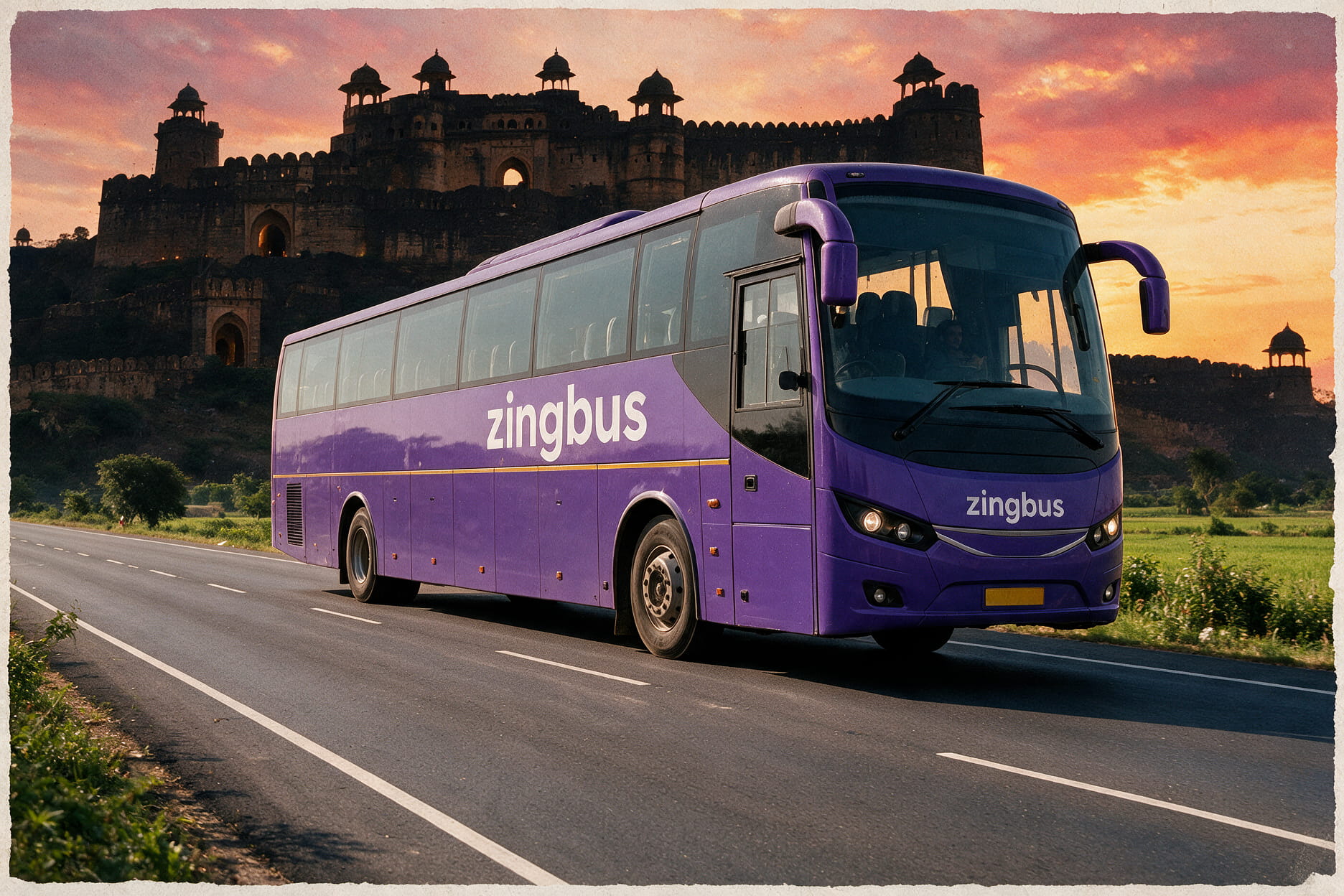
Delhi is also one of the best departure points for short trips across north India. If you are extending your visit, you can book a Delhi to Jaipur bus through zingbus for an easy overnight or morning connection to Rajasthan, or a Delhi to Agra bus for a day trip to the Taj Mahal. Both routes run daily from multiple boarding points across Delhi NCR and Gurgaon.
You Might Also Like
Planning more time in and around Delhi? These posts go deeper:
- Places to Visit in Delhi with Family for Fun
- Places to Visit in Delhi at Night
- Best Places to Visit Near Delhi Within 200 km
- Overnight Sleeper Buses: What to Expect and How to Prepare
Tips Before You Go
- Two full days is the minimum. Old Delhi alone deserves one full day. Trying to do Red Fort, Chandni Chowk, Qutub Minar, and Humayun’s Tomb in a single day is a recipe for doing all of them badly.
- Start early every single day. Delhi heat from May to August is serious. Most monuments open at 7 AM. Being there at 7:30 beats the crowd and the sun both.
- Wear comfortable, covered footwear. You will remove shoes at Akshardham, Lotus Temple, and Jama Masjid. Sandals that slip off easily and socks you are fine wearing on temple floors make a real difference.
- Carry cash for Old Delhi. Chandni Chowk’s smaller lanes and food stalls are mostly cash only. Keep Rs 500 to Rs 800 accessible.
- The metro is non-negotiable. Do not rely on cabs or autos for cross-city travel. Traffic in Delhi is unpredictable and the metro will save you time and money on every single leg.
- Buy a metro day pass on day one. If you are hitting more than three stops in a day, the day pass at around Rs 200 pays for itself within the first three journeys.
- Book onward buses early. If you are heading to Jaipur or Agra from Delhi, weekend buses via zingbus fill up quickly. Book a day or two ahead to get your preferred departure slot.
Wrapping Up
Delhi rewards the people who slow down enough to actually look at it. The places to visit in Delhi range from some of the oldest architecture in the subcontinent to some of the best street food you will find anywhere in India, and most of it is either free or costs almost nothing. Two days done right will leave you wanting a third. Plan the sightseeing in the morning, save the eating and wandering for the afternoon, and let the evenings take care of themselves.
Frequently Asked Questions
What are the best places to visit in Delhi for first-timers?
Red Fort, Chandni Chowk, Humayun’s Tomb, Qutub Minar, India Gate, Lotus Temple, and Akshardham are the essential stops for any first-time visitor. Hauz Khas and Connaught Place round out the experience with a more contemporary side of the city. Two full days covers the highlights comfortably if you plan by area and use the metro.
How many days are enough to see Delhi as a first-timer?
Two full days is a practical minimum to see the major sightseeing spots without rushing. Three days is ideal if you want to include both Old Delhi in depth and south Delhi at a relaxed pace. If you are using Delhi as a base for day trips to Agra or Jaipur, add those days separately on top.
Is Delhi safe for solo travellers and tourists?
Delhi is safe for tourists who use standard precautions. The metro is the safest and most reliable way to get around. Stick to well-lit and busy areas after dark, use app-based cabs rather than random street autos at night, and keep a copy of your ID and hotel address on your phone. The major tourist zones around Red Fort, India Gate, and Connaught Place are well patrolled.
What is the best time of year to visit Delhi for sightseeing?
October to March is the best window for Delhi tourism. The weather is cool and manageable, monuments are pleasant to walk around, and the city is at its most visitor-friendly. Summer months from April to June are very hot, though early mornings are still workable. Monsoon travel from July to September brings humidity and occasional flooding in parts of Old Delhi.
What is the entry fee for major Delhi monuments?
Entry fees for Indian nationals are low across most monuments. Red Fort is around Rs 35, Humayun’s Tomb around Rs 35, and Qutub Minar around Rs 40. India Gate, Lotus Temple, and Jama Masjid are free to enter. Akshardham’s main temple complex is free, with paid zones for specific experiences inside. Always confirm current fees on the official ASI website before visiting as these are subject to revision.
How do I get from Delhi to Jaipur or Agra for a day trip?
Both Jaipur and Agra are very accessible from Delhi. You can book a Delhi to Agra bus with early morning departures that get you there well before the monuments open.
For Jaipur, the Delhi to Jaipur bus takes about 5 to 6 hours and runs daily from multiple Delhi NCR and Gurgaon boarding points. Both are easy to combine with your Delhi itinerary as one-night additions.
Is Chandni Chowk worth visiting for food alone?
Yes, completely. The food in Chandni Chowk is reason enough to visit even if you skip the shopping entirely. Paranthewali Gali, the jalebi at Old Famous Jalebi Wala near Fatehpuri Masjid, the rabri and kulfi near the chowk, and the variety of street food packed into a small area makes it one of the most rewarding food walks in north india. Go with an empty stomach and at least two hours to spare.