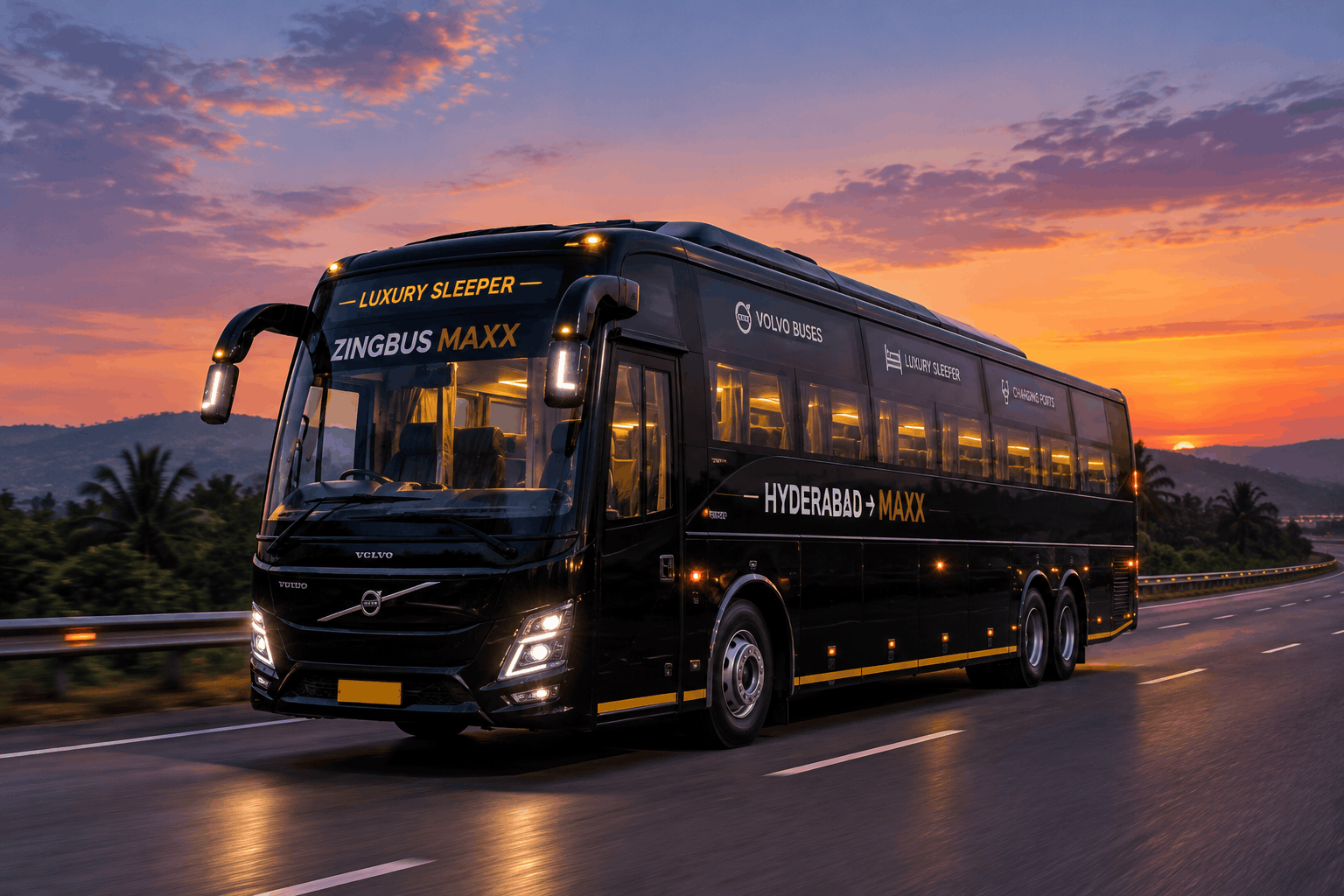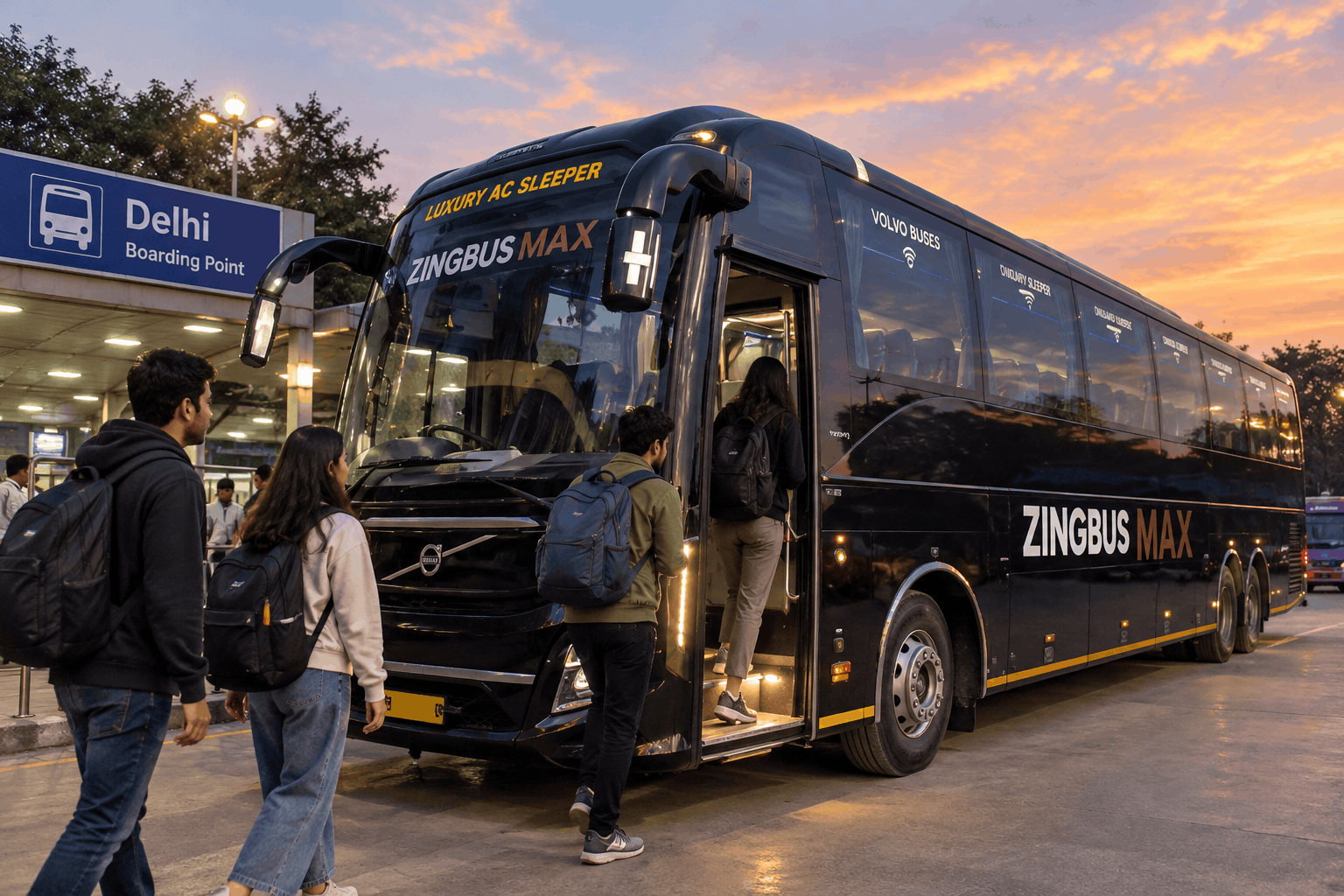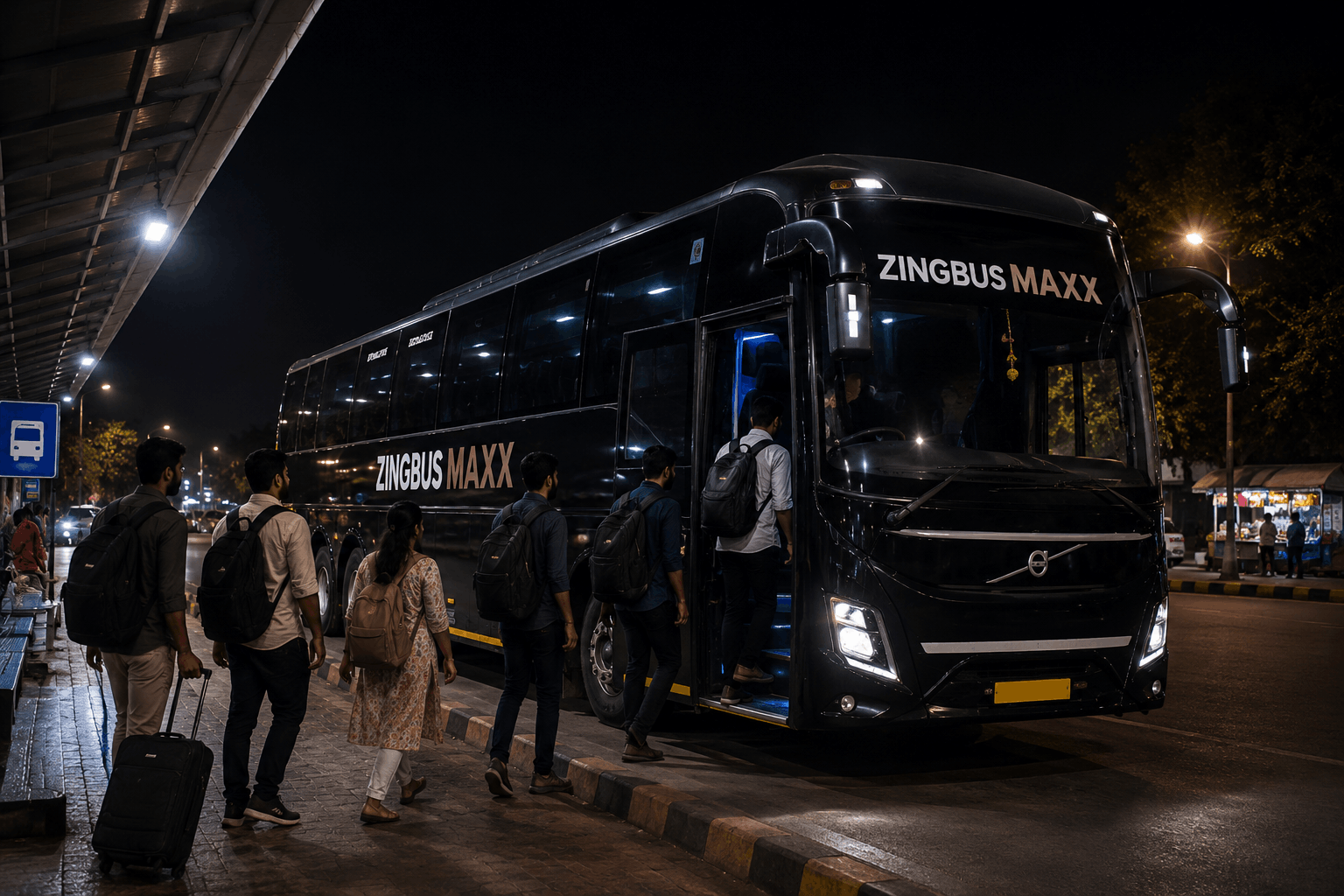
Overnight buses are a practical part of intercity travel in India. They can cover long distances while you sleep, reduce the daytime spent travelling and connect cities where other transport options may be less convenient.
But night bus travel safety india cannot be reduced to a simple yes or no. Safety depends on the operator, vehicle, route, boarding and drop points, weather conditions and how prepared you are. Choosing carefully before booking matters more than simply choosing a night departure.
Night Bus Travel Safety India: What to Check Before You Book
Night buses are widely used across India, but no bus journey can be described as completely risk free. A reputable operator, clear boarding information, appropriate vehicle safety systems, live journey information and access to support can all reduce uncertainty.
The best approach to night bus travel safety india is to assess the complete journey. Think about where you will wait, what bus you are boarding, how you can get help and what happens when you arrive.
Is It Actually Safe to Travel by Bus at Night in India?
It can be, provided you make sensible choices.
Travelling after dark introduces considerations that matter less during the day. Boarding points may be quieter, visibility is lower, passengers are asleep for much of the journey and some drop points are reached before local transport becomes active.
That does not automatically make a night bus unsafe. It means you should evaluate the journey differently.
Before booking, look for:
| Safety Check | What to Look For |
| Operator | Established service with recent passenger feedback |
| Booking | Official operator or recognised booking platform |
| Boarding point | Clearly defined and reasonably active location |
| Drop point | Suitable location with onward transport available |
| Journey tracking | Live GPS where offered |
| Support | Accessible operator contact during the journey |
| Bus information | Clear bus type, seat layout and operator details |
| Emergency equipment | Visible emergency exits and safety equipment once onboard |
These checks provide a much better picture of night bus travel safety in India than price or bus type alone.
Choose the Operator Before You Choose the Cheapest Fare
Safety begins on the booking screen.
Read recent reviews rather than looking only at the overall rating. Comments about driver behaviour, unexpected vehicle changes, boarding confusion, breakdowns or poor support can be more useful than generic comments about seats and cleanliness.
Use official operator websites, apps or established ticket platforms rather than informal payment links or unverified roadside sellers.
For first time travellers, the zingbus first time bus travel guide covers boarding points, ticket details, bus types and practical preparation in more depth.
When using zingbus, live GPS tracking, customer support and trained crew are available across its operated network, while women-only seating is available on select routes. Check the features shown for your particular service when booking.
Pay Attention to the Bus’s Emergency Features
Vehicle safety deserves more attention than it receives in most overnight bus guides.
In February 2026, the Ministry of Road Transport and Highways said states and Union Territories had been advised to check compliance with AIS 052 and AIS 119 when sleeper coaches undergo registration and fitness inspections. The announcement followed investigations into fatal sleeper coach fires.
AIS 119 contains requirements for sleeper coaches including emergency exits. The standard specifies four emergency exits, including an emergency door and two escape hatches.
As a passenger, you are not expected to inspect regulatory compliance yourself. You can, however, do something much simpler when you board: locate the emergency exits.
Notice where the following are positioned:
- Emergency door
- Roof escape hatches
- Emergency windows were provided
- Window breaking hammers
- Fire extinguishing equipment
Do this before settling into your seat or berth. In an emergency, knowing where the nearest exit is can save valuable time.
Choose Your Seat for Comfort, Access and Awareness
Seat selection affects how comfortable and in control you feel, although no particular seat can guarantee safety.
The middle section of a bus generally experiences less movement than the rear, making it a useful choice for people who struggle with bumps or motion discomfort. Lower sleeper berths are easier to enter and exit than upper berths.
The zingbus guide to choosing the best bus seat explains the differences between front, middle and rear sections as well as sleeper and seater layouts.
If you are travelling alone, choose a position where you feel comfortable accessing the aisle and contacting staff if required. Women can also check whether the operator offers women-only seating or female seat matching.
Women and Solo Travellers Should Check the Whole Journey
For solo travellers, particularly women travelling at night, the boarding point and arrival plan deserve as much attention as the bus itself.
Before payment, check the pickup point on a map. A ₹100 cheaper ticket is poor value if it requires you to wait alone beside an isolated highway at 11 PM.
Prefer a clearly identified boarding location with other passengers, staff presence, a lounge or nearby businesses where available.
The same applies at your destination. Before boarding, know:
- The exact drop point
- Your approximate arrival time
- How you will reach your accommodation
- Whether someone can meet you if the arrival is very early
- Whether your accommodation accepts early or late arrivals
The zingbus women bus travel safety guide covers seat selection, boarding points, live tracking and solo travel considerations in greater detail.
A good night bus travel safety india plan should never end with “the bus reaches at 4 AM.” Decide what happens at 4 AM before you leave home.
Share the Journey with Someone You Trust
Send a trusted contact the basic trip details before departure.
Share your:
- Bus operator
- Bus number where available
- Boarding point
- Departure time
- Drop point
- Expected arrival
- Booking confirmation
- Live tracking link where supported
Live tracking is particularly useful because your contact can follow progress without repeatedly calling while you are trying to sleep.
Keep your phone sufficiently charged throughout the journey. A power bank is useful even when charging ports are advertised because availability can vary by bus.
Keep Important Items with You
Large luggage may need to go into the luggage compartment. Your essential items should remain with you.
Keep your phone, wallet, identification, medication and other valuables in a small closed bag that stays within reach.
Do not put valuable items into an overhead rack and then sleep without knowing where they are.
A practical carry bag can include:
- Phone and charging cable
- Power bank
- Identification
- Essential medication
- Water
- Light snack
- Tissues or wipes
- Light jacket or shawl
- Ticket screenshot
- Emergency contacts
For a more detailed packing list, read the zingbus overnight bus journey packing checklist.
Treat Night Rest Stops Carefully
Long distance buses may stop during the night for washrooms, food or driver breaks.
When you get down, take your phone and valuables with you. Stay close enough to the bus to return when boarding resumes and avoid wandering into poorly lit areas around an unfamiliar highway stop.
Check which bus you arrived on before walking away. Large rest stops can have several similar looking coaches parked together.
If the rest stop does not feel suitable, you do not have to wander around simply because everyone else has stepped out.
Some services may offer onboard washrooms, but this varies by operator, bus and route. Never assume an overnight bus has one unless the booking information specifically confirms it.
What Should You Do If Something Feels Wrong?
Do not wait for a concern to become serious before asking for assistance.
If another passenger is making you uncomfortable, contact the onboard staff and request help or a seat change where possible.
If the bus makes an unexpected stop or a significant route change, check your location and ask the crew for information.
If a breakdown occurs in an isolated area, staying near the bus and other passengers is generally more sensible than accepting an unsolicited ride from a stranger. Update your trusted contact about the delay.
If there is an immediate emergency, India uses 112 as the national integrated emergency response number for services including police, fire and medical assistance. The official Emergency Response Support System also supports emergency requests through the 112 India app.
Know What to Do in a Fire or Evacuation
Fire incidents are rare but serious enough that passengers should know the basics.
If you see smoke or fire, alert the crew immediately. Follow evacuation instructions and move towards the nearest usable emergency exit.
Do not delay evacuation to retrieve large luggage.
The Ministry has strengthened requirements around fire alarm and protection systems in long distance passenger buses, and sleeper coaches are subject to additional safety standards.
Knowing where the exit and emergency hammer are located before the journey begins is far more useful than searching for them in darkness during an emergency.
When Should You Avoid Taking a Night Bus?
A night bus may be practical on one journey and a poor choice on another.
Consider another departure when:
- Recent reviews raise repeated concerns about the operator or vehicle.
- The boarding point is unclear or isolated late at night.
- Your destination drop point leaves you without safe onward transport.
- Severe weather or official road warnings affect the route.
- You cannot verify basic booking or operator details.
- You are unwell and a long overnight journey is likely to make the situation harder.
- The only available service does not give you enough information to feel comfortable booking it.
For hill routes, weather and road conditions deserve particular attention because visibility, landslides, snowfall or heavy rain can affect travel.
Choosing a daytime departure when conditions are uncertain is not overcautious. It is simply a better travel decision.
Comfort Matters Because Tired Travellers Make Poor Decisions
Safety and comfort are different, but they interact.
If you are cold, dehydrated or unable to sleep for several hours, you are more likely to arrive exhausted and less alert at an unfamiliar destination.
Wear comfortable clothing, carry a light layer for air conditioned buses and keep water accessible.
For long journeys, choose a bus type that lets you rest reasonably well. Sleeper and semi sleeper options may suit overnight trips better than upright seating, depending on the route and your preferences.
Avoid taking medication solely to make yourself sleep unless it has been prescribed or recommended appropriately for you. You should still be able to respond to announcements or an unexpected situation during the journey.
A Night Bus Safety Checklist Before You Leave
The best night bus travel safety india routine takes only a few minutes before departure.
- Confirm the operator and bus details.
- Screenshot the ticket and boarding location.
- Check your drop point and onward transport.
- Share your journey information with someone you trust.
- Charge your phone and carry a power bank.
- Keep valuables and medication in your carry bag.
- Reach the official boarding point with reasonable time to spare.
- Locate emergency exits after boarding.
- Save the operator’s support details.
- Know that 112 is available for emergencies across India.
These steps will not remove every possible risk. They give you more information, more control and clearer options if something unexpected occurs.
The Answer Depends on the Bus You Choose
So, is it safe to travel by bus at night in India?
Night bus travel can be a practical option when the operator, bus, boarding point, route and arrival plan all make sense. It should not be treated as automatically safe simply because thousands of people use overnight buses every day.
Good night bus travel safety india starts before payment. Verify the service, understand where you will board and get down, share the journey, keep essentials accessible and know what to do if circumstances change.
The goal is not to travel nervously. It is to make enough informed decisions before departure that you are prepared for the journey you actually booked.
Frequently Asked Questions
Is night bus travel safe in India?
It can be safe with a reliable operator, suitable boarding points, clear journey information and sensible personal precautions.
Is it safe for women to travel alone on night buses?
Many women travel overnight, but operator choice, seating, live tracking, boarding location and arrival planning deserve careful attention.
Which seat is better for an overnight bus?
Middle section seats or lower berths generally provide easier access and less movement than seats near the rear.
Should I share my live bus location with family?
Yes. Sharing journey details or live tracking with a trusted person provides useful visibility during an overnight trip.
What should I keep with me while sleeping on a bus?
Keep your phone, wallet, identification, medication and other valuables inside a closed bag within easy reach.
What emergency number should I call in India?
Dial 112 for India’s integrated emergency response covering police, fire, medical assistance and other emergency services.
Are all overnight sleeper buses required to have emergency exits?
Sleeper coach safety standards include emergency exit requirements, although passengers should still locate the exits after boarding.
Are onboard washrooms available on every night bus?
No. Washroom availability varies by operator, bus and route, so confirm the facility before booking.
What should I do if my bus breaks down at night?
Stay near the bus and other passengers, contact the operator, share your updated location and avoid unverified onward transport.
When should I avoid an overnight bus journey?
Consider daytime travel when weather, road conditions, boarding locations, operator information or your arrival arrangements create avoidable uncertainty.