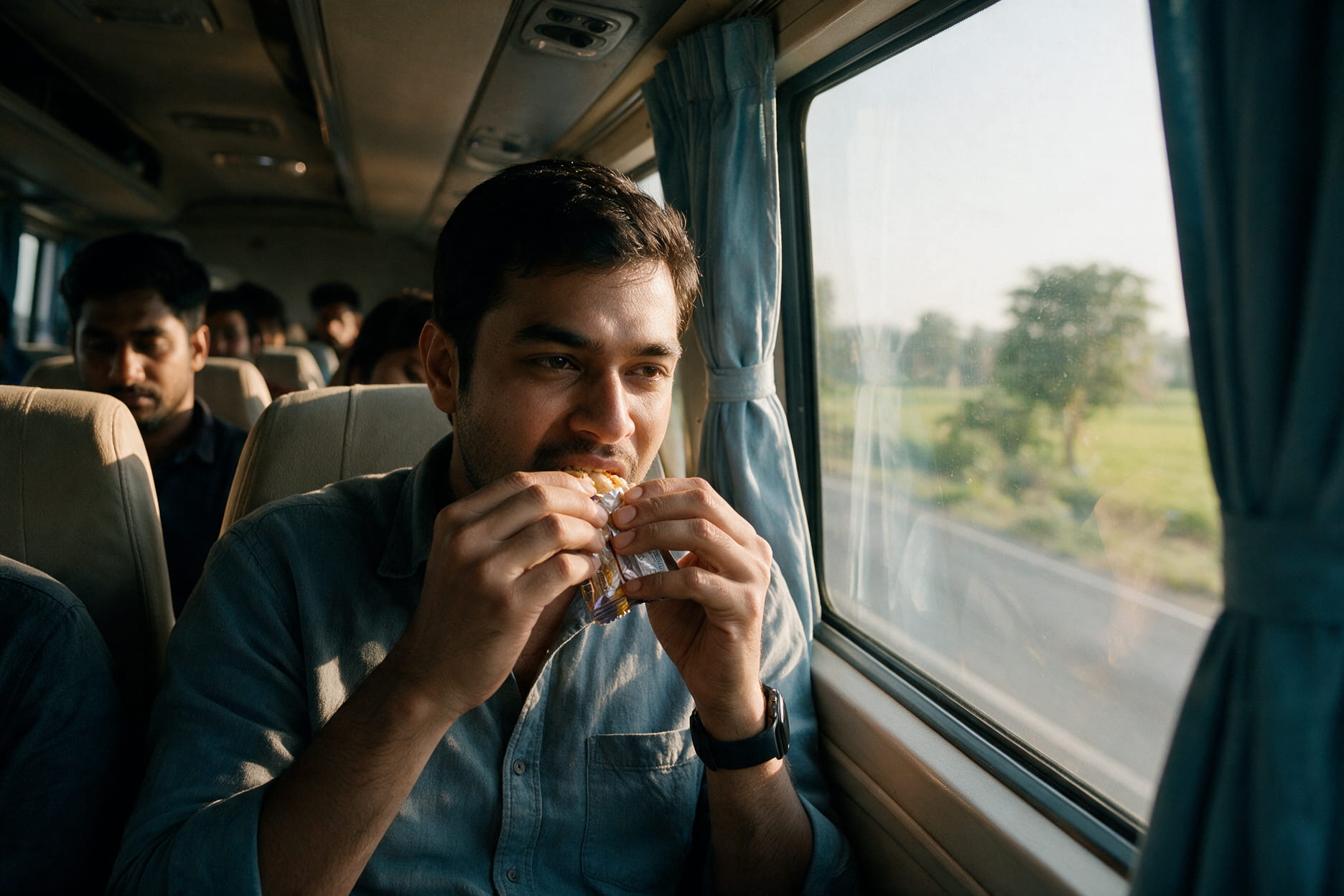
Pondicherry is roughly 150 km from Chennai via the East Coast Road. The bus takes about 3 to 3.5 hours. That travel time puts it closer than most weekend destinations from Chennai, and the ECR route runs along the coast through Mahabalipuram before reaching the outskirts of the union territory.
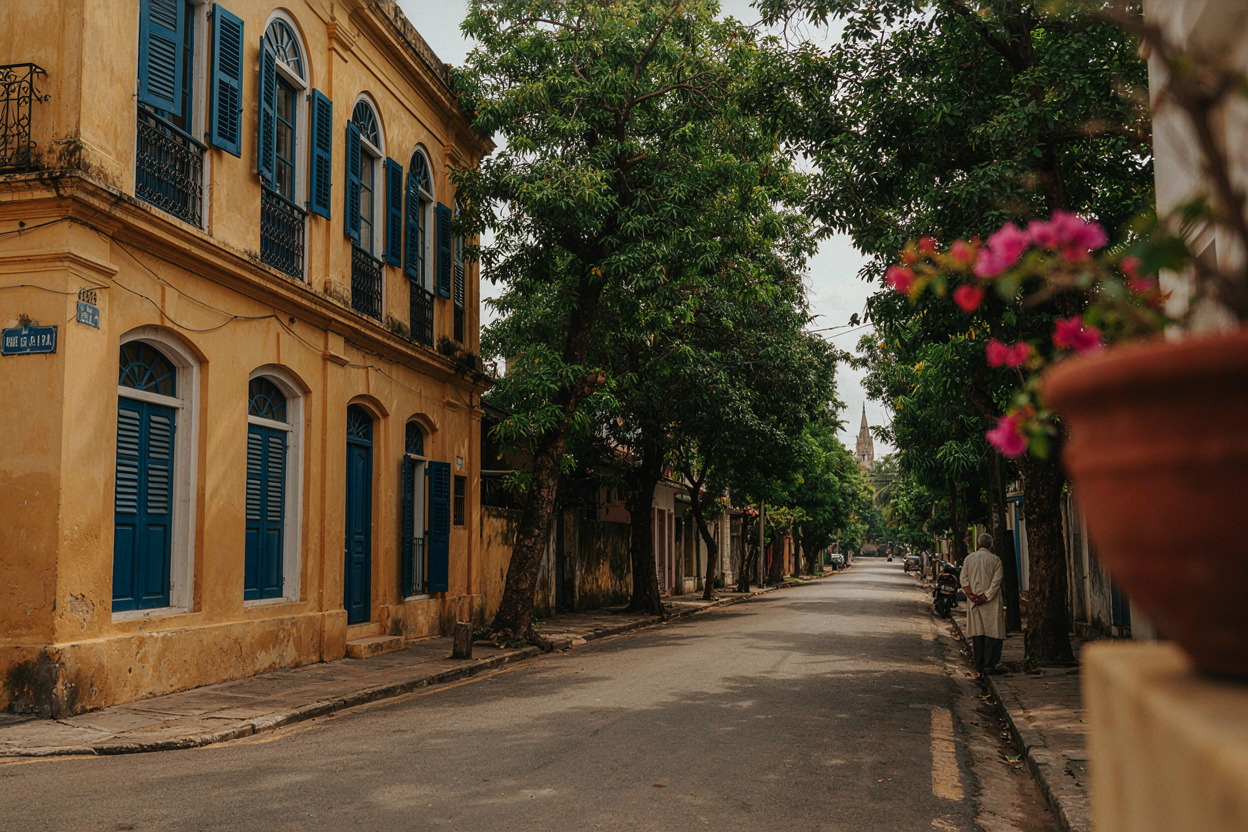
What sits at the other end is not a typical beach town. Pondicherry was a French colonial territory until 1954, and the old French Quarter still operates under its original street names: Rue Suffren, Rue Dumas, Rue de la Marine. The canal that once separated the French Quarter from the Tamil Quarter has been filled and converted into a road, but the two sides of the town still look and feel distinctly different.
Getting From Chennai to Pondicherry by Bus and Cab
This guide covers the two route options, travel time for each, what Pondicherry offers once you arrive, and the best season to go. Current bus schedules for the corridor are available on the Chennai bus booking page.
The Offbeat Explorer service covers this route with a bus to the central location followed by a verified cab transfer, with cab charges included in the fare. Which of the two roads to take depends on the day of the week.
Chennai to Pondicherry: Route Guide, Travel Time and What Pondicherry Offers
The distance from Chennai to Pondicherry is approximately 150 km via the East Coast Road and about 165 km via the Grand Southern Trunk Road, known as NH32. Both routes take between 3 and 4 hours under normal traffic conditions, but they are genuinely different journeys.
ECR Versus NH32: Two Routes, Two Experiences
The East Coast Road runs along the Bay of Bengal coastline. It passes through Thiruvanmiyur, Kovalam, Mahabalipuram and Kalpakkam before reaching Marakkanam and then Pondicherry. The coastal stretch between Mahabalipuram and Pondicherry is the section that makes the ECR worth choosing. Salt pans, fishing villages, casuarina groves and the open sea sit on one side of the road for extended stretches.
The NH32 route goes inland through Tambaram, Chengalpattu and Tindivanam. It is faster in theory because it avoids the weekend traffic that builds on the ECR, particularly on Sunday afternoons when travellers from Chennai return simultaneously. For a Friday evening or Saturday morning departure, the ECR is the better choice. For a Sunday return, consider the NH32 timing.
A practical detail most first-time travellers miss: the Sunday afternoon ECR traffic from Pondicherry towards Chennai is severe. If your return falls on a Sunday, book a departure before noon or after 8 PM to avoid the worst of it.
What Pondicherry Actually Is
Pondicherry was established as a French trading post in 1674, nearly three centuries before it was formally transferred to India in 1954. That timeline left a visible mark. The French Quarter, now called White Town, still has colonial-era buildings painted in ochre, mustard and pale blue, with wooden shutters and bougainvillea climbing the facades.
The town is formally called Puducherry and is a union territory rather than part of Tamil Nadu. This administrative distinction matters practically because liquor prices are lower, import rules differ, and the town has its own policing and governance.
White Town and the Tamil Quarter
White Town sits east of the canal road, between the canal and the sea. The streets are laid out in a grid, the architecture is French colonial, and the cafes serve croissants, baguettes and filter coffee side by side.
The Tamil Quarter sits west of the canal road. The streets here are older, narrower, and lined with traditional Tamil houses featuring carved wooden pillars and tiled courtyards. Temples that predate the French arrival by centuries stand between residential blocks. This side of Pondicherry is less photographed and significantly more lived in.
The two quarters together are what make Pondicherry distinct from every other coastal town in South India. Neither half tells the full story on its own.
Auroville
Auroville is located about 12 km north of Pondicherry town. It was founded in 1968 as an experimental international township dedicated to human unity, based on the vision of Mirra Alfassa, known as The Mother. The Matrimandir, a gold-clad spherical structure at the centre of the township, is its most recognisable feature.
Auroville is not a tourist attraction in the conventional sense. The residents are a working community, and visitor access to the Matrimandir requires prior registration. The surrounding area includes community farms, workshops and forest land that has been regenerated over the decades from a barren plateau.
Beaches
Pondicherry’s beaches run along the eastern edge of the town. The main promenade beach does not have sand; it is a rocky seawall with a paved walkway used for morning and evening walks. The actual swimming and sand beaches are further out.
Paradise Beach, accessible only by boat from Chunnambar Boathouse about 7 km south of town, is a sandbar island with calmer water. Serenity Beach, about 10 km north, is a surf beach used by local surf schools. Auroville Beach sits between Serenity and the township.
Best Season to Visit Pondicherry
October to March is the practical travel window. Temperatures during this period range between 20 and 30 degrees Celsius, humidity drops, and the coastal breeze is comfortable for walking through the old quarters.
A specific caution applies to the northeast monsoon. Tamil Nadu receives its primary rainfall between October and December, and Pondicherry is directly in its path. Heavy rain days in October and November can flood low-lying streets in White Town and make beach access impractical. The safest months within the October to March window are December through February, when the monsoon has cleared and the weather is at its driest and coolest.
March onwards, temperatures climb towards 35 to 40 degrees. April through June is hot enough to make outdoor exploration uncomfortable. July through September is the southwest monsoon period, which affects Pondicherry less than the northeast monsoon but still brings intermittent rain.
Food in Pondicherry
The food is the clearest expression of the town’s dual identity. French bakeries serve pain au chocolat and quiche alongside Tamil banana leaf meals with sambar, rasam and curd rice. Creole cooking, which blends French technique with Tamil ingredients, exists in a handful of restaurants and heritage hotels but is not widely available on the street.
The cafe culture in White Town is genuine rather than tourist-manufactured. Several of the cafes have been operating for decades, and the croissant and filter coffee combination is a daily local habit rather than a visitor novelty.
Accommodation Context
White Town has heritage guesthouses and boutique hotels inside restored French colonial buildings. These properties charge a premium for the location and the architecture. Many include courtyard gardens and complimentary bicycle access, which is the most practical way to move around the old quarters.
The Tamil Quarter and the streets further west have budget guesthouses and mid-range hotels at significantly lower prices. Auroville has a separate ecosystem of guest accommodations run by the community, ranging from simple rooms to forest retreats.
Weekend demand pushes prices up for Friday and Saturday nights. Booking midweek or arriving on Thursday evening gives better availability and lower rates.
Practical Planning for the Trip
The trip works as a weekend from Chennai. A Saturday morning departure reaches Pondicherry before lunch. Two nights give enough time to cover White Town, the Tamil Quarter, one or two beaches, and Auroville as a half-day excursion. The return bus on Sunday evening or Monday morning completes the loop.
Auto-rickshaws within Pondicherry town run on negotiated fares rather than meters. The town is small enough that most attractions within the old quarters are within cycling distance of each other.
Carry cash for smaller establishments. While cards and UPI are accepted in most cafes and hotels in White Town, the Tamil Quarter shops and local eateries often operate on cash.
Planning Around the Weather and Your Travel Timing
The combination of dry weather, comfortable temperatures and manageable crowds makes December through February the strongest window for the trip. November is beautiful when the monsoon cooperates, but it carries genuine rain risk. March is the last comfortable month before the summer heat arrives.
Bastille Day on July 14 is celebrated in Pondicherry with parades and events in the French Quarter, a tradition unique to this town in India. The International Yoga Festival in January draws participants to the Sri Aurobindo Ashram. Both events are worth timing around if either matches your interest.
Common Questions About Travelling from Chennai to Pondicherry
How far is Pondicherry from Chennai?
Pondicherry is approximately 150 km from Chennai via the East Coast Road and about 165 km via the NH32 inland route.
How long does the Chennai to Pondicherry bus journey take?
The bus journey from Chennai to Pondicherry takes approximately 3 to 3.5 hours via the ECR under normal traffic conditions.
Which route is better for Chennai to Pondicherry, ECR or NH32?
The ECR is more scenic and runs along the coast, while the NH32 is faster and avoids the heavy Sunday return traffic.
What is the best time to visit Pondicherry?
December through February offers the driest weather and coolest temperatures, making it the most comfortable window for the trip.
Is Pondicherry expensive compared to other Tamil Nadu destinations?
White Town accommodation carries a premium, but the Tamil Quarter and areas further west offer budget options at standard Tamil Nadu rates.
Can I visit Auroville on a day trip from Pondicherry town?
Auroville is about 12 km from Pondicherry town and works as a half-day visit, though Matrimandir access requires prior registration.
What should I eat in Pondicherry?
French bakeries serve croissants and quiche alongside Tamil banana leaf meals, and the Creole cooking blends French technique with Tamil ingredients.
Is Pondicherry safe for solo travellers and women?
Pondicherry is generally safe, and the compact town layout makes navigation straightforward. Standard travel precautions apply for late evenings.
How does Offbeat Explorer work for the Chennai to Pondicherry route?
The Offbeat Explorer service covers the bus to the central location and a cab transfer to the destination, with cab charges included in the fare.
What is the difference between White Town and the Tamil Quarter?
White Town has French colonial architecture with grid streets and cafes, while the Tamil Quarter has older Tamil homes, temples and a more residential character.
Is there a direct bus from Chennai to Pondicherry?
Multiple daily bus services connect Chennai to Pondicherry, with departures throughout the day and the journey taking about 3 to 3.5 hours.
What beaches are worth visiting in Pondicherry?
Paradise Beach is accessible by boat from Chunnambar and has calm water, while Serenity Beach about 10 km north is a surf beach.
You Might Also Like
- Chennai to Pondicherry Bus: Weekend Trip Guide: A detailed route breakdown, fare information and a practical 2 day itinerary for the bus corridor.
- Is zingbus Safe? Safety Features, Reviews and What to Know: What the CCTV, GPS tracking and verified driver setup looks like across the zingbus network.
- Women Bus Travel Safety in India: Complete Solo Travel Guide: Practical safety guidance for overnight and long distance bus journeys.