For most long-distance journeys in India, the genuine question is not whether to fly or drive. It is whether to take the train or the bus. The AC train and the premium bus exist at different ends of the same price band for many routes, and the decision between them is more nuanced than most comparison articles acknowledge. This guide gives you the honest version: what each option actually delivers, where each one is clearly better, and how to decide based on your specific route, departure point, and travel priorities.
zingbus Maxx vs AC Train: A Complete Overview
This guide compares zingbus Maxx directly against AC train travel in India across the dimensions that matter most for long-distance overnight journeys: speed, comfort, booking access, route coverage, door-to-door convenience, and price. It also covers specific route scenarios where the decision is clear in one direction or the other.
For a complete breakdown of what zingbus Maxx offers onboard, the zingbus Maxx routes list covers every current route where Maxx is available. The comparison below applies across all of them.
zingbus Maxx vs AC Train: The Honest Comparison
Stating the most important point upfront: on most major corridors where both a Maxx bus and an AC train exist, the train is faster. A Rajdhani from Delhi to Lucknow takes around 6 to 6.5 hours; a Maxx bus takes 7 to 8 hours. A Konkan Railway train from Mumbai to Goa takes a comparable 9 to 12 hours. A Vande Bharat from Delhi to Varanasi takes around 8 hours; a Maxx bus takes 12 to 14 hours.
Acknowledging this upfront is necessary for an honest comparison. Speed is not where the bus wins. Everything else is where the decision becomes more complicated.
The Head-to-Head: All Dimensions Compared
| Dimension | zingbus Maxx | AC Train (2-Tier / 3-Tier) |
| Speed | Slower on most corridors | Faster on most corridors |
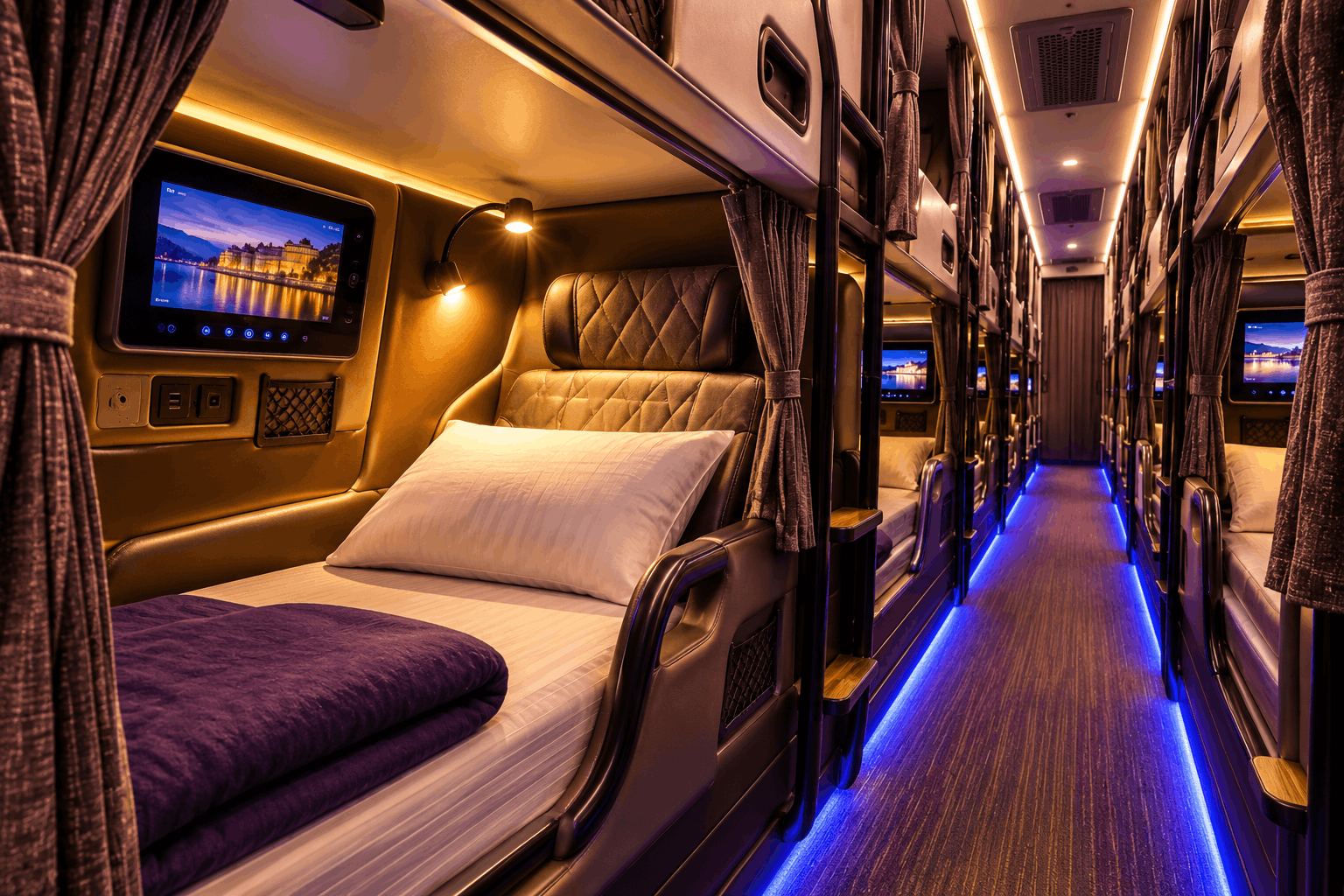
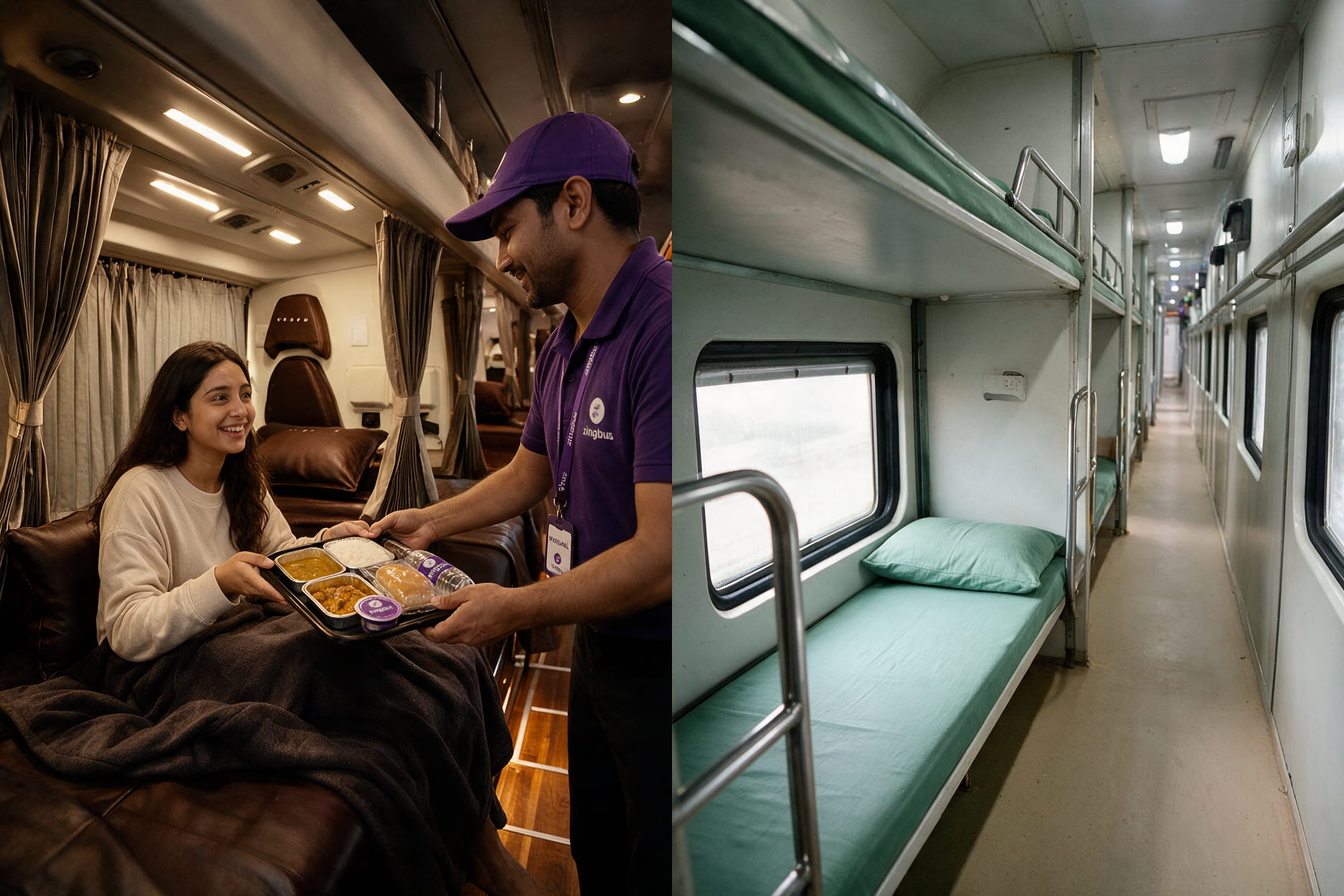
| Berth comfort | 180-degree flat, wider configured | AC 2-Tier flat, AC 3-Tier semi-recline; both functional |
| Booking advance required | No fixed advance requirement | 60-day advance booking opens; tatkal 1 day before |
| Availability on short notice | Generally better availability | Tatkal fares significantly higher; waitlisted tickets common |
| Route flexibility | Covers hill stations and routes with no train | Fixed rail network; remote hill towns not served |
| Boarding location | City-based boarding points, closer to residential areas | Railway station, which may require additional commute |
| Onboard dining | Complimentary refreshments; pre-booked meal option | Pantry car on long routes; quality and availability varies |
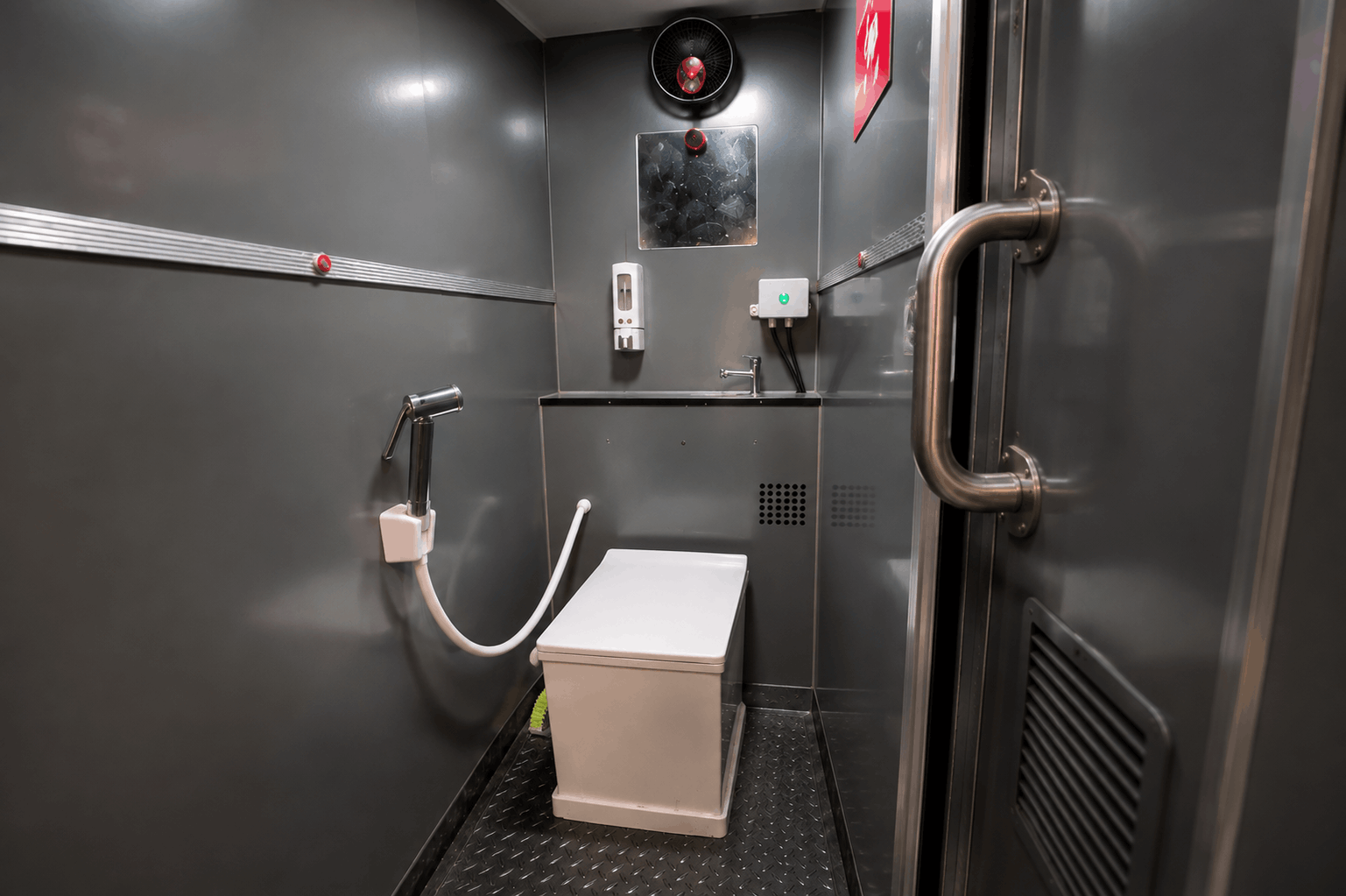
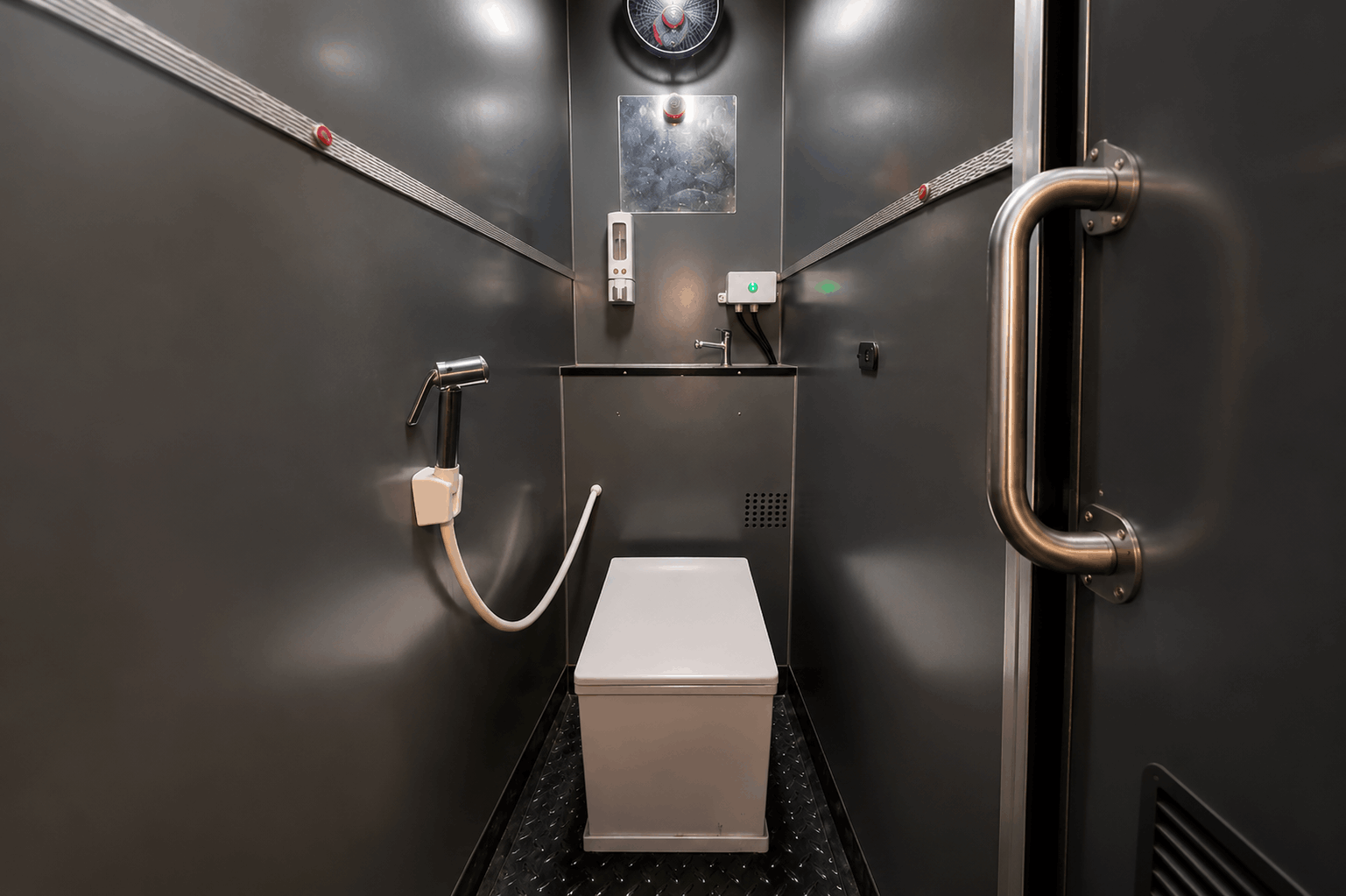
| Onboard washroom | Onboard bio-washroom | Onboard washroom (fixed installation) |
| Entertainment | Personal screens on Maxx | No personal screens; shared AC environment |
| Delay risk | Highway traffic, weather, road conditions | Track scheduling delays; generally more predictable |
| Station commute | None if boarding point is close | Railway station commute both ends |
| Female-friendly features | Female seating arrangement on request | Female-reserved compartment (Ladies’ coach) |
| Price range | Premium; above standard sleeper | AC 3-Tier mid-range; AC 2-Tier and 1st Class premium |
Where the Train Is Clearly the Better Choice
When speed is the primary factor. If you need to reach Delhi from Varanasi in 8 hours, the Vande Bharat is the right answer. If you are connecting Bangalore and Chennai for a same-day work meeting, the morning express train is the practical option. The speed advantage of trains on rail-served corridors is real and significant, and no amount of onboard comfort on a bus changes journey time.
When you have time to plan 60 days ahead. Indian Railways’ advance booking system gives structured access to confirmed seats for passengers who plan far ahead. A confirmed AC 2-Tier berth booked 45 to 60 days in advance on a premium express is a very good overnight travel option.
When you are departing from or arriving at a city where the railway station is your natural transit point. If your home or hotel is near the station and your destination is also near the station at the other end, the station commute cost of a train is low and the advantage goes further in the train’s direction.
Where zingbus Maxx Is Clearly the Better Choice
When your destination has no direct train. This is the most decisive scenario. Delhi to Manali has no direct train: the closest rail connection goes to Chandigarh or Ambala, from which Manali requires another 5 to 6 hours by road. The Delhi to Manali Maxx bus departs from the city and arrives at Manali directly. Delhi to Kasol, Delhi to Dharamshala by direct bus, Delhi to Dalhousie: these routes either have no train equivalent or require combinations that add hours to the journey.
The same applies across many South India routes: Hyderabad to Goa, Bangalore to Goa, and several cross-state corridors where the rail network requires multi-leg connections that a direct bus route eliminates entirely.
When you cannot get a confirmed train ticket. Train berths on popular routes during peak season, festival weekends, and long weekends sell out 60 days in advance. Tatkal tickets are available from one day before departure but at significantly higher fares with no guarantee of confirmed berth status on heavily booked trains. A zingbus Maxx booking on the same route, made 3 to 7 days before travel, is typically available with a confirmed berth at a predictable price.
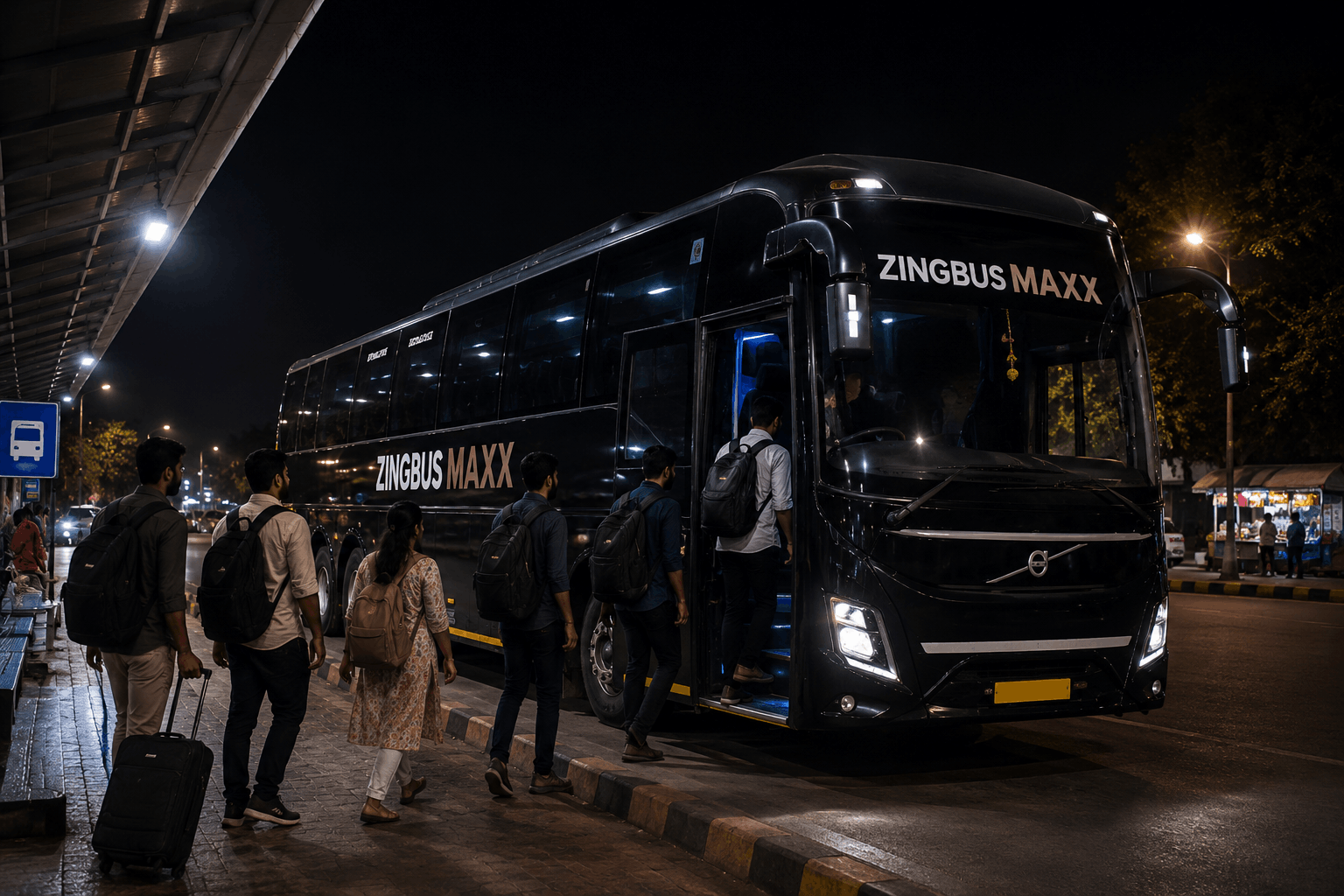
When the boarding point matters. Railway stations in major Indian cities are not always conveniently located relative to residential or commercial areas. A zingbus boarding point in Kashmere Gate Delhi, in Pune’s central areas, or in Bangalore’s key localities can eliminate the station commute entirely. For passengers who live 40 minutes from the railway station, the bus boarding point that is 10 minutes from home changes the total journey calculation meaningfully.
When the Mumbai to Goa corridor is your route. The Mumbai to Goa comparison is the most balanced of any on this list. The Konkan Railway is one of India’s most scenic train routes and the journey time is comparable to the bus. But confirmed train berths on the Mandovi, Vasco Express, and Konkan Kanya are in consistent high demand, and booking on the Mumbai to Goa Maxx bus on a week’s notice is typically easier than getting a confirmed AC 2-Tier berth by the same method. On this specific corridor, the choice genuinely comes down to availability more than experience preference.
The Onboard Comfort Comparison: Closer Than It Looks
AC train travel in India is comfortable. The AC 2-Tier berth is flat, well-separated from the AC 3-Tier environment, and a legitimate overnight travel option. The AC 3-Tier berth is semi-reclinable in the seated position and flat for sleeping.
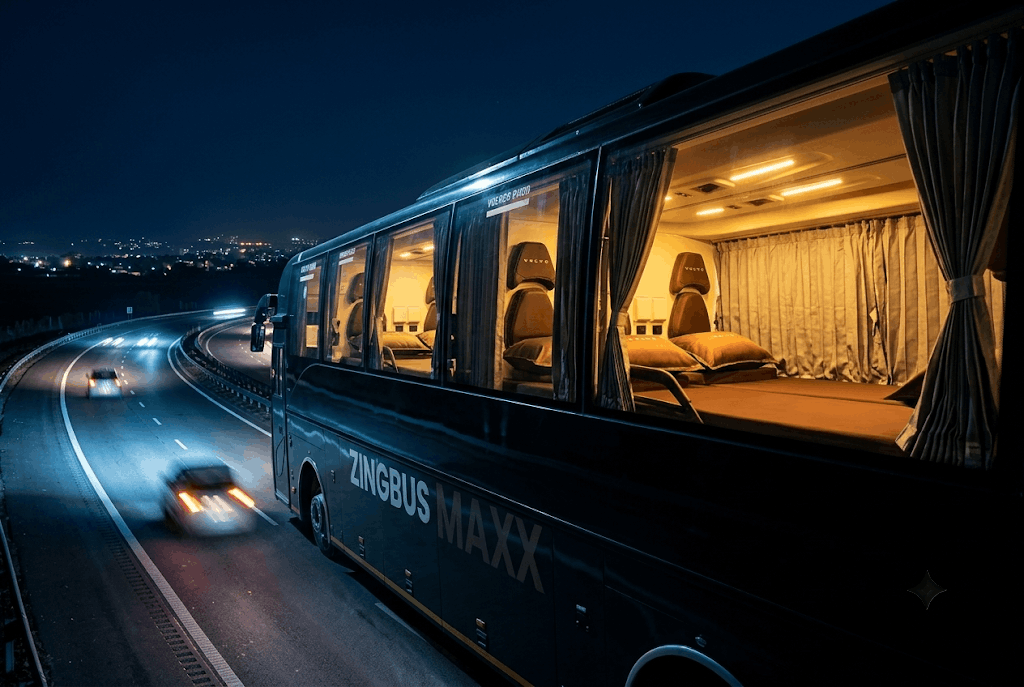
What Maxx adds over AC 3-Tier: personal entertainment screens, no shared open bay (the train’s open bay means the berth adjacent to the corridor has less privacy), complimentary dining rather than pantry car ordering, and a Gold Star Crew managing the cabin rather than a common general coach attendant covering multiple coaches.
What the train adds over Maxx: the smoothness of rail over road on most corridors (trains on dedicated track are less subject to potholes and ghat road vibration), and on some long train routes, a dining car with table service.
On long mountain routes specifically, the bus chassis and road surface become relevant. The Volvo B8R 9600 on a Himalayan ghat road handles significantly better than older rolling stock, but a train on level track is inherently smoother. On plains routes (Delhi-Lucknow, Delhi-Varanasi), the train ride is noticeably less vibration-prone.
The Price Comparison: Route-Dependent
Pricing varies significantly by route, day, advance booking, and class. Some general observations:
AC 3-Tier on major express trains typically falls in a range that is lower than Maxx fare for the same journey. AC 2-Tier approaches or sometimes exceeds Maxx pricing on high-demand routes. AC 1st Class generally exceeds Maxx pricing.
Tatkal fares on trains during peak season can bring the per-journey cost close to or above Maxx pricing while adding the uncertainty of a waitlisted ticket.
The most accurate comparison is always route-specific and date-specific. Check both platforms at the time of booking.
How to Decide: A Practical Framework
Choose the train when:
- The route is fully served by train with direct service
- You can book 30 to 60 days in advance and confirm a berth
- Speed is the primary consideration
- The railway station is a convenient transit point at both ends
Choose zingbus Maxx when:
- Your destination has no direct train or requires a multi-leg rail journey
- You are booking 1 to 10 days before travel and cannot get a confirmed train berth
- The boarding point proximity is significantly more convenient than the railway station
- The specific route is best served by bus (Himalayan destinations, cross-Ghat routes)
- You want the specific onboard experience (personal entertainment, complimentary dining, female-friendly seating)
For many travellers, the comparison is resolved not by preference but by availability: when the train is confirmed and affordable, take it; when it is not, Maxx is the practical alternative that does not require settling for a lower-quality standard sleeper.
You Might Also Like
- zingbus Maxx Routes List: Where to Book the 7-Star Experience: The complete route list showing where Maxx is available, including the hill station corridors with no train equivalent.
- zingbus Maxx vs Regular Sleeper: Is the Upgrade Worth It?: The within-bus comparison of Maxx against standard AC sleeper, for when the bus decision is already made and the upgrade question remains.
- Best Luxury Bus Options in India 2026: The broader guide to the four tiers of luxury bus travel in India, providing context for where Maxx sits in the premium travel landscape.
Frequently Asked Questions
Is the bus or train better for overnight travel in India?
Trains are generally faster on rail-served corridors; buses including zingbus Maxx are better when the destination has no direct train, when confirmed train berths are unavailable on short notice, or when boarding point convenience is a significant factor.
How does zingbus Maxx compare to an AC train berth in terms of comfort?
AC 2-Tier train berths and Maxx flat berths are comparable in sleeping comfort; Maxx adds personal entertainment screens, complimentary onboard dining, and a dedicated crew, while trains offer smoother rolling stock on level track and dining car access on premium express services.
When does taking a bus make more sense than a train in India?
A bus is the clear choice for routes with no direct train service, such as Delhi to Manali, Delhi to Kasol, and many Himalayan hill station routes; it is also practical when confirmed train berths are unavailable on short notice or when tatkal fares push the train cost above the bus fare.
Is the Mumbai to Goa bus or train better?
The Mumbai to Goa decision comes down to availability: the Konkan Railway is scenic and the journey time is comparable, but confirmed AC berths on this route are in high demand; if a confirmed train berth is available at a reasonable price, take it; if not, zingbus Maxx on this corridor is a genuine and comfortable alternative.
Is zingbus Maxx cheaper than an AC train?
On most routes, AC 3-Tier train fares at base price are lower than Maxx; AC 2-Tier approaches or overlaps with Maxx pricing; tatkal fares during peak season can exceed Maxx pricing; the most accurate comparison requires checking both platforms for the specific route and date.
Does zingbus cover routes that trains do not?
Yes, many Himalayan and hill station destinations including Manali, Kasol, Dharamshala, and Dalhousie are not served by direct trains from Delhi; zingbus operates direct overnight Maxx services on these corridors, making the bus the only practical door-to-destination option.