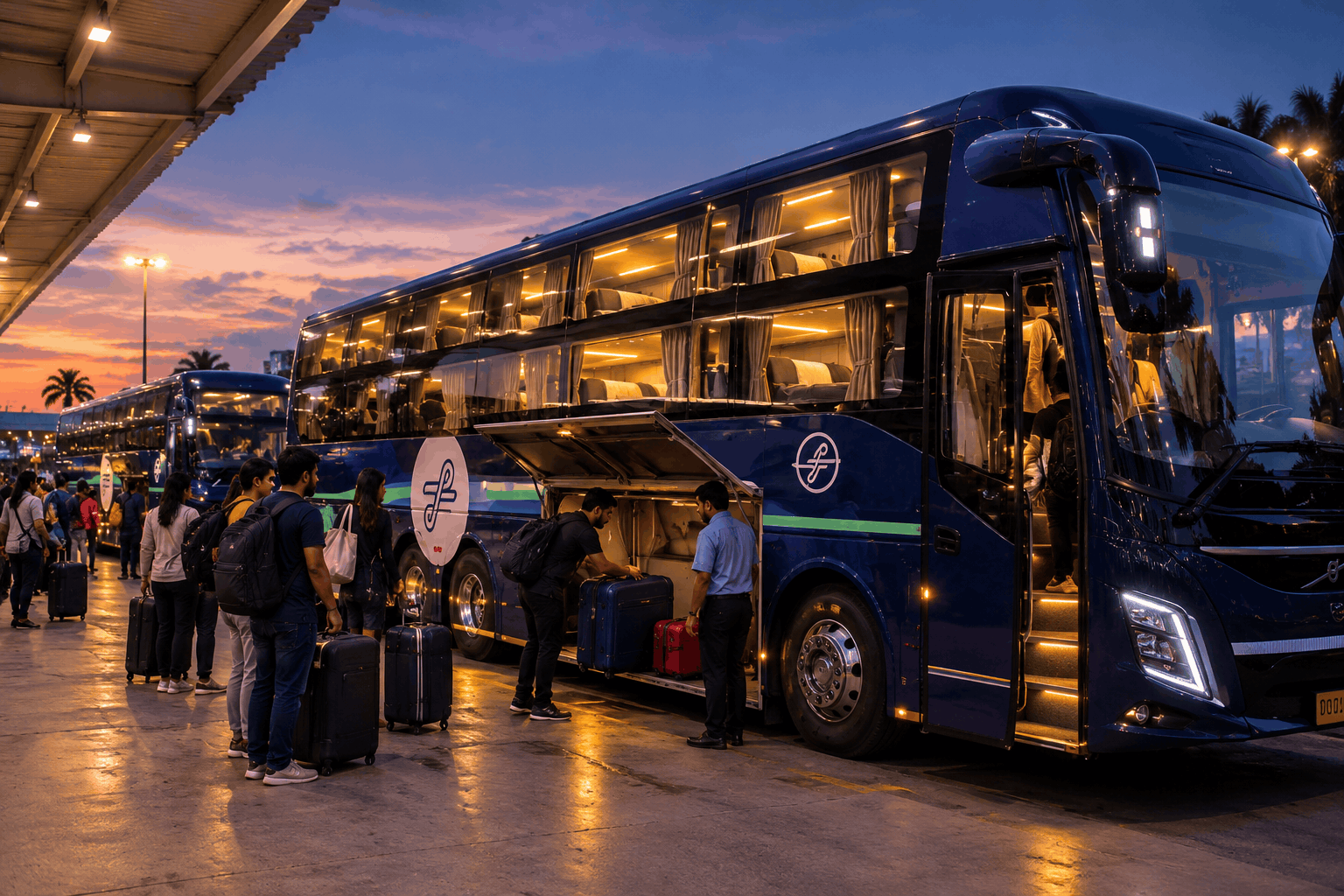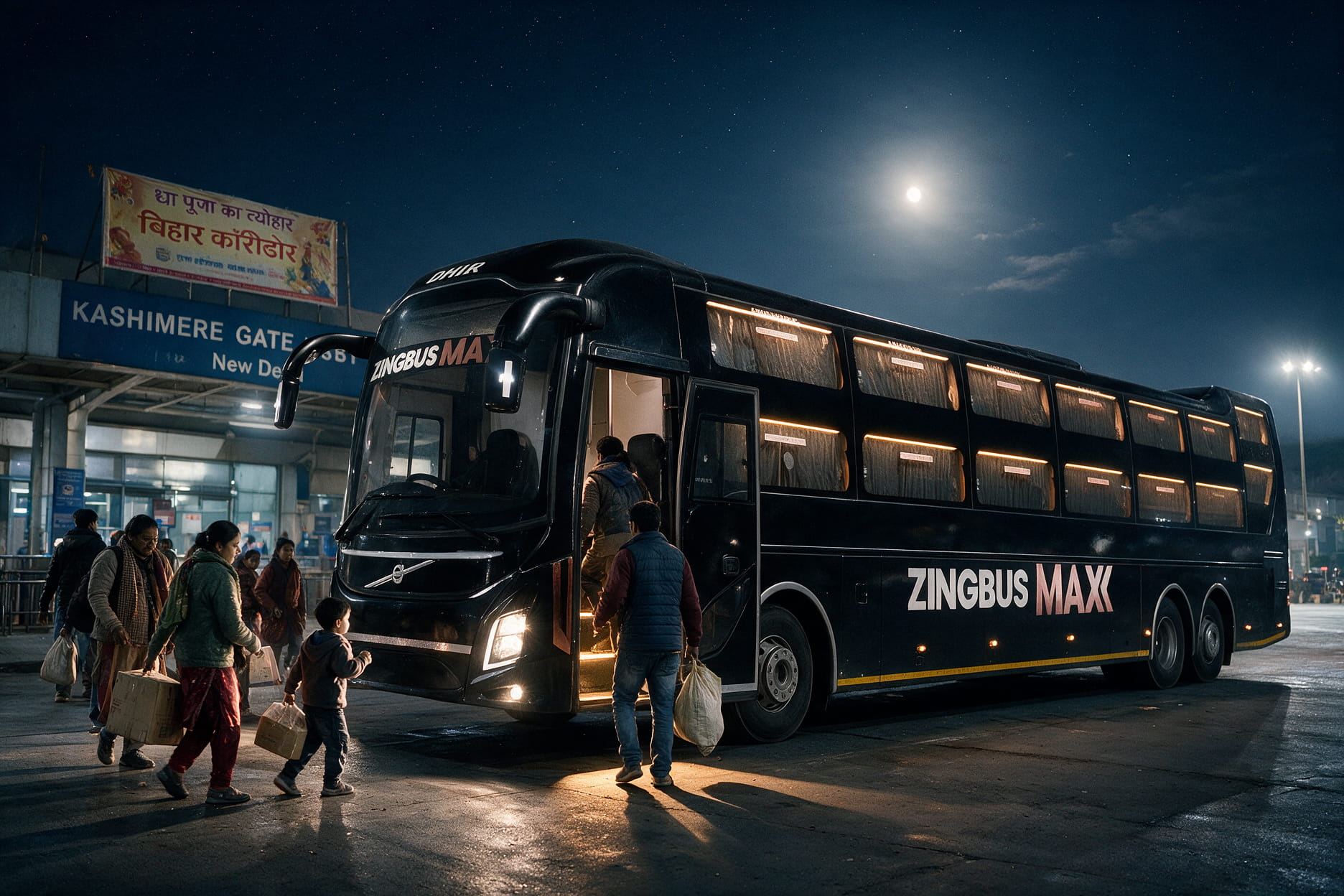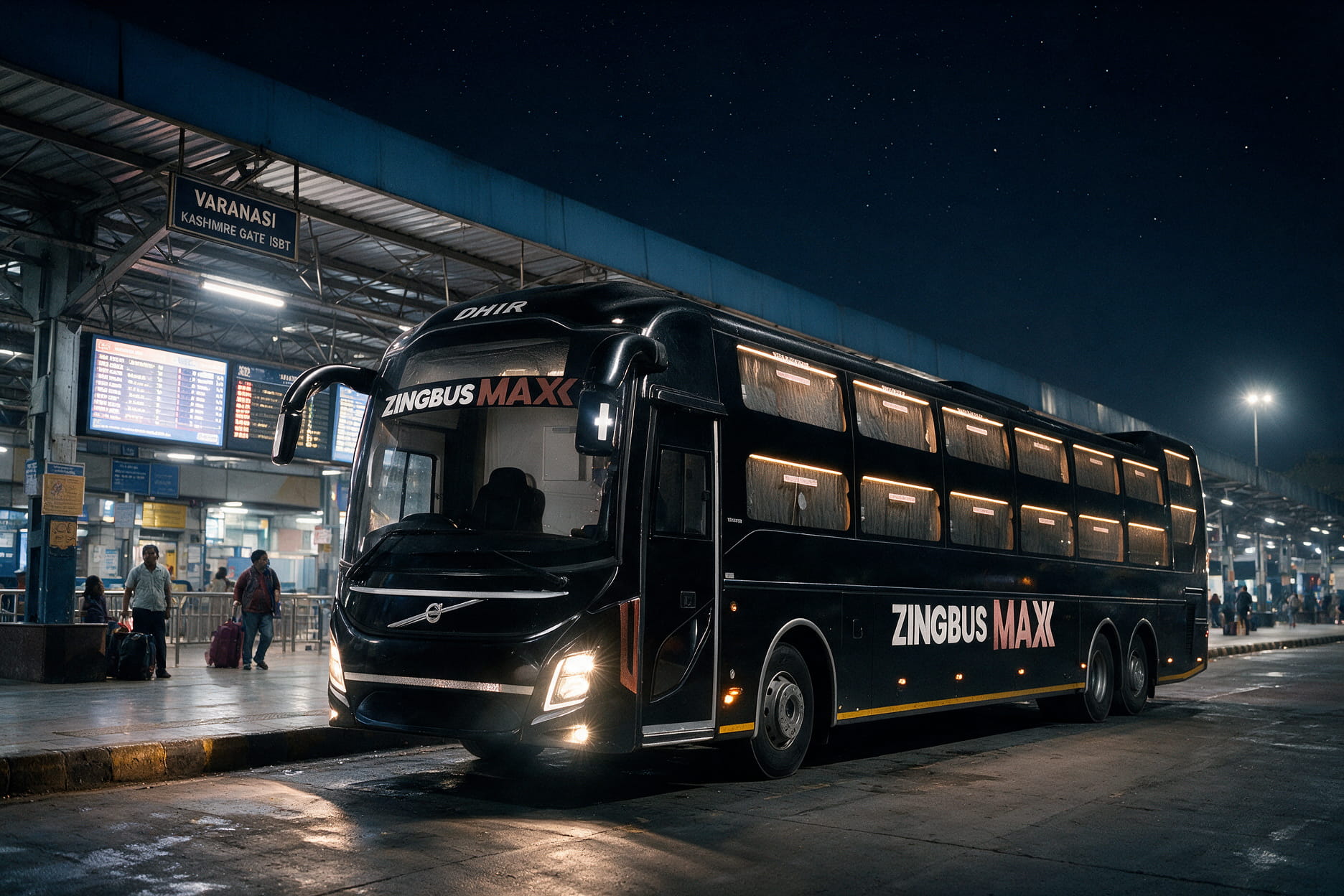
Luxury bus travel in India has changed more in the last five years than in the previous three decades. What used to mean a slightly cleaner AC seater now means individual entertainment screens, airline-style flat berths, onboard dining, and crew service that would not be out of place on a regional flight. The category of best luxury bus India 2026 travellers are searching for covers a wide range: from premium Volvo sleepers to seven-star overnight coaches that compete with domestic air travel on comfort, if not speed.
Best Luxury Bus India 2026: A Complete Overview
This guide covers the four main tiers of bus travel in India, the specific features that define genuine luxury on the road, which routes see the strongest luxury bus coverage, and how to evaluate your options when planning a long-distance journey. It also covers what zingbus Maxx offers as a current reference standard for premium intercity travel.
For current schedules on the best luxury bus routes in India, including Delhi to Manali and other premium corridors, check the zingbus platform directly.
Best Luxury Bus India 2026: Complete Feature and Tier Guide
The starting point for understanding luxury bus travel in India is recognising that the word “luxury” is applied to a very wide range of services, from an ordinary AC coach with a Volvo badge to a fully outfitted premium sleeper with personal dining and entertainment. Understanding the tiers and what each actually delivers makes it much easier to select the right option for a specific journey.
What Makes a Bus Truly “Luxury” in India?
The definition of a luxury bus in India is not fixed, and operators use the term across very different service levels. A meaningful definition requires looking at specific features rather than accepting category labels at face value.
Genuine luxury in bus travel in India is characterized by the following:
- Chassis quality: The vehicle’s build and suspension determine ride quality, particularly on mountain and ghat roads. Premium international-grade chassis such as the Volvo B8R handle Indian terrain significantly better than locally assembled buses. The difference is most apparent on winding roads and on overnight journeys where road vibration affects sleep quality.
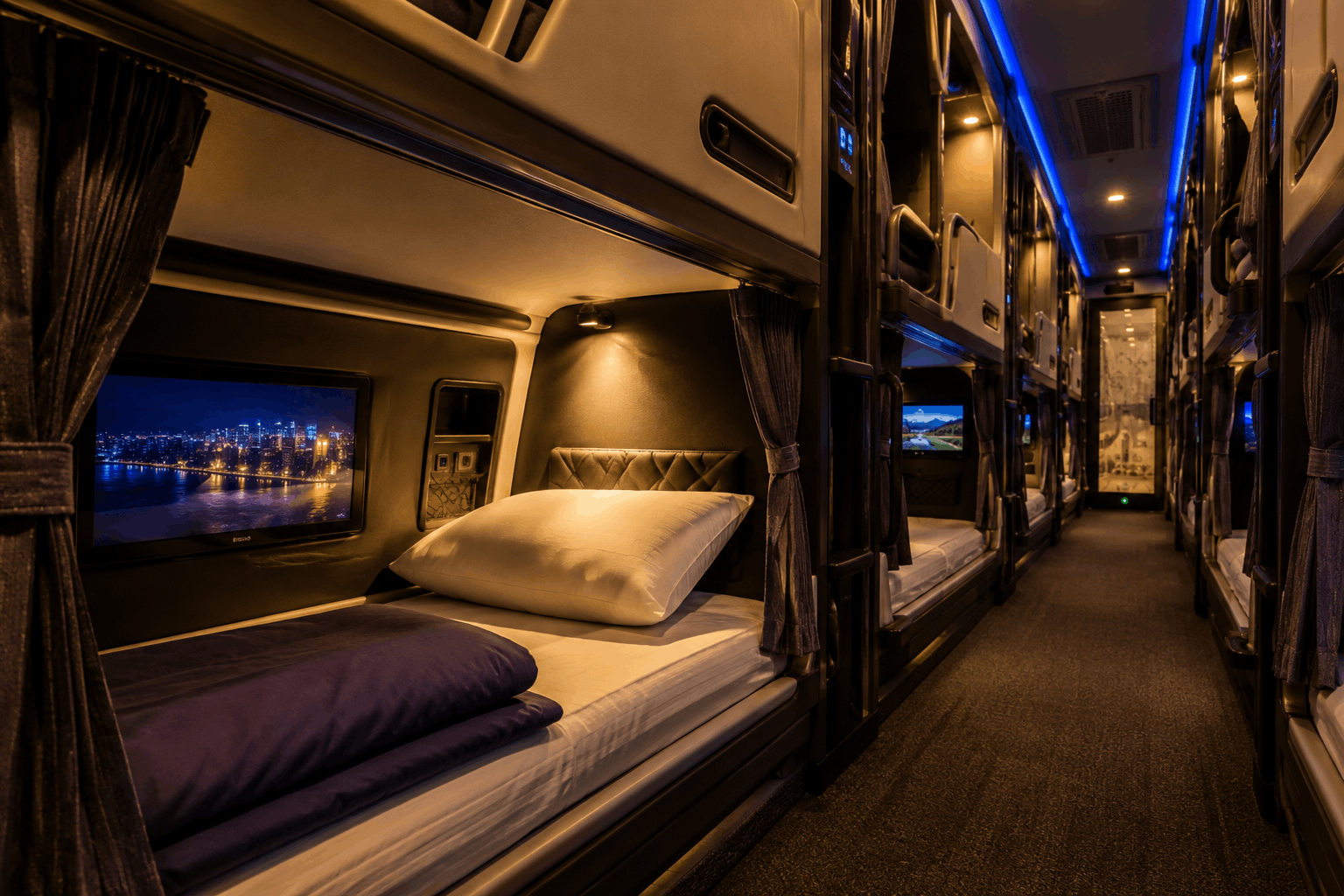
- Berth or seat configuration: True luxury in a sleeper bus means 180-degree flat recline, not a 150 or 160-degree lean. The difference between sleeping and resting-while-uncomfortable is a meaningful one across a 10-hour overnight journey.
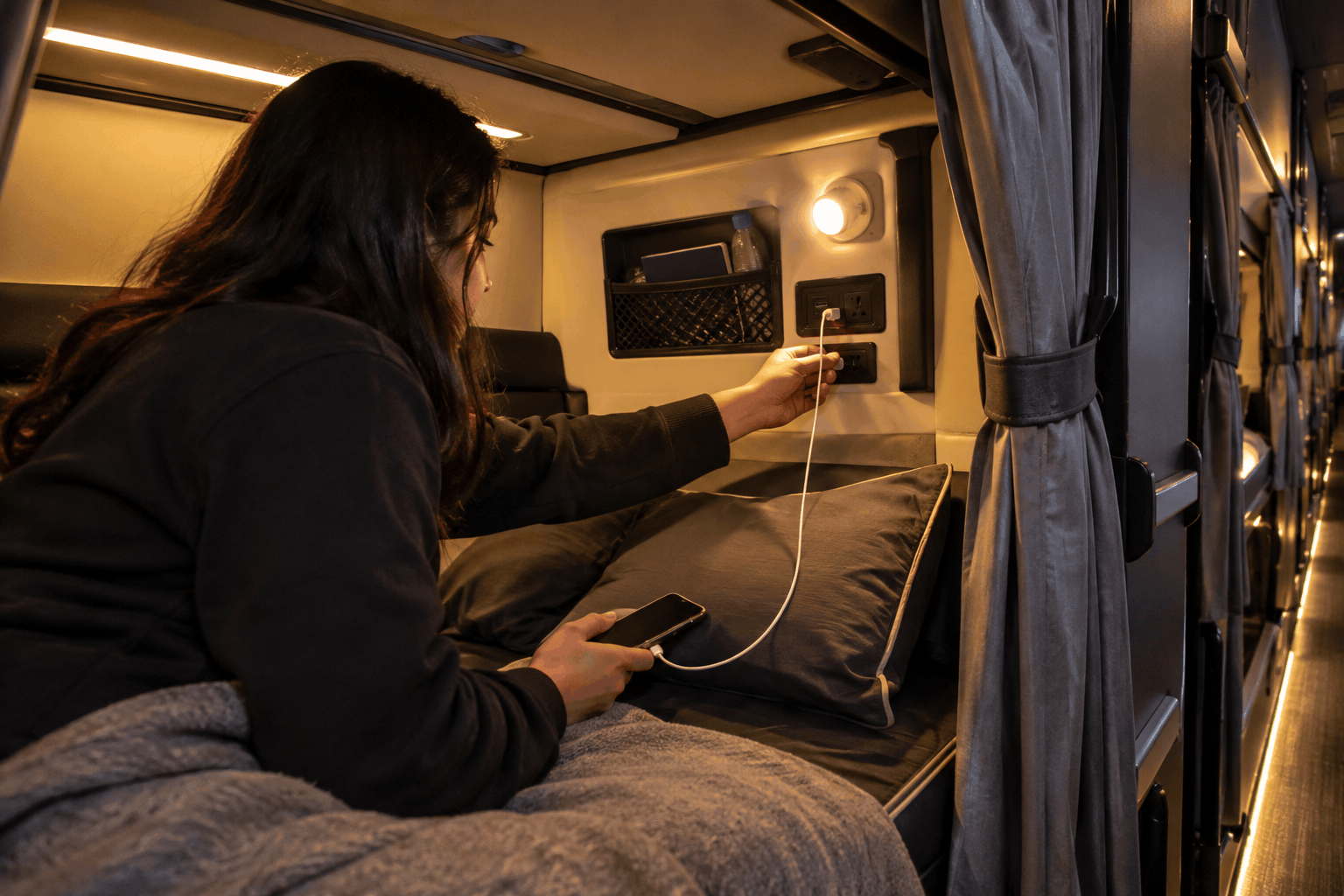
- Individual amenities: Personal reading lights, individual charging ports (both USB-A and Type-C), and personal entertainment screens at every berth distinguish genuine luxury from upgraded standard service.
- Onboard crew: A trained crew member separate from the driver and conductor who manages passenger requests, serves refreshments, and handles the onboard experience. A driver and conductor alone do not constitute a luxury crew.
- Dining: Complimentary food and beverages served onboard, rather than stops at highway dhabas, is a luxury differentiator. The ability to sleep through without mandatory meal-stop wake-ups is part of what makes a premium overnight journey better.
- Rest stop quality: Pre-selected, verified rest stops with clean facilities and reliable food. Stops at random highway eateries are not a luxury offering.
- Safety systems: Live GPS tracking, advanced safety monitoring, and female-friendly seating arrangements are increasingly expected features of genuine luxury bus services.
The Four Tiers of Bus Travel in India
Understanding the tiers helps travellers set accurate expectations and make an informed choice for their specific journey.
Tier 1: Economy and State Transport Buses
Standard non-AC seater or basic AC seater services. These are the backbone of India’s bus network: reliable, affordable, and designed for practical travel rather than comfort. They serve an enormous number of daily passengers across routes that premium services often do not cover. Relevant for budget travel, short distances, and routes where premium services are not available.
Typical features: Non-AC or basic AC, seater configuration, no entertainment, driver stops for breaks.
Tier 2: Standard AC Sleeper
The mainstream overnight bus category in India. This tier has grown substantially in quality over the last decade and covers most major intercity corridors. A good standard AC sleeper will provide reclining berths of 150 to 160 degrees, shared AC, basic charging, and functional travel across overnight routes.
Typical features: AC sleeper berths at 150 to 160 degrees, basic charging, shared entertainment or none, highway dhaba stops.
Best for: Journeys under 8 hours, budget-sensitive overnight travel, routes where Tier 3 or 4 is unavailable.
Tier 3: Premium Volvo and Multi-Axle Sleeper
The step above standard AC sleeper. Premium Volvo and multi-axle sleeper buses use better chassis, provide more consistent AC quality, and often have improved berth configuration. The suspension difference on long mountain routes and the better climate control distinguish this tier from standard AC sleeper for travellers who want a more consistent experience without the full top-tier pricing.
Typical features: Volvo or comparable chassis, improved suspension, wider berths than Tier 2, sometimes individual charging, more reliable AC quality.
Best for: Journeys of 6 to 10 hours, travellers prioritising ride quality over full luxury amenities, routes where Tier 4 is not available.
Tier 4: Ultra-Luxury and Seven-Star Sleeper
This is the category that best luxury bus India 2026 searches are primarily looking for. These services operate premium international-grade chassis, fully flat 180-degree berths, personal entertainment systems, trained onboard crew, complimentary dining, and pre-selected rest stops. The total experience is closer to a domestic flight than to a standard sleeper bus.
Typical features: Premium chassis (Volvo B8R 9600 or equivalent), 180-degree flat berths, personal screens and entertainment, onboard dining and crew service, vetted rest stops, real-time GPS tracking, individual climate and lighting control, female-friendly seating.
Best for: Overnight journeys of 8 hours or more, mountain routes where suspension quality matters most, business travel, solo female travellers, anyone for whom arrival condition matters.
Key Features to Evaluate When Choosing a Luxury Bus
Knowing which features to look for prevents paying a premium for what is essentially a standard AC sleeper with better marketing. Here is what to evaluate specifically.
Chassis and Suspension
The chassis determines how the bus handles road quality, bends, and elevation change. For mountain routes like Delhi to Manali or Pune to Mahabaleshwar, a premium suspension system makes the difference between a smooth overnight journey and one where road vibration disrupts sleep repeatedly. Ask or check which specific chassis the operator uses. A named premium chassis is a verifiable claim; generic references to “luxury” are not.
Berth Recline Angle
Confirm whether the berths recline to 180 degrees (fully flat) or to a lesser angle. A 160-degree recline is significantly more tiring over 8 to 10 hours than a flat bed. Most platforms list this in the bus details, and it is worth checking rather than assuming.
Individual Amenities Per Berth
The distinction between shared and personal amenities matters. A shared charging point at the end of a row is different from a personal USB and Type-C port at every berth. A shared front entertainment screen is different from an individual screen per berth. Genuine luxury tiers provide the personal configuration.
Crew and Service Structure
A trained crew member onboard is a meaningful service indicator. On a standard bus, the driver and conductor have full responsibility for all passengers. On a premium service with a crew member, there is a dedicated person available for requests, serving food, managing the cabin environment, and responding to passenger needs. The difference becomes most apparent when something goes wrong or when a passenger has specific requirements.
Rest Stop Pre-Selection
Find out whether the rest stops are pre-selected by the operator or chosen by the driver. Pre-selected stops with verified facilities are a luxury service feature. The ability to predict when and where the bus will stop, and to trust the facility quality, is part of the overall service standard.
Which Routes Offer the Best Luxury Bus Coverage in India?
Luxury bus services are most developed on high-volume intercity corridors where the passenger base justifies the investment in premium fleet. The routes below see the strongest luxury bus coverage in India.
North India corridors:
- Delhi to Manali and Return: One of the most premium-fleet-served routes in the country, given the journey length and terrain
- Delhi to Shimla, Mussoorie, and other Himachal/Uttarakhand hill stations
- Delhi to Chandigarh, Amritsar, and Punjab corridors
West India corridors:
- Mumbai to Goa: The highest demand route for premium overnight services in western India
- Mumbai to Pune and Return: premium day services for business travellers
- Mumbai to Nashik and Aurangabad
South India corridors:
- Bangalore to Chennai, Hyderabad, and Kochi
- Hyderabad to Goa
- Chennai to Coimbatore and Madurai
zingbus Maxx: The Current Reference Standard for Tier 4 Bus Travel
Among current luxury bus offerings in India, zingbus Maxx operates as a clear Tier 4 service on its covered routes. The Volvo B8R 9600 chassis, the 180-degree flat berths, the Gold Star Crew service, the complimentary onboard dining, the personal entertainment screens, and the vetted rest stops collectively define what the best luxury bus India 2026 travellers are looking for.
The service currently covers routes including Delhi to Manali, Mumbai to Goa, and several other major corridors, with new routes being added based on demand. A 90.5% CSAT score across Maxx services and a 40% women repeat rate are the most direct evidence available of actual performance.
For Mumbai to Goa and other Maxx-served routes, current schedules and fares are available on the zingbus platform.
Is Luxury Bus Travel Worth the Premium?
The answer depends on the journey length and the specific features that matter to you.
For journeys under 6 hours, a premium Volvo sleeper (Tier 3) is usually sufficient. The features that define Tier 4 (dining, full crew, flat berth) are less relevant when you are not sleeping on the bus for most of the journey.
For overnight journeys of 8 hours or more, the quality of sleep directly affects how you feel on arrival. A flat berth, a consistent climate, complimentary food that removes forced dhaba stops, and a crew member who manages the cabin: these features compound into a meaningfully better overnight experience. For mountain routes, the suspension difference adds another layer of practical value.
The luxury bus category in India in 2026 is not what it was in 2018. Tier 4 services have raised the standard to a point where the premium fare buys a genuinely different product, not just a better version of the same experience.
How to Choose the Right Luxury Bus for Your Journey
A practical selection approach combines the route length, your specific priorities, and what is actually available on the corridor you are travelling.
For journeys under 6 hours: Tier 3 premium Volvo sleeper or a good Tier 2 AC sleeper is sufficient.
For overnight journeys of 8 to 14 hours: Evaluate Tier 4 options first. If not available on your route, choose the best available Tier 3 service.
For mountain routes: Prioritise chassis and suspension information above other features.
For business travel: Prioritise charging access, onboard quiet environment, and crew availability.
For solo female travel: Look for operators who offer female-friendly seating arrangements as a confirmed service feature rather than a stated policy.
Check reviews from verified travellers on the specific route rather than overall operator ratings, since service quality can vary significantly by corridor even within the same operator’s fleet.
You Might Also Like
- Top zingbus Maxx Routes for Luxury Intercity Travel: The most popular zingbus Maxx corridors, with route-specific guidance on when Maxx delivers the most value.
- Best Overnight Bus Routes in India 2026: A comprehensive guide to overnight bus corridors where luxury bus services are most available.
Frequently Asked Questions
These are the most common questions travellers ask when researching the best luxury bus options in India.
What is the best luxury bus in India in 2026?
The best luxury bus options in India in 2026 are Tier 4 services that operate premium international-grade chassis with 180-degree flat berths, personal entertainment, onboard crew and dining, and vetted rest stops; zingbus Maxx is the current reference standard on its covered routes.
What features should I look for in a luxury bus in India?
Look for a premium chassis with verified suspension quality, 180-degree flat berth recline, individual charging ports at every seat, personal entertainment screens, a trained onboard crew separate from the driver, complimentary dining, and pre-selected rest stops.
Which routes in India have the best luxury bus services?
Delhi to Manali, Mumbai to Goa, Bangalore to Chennai, Mumbai to Pune, and Hyderabad to Goa are among the routes with the strongest luxury bus coverage in India in 2026.
Is a Volvo bus always a luxury bus in India?
Not necessarily. The Volvo brand is associated with premium chassis quality, but the onboard service, berth configuration, crew, and amenities vary significantly by operator. A Volvo chassis in a Tier 2 configuration offers better ride quality but not the full luxury service of a Tier 4 offering.
What is the difference between a premium sleeper and a luxury bus in India?
A premium sleeper typically offers a better chassis and berths than a standard AC sleeper but may not include individual entertainment, onboard crew, or dining; a true luxury or Tier 4 bus includes all of these as standard features.
Is luxury bus travel in India cheaper than flying?
Yes, luxury bus travel in India is significantly cheaper than flying, particularly for routes under 700 km, while providing a comparable or superior sleep experience for overnight journeys when the travel time and the time saved by sleeping on board are factored in.