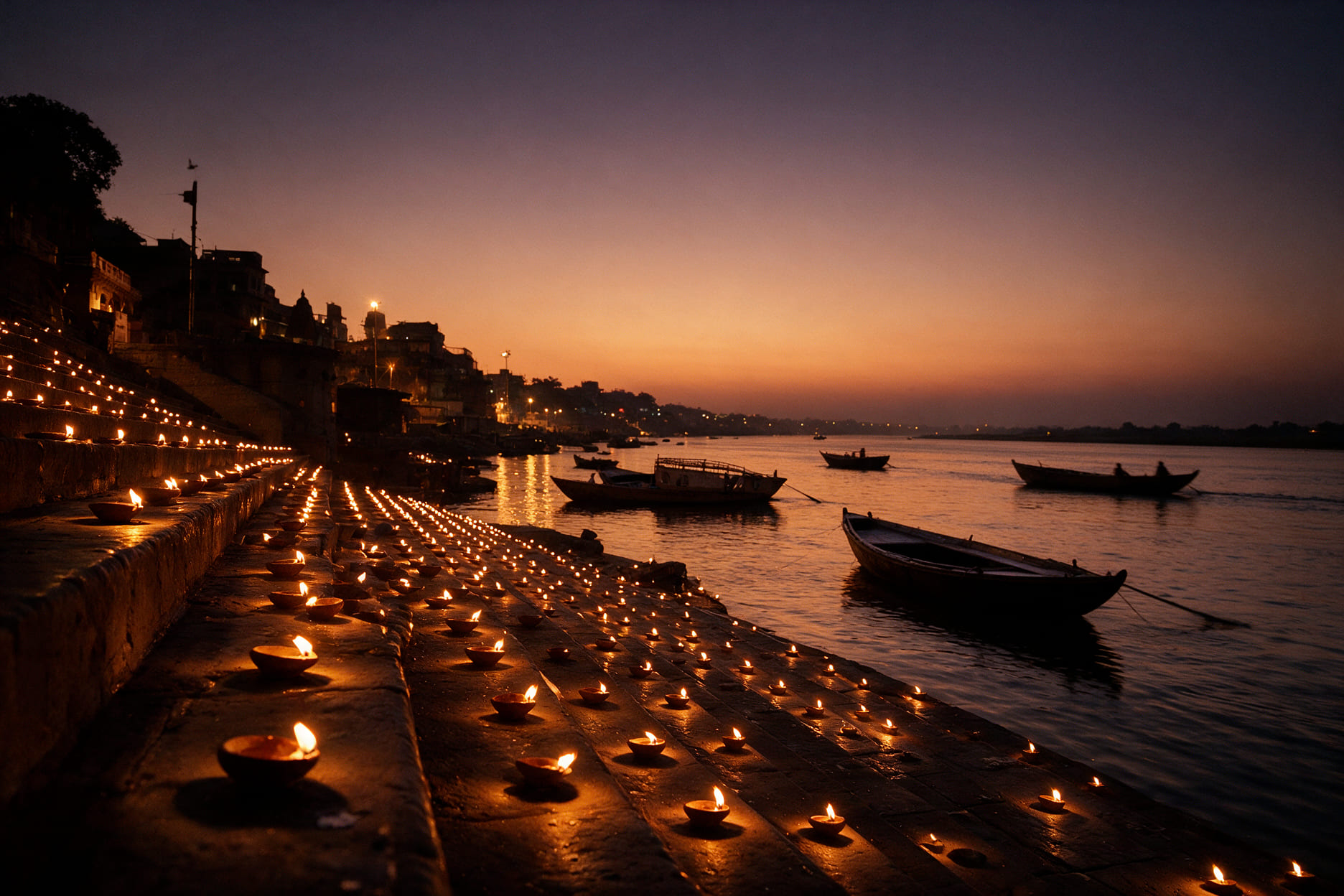
Varanasi is lit twice in November 2026, and the two occasions are not the same event. Diwali on 8 November belongs to the lanes, rooftops and homes of the old city. Dev Deepawali on 24 November belongs to the river, when the stone steps of the ghats carry lakhs of earthen lamps. Choosing which night to be in the city changes what you should book and where you should stand.
What the November Lamp Season Actually Covers
This guide separates the two nights, gives the confirmed dates, and works through the ghats worth choosing, the sites that suit daylight hours, and the crowd conditions that slow every plan down along the riverfront.
It also covers the practical side: which travel window each night creates, how long the journey takes from the main feeder cities, and which drop points leave you closest to the ghats. Current route options are listed on the Varanasi bus booking page.
Planning Varanasi Diwali Dev Deepawali 2026: Dates, Ghats and Timing
The essential fact behind every Varanasi Diwali Dev Deepawali 2026 plan is the sixteen day gap between the two. Diwali falls on Kartik Amavasya and Dev Deepawali on Kartik Purnima, the full moon that closes the month, so they sit at opposite ends of the same lunar fortnight.
The Confirmed Dates and the Holiday Window Around Them
Both nights fall close enough to a holiday to make a short trip workable without spending much leave.
| Occasion | Date in 2026 | Usable travel window |
| Diwali | Sunday, 8 November | Saturday 7 to Monday 9 November, with Govardhan Puja on the Monday as a state holiday in several states |
| Dev Deepawali | Tuesday, 24 November | Saturday 21 to Tuesday 24 November, with one day of leave on Monday 23 November |
The 24 November date carries a second effect worth planning around. It is also Guru Nanak Jayanti, a gazetted holiday, which means the Dev Deepawali crowd is drawing on a long weekend rather than a working Tuesday. Hotel rates along the riverfront respond to that well before the week itself.
Note: Prices are approximate and may vary based on season, demand, and availability.
Kartik Purnima is fixed by tithi rather than by the calendar, and a small number of sources list the observance a day later. Cross check the final date against the Varanasi district administration announcement, which is usually issued a few weeks ahead along with the traffic plan.
Choosing a Ghat for the Dev Deepawali Evening
Lamps are lit along the full sweep of the riverfront, so the choice is less about where the lights are and more about how much crowd you are willing to stand in. The ghats below suit different kinds of travellers.
Dashashwamedh Ghat
The site of the daily evening Ganga Aarti and the most photographed stretch of the river. On Dev Deepawali it is also the most congested point in the city, and holding a position here means arriving hours before sunset. It suits people who want the ceremonial centre and are prepared to stand.
Assi Ghat
The southern end of the ghat sequence, with more open space than the central ghats and the Subah e Banaras morning programme the next day. Families and older travellers usually find the approach easier here, and the walk down from the road is shorter than at most central ghats.
Chet Singh Ghat
Recognisable by the fort wall rising straight from the steps, which the city has used for light and projection displays in recent years. Programmes are announced close to the date, so treat any show as something to confirm rather than expect.
Namo Ghat
At the northern end of the riverfront, newer and considerably more open than the old ghats, with room to sit without being pressed against a crowd. The trade off is distance from the Kashi Vishwanath area, so it works better for people staying on that side of the city.
Manikarnika Ghat is a working cremation ghat and remains so through the festival. It is not a viewing point, and visitors are better placed elsewhere on the evening itself.
Watching From a Boat or From the Steps
A boat gives you the view the photographs are taken from, with the whole lit riverfront in one line rather than the few ghats either side of you. It also removes the walking and the crowd pressure, which matters if you are travelling with elders.
The limitations are real. Boat demand on Dev Deepawali night is far higher than supply, rates rise steeply, and the river fills with vessels that move slowly. Book through a recognised operator well ahead, confirm the boarding ghat in writing, and allow extra time to reach it, because vehicle access near the river tightens through the evening.
Diwali Night in Varanasi Is a Quieter, More Domestic Affair
Anyone weighing the two nights should know that Diwali here looks nothing like the Dev Deepawali spectacle. The lamps sit on doorsteps, balconies and shop fronts through the lanes of the old city rather than in formation along the river, and the sound of the evening is firecrackers rather than chanting.
The evening aarti at Dashashwamedh continues, and the ghats carry lamps, but the scale is ordinary rather than exceptional. Travellers who want the city at its most photogenic should pick 24 November. Travellers who want Kashi as a living city, with manageable crowds and easier hotel availability, are often better served by the Diwali weekend.
What to See in the Daylight Hours
Both trips leave a full day or two that the evening programme does not use. These four fill it without long transfers.
- Kashi Vishwanath Dham: the temple complex and its corridor to the river. Security checks are thorough and queues lengthen through festival weeks, so an early morning visit is the practical slot.
- Sarnath: roughly 10 km from the city, where the Buddha delivered his first sermon. The stupa, the excavated site and the museum comfortably absorb half a day.
- Ramnagar Fort: across the river on the eastern bank, with a museum of royal collections. The approach is slow in festival traffic, so pair it with a morning rather than a late afternoon.
- Vishwanath Gali: the lane market for Banarasi silk, brassware and sweets. Prices and quality vary widely, and the lane is at its most crowded after dark.
Ganga Mahotsav, the city’s cultural festival, runs in the days leading up to Kartik Purnima and closes on the same night as Dev Deepawali. Programme details are published locally each year and are worth checking once you have fixed your dates.
Reaching Varanasi for Either Night
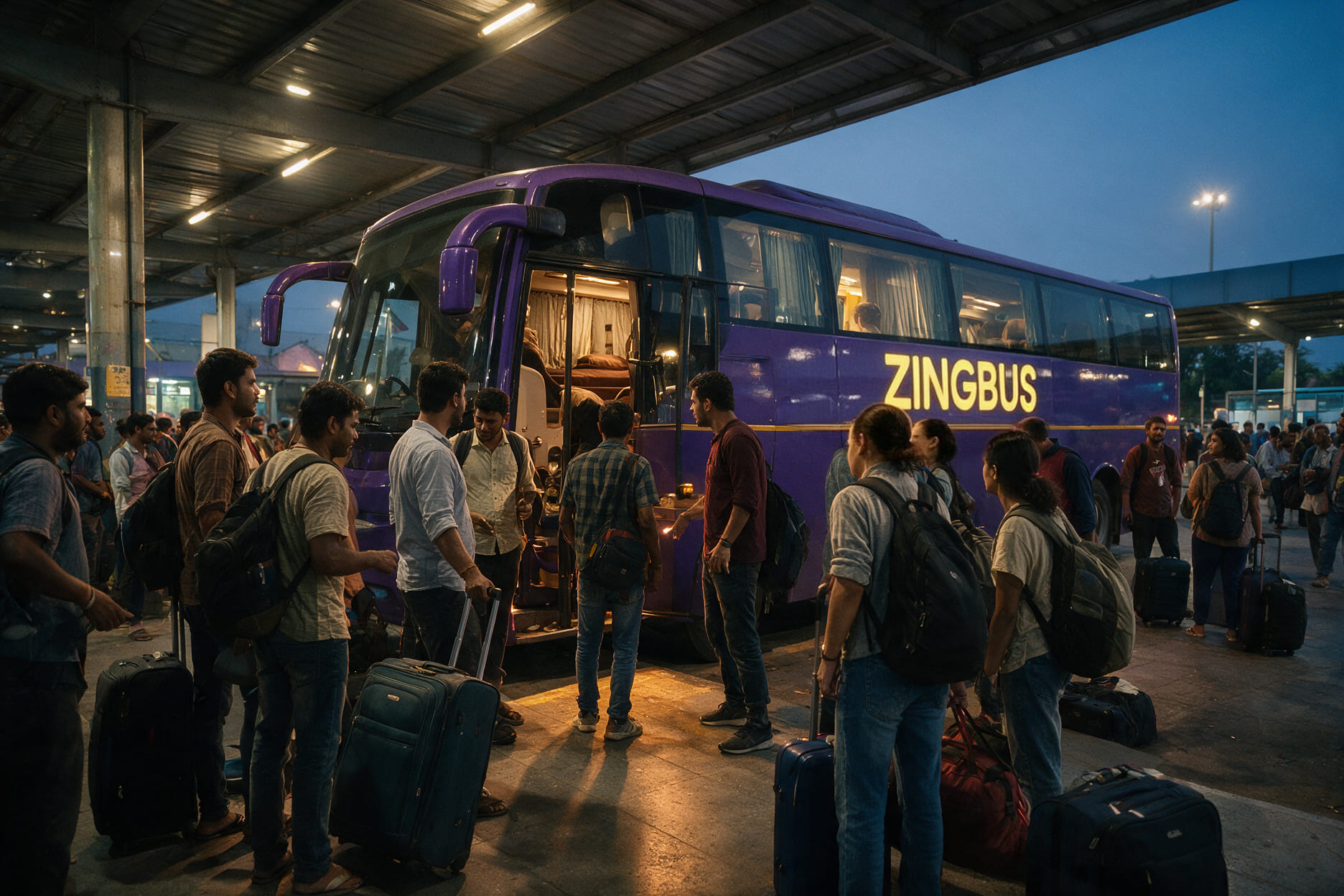
Varanasi is well connected by road from Delhi NCR and from across Uttar Pradesh, and the overnight bus works particularly well in this window because it protects the daylight hours for the festival itself.
From the capital, the Delhi to Varanasi bus route covers roughly 807 km in about 12 hours and 20 minutes, with fares on the corridor listed from around Rs 1,829 depending on coach type and date. From within the state, the Lucknow to Varanasi bus route is the shorter option at close to five hours, with five daily departures and fares from about Rs 592. Live results for your travel date should always override figures quoted in any article.
Varanasi Cantt is the primary boarding and drop area for intercity services. It sits several kilometres from the ghats, so budget for an auto or taxi transfer and expect that final stretch to take far longer than usual on 24 November. Return seats deserve the same attention: the Varanasi to Delhi bus route tightens sharply on the day after the festival.
Where the Evening Actually Slows You Down
Three constraints catch first time visitors on Dev Deepawali night. Vehicle access to the riverfront is restricted for several hours, which means a walk of a kilometre or more from wherever your ride can stop. The lanes leading down to the ghats are narrow and move in one direction under crowd pressure, so leaving early is harder than arriving early.
Mobile networks also struggle when a few lakh people are in the same few hundred metres. Agree on a meeting point with everyone in your group before you go down to the river, keep a printed hotel address, and carry water, because the stretch between the lamps and the nearest shop is longer than it looks.
Choosing Which Night to Be in Kashi
If the goal is the image of a river lined with lamps, 24 November is the only date that delivers it, and the planning it demands is proportionate: accommodation and boats booked early, arrival a day ahead, and a tolerance for crowds. If the goal is the city itself, the Diwali weekend of 7 to 9 November gives you Kashi with room to move.
Either way, fix the return journey at the same time as the outbound one. The morning after each of these nights is when several thousand visitors decide to leave at once, and that is the seat worth holding in advance.
You Might Also Like
Places to Visit in Varanasi: Ghats, Temples and Street Food
The wider city guide for anyone extending the festival trip beyond the two lit nights.
Best Time to Visit Varanasi 2026
Season by season detail if you are weighing November against another month.
Frequently Asked Questions
What is the exact date of Dev Deepawali in Varanasi in 2026?
Dev Deepawali in Varanasi in 2026 falls on Tuesday, 24 November, on Kartik Purnima, which is sixteen days after Diwali on 8 November.
When is Diwali in Varanasi in 2026?
Diwali in Varanasi in 2026 is on Sunday, 8 November, and the celebration runs through the lanes and homes of the old city.
Is there a long weekend for Varanasi Diwali Dev Deepawali 2026 travel?
Varanasi Diwali Dev Deepawali 2026 travel has two workable windows: 7 to 9 November for Diwali and 21 to 24 November for Dev Deepawali.
What is the difference between Diwali and Dev Deepawali?
Diwali is the new moon festival of lamps at home, while Dev Deepawali is the full moon night when the Varanasi ghats are lit.
Which ghat is best for watching Dev Deepawali?
Dashashwamedh Ghat is the ceremonial centre, while Assi Ghat and Namo Ghat offer more space and an easier approach for families and older travellers.
How early should I reach the ghats on Dev Deepawali evening?
Reach the ghats at least two to three hours before sunset on Dev Deepawali evening, because crowd density and walking distance both increase through the afternoon.
Is a boat ride necessary to see Dev Deepawali?
A boat ride is not necessary to see Dev Deepawali, though it gives the full riverfront view and avoids the crowd pressure on the steps.
How far is Sarnath from Varanasi?
Sarnath is approximately 10 km from Varanasi and takes roughly half a day to cover, including the stupa, the excavated site and the museum.
How long does the bus from Delhi to Varanasi take?
The bus from Delhi to Varanasi covers around 807 km in approximately 12 hours and 20 minutes, depending on traffic and the departure you select.
How long is the bus journey from Lucknow to Varanasi?
The bus journey from Lucknow to Varanasi takes close to five hours across about 290 km, with several departures running through the day and evening.
Where do intercity buses drop passengers in Varanasi?
Intercity buses generally use the Varanasi Cantt area, which sits several kilometres from the ghats and needs an auto or taxi transfer.
Is November a good time to visit Varanasi otherwise?
November is among the most comfortable months in Varanasi, with cool mornings and mild afternoons that suit long walking along the ghats.
How far in advance should accommodation be booked for Dev Deepawali?
Book accommodation for Dev Deepawali several weeks ahead, since riverfront hotels and guesthouses fill early and rates climb steeply near the date.