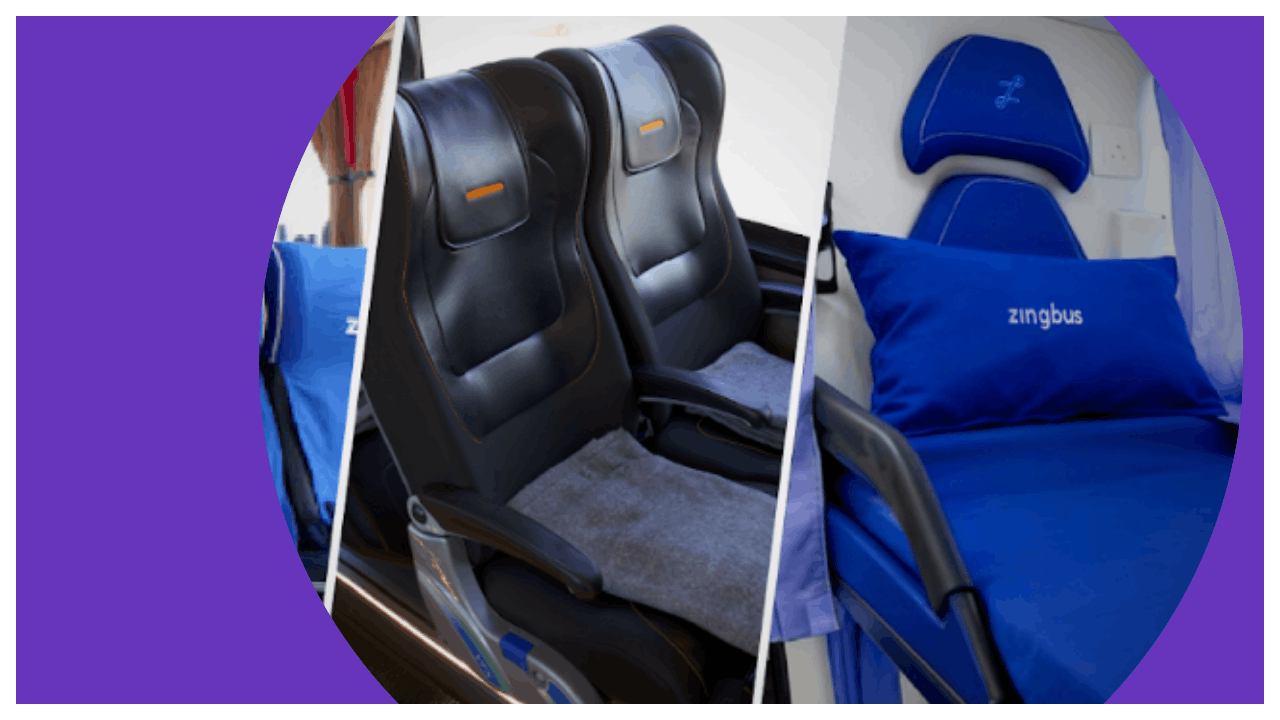
The seat you choose can decide whether your journey feels smooth or stressful. It affects comfort, safety, sleep quality, and how fresh you feel when you arrive.
Once you understand basic bus layouts and how different seat positions behave, picking the best seat in bus for your needs becomes very simple.
Understanding Bus Layouts and Seat Types
Before worrying about “front or back”, it helps to know what kind of bus you’re actually boarding.
Types of Buses You’ll Usually See
- Ordinary / standard buses: Upright seats, basic legroom, limited recline.
- AC semi-sleeper buses: Reclining seats with better cushioning, footrests, AC vents.
- Sleeper buses: Single and double berths (upper and lower) instead of seats.
- Luxury / premium buses: Extra legroom, better recline, USB charging, sometimes entertainment screens.
On premium services like zingbus Maxx, seats are semi-sleeper or sleeper with more legroom and ergonomic design to reduce fatigue.
Common Seating Layouts
- 2×2 layout: Two seats on each side of the aisle.
- Sleeper layout: Single berths on one side, double berths on the other.
- Front, middle, and back sections: Each behaves differently in terms of bumps and noise.
Most booking apps show a seating diagram, so you can quickly spot which section you’re choosing.
Best Seat in Bus for Overall Comfort
Different sections of the bus feel very different once the vehicle starts moving.
Front Section: For Motion Sickness and Quick Exits
- Smoother than the back, especially on highways.
- Better for people who get dizzy or anxious at higher speeds.
- Easy to get in and out of the bus quickly.
Downsides: Less privacy, more light from the front, and sometimes slightly less legroom in the very first row.
Middle Section: The “Sweet Spot” For Most People
- Feels more stable than front or back on rough roads.
- Less bounce and noise than rear seats.
- Good balance between comfort, movement, and access to doors.
This area is often the best seat in bus for long journeys if you don’t have any special requirements.
Back Section: Budget-friendly But Bouncy
- Often the last to be filled, so more chances of an empty seat near you.
- Can work for short trips if you don’t mind extra movement.
Downsides: More bumps, more noise from engine, and sometimes stronger smell or vibration.
Window vs Aisle vs Sleeper Berths
Beyond “front, middle, back”, your seat type also affects how you feel during the trip.
Window Seat
- Good if you like views and want to rest your head.
- Feels more private with fewer people brushing past.
- Better for people who like to sleep against the side.
Downside: You’ll disturb your neighbour if you need to get up frequently.
Aisle Seat
- Easier to stand up, stretch legs, and reach the washroom.
- Good for tall people who need to extend their feet slightly.
Downside: More disturbance from people walking in the aisle and staff movement.
Sleeper Berths (In Sleeper Buses)
- Lower berth: Easier to climb into, feels more stable, safer for older people or solo women.
- Upper berth: More privacy, fewer footsteps and noise directly next to you.
If you’re booking a premium sleeper like zingbus Maxx, lower berths usually give a good balance of stability and accessibility.
Safest Seat in Bus: General Guidance
No seat can guarantee safety in every situation, but some positions are considered safer than others.
Safer Positions to Consider
- Seats in the middle portion of the bus, between the front and rear axles.
- Aisle seats in that middle section, with quick escape options.
- Seats not directly next to emergency exits but close enough to reach them quickly.
Seats Best Avoided for Safety
- Very front row seats, especially on non-premium buses, as they are closest to any frontal impact.
- Very last row, where sway, bounce, and rear impacts feel stronger.
- Seats immediately next to doors if you feel uncomfortable with constant movement.
When in doubt, pick a middle-row aisle or window seat instead of extreme front or back.
Best Seat in Bus for Solo Female Travellers
Safety, visibility, and control over your surroundings matter more than just legroom when you’re travelling alone.
Where Solo Women Should Ideally Sit
- Middle-row window or aisle seat in a well-lit, busier part of the coach.
- Close enough to the driver or staff that you can call them if needed.
- In women-only sections if the bus operator offers them.
On services like zingbus Maxx, you’ll often find women-only seats or automatic female seat matching so you sit next to another woman where possible.
Seats and Areas Better to Avoid
- Last row seats, especially on lightly crowded buses.
- Fully isolated corners where you’re completely alone.
- Immediately near the washroom if you want fewer people passing by.
Along with seat choice, share your live location, keep emergency contacts handy, and avoid oversharing personal details with strangers on board.
Booking the Best Seat Online (Step-by-Step)
Most modern bus booking platforms let you see a full seat map before paying.
How to Book Your Preferred Seat
- Open a trusted booking platform (e.g. zingbus website or app).
- Enter your from–to cities and travel date.
- Filter by bus type (AC, semi-sleeper, sleeper, luxury).
- Open the seat map of a suitable bus.
- Look for middle-section seats first (for comfort).
- Choose a window or aisle based on your preference and needs.
- Select the seat, fill your details, and confirm payment.
Tips for Better Seats
- Book early for weekends and holidays; the good seats go first.
- On weekdays, you may get more choice, even at the last minute.
- Compare different departure times; often late-night services have better availability in the middle area.
If you usually travel on specific routes, notice which seat numbers become your personal “safe bet” and stick to those on future trips.
Staying Comfortable on Long Bus Journeys
Even the best seat in bus won’t help if you’re not prepared for a long ride.
Choose the Right Seat for Your Body And Habits
- If you have motion sickness, prefer front or middle seats and avoid the last row.
- If you like stretching legs, pick an aisle seat in a semi-sleeper coach.
- If you want to sleep easily, choose a window or lower sleeper berth.
Carry Simple Comfort Essentials
- Travel neck pillow and light blanket or shawl.
- Eye mask and earphones or earplugs.
- Small pouch with medicines (motion sickness, basic painkiller).
- Power bank and charging cable for your phone.
Food And Hydration
- Pack light, non-greasy snacks like theplas, dry fruits, khakras, or biscuits.
- Drink water regularly but avoid overdoing it if washroom access is limited.
- Avoid very heavy, oily meals right before the journey starts.
Best Seat in Bus for Overnight Trips
Night journeys make seat choice more critical because you’ll be sleeping through most of the ride.
Good seat choices for Sleep
- Middle-row window seat in semi-sleeper buses for fewer disturbances.
- Lower berth in sleeper buses for easier access and a stable feel.
- Recliner seats with footrests on premium services like zingbus Maxx.
Sleep-friendly Habits
- Wear loose, comfortable clothes that don’t restrict movement.
- Use a neck pillow and a light blanket or jacket.
- Avoid very bright screens; try soft music or white noise instead.
If you’re particular about sleep, spend a bit more for a recliner or sleeper berth instead of the cheapest option.
First-Time Bus Traveller Tips
If you’re new to long-distance buses, these simple habits can help.
Before boarding
- Reach the boarding point at least 20–30 minutes early.
- Keep your ticket and ID easily accessible.
- Label your main bag and keep valuables in a smaller personal bag.
During the journey
- Keep your personal bag where you can see or feel it.
- Don’t block the aisle with luggage or feet.
- Adjust your recline to be comfortable, but don’t slam it back suddenly.
Handling small issues
- If the seat feels too cold or hot, adjust vents or ask staff for help.
- If someone is in your reserved seat, politely show your ticket and involve staff if needed.
- If you feel unwell, speak to the conductor or driver early instead of waiting.
Frequently Asked Questions
Q: Which is the overall best seat in a bus for comfort?
Ans: For most people, a middle-row window or aisle seat in a semi-sleeper coach gives the best balance of stability, comfort, and quietness.
Q: Where should solo female travellers sit on a bus?
Ans: Ideally in the middle section, near other passengers, preferably on a window or aisle seat, and close enough to the driver or staff.
Q: Which seats are best for motion sickness?
Ans: Front or middle seats on the lower level are usually better. Avoid the last row and avoid sitting directly above the wheels if possible.
Q: Are back seats always bad?
Ans: Not always, but they feel bumpier, noisier, and can be uncomfortable on rough roads. They’re okay for short trips or if nothing else is available.
Q: Is a window or aisle seat better for sleeping?
Ans: A window seat usually works better for sleep because you can rest your head on the side and face away from aisle movement.
Q: Are sleeper berths safer than normal seats?
Ans: They’re more about comfort than safety. Lower berths feel more stable and easier to access, especially for older people and solo women.
Q: What should I avoid doing with my seat recline?
Ans: Avoid pushing the recline back suddenly. Recline slowly and check behind if someone is eating or using a laptop to prevent discomfort.
Q: How early should I book to get a good seat?
Ans: For weekends and holidays, book several days in advance. For weekdays, even one or two days before usually gives decent seat options.
Q: Can I change seats after boarding?
Ans: Sometimes, if there are free seats and staff agree. Always ask the conductor or driver first instead of shifting silently.
Q: How can I use bus time productively?
Ans: You can read, listen to podcasts, plan your next day, or simply rest. Just keep your phone charged and valuables close.
Picking the Best Seat Every Time
The best seat in bus is the one that matches your body, your safety comfort level, and your travel purpose. Front and middle sections suit most people, while back seats are more of a last choice for long trips.
If you choose your seat thoughtfully, carry a few comfort essentials, and travel with a reliable operator, even long journeys start feeling easier and more predictable.