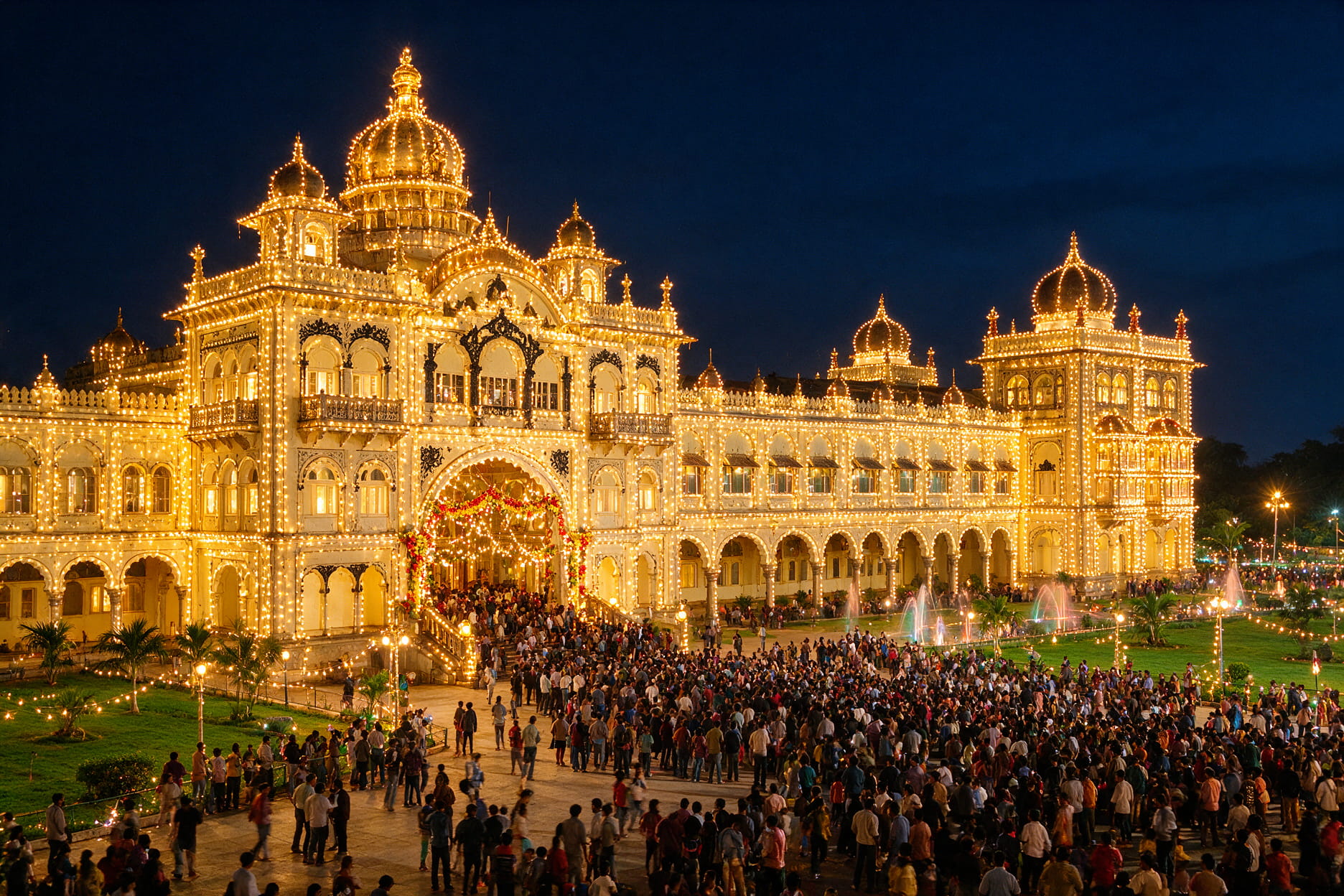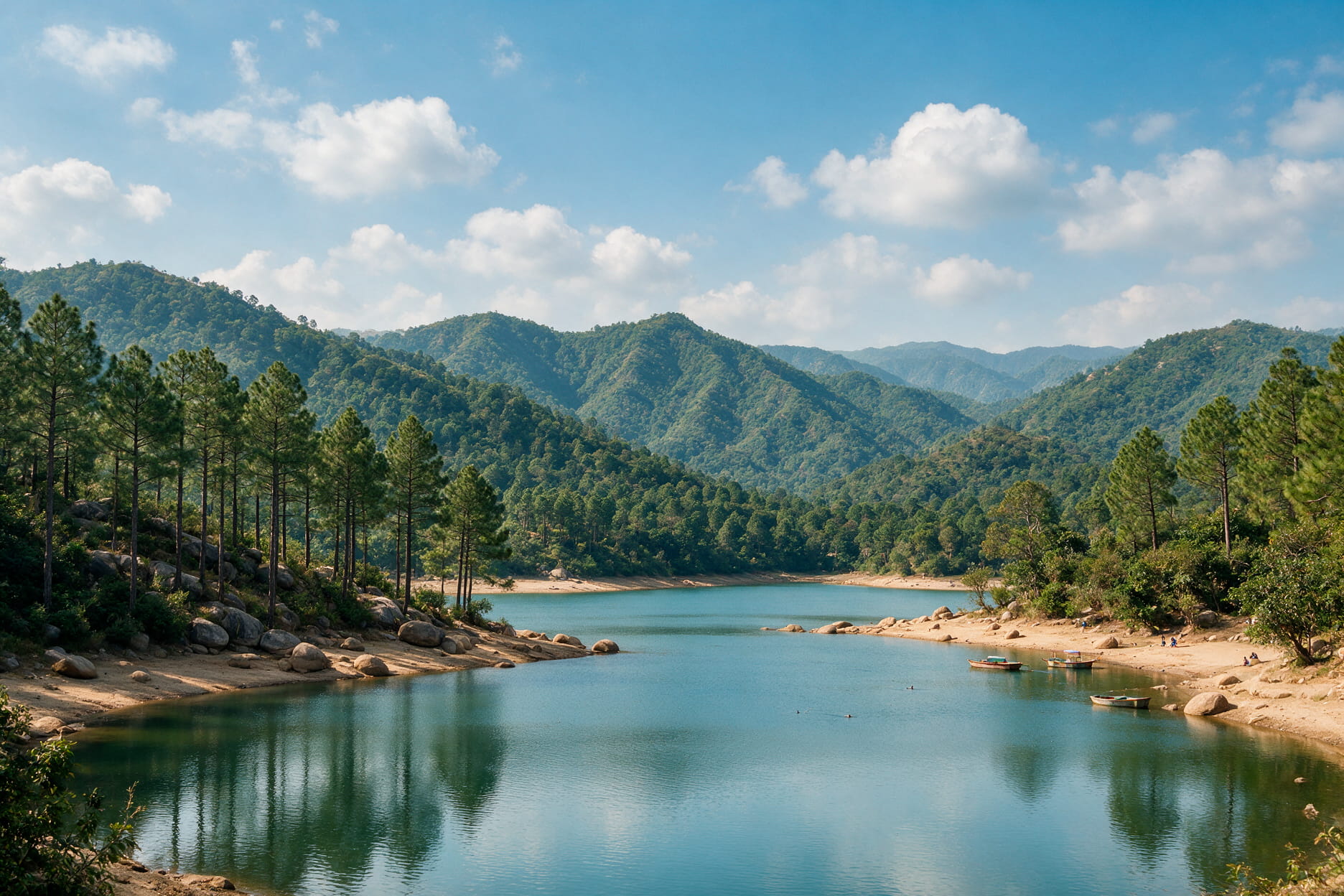
Pune is backed by the Sahyadri hills, and the places to visit near pune under 50 km reflect that geography directly: a fort hill behind one of the Maratha empire’s defining battles, paragliding over a reservoir, lake camping in the Western Ghats, and a pilgrim town where turmeric covers everything.
One honest note before the list: Lonavala is 65 to 76 km from Pune, not within 50 km despite appearing on virtually every nearby-Pune list. This guide stays within the verified radius. Book your Pune bus on zingbus to arrive in the city, then drive out.
Places to Visit Near Pune Under 50 km
Six destinations, one honest radius. The places to visit near pune under 50 km draw from three types of Sahyadri terrain: the high fort ridges to the south and southwest, the Mutha and Mula river reservoir systems to the west, and the agricultural plain to the southeast where Jejuri sits on its turmeric-stained hill.
Sinhagad Fort
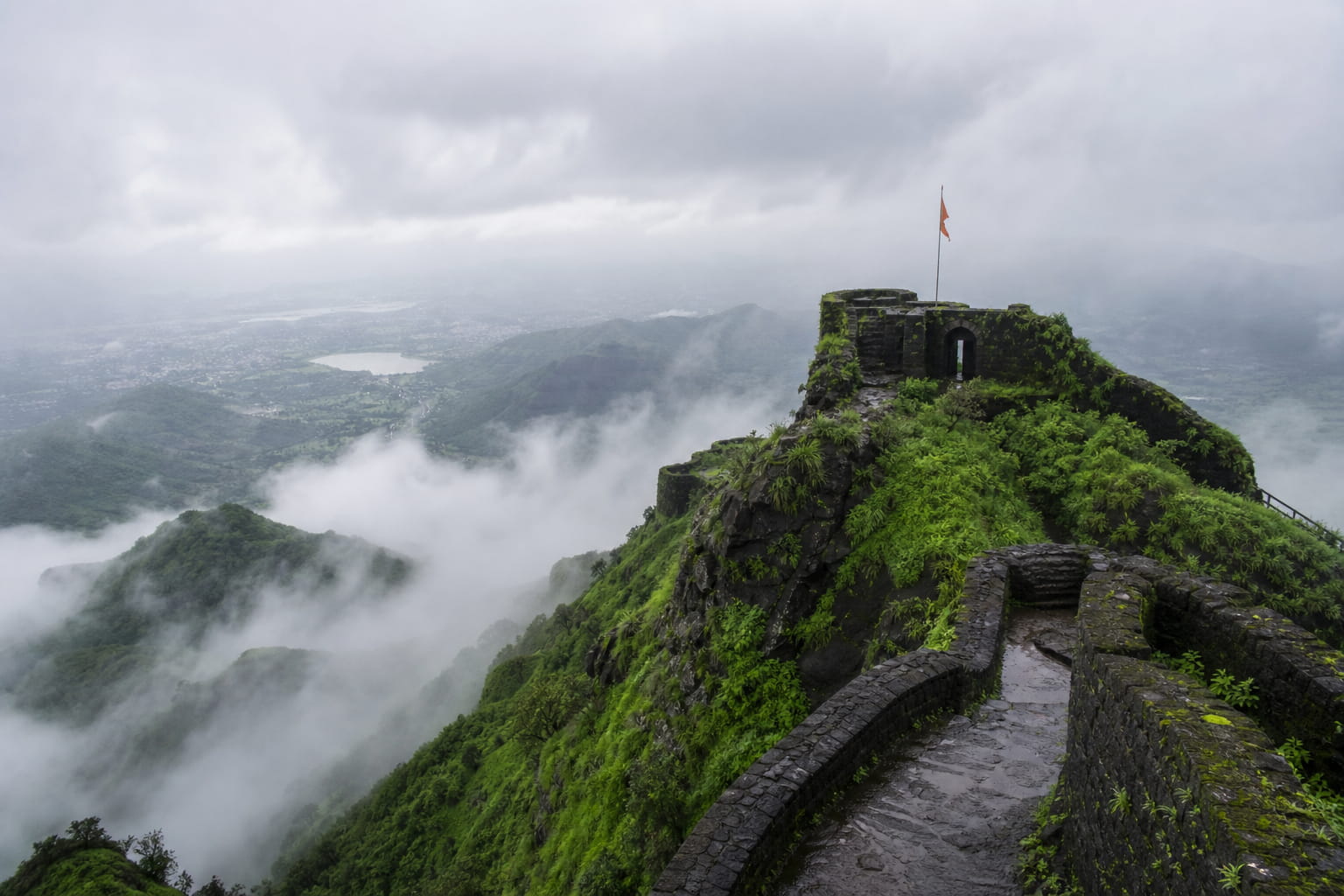
Sinhagad Fort is approximately 28 to 35 km from Pune, depending on your starting point within the city, and is the most historically resonant destination in this radius. The fort sits at 1,312 metres on the Bhuleshar range and is associated most directly with the Battle of Sinhagad in 1670, when Tanaji Malusare captured it from Mughal commander Udaybhan Rathod in a night attack, losing his life in the process. Shivaji Maharaj, on hearing of the fort’s capture, is said to have mourned: “Gad ala, pan Sinha gela”; the fort is won, but the lion is gone. The fort was renamed Sinhagad from its earlier name, Kondhana.
The trek from the base village to the summit takes 45 minutes to an hour at a steady pace, gaining roughly 600 metres on a well-worn stone path. A road also runs to the summit for those not trekking. At the top, the Kaundinyeshwar Temple, the memorial to Tanaji, and the bungalow associated with Lokmanya Tilak are the main heritage points. The hilltop food: kanda bhaji, pithla-bhakri, and fresh yoghurt served from small stalls near the northern bastion is the practical reason many Pune residents return.
Monsoon (June through September) is the most popular and the most dramatic season. The fort disappears into clouds at dawn and the green-covered ravines below are at their most striking. Winter (November through February) is more comfortable for the trek. Summer mornings are manageable if you leave Pune before 6 AM.
Khadakwasla Dam and Reservoir
Khadakwasla Dam is 20 to 25 km from Pune on the Mutha River and is the gateway reservoir on the chain that runs west toward Panshet. The lakefront here is a straightforward picnic and sunset drive for Pune residents, with a view across the water to the Sahyadri foothills. The dam road is popular for early morning cycling from the city. Khadakwasla is rarely a standalone destination; it sits on the same route as Sinhagad and Panshet and works best as a stopping point on a larger loop rather than a trip in itself.
Panshet Dam
Panshet Dam; officially Tanajisagar after Tanaji Malusare is about 45 to 50 km from Pune on the Ambi River. It was built to store water in the same Mutha basin and its reservoir has developed into Pune’s most practical water-sports and camping destination within this range. Kayaking, rowing, banana boat rides, and speed boating are available through multiple private operators along the dam area. Overnight camping by the lakeside is a well-established option; several operators run tent sites and small resorts.
Panshet is best visited after the monsoon from October onward when the water level is high and the surrounding hills are still green. The road from Khadakwasla to Panshet passes through quiet villages and low forest and is one of the more pleasant drives in the Pune district.
Mulshi Lake
Mulshi Lake and Dam, built across the Mula River in 1927 by Tata Power, is approximately 35 to 50 km from Pune depending on your route and starting point within the city. From Chandni Chowk or Baner on Pune’s western edge, the Mulshi approach through the Pirangut road is the most direct. The lake is large, surrounded by Sahyadri forest, and backed by the Tamhini Ghat escarpment.
The Tamhini Ghat road beyond Mulshi is one of the most celebrated monsoon drives near Pune: dense forest cover, waterfalls appearing off the cliff faces, and minimal traffic. Camping is available at several sites around the lake periphery. Birdwatching in the buffer forest around the reservoir produces good counts year-round, with monsoon and post-monsoon being the richest periods.
Note: some route estimates for Mulshi put the distance at 50 to 73 km depending on the specific track and your Pune starting point. From the city’s western areas, it comfortably falls within the 50 km range.
Kamshet: India’s Paragliding Town
Kamshet is approximately 45 to 49 km from Pune and is consistently described as one of India’s most accessible paragliding destinations, with a full season running from October through May. The town sits on the plateau above the Pawna Valley near Lonavala, and its position on the Sahyadri ridge produces the reliable lift conditions that make tandem and solo flights predictable.
Tandem joy-ride flights, in which a licensed instructor handles the controls while you take in the Pawna Valley from altitude, run from approximately 2,500 to 3,000 rupees depending on operator and season confirms current pricing directly with operators before booking as rates vary and change annually. Advanced acro-flying and course-based training are also available.
Multiple take-off sites operate in the Kamshet area: Tower Hills, Kusgaon, Shelar, and the Pawna-lake-adjacent launches. The best morning slots fill fast on weekends in the October through February window. Book in advance, especially for Saturdays.
Jejuri: The Turmeric Temple Town
Jejuri is 48 to 50 km from Pune on the Pune-Solapur road and is the site of the Khandoba Temple, one of the most significant pilgrimage sites in Maharashtra and a destination unlike anything else in this radius. Khandoba is a form of Shiva worshipped particularly by the Dhangar, Mali, and Kunbi communities of Maharashtra and Karnataka. The temple sits on a hillock reached by roughly 200 stone steps, and the approach road and steps are lined with deepmalas, oil lamp pillars that are lit during festival periods.
The signature experience at Jejuri is the bhandara: devotees offer turmeric (haldi) as prasad, and on festival days the entire site — walls, steps, temple dome, and the visitors themselves; turns golden yellow. The sight of bhandara being thrown in handfuls at the height of the puja is the reason Jejuri has been written about, photographed, and visited well beyond its scale as a market town. The poet Arun Kolatkar wrote an entire cycle of poems about Jejuri in the 1970s that is now regarded as a major work in Indian English literature.
Significant dates: Somvati Amavasya (Monday new moons) draw large crowds; the annual November jatra sees roughly 40,000 visitors. On ordinary mornings, the temple is quiet and accessible. The upper Kadepathar temple, on a higher hill, adds a separate climb for those with time.
A Note on Lonavala: Just Beyond the Range
Lonavala is consistently 65 to 76 km from Pune by road – well outside the 50 km boundary of this guide. Most “places near Pune within 50 km” lists include it incorrectly. The zingbus Pune-to-Lonavala service lists the distance at 76 km. If you want Lonavala, Pawna Lake (~54-65 km), or the Karla and Bhaja Caves (~55-70 km), they are excellent destinations; just not within 50 km. Book a Pune to Lonavala bus on zingbus for that trip separately.
When to Visit Places Near Pune Under 50 km
The destinations in this guide split across two seasonal peaks. Sinhagad, Mulshi, and Panshet are at their most spectacular during monsoon (June through September): the forts vanish into cloud, the reservoirs fill, and the ghat roads turn vivid green. Post-monsoon (October through November) combines green surroundings with better road conditions.
Winter (December through February) is the most comfortable season for outdoor activities and the fort trek. Kamshet’s paragliding operates October through May and closes for monsoon. Jejuri is accessible year-round; its major festivals follow the Hindu calendar rather than the season.
How to Reach Pune
zingbus connects Pune to Mumbai, Goa, Nagpur, Kolhapur, Bangalore, Hyderabad, Nashik, and other cities from Sangamwadi, Wakad, and Swargate. Check current routes and book your Pune bus on the zingbus website or app. All six destinations in this guide require a self-drive vehicle or a hired cab from Pune. Sinhagad and Khadakwasla are reachable by shared transport on weekends; the other four require private vehicle access.
You Might Also Like
- How to Plan a Road Trip in India: Relevant if the Mulshi or Panshet day trip turns into a longer Tamhini Ghat or Western Ghats loop.
- Best Hill Stations to Visit in Summer in India: Context for when the 50 km range isn’t enough and you want to plan further.
- Hidden and Unexplored Places in India to Visit in 2026: Mulshi’s Tamhini Ghat zone qualifies; this blog covers similar terrain nationally.
Before You Drive Out of Pune
Sinhagad Fort has two peak periods: monsoon weekends when the hilltop crowds are enormous, and Shivaji Maharaj Jayanti when the fort draws ceremonial attention. Both are worth knowing before you pick a date. Weekday mornings in winter are the calmest the fort gets.
For Kamshet paragliding, confirm current operator status and weather conditions before you leave. Flights are cancelled on days with unstable wind. Many operators are reachable directly or through booking platforms; the industry pricing has moved in recent years, so confirm the current figure rather than relying on any guide’s stated amount.
Panshet’s water sports operators are most active on weekends and holidays. Weekdays offer longer slots with fewer queues. Camping sites around Panshet fill during long weekends: book any tented accommodation at least a week ahead.
Jejuri is a working pilgrimage town, not a tourist site. The temple management and the town’s rhythm are shaped by the devotee calendar. Dress conservatively and carry cash; the town has limited card infrastructure.
The Mulshi approach via Pirangut Road has sections under periodic repair. Check road condition reports before the drive in and after heavy rainfall.
The Places to Visit Near Pune Under 50 km Earn Their Sahyadri Address
The geography that makes Pune liveable; its position at the base of the Western Ghats, the river systems running through its edges, the fort ridges visible from the city on clear mornings is the same geography that fills this list. Sinhagad’s fort and Jejuri’s turmeric temple would be significant destinations in any region. Mulshi and Panshet are two of the most accessible reservoir landscapes in peninsular India. Kamshet is not a manufactured tourist product; it is a working paragliding site that happens to sit 48 km from a city of seven million people.
The places to visit near pune under 50 km are not compensations for not being able to drive to Lonavala. They are the result of Pune’s specific position in the Sahyadri system, and they are genuinely worth the Saturday morning early start.
Frequently Asked Questions
What are the best places to visit near Pune within 50 km?
The best places to visit near Pune within 50 km include Sinhagad Fort at 28 to 35 km, Khadakwasla Dam at 20 to 25 km, Panshet Dam at 45 to 50 km, Mulshi Lake at 35 to 50 km, Kamshet at 45 to 49 km, and Jejuri Khandoba Temple at 48 to 50 km.
Is Lonavala within 50 km of Pune?
No, Lonavala is 65 to 76 km from Pune by road – well outside the 50 km range. It appears incorrectly on most “within 50 km” lists. zingbus lists the Pune to Lonavala distance at 76 km on its route page.
What is Sinhagad Fort near Pune?
Sinhagad Fort is a hill fortress about 28 to 35 km from Pune at 1,312 metres elevation, famous for the 1670 Battle of Sinhagad where Tanaji Malusare captured the fort from the Mughals before dying in battle, prompting Shivaji Maharaj to rename it the Lion’s Fort.
Is Kamshet good for paragliding near Pune?
Yes, Kamshet at 45 to 49 km from Pune is one of India’s most established paragliding destinations, offering tandem flights over the Pawna Valley from October through May when the flying season is open.
What is special about Jejuri near Pune?
Jejuri at 48 to 50 km from Pune is the site of the Khandoba Temple, where devotees offer turmeric as prasad, turning the entire hilltop golden yellow during ceremonies. The poet Arun Kolatkar wrote a celebrated cycle of poems about Jejuri that is considered a landmark of Indian English literature.
What is Panshet Dam near Pune?
Panshet Dam (Tanajisagar) is a reservoir about 45 to 50 km from Pune on the Ambi River, offering kayaking, boating, banana boat rides, and lakeside camping. It is the most practical water-sports destination within the strict 50 km range from the city.
What is the best season to visit Sinhagad Fort?
Sinhagad Fort is most atmospheric in monsoon (June through September) when mist covers the hilltop; most comfortable for trekking in winter (November through February). Summer mornings are manageable with a very early start.
Is Mulshi Lake within 50 km of Pune?
Mulshi Lake is within 50 km from the western areas of Pune via the Chandni Chowk and Pirangut approach, typically placing it at 35 to 50 km. Some routes and Pune starting points extend the distance further; confirm the specific approach road before planning.
What is Khadakwasla Dam near Pune?
Khadakwasla Dam is a reservoir 20 to 25 km from Pune on the Mutha River, serving as both a key water source and a popular picnic and sunset-drive destination on the route toward Sinhagad Fort and Panshet.
Does zingbus run buses from Pune to these day trip destinations?
zingbus connects Pune to intercity destinations including Mumbai, Goa, Nashik, Kolhapur, Nagpur, and Bangalore. For local day trips to Sinhagad, Panshet, Mulshi, and Kamshet, a hired cab or self-drive from Pune is the practical option.
Can you visit Sinhagad and Panshet in a single day from Pune?
Yes, Sinhagad Fort and Panshet Dam can be combined in a single day. Drive to Sinhagad early for the morning trek, descend by midday, then continue on the same road southwest to Khadakwasla and Panshet for the afternoon at the reservoir.
What is the Khandoba Temple at Jejuri famous for?
The Khandoba Temple at Jejuri is famous for its bhandara tradition, where turmeric is offered as prasad and thrown in handfuls during puja, covering the temple complex and devotees in a golden yellow layer. It is one of the most visually distinctive pilgrimage rituals in Maharashtra.