Most people who visit Tirupati come for one specific reason: the Sri Venkateswara Temple on Tirumala Hill, 23 km above the town. It receives 30 to 40 million pilgrims every year, making it the most visited religious site in the world by annual footfall. Everything about the places to visit in tirupati is organised around that central fact — the town itself, its other temples, and the sites on the hill all exist within the orbit of the main temple.
This guide covers the Tirumala temple and what to expect there, the temples in Tirupati town worth visiting before or after the hill, and the historical and natural sites around the area. Book your Tirupati bus on zingbus and plan at least two days if the darshan queue is your primary concern.
Places to Visit in Tirupati: The Temple Town Guide
Tirupati is the base town in Andhra Pradesh. Tirumala is the temple complex on top of the seven hills above it, reached by a ghat road with sharp turns that takes approximately 45 minutes to an hour by bus. Most visitors use Tirupati as the overnight base and travel up to Tirumala for the darshan. Understanding the two-town structure is the starting point for planning anything else.
The Tirumala Temple: The Heart of Every Pilgrimage
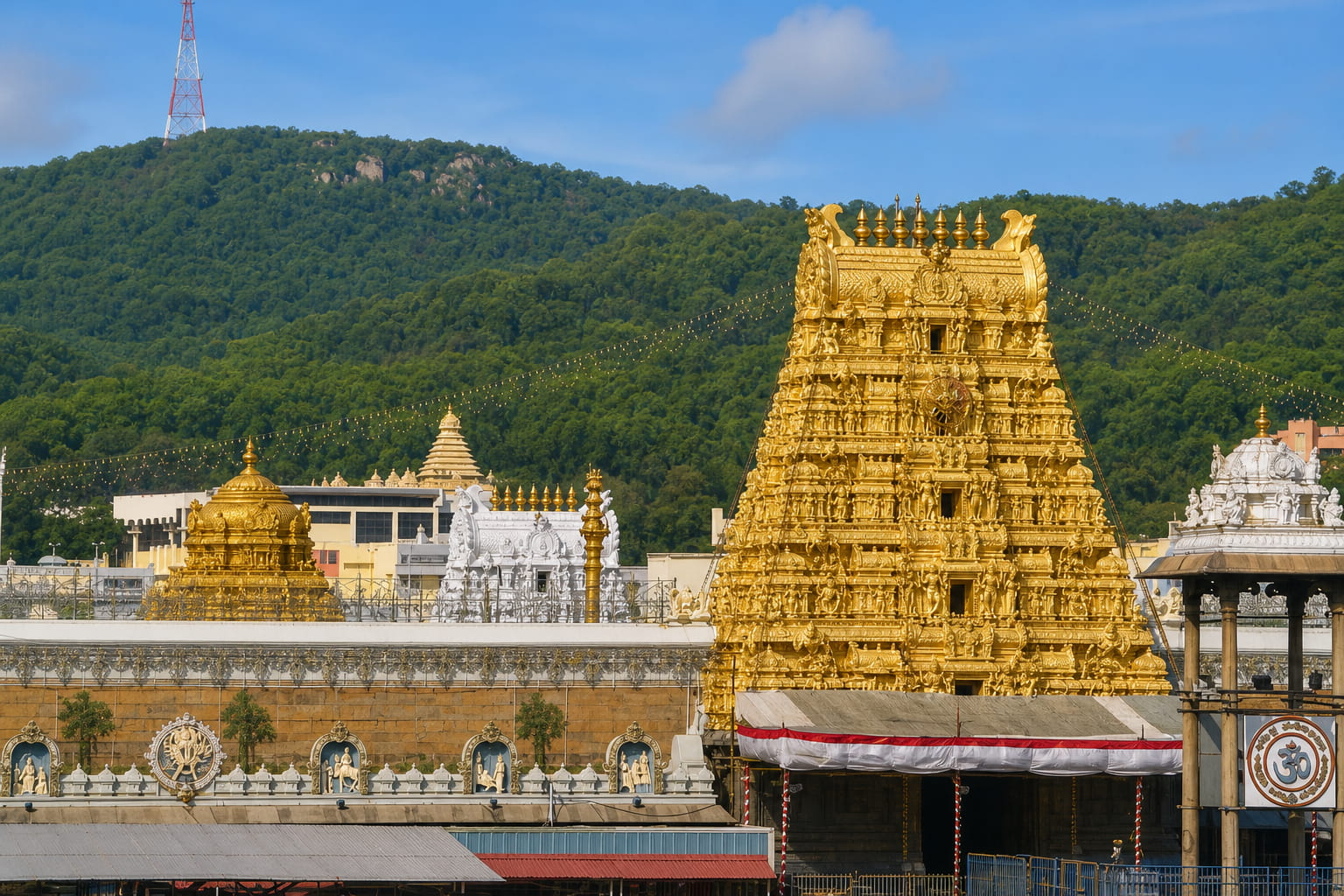
Sri Venkateswara Swamy Vaari Temple at Tirumala is the reason Tirupati exists as a city. Built over centuries in Dravidian style, with rituals that have followed the traditions established by the saint-philosopher Ramanujacharya in the 11th to 12th centuries, the temple is the principal seat of Vaishnava pilgrimage in South India.
The deity, Lord Venkateswara, is understood within the tradition as a form of Vishnu who is present on the hill awaiting his devotees. The golden vimanam (tower) above the sanctum is visible from several points on the hill. The temple complex includes the main sanctum, the Varaha Swamy temple (which pilgrims traditionally visit first on the hill), the Vakula Devi shrine, the Yoga Narasimha shrine, and the golden well adjacent to the main temple.
What to See Inside the Temple Complex
The experience at the Tirumala temple is not just the main darshan of the deity. Several elements of the complex are worth taking time with:
The Dwajastambham is the tall ceremonial flagpole at the temple entrance, gilded and considered deeply sacred. Pilgrims touch the base before proceeding.
The Varaha Swamy Temple, close to the main entrance, is dedicated to the boar avatar of Vishnu and holds the tradition that Varaha granted the land to Lord Venkateswara. Visiting here before the main darshan is considered customary and is part of the traditional sequence.
The Hundi is the donation vessel near the sanctum. The TTD Hundi collection is among the largest of any religious institution in the world; it is where the trust sources much of its budget for the free meals, accommodation, and pilgrimage services it runs.
The Annadana Prasadam, free meals served to all pilgrims at Tirumala, is available around the clock through the TTD’s community kitchen system. No ticket or registration is needed. Sitting in the dining hall with tens of thousands of other pilgrims for a meal that the temple provides free is one of the more distinctly Tirupati experiences available.
Darshan Types and How to Book
The single most important piece of planning for Tirupati is understanding how the darshan system works. There are two main options:
Sarva Darshan (free)
Available to all without any booking. The queue enters through the Vaikuntham Queue Complex near the main temple. Wait times range from 6 hours to over 24 hours depending on the season and day. On normal days outside festival periods, a Saturday morning Sarva Darshan wait is typically 10 to 14 hours. On quieter weekdays in the off-season (March to June), waits can drop to 4 to 6 hours.
Special Entry Darshan (SED / Seeghra Darshan)
Tickets cost ₹300 per person. This is a shorter queue that typically takes 2 to 5 hours depending on the day. SED tickets are booked online through the TTD website (tirupatibalaji.ap.gov.in) or the TTD mobile app. Booking opens approximately 2 to 3 months in advance. For popular dates, slots sell out very quickly.
TTD Sevas: These are ticketed ritual services that allow a closer and more structured interaction with the deity during specific rituals.
Popular sevas include Suprabhatam (pre-dawn wake-up ritual), Thomala Seva, Archana, and Kalyanotsavam (the wedding ritual ceremony). Sevas are booked through the TTD website and are priced differently from the standard darshan.
For most first-time visitors: Book SED tickets online 2 months ahead of your intended visit date. If SED is not available, plan for Sarva Darshan and arrive prepared for a long wait with comfortable clothing, snacks, and patience.
Getting to Tirumala from Tirupati
TTD buses run continuously from the Tirupati Bus Stand to Tirumala, 24 hours a day. The fare is minimal and the journey takes 45 minutes to an hour via the 23 km ghat road. Private taxis and shared vehicles are also available.
Alternative: the footpath (Alipiri to Srivari Mettu route, approximately 14 to 18 km depending on the starting point). Many pilgrims make the climb on foot as a vow or as penance. The climb takes 4 to 6 hours and is doable in reasonable fitness. It is particularly popular at night to avoid the heat.
All vehicles except TTD buses are restricted on certain ghat road sections at peak hours.
Sacred Sites on Tirumala Hill
Beyond the main temple, two sites on Tirumala Hill are worth visiting if time allows.
Akasaganga Waterfalls
Akasaganga is a sacred waterfall about 3 km from the main Tirumala temple complex. Pilgrims traditionally bathe here before proceeding to the main darshan, and the water is believed to be of significant spiritual value. The falls flow most powerfully during and after monsoon (July to October) but run through the year from a natural spring. The walk to the falls from the temple area passes through quiet forest.
Silathoranam
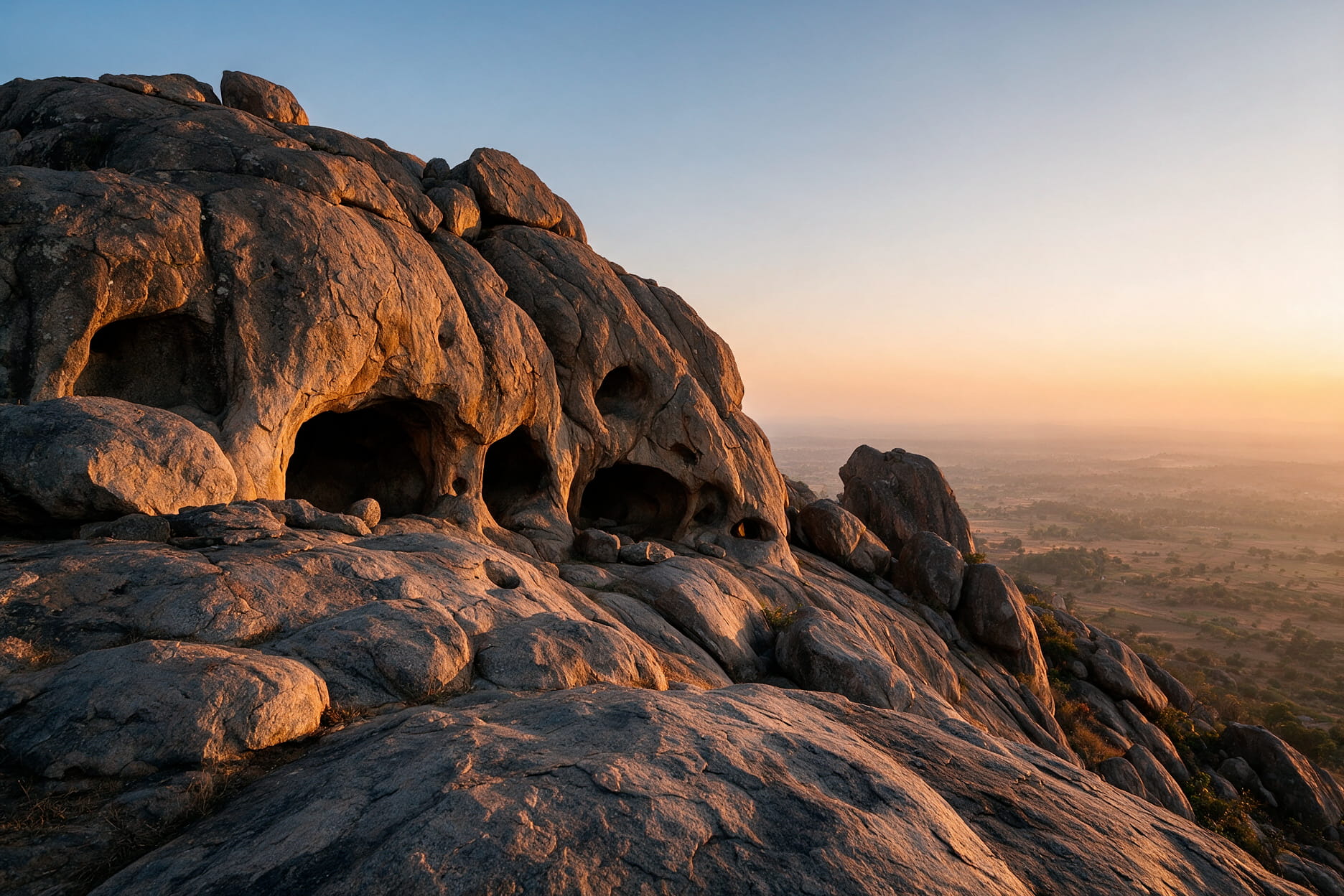
Silathoranam is a natural rock arch formation on Tirumala Hill and one of very few such geological formations in Asia. It is accessible via a short walk from the main temple complex. The arch itself is estimated to be over 1,600 million years old and formed from Cuddapah quartzite. The geological significance attracted attention from scientists studying rock formations in the Deccan Plateau. It is worth the 15 to 20 minutes it takes to walk there and back.
In Tirupati Town: Start Here Before Going Up
Three sites in the town itself are visited by pilgrims as part of the overall Tirupati pilgrimage, and each is accessible without any queue system.
Sri Padmavathi Ammavari Temple, Tiruchanur
The Padmavathi Temple at Tiruchanur, 5 km from the Tirupati bus stand, is dedicated to Goddess Padmavathi, the consort of Lord Venkateswara. According to the tradition, Venkateswara married Padmavathi and the two temples are inseparable in the pilgrimage circuit: most devotees visit Padmavathi before heading to Tirumala, and many visit her temple again on the return.
The queues here are significantly shorter than at Tirumala, making the darshan more accessible even on busy days. The temple architecture is in the same South Indian Dravidian style as Tirumala and the sanctum is well-maintained. The temple is also called Alamelumangapuram after the local name for the goddess.
Kapila Theertham
Kapila Theertham, at the base of the Tirumala hills near Alipiri, is an ancient Shiva temple centered on a Swayambhu (self-manifested) Shivalinga installed by the sage Kapila Muni. Inscriptions in the temple date to the 10th century, indicating that the site predates most of the Tirumala temple’s recorded history.
The waterfall adjacent to the temple flows strongly during monsoon and is visible from the road approaching the temple. Pilgrims travelling to Tirumala via the footpath from Alipiri pass close to Kapila Theertham.
The temple opens at 5 AM. Dress code applies: traditional wear is required (dhoti or shirt and trousers for men, saree or salwar kameez with dupatta for women). No shorts or sleeveless clothes inside the temple.
Sri Govindaraja Swamy Temple
Sri Govindaraja Swamy Temple in Tirupati town is one of the Divya Desams, the 108 sacred Vishnu shrines identified by the Alvars (Tamil poet-saints). The temple’s history stretches over a thousand years, and its architectural scale is substantial for a town temple. It is less crowded than both Tirumala and the Padmavathi temple and is often visited by pilgrims who want to spend more time in a quieter devotional environment.
Around Tirupati: Two Destinations Worth Adding
Chandragiri Fort
Chandragiri Fort, 11 to 13 km from Tirupati, is the most significant historical site in the immediate region. Built in the 11th century by the Yadava Naidu kings and later renovated under the Vijayanagara empire, it served as the capital of the Vijayanagara kings during their later period. It was at Chandragiri that the Vijayanagara king Sri Ranga Raya II gave land grants to the East India Company in 1639, an event that eventually led to the founding of Madras (Chennai).
The Raja Mahal palace inside the fort now houses an archaeological museum with sculptures, inscriptions, and objects from the Vijayanagara period. The fort setting on a rocky hill gives good views acrxoss the surrounding countryside.
Entry: Nominal Archaeological Survey fee.
Sri Kalyana Venkateswara Temple, Srinivasa Mangapuram
Srinivasa Mangapuram, 12 km from Tirupati, holds the Sri Kalyana Venkateswara Swamy Temple. This is the temple associated with the post-wedding period of Lord Venkateswara and Goddess Padmavathi; according to tradition, the divine couple resided here for six months after their wedding.
It is considered the second most sacred Venkateswara temple after Tirumala and is visited by many pilgrims who complete the full circuit of the connected sites.
How Long Do You Need in Tirupati?
- One full day: Sarva Darshan alone, if the queue is 10 to 12 hours. You arrive in Tirupati, go directly to Tirumala, queue, complete darshan, and return.
- Two days: A more considered visit. Day 1 for the Tirumala darshan with SED (if booked online), plus Akasaganga and Silathoranam. Day 2 for the town temples: Padmavathi, Kapila Theertham, Govindaraja Swamy, and Chandragiri Fort.
- Three days: Adds Srinivasa Mangapuram, a walk on the footpath, and time at each site without schedule pressure.
Best Time to Visit Tirupati
March to June is the best period for shorter queues. The heat is significant but the crowds are thinner compared to the post-monsoon festival season.
October to February is peak season in terms of weather but also peak crowd density. Brahmotsavam, the major 9 or 10 day annual festival usually held in September or October, sees daily darshan numbers rise to 200,000 or more. Avoid this period if queue length is a concern.
Brahmotsavam 2026 dates: confirm on the TTD website closer to the date, as they are announced annually based on the Telugu calendar.
The temple is open 24 hours a day throughout the year. The darshan pauses briefly several times daily for sevas (rituals) but resumes after each pause.
How to Reach Tirupati
From Chennai (~150 km, 3 to 4 hours), book the Chennai to Tirupati bus on zingbus. This is the most popular departure city for Tirupati pilgrims from Tamil Nadu and South Andhra.
From Bangalore (~249 km, 4 to 4.5 hours), book the Bangalore to Tirupati bus on zingbus. Overnight buses from Bangalore arrive in Tirupati by early morning, allowing a full day for the darshan.
Fares are approximate and vary by bus type and date; confirm current rates on the zingbus app before booking. Book at least 3 to 5 days in advance for weekends and 7 days ahead during festival periods.
zingbus boarding points in Tirupati: the main Tirupati Bus Stand and the Tirupati Bypass near the Taj Hotel.
You Might Also Like
- 25 Must-Visit Places in India: Tirupati features prominently in this national heritage and pilgrimage travel reference alongside other bus-accessible sacred sites.
- Women Bus Travel Safety in India: Relevant for solo female pilgrims travelling overnight to Tirupati from Chennai or Bangalore.
- How to Plan a Road Trip in India: Practical planning guidance for those building a South India temple circuit including Tirupati, Madurai, and Tiruchendur.
Tips for Visiting Tirupati
- Book Special Entry Darshan (SED) tickets on the TTD website 2 to 3 months ahead of your visit date. They sell out fast for weekends and festival periods.
- If visiting with Sarva Darshan, arrive at Tirumala by 4 AM to be near the front of the morning queue. Arriving after 8 AM on a weekend means a longer wait.
- The footpath from Alipiri to the Tirumala temple (14 to 18 km) is the traditional route. Many pilgrims make the climb barefoot as a vow. Wear appropriate shoes if not following the barefoot custom; the stone surface can be hot in summer.
- Traditional Indian dress is required inside the Tirumala complex. Men: dhoti, shirt, or mundu. Women: saree, half-saree, or salwar kameez with dupatta. Shorts and sleeveless clothing are not permitted.
- Visit the Padmavathi Temple in Tiruchanur before going to Tirumala, not after. The traditional pilgrimage sequence is Padmavathi first, Venkateswara second.
- The free Annadana Prasadam (meals) at Tirumala is available 24 hours at the dining halls. No booking required. Use it.
- Tonsure (head shaving) facilities at Tirumala are free and available at the TTD tonsure halls. No private barbers are needed.
- Chandragiri Fort is best visited in the morning before the heat builds. Allow 2 hours.
- During Brahmotsavam and other major festivals, queues double or triple in length. Check the TTD festival calendar before booking your travel dates.
- The Tirupati-Tirumala ghat road has restricted hours for private vehicles. TTD buses run without restriction. If arriving by private vehicle, check the current ghat road schedule on the TTD website.
Tirupati Is a Pilgrimage That Also Rewards the Non-Devotee
The places to visit in tirupati carry a specific weight that heritage destinations do not. The scale of the operation — the free meals for lakhs of pilgrims daily, the centuries-old rituals running continuously, the millions of devotees who arrive by foot and by overnight bus from across India — is a social phenomenon as much as a religious one. Coming to Tirupati and standing in the Sarva Darshan queue gives you twelve hours inside one of India’s most extraordinary human institutions.
The fort at Chandragiri, the ancient inscriptions at Kapila Theertham, and the quiet darshan at Padmavathi Temple add a historical and architectural dimension that the places to visit in tirupati offer outside the central pilgrimage. Two days covers both.
Frequently Asked Questions
What are the best places to visit in Tirupati?
The best places to visit in tirupati include the Sri Venkateswara Temple at Tirumala, Sri Padmavathi Temple at Tiruchanur, Kapila Theertham, Sri Govindaraja Swamy Temple, Chandragiri Fort, and Silathoranam on the Tirumala Hill.
How do I book a darshan ticket for Tirupati?
Special Entry Darshan tickets at ₹300 per person are booked online through the TTD website (tirupatibalaji.ap.gov.in) or TTD mobile app, opening 2 to 3 months before the visit date; Sarva Darshan is free and requires no booking but involves a long queue.
How long is the darshan queue at Tirupati?
Sarva Darshan queue waits range from 4 to 6 hours on quieter weekdays in the off-season to over 24 hours during festival periods; Special Entry Darshan typically takes 2 to 5 hours.
How far is the Tirumala Temple from Tirupati?
The Tirumala Temple is approximately 23 km from Tirupati town by road via the ghat route, a journey of 45 minutes to one hour by TTD bus.
What is the dress code at the Tirumala Temple?
Traditional Indian dress is required at the Tirumala temple complex; men should wear a dhoti, mundu, or shirt with trousers; women should wear a saree, half-saree, or salwar kameez with dupatta; shorts and sleeveless tops are not permitted.
What is the Padmavathi Temple near Tirupati?
Sri Padmavathi Ammavari Temple at Tiruchanur, 5 km from Tirupati, is dedicated to Goddess Padmavathi, the consort of Lord Venkateswara; it has much shorter queues than Tirumala and is traditionally visited before the main Tirumala darshan.
What is the best time to visit Tirupati to avoid crowds?
March to June offers the shortest darshan queues; avoid the Brahmotsavam festival period (usually September or October) and major Hindu festival dates when crowds reach 200,000 or more daily.
Can non-Hindus visit the Tirumala Temple?
Yes, the Tirumala Venkateswara Temple is open to visitors of all faiths; there is no restriction on non-Hindus entering, though the traditional dress code and darshan queue rules apply to everyone.