Amritsar holds two things at once. The Golden Temple is the holiest site in Sikhism, and the city around it is where some of India’s most painful 20th-century history happened. The places to visit in amritsar carry both of those realities, often within a few hundred metres of each other. It makes Amritsar one of the most emotionally layered cities in India to visit, not just a heritage destination.
The Golden Temple is why most people come, and it justifies the entire trip on its own. But the Partition Museum, Jallianwala Bagh, and the Wagah Border ceremony complete a picture that the temple alone cannot. Book your Amritsar bus on zingbus and plan at least two full days for the city.
Places to Visit in Amritsar: The Complete City Guide
Two days in Amritsar works comfortably, with Day 1 covering the Golden Temple complex and the adjacent historical sites, and Day 2 for Wagah Border plus the rest of the city. One day is possible but leaves everything feeling rushed. Three days allows you to slow down at each place and add Gobindgarh Fort, Khalsa College, and a proper morning in the food lanes near the temple.
The Golden Temple Complex
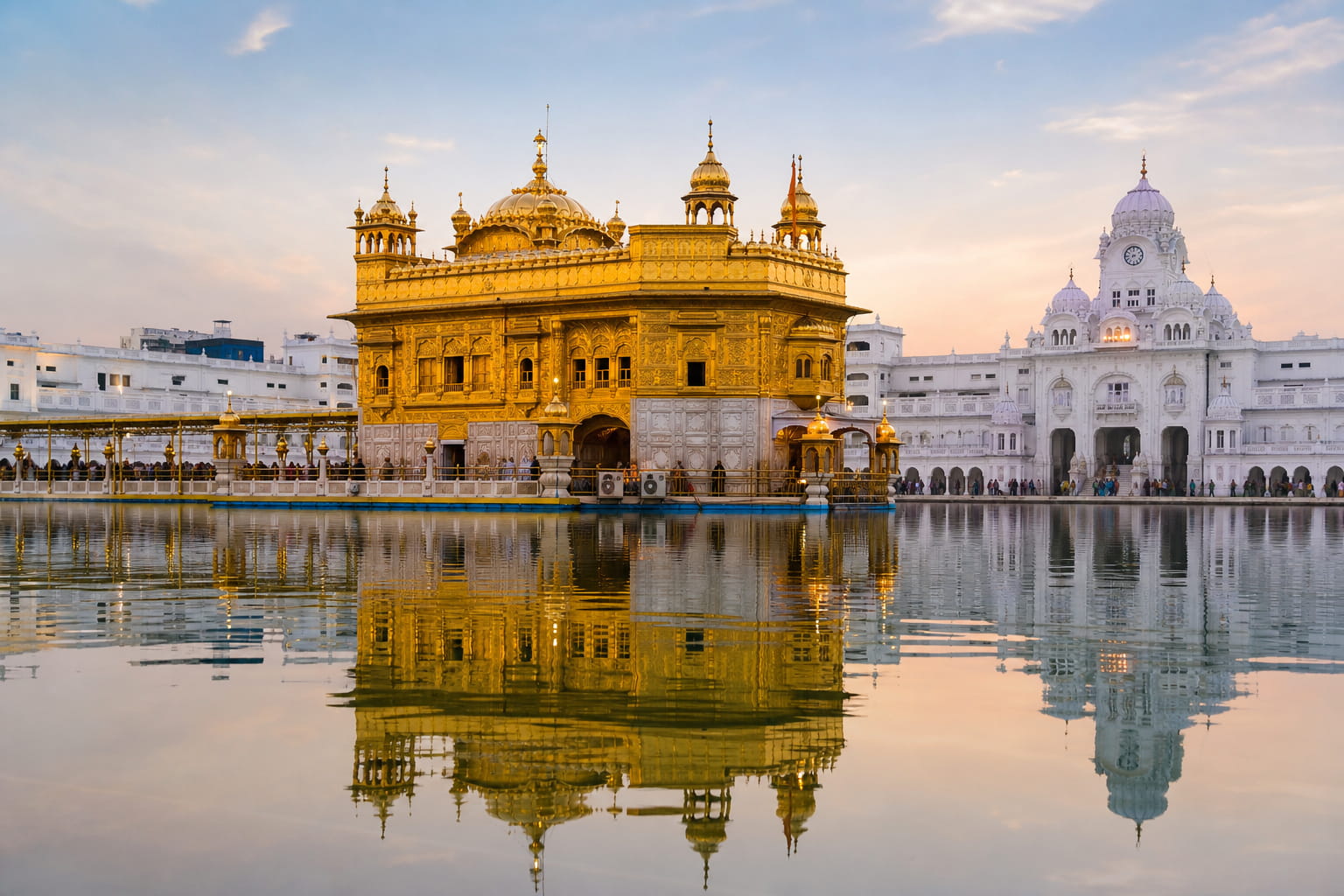
The Golden Temple, officially Sri Harmandir Sahib, is the centrepiece of every visit to Amritsar. It is open 24 hours a day, 365 days a year, and entry is completely free for everyone regardless of religion, nationality, or background. The sheer scale of what happens here daily is part of what makes it remarkable.
The sacred pool, the Amrit Sarovar, is what gave Amritsar its name. Guru Ram Das began digging it in 1577, and Guru Arjan Dev, the fifth Sikh Guru, completed the temple structure in 1604. The gold plating that defines the building’s appearance was added later, in the early 19th century, by Maharaja Ranjit Singh, who contributed approximately 750 kilograms of gold. The effect of the gold dome and walls reflecting in the still pool at dawn or late evening is unlike anything else in India.
What to see inside the complex:
The temple stands on a platform in the centre of the sarovar, connected to the marble causeway called the Guru’s Bridge. Entering the sanctum involves a queue that moves continuously; patience is needed on busy days. Inside, the Guru Granth Sahib, the Sikh holy scripture, is recited continuously by musicians throughout the day.
The Akal Takht faces the Golden Temple from across the main entrance. It is the highest seat of Sikh temporal authority and one of five Takhts in the Sikh world. The daily Palki Sahib ceremony, when the Guru Granth Sahib is carried in a golden palanquin to the sanctum at dawn and returned to the Akal Takht each night, is one of the most significant daily rituals at the complex. The morning Palki Sahib, which begins before 4 AM, draws devoted crowds.
The Langar:
The langar at the Golden Temple is the largest free community kitchen in the world. It serves over 50,000 meals daily, with numbers rising to 100,000 or more on weekends and festival days.
All food is vegetarian, prepared and served by volunteers, and available to anyone who enters. The dal, roti, and kheer served here taste different from any restaurant version of the same food.
Eating in the langar hall, sitting cross-legged on the floor alongside pilgrims, volunteers, and visitors from every part of India and the world, is an experience specific to this place.
Practical notes:
- Entry: Free, open 24 hours
- Heads must be covered at all times inside the complex; scarves and head covers are available at the entrance gates
- Shoes are removed before entering and kept in a cloakroom
- Wash your feet in the shallow wading pool at the entrance
- Best times: 4 to 6 AM for the Palki Sahib ceremony and morning quiet, late evening from 9 PM onward for the illuminated reflection in the sarovar
Within Walking Distance: History Right Beside Devotion
The most significant historical sites in Amritsar sit within 500 metres to 2 km of the Golden Temple. Both deserve serious time.
Jallianwala Bagh
Jallianwala Bagh is 500 metres from the Golden Temple, accessible through a narrow lane off the main road. On April 13, 1919, General Reginald Dyer ordered troops to open fire on a crowd of unarmed civilians who had gathered in the walled garden for a public meeting and to celebrate Baisakhi. Approximately 400 people were killed and more than 1,000 were wounded in one of the defining events of India’s independence struggle.
The bullet marks are still in the walls. They have been preserved exactly as they were. The Martyrs’ Well, into which people jumped to escape the shooting, is still there. Walking through the garden with that knowledge changes what you see.
The site also has a museum covering the event and a flame memorial. Set aside at least an hour here, not as a tourist visit but as a proper reading of what happened.
Entry: Free.
Partition Museum
The Partition Museum is 2 km from the Golden Temple, housed in the historic Town Hall building in the heart of Amritsar. Opened in 2017, it is India’s first museum dedicated entirely to the events of the 1947 Partition of India, the largest forced migration in human history, which displaced approximately 15 million people and killed somewhere between 200,000 and 2 million.
The museum does not present the Partition through political history alone. The galleries are built around personal stories: recorded testimonies, letters, photographs, and objects belonging to families who were displaced. The effect is accumulated across room after room, and most visitors leave in silence.
Entry: ₹250 Indians, ₹500 foreigners.
Timings: 10 AM to 6 PM. Closed Mondays.
Wagah Border: Plan Your Afternoon Around It
Wagah is the only road border crossing between India and Pakistan, 28 km from Amritsar. Every evening, the Border Security Force of India and the Pakistan Rangers perform the Beating Retreat ceremony, a formally choreographed lowering of both national flags involving precision marching, high kicks, and considerable patriotic noise from both sides of the border simultaneously.
The ceremony is free to attend. The stands fill fast. Leave Amritsar by 2:30 to 3 PM to allow time for the drive and a good seated position before the ceremony begins.
Ceremony timings vary by season:
- Summer: Approximately 5:30 to 6:30 PM
- Winter: Approximately 4:15 to 4:45 PM
Confirm the exact time before going; the ceremony runs roughly 45 minutes and adjusts with the sunset.
The Wagah ceremony is often described as a theatrical spectacle, which is accurate, but it is also a genuinely unusual experience to sit a few metres from the Pakistan border and watch both countries simultaneously mark the end of the day with the same choreography performed competitively. It reads differently once you have been to the Partition Museum earlier in the day.
Return to Amritsar takes about 45 minutes. The drive back after the ceremony coincides with traffic from both sides of the stands, so allow extra time.
More Places to Visit in Amritsar: A Second Day
The Golden Temple, Jallianwala Bagh, Partition Museum, and Wagah Border fill a strong first day. A second day covers different ground.
Gobindgarh Fort
Gobindgarh Fort is 3 km from the Golden Temple and was originally built in the 18th century, later used by Maharaja Ranjit Singh as a treasury. After remaining closed for decades, it has been developed into a heritage attraction with a museum, light and sound show, cultural performances, and restaurants within the fort walls.
The light and sound show runs in the evening and covers the history of Punjab through narration and projections onto the fort’s interior walls. It is the most accessible evening option in Amritsar after returning from Wagah Border.
Entry: ₹100 to ₹250 depending on the show and package.
Durgiana Temple
Durgiana Temple, 3 km from the Golden Temple, is a Hindu temple dedicated to Goddess Durga and built on a platform in the centre of a sacred lake, in deliberate architectural parallel to the Golden Temple. The white marble and the lakeside setting give it a quiet and reflective atmosphere. Entry is free.
Khalsa College
Khalsa College on the GT Road, established in 1892, is one of Punjab’s most visually striking institutions. The main building is a Mughal-influenced red sandstone structure with white marble detail and a prominent clock tower. It is still an active college, but the outer campus and the main building’s facade are accessible and worth the short detour for anyone with an interest in colonial-era Indian architecture.
What to Eat in Amritsar
Amritsar’s food is inseparable from the city. No visit is complete without spending time in the food lanes near the Golden Temple.
Amritsari kulcha is the signature dish: a thick, stuffed flatbread cooked in a tandoor, served with chhole (spiced chickpeas) and makhan (fresh butter). Bharawan Da Dhaba, operating since 1912, and Kesar Da Dhaba, since 1916, are the most established names. Both are near the temple and consistently busy.
The langar at the Golden Temple is a meal in itself and one of the most interesting culinary experiences in India. Dal, sabzi, roti, and kheer, served free, in a hall that seats thousands simultaneously.
Amritsari fish, marinated in ajwain and gram flour batter and fried, is the non-vegetarian dish most specific to the city. The lanes near the temple and the Lawrence Road area have reliable options.
Lassi here is thick, set, and served in clay pots. It is not a beverage in the usual sense. Gurdas Ram Jalebi Wala on Katra Ahluwalia Street has been making jalebis and lassi since 1885.
How Long Do You Need in Amritsar?
One full day covers the Golden Temple, Jallianwala Bagh, and Wagah Border, but nothing slowly. Two days allows you to experience the Golden Temple at both dawn and late evening, spend proper time at the Partition Museum, add Gobindgarh Fort, and eat properly. Three days gives you Durgiana Temple, a morning in the food lanes without any schedule pressure, and Khalsa College.
Most visitors underestimate how much time the Golden Temple and the Partition Museum need. Both reward going slowly.
How to Reach Amritsar
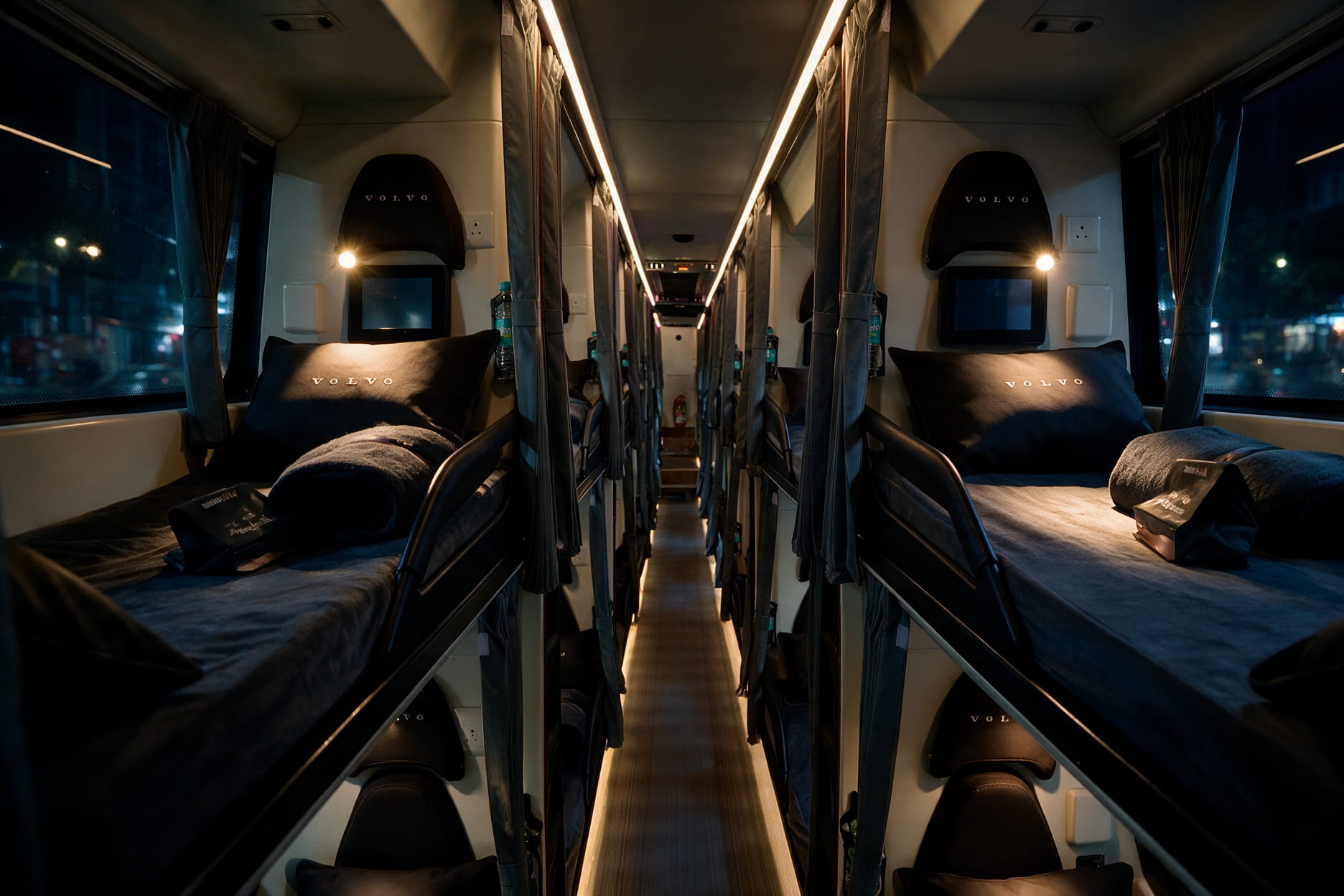
Amritsar is approximately 466 km from Delhi by road. zingbus operates multiple buses daily on the Delhi to Amritsar corridor, with overnight options that leave Delhi in the evening and arrive in Amritsar by morning. The journey takes approximately 6 to 8 hours depending on route and traffic conditions.
Book your Delhi to Amritsar bus in advance. For the return, the Amritsar to Delhi bus runs daily with fares starting from approximately ₹730. Prices vary by bus type and date; confirm current rates on the zingbus app.
Boarding points in Amritsar for zingbus include the Amritsar Bus Stand (GT Road), Alpha One Mall in Ranjit Avenue, and the Golden Temple Road stop, which is the most convenient point for visitors staying near the temple area.
You Might Also Like
- 25 Must-Visit Places in India: Amritsar features in this national heritage travel reference alongside other bus-accessible sites worth building into a longer trip.
- How to Plan a Road Trip in India: Useful if you are building a Punjab circuit with Amritsar, Chandigarh, and Dharamshala as part of the same journey.
- Women Bus Travel Safety in India: Relevant for solo female travellers taking the overnight Delhi to Amritsar bus.
Tips for Visiting Amritsar
- Visit the Golden Temple at 4 AM if you can. The early morning Palki Sahib ceremony and the stillness of the sarovar before the crowds arrive are the most specific experiences the temple offers.
- Return to the Golden Temple after 9 PM on the same day. The gold dome reflected in the illuminated pool at night is a completely different version of the same place.
- Head covers are mandatory inside the Golden Temple complex. Carry a scarf or use the ones available at the entrance gates.
- Leave for Wagah Border by 2:30 PM at the latest. Getting there early means a better seated position for the ceremony.
- The Partition Museum closes on Mondays. Plan accordingly.
- Eat the langar at the Golden Temple at least once. Sitting on the floor in the langar hall and eating with 1,000 others is the most distinctly Amritsar meal available.
- Jallianwala Bagh needs an hour, not 15 minutes. Reading the plaques and standing at the Martyrs’ Well takes time to process.
- The Golden Temple entrance has multiple gates. The main gate on the north side is the busiest. Side entrances are faster in the early morning.
- Amritsar is generally affordable. Street food near the temple is cheap, accommodation near the old city is available at most price points, and entry to the Golden Temple, Jallianwala Bagh, and Wagah is free.
Amritsar Asks You to Take It Seriously
The places to visit in Amritsar are not passive sightseeing stops. The Golden Temple is an active, living religious institution that runs on the voluntary service of its community. Jallianwala Bagh is a memorial to a specific, documented atrocity. The Partition Museum collects the testimonies of people who survived the largest forced displacement in modern history. Wagah is a border that physically divides what was once one region.
Amritsar rewards the visitor who approaches each of these places with the weight they deserve. The city is completely accessible, extremely well set up for visitors, and genuinely unlike anywhere else in India. The places to visit in amritsar form a coherent picture when you give them time, and that picture stays with you.
Frequently Asked Questions
What are the best places to visit in Amritsar?
The best places to visit in amritsar include the Golden Temple, Jallianwala Bagh, the Partition Museum, Wagah Border, Gobindgarh Fort, and Durgiana Temple.
Is the Golden Temple free to visit?
Yes, the Golden Temple is completely free to enter for everyone, open 24 hours a day, 365 days a year, with no entry ticket required regardless of religion or nationality.
What time is the Wagah Border ceremony?
The Wagah Border Beating Retreat ceremony runs at approximately 5:30 to 6:30 PM in summer and 4:15 to 4:45 PM in winter; confirm the exact time before travelling as it adjusts with the sunset.
How far is Wagah Border from Amritsar?
Wagah Border is approximately 28 to 30 km from Amritsar city centre; the drive takes 45 minutes to an hour and you should leave the city by 2:30 to 3 PM to arrive with time to find a good seat.
What is the entry fee for the Partition Museum in Amritsar?
The Partition Museum entry fee is ₹250 for Indian nationals and ₹500 for foreign visitors; it is closed on Mondays and open from 10 AM to 6 PM.
How many days are enough for Amritsar?
Two full days covers the Golden Temple at dawn and evening, Jallianwala Bagh, the Partition Museum, and Wagah Border; three days adds Gobindgarh Fort, Durgiana Temple, and a proper morning in the food lanes.
What is the langar at the Golden Temple?
The langar is the free community kitchen at the Golden Temple that serves over 50,000 vegetarian meals daily to anyone who visits, regardless of religion, run entirely by volunteers and considered the world’s largest free kitchen.
What is the best time to visit the Golden Temple?
The best times to visit the Golden Temple are between 4 and 6 AM for the morning Palki Sahib ceremony and the quiet of early devotion, and after 9 PM in the evening for the illuminated reflection of the gold dome in the sarovar.