Rishikesh is not a single place. It is a collection of very different neighbourhoods, each with its own atmosphere and pace. The town on the west bank is busy and commercial. The Swarg Ashram area on the east bank is quieter and more spiritual. The adventure belt upstream is louder and more energetic. The outskirts are forest and temple roads.
This guide covers all the places to visit in Rishikesh organised by zone so you can plan your time practically rather than jumping back and forth across the city. For the detailed activity guides, the Top 10 Things To Do In Rishikesh and the Rishikesh Travel Guide for Adventure and Yoga cover the experiences in depth. This guide focuses on the places themselves.
| Zone | Key Places | Best For |
| Riverfront | Triveni Ghat, Gita Bhawan | Families, pilgrimage, sunset |
| Bridge and Ashram Belt | Lakshman Jhula, Ram Jhula, Swarg Ashram | First-time visitors, morning walks |
| Spiritual and Temple Circuit | Neelkanth Mahadev, Bharat Mata Mandir, Vashishtha Cave | History, hidden gems, couples |
| Adventure Belt | Shivpuri, Mohan Chatti | Adventure seekers, friend groups |
| Outskirts | Kunjapuri, Neer Garh Waterfall, Rajaji National Park | Nature, wildlife, photographers |
Plan 1: Best Places to Visit in Rishikesh
The riverfront zone runs along the west bank of the Ganga through the heart of Rishikesh town. This is where the ghats are, the evening activity is centred, and the spiritual pulse of the city is most immediately felt. Most first-time visitors spend their first evening here, and it is usually the right call.
Triveni Ghat
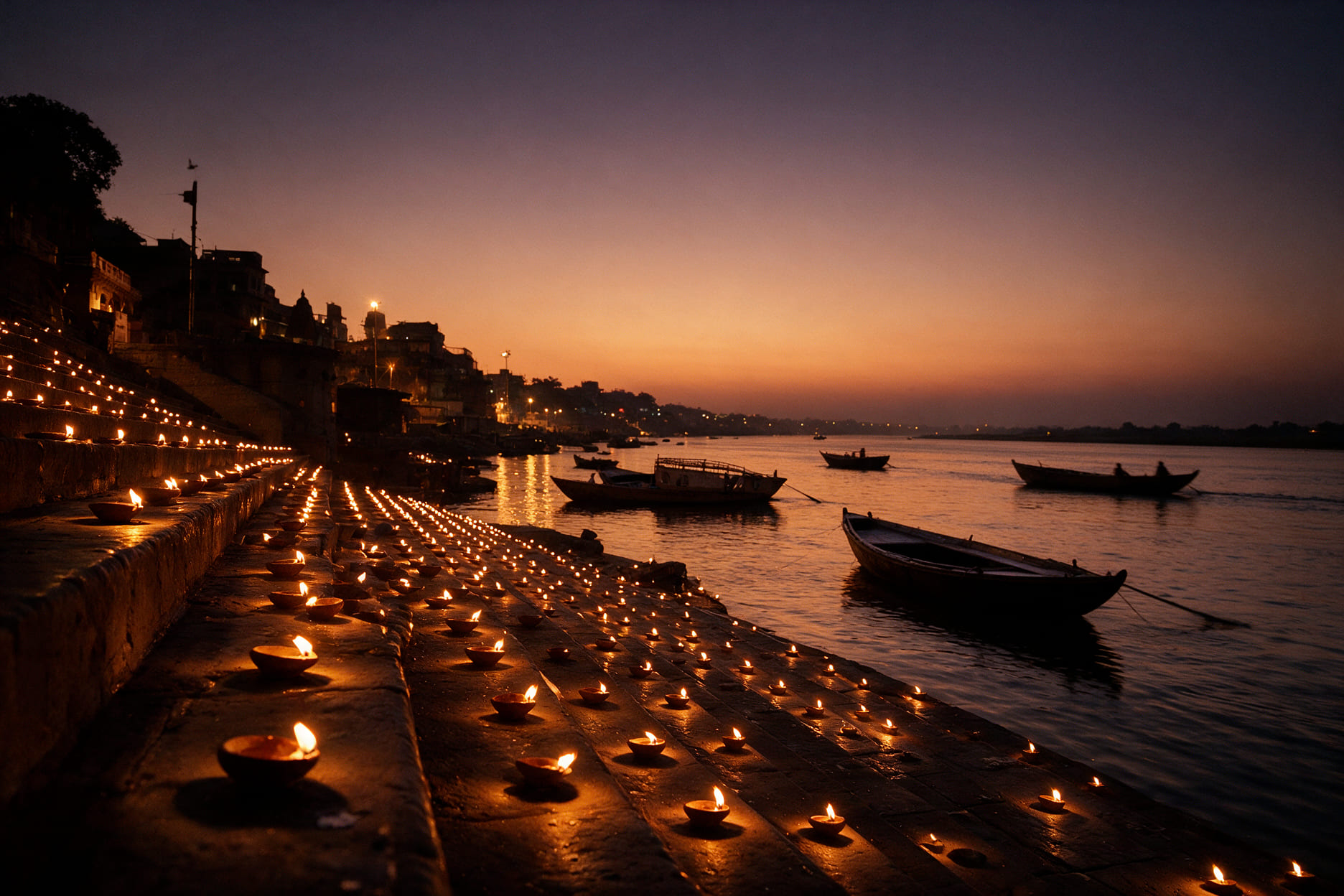
Triveni Ghat is the most significant ghat in Rishikesh and the centre of the city’s religious life. The name refers to the confluence of the three sacred rivers, and the stone steps here descend into a section of the Ganga that sees both daily ritual bathers and tourists sitting quietly at the edge. The ghat has a morning activity as important as its evening one: early bathers arrive before 7 AM, and the light on the river at that hour is something the crowd of evening visitors rarely sees.
The ghat is free to enter, open at all hours, and best visited both morning and evening for two entirely different experiences of the same place.
Gita Bhawan
Gita Bhawan is one of the most visited religious complexes in Rishikesh and one of the least covered in standard travel guides. It sits about 500 metres from Ram Jhula on the riverbank and covers a large area with multiple halls, corridors, a library, and a bookshop. The complex is best known for the murals covering its interior walls, which depict scenes from the Mahabharata and Bhagavata Purana in vivid, detailed style.
The entire complex runs on a pilgrimage model. Accommodation for spiritual visitors is available at nominal cost, and entry to the public areas is free. The library holds thousands of texts in multiple languages. Most tourists walk past the gate without realising what is inside. It is worth at least an hour for anyone interested in the cultural depth behind Rishikesh beyond its adventure reputation.
- Entry: Free
- Best time: Morning for quiet; afternoon for the art-covered corridors
- Best for: Families, cultural travellers, pilgrims
Plan 2: The Bridge and Ashram Belt
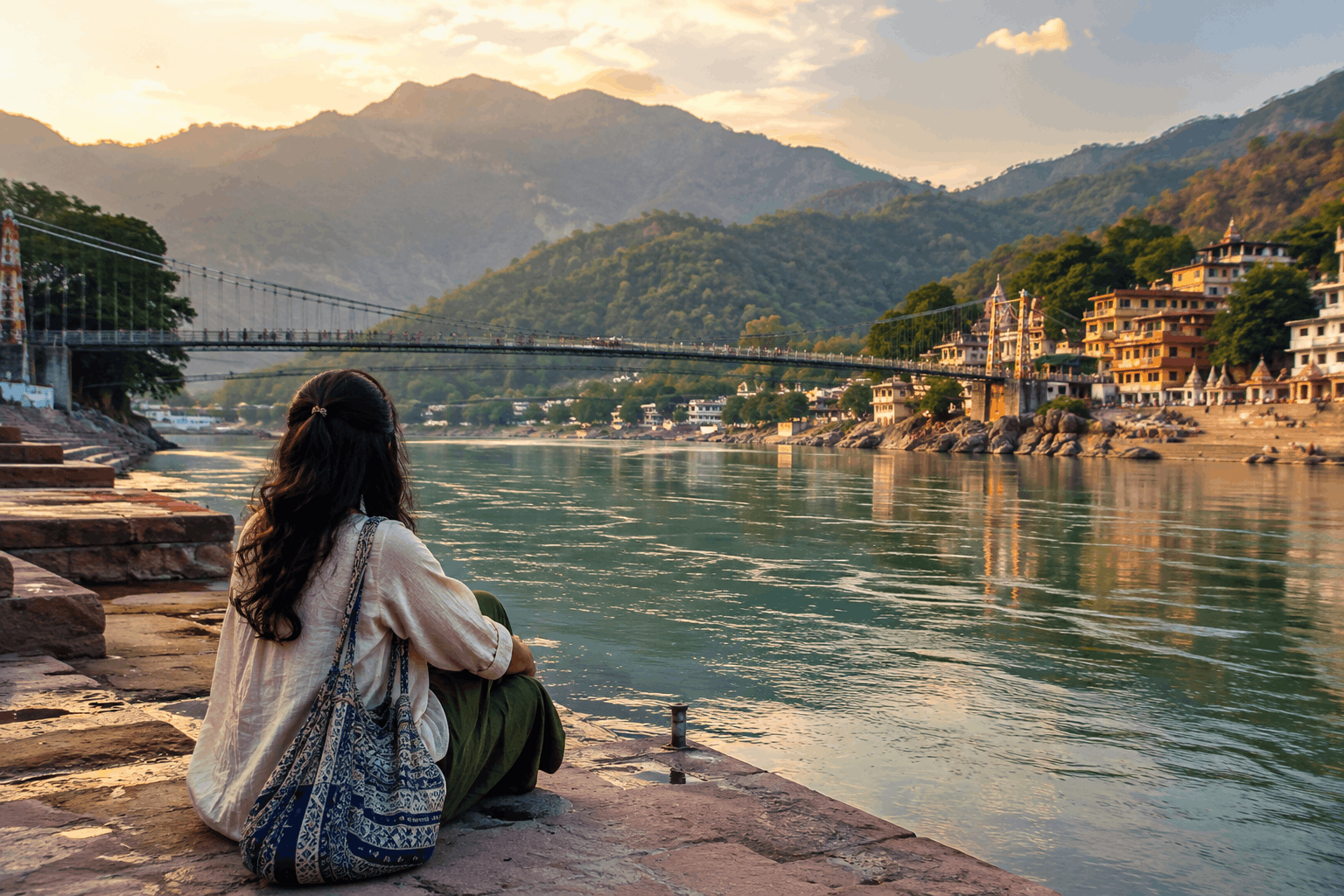
The suspension bridges across the Ganga divide the Rishikesh experience into two banks. The east bank, accessible through Lakshman Jhula and Ram Jhula, has a markedly different character from the main town and is where the most important ashram neighbourhood in the city sits.
Lakshman Jhula and Ram Jhula
These two bridge areas anchor the most-visited part of Rishikesh. Lakshman Jhula is about 5 km from the main bus stand, and Ram Jhula sits approximately 3 km upstream. Both are surrounded by temples, cafes, small shops, and river access. The bridges provide the pedestrian crossing between the two banks and are also among the most photographed spots in the city.
The area around both bridges is best navigated on foot. Street food, riverside tea stalls, and the sounds of temple bells make the lanes worth wandering slowly. Go early in the morning if you prefer fewer people.
Swarg Ashram Neighbourhood
Swarg Ashram is the neighbourhood on the east bank of the Ganga, directly accessible via Ram Jhula. Unlike the main town which has traffic, noise, and the commercial activity that comes with a busy hill town, Swarg Ashram is pedestrian only. No vehicles. The lanes are narrow, lined with small temples, meditation centres, and open areas facing the river.
It is one of the genuinely peaceful places to visit in Rishikesh, and most travellers who spend time here wish they had stayed longer. Morning walks through Swarg Ashram between 6 and 8 AM, when residents are doing their rituals and the lane is quiet, are among the better quiet experiences the city offers. The neighbourhood connects northward along the river road toward the jungle edge.
- Best time: Early morning for the quietest version of this neighbourhood
- Best for: Solo travellers, couples, anyone who wants Rishikesh without the crowd
Beatles Ashram
The Beatles Ashram, officially Chaurasi Kutia, sits within the Rajaji Tiger Reserve buffer zone and remains one of the most atmospheric and culturally layered sites in Rishikesh. The full visit guide including entry fee, timings, and what to see inside is covered in the Rishikesh Travel Guide. As a physical location, it sits off the east bank forest road and takes some finding, which is part of its appeal.
Plan 3: The Spiritual and Temple Circuit
The spiritual geography of Rishikesh extends well beyond the riverbank and into the surrounding hills and forest. Three places in this zone are genuinely undervisited relative to their significance, and all three reward visitors who make the extra effort to reach them.
Neelkanth Mahadev Temple
Neelkanth Mahadev Temple is one of the most important Shiva temples in Uttarakhand and a destination that many visitors to Rishikesh miss entirely because it sits 32 km from the main town at an elevation of approximately 1,330 metres. The temple marks the location where, according to tradition, Lord Shiva meditated after consuming the Halahala poison during the churning of the cosmic ocean, an act that turned his throat blue and gave him the name Neelkanth.
The temple complex sits within dense forest with the Pankaja and Madhumati rivers converging nearby. The road from Rishikesh to Neelkanth passes through increasingly quiet forest, and the final approach on foot gives the visit a sense of arrival that the more accessible ghats and bridges do not. Shared jeeps and cabs from Rishikesh town cover the route, taking approximately one to one and a half hours.
The temple sees heavy crowds on Mondays, Shivratri, and Sawan month. Weekday mornings outside festival season offer the most peaceful visit.
- Distance from Rishikesh: 32 km
- How to reach: Shared jeep or private cab from Rishikesh town
- Entry: Free
- Best for: Pilgrims, couples, photographers, anyone who wants the best single temple near Rishikesh
Bharat Mata Mandir
Bharat Mata Mandir stands in the Muni Ki Reti area, about 2 km from Ram Jhula, and is among the most unusual religious sites in North India. The building is a 13-storey temple not dedicated to a deity but to Mother India as a concept. Each floor is dedicated to a different dimension of Indian spiritual and national life: freedom fighters, saints, women of historical significance, and the idea of India as a sacred geography.
Built in 1983 by Swami Satyananda, the interior holds marble relief maps, paintings, and installations across its floors. The rooftop offers a long view across the Rishikesh valley. Entry is free, and the temple opens in the morning until early evening. Most visitors who find it spend 45 minutes to an hour inside. Most visitors to Rishikesh miss it entirely.
- Entry: Free
- Timings: Approximately 8 AM to 7 PM (confirm locally before visiting)
- Best for: Families, history enthusiasts, first-time visitors wanting something different
Vashishtha Cave
Vashishtha Cave sits approximately 17 km from Rishikesh on the Badrinath road along the upper Ganga. It is a narrow cave along the riverbank where the sage Vashishtha is believed to have meditated, and it remains an active meditation site. Small in scale, quiet in character, and largely unknown among first-time visitors, it draws a different kind of traveller: serious practitioners, people returning to Rishikesh for a second or third visit, and those specifically seeking the less obvious spiritual sites.
The cave itself has a small shrine inside. The setting along the Ganga bank with the river fast and clear at this elevation makes the surroundings as compelling as the cave. Mornings before 9 AM offer near-complete quiet.
- Distance: 17 km from Rishikesh on the Badrinath road
- Best for: Spiritual seekers, couples, travellers on second or third Rishikesh visits
- Hidden gem status: One of the most undervisited sites in the entire region
Plan 4: The Adventure Belt
About 12 to 20 km upstream from Rishikesh, the Ganga runs through a stretch that has become the centre of the city’s adventure tourism economy. The places here are not sightseeing spots in the conventional sense but distinctive destination zones in their own right.
Shivpuri
Shivpuri is a small riverside settlement 16 km upstream from Rishikesh and the primary base for river rafting departures and overnight camping along the Ganga. As a physical location, it has a distinct character: riverside camps spread across the bank, the sound of rapids in the background, and the Aravalli forest coming down to the water’s edge.
- Distance: 16 km from Rishikesh
- Best for: Friends, adventure groups, overnight camp bookings
Mohan Chatti
Mohan Chatti is the base village for Jumpin Heights, which operates India’s highest commercial bungee jump at 83 metres. As a destination, Mohan Chatti sits on a quiet forest road approximately 25 km from Rishikesh and has the feel of a forest outpost rather than a commercial hub.
Plan 5: The Outskirts
The outermost ring of Rishikesh’s places to visit includes one of the most photogenic sunrise points in the region, a forest waterfall trail, and a full national park within short reach.
Kunjapuri Temple
Kunjapuri Temple sits at an elevation of 1,676 metres on a ridge approximately 25 km from Rishikesh. On a clear morning, the view from the temple encompasses the Garhwal Himalayan range, the Doon Valley, and parts of the river below. As a physical location, the temple is a Shaktipeeth, one of the 64 sacred seats of the goddess, and holds religious significance independent of its panoramic views.
Neer Garh Waterfall
Neer Garh Waterfall sits about 3 km from Lakshman Jhula along a short forest trail. As a destination, it provides one of the quickest nature breaks from the main Rishikesh town, taking under an hour to reach and offering cool shade and sound in contrast to the busy riverbank areas. The waterfall has two tiers, with the lower tier more easily accessible and the upper tier requiring a steeper path.
Rajaji National Park
Rajaji became a Tiger Reserve in 2015 and covers approximately 820 sq km across three Uttarakhand districts, with the Chilla Range just 15 to 20 km from central Rishikesh being the nearest safari entry point. The park is home to wild elephants, tigers, leopards, sambar deer, spotted deer, over 315 bird species, and the critically important elephant corridor that passes between Rajaji and the Corbett landscape.
Jeep safaris from the Chilla gate are available from November to June. The park closes during monsoon from July to September. For families or travellers who want wildlife alongside Rishikesh’s spiritual and adventure landscape, Rajaji adds a fourth dimension to the trip that very few itineraries include.
- Entry to Rajaji: Fees apply; confirm current rates at the park gate or online before visiting
- Best season: November to June for safaris
- Best for: Families, nature lovers, photographers, birdwatchers
How to Reach Rishikesh from Delhi
Rishikesh is approximately 230 to 250 km from Delhi via NH58, with the bus journey taking 6 to 7 hours depending on traffic and departure time. You can book a Delhi to Rishikesh bus with AC Seater and Sleeper options from multiple Delhi boarding points including Kashmere Gate, Dhaula Kuan, Anand Vihar, and AIIMS. The full route, seat type, and fare breakdown is covered in the Delhi to Rishikesh by Bus guide.
Carry These Essentials for Rishikesh
- Comfortable walking shoes: the zone-to-zone distances add up faster than expected
- Light jacket: mornings at Kunjapuri, Vashishtha Cave, and Neelkanth are cool year-round
- Cash: many ghats, cave entrances, and small shrines only accept cash
- Water bottle: the Neelkanth road and Rajaji safari zone have limited stops
- Sunscreen: the Ganga riverfront at midday is significantly brighter than Delhi
- A small bag for day walks: the Neer Garh trail and Swarg Ashram lanes need only what you carry on you
Rishikesh Is Bigger Than One Trip
The places to visit in Rishikesh span more range than most first-time visitors plan for. The riverfront, the bridges, the temples in the hills, the forest zones upstream, and the national park just outside the city create a layered destination that rewards return visits as much as first ones.
For this trip, plan your time by zone rather than by a single list of attractions. Start at the riverfront. Cross to Swarg Ashram. Budget a half day for Neelkanth. Add Rajaji if you have the time. And check zingbus for bus departures from Delhi before you finalise the dates.
Frequently Asked Questions
Ques: What are the top 10 places to visit in Rishikesh?
Ans: Triveni Ghat, Neelkanth Mahadev, Lakshman Jhula, Bharat Mata Mandir, Swarg Ashram, Shivpuri, Vashishtha Cave, Kunjapuri, Gita Bhawan, Rajaji National Park.
Ques: What are the top 5 places to visit in Rishikesh?
Ans: Triveni Ghat, Neelkanth Mahadev Temple, Lakshman Jhula area, Swarg Ashram, and Bharat Mata Mandir are the five essential stops.
Ques: What are the top 3 must-see places in Rishikesh?
Ans: Triveni Ghat, Neelkanth Mahadev Temple, and the Lakshman Jhula and Swarg Ashram belt are the three most visited areas.
Ques: Which places to visit in Rishikesh with family?
Ans: Triveni Ghat, Bharat Mata Mandir, Gita Bhawan, and Rajaji National Park work best for family visits to Rishikesh.
Ques: Which places to visit in Rishikesh for couples?
Ans: Kunjapuri sunrise, Vashishtha Cave, Swarg Ashram morning walks, and Neelkanth Mahadev Temple are popular choices for couples.
Ques: What are the hidden places to visit in Rishikesh?
Ans: Vashishtha Cave and Bharat Mata Mandir are two genuinely undervisited spots that most first-time visitors miss entirely.
Ques: What can I visit in Rishikesh in one day?
Ans: Triveni Ghat, Lakshman Jhula, Swarg Ashram, and Gita Bhawan together cover a strong one-day first-visit itinerary.
Ques: How far is Neelkanth Mahadev Temple from Rishikesh?
Ans: Neelkanth Mahadev Temple is approximately 32 km from Rishikesh, about 1 to 1.5 hours by shared jeep or cab.
Ques: What is Bharat Mata Mandir known for in Rishikesh?
Ans: A 13-storey temple dedicated to Mother India with each floor honouring saints, freedom fighters, and national values. Entry is free.
Ques: Is Rajaji National Park worth visiting from Rishikesh?
Ans: Yes. Jeep safaris, elephant sightings, tigers, and over 315 bird species make it worth the 15 to 20 km trip from Rishikesh.
Ques: What is Swarg Ashram in Rishikesh?
Ans: A vehicle-free neighbourhood on the east Ganga bank beyond Ram Jhula, known for temples, ashrams, and quiet riverside lanes.
Ques: What is the best time to visit places in Rishikesh?
Ans: October to March is ideal for sightseeing and temple visits. September to November is best for adventure activities.
Ques: How do I get to Rishikesh from Delhi by bus?
Ans: Book on zingbus from Delhi with AC Seater or Sleeper options; the journey takes approximately 6 to 7 hours.