


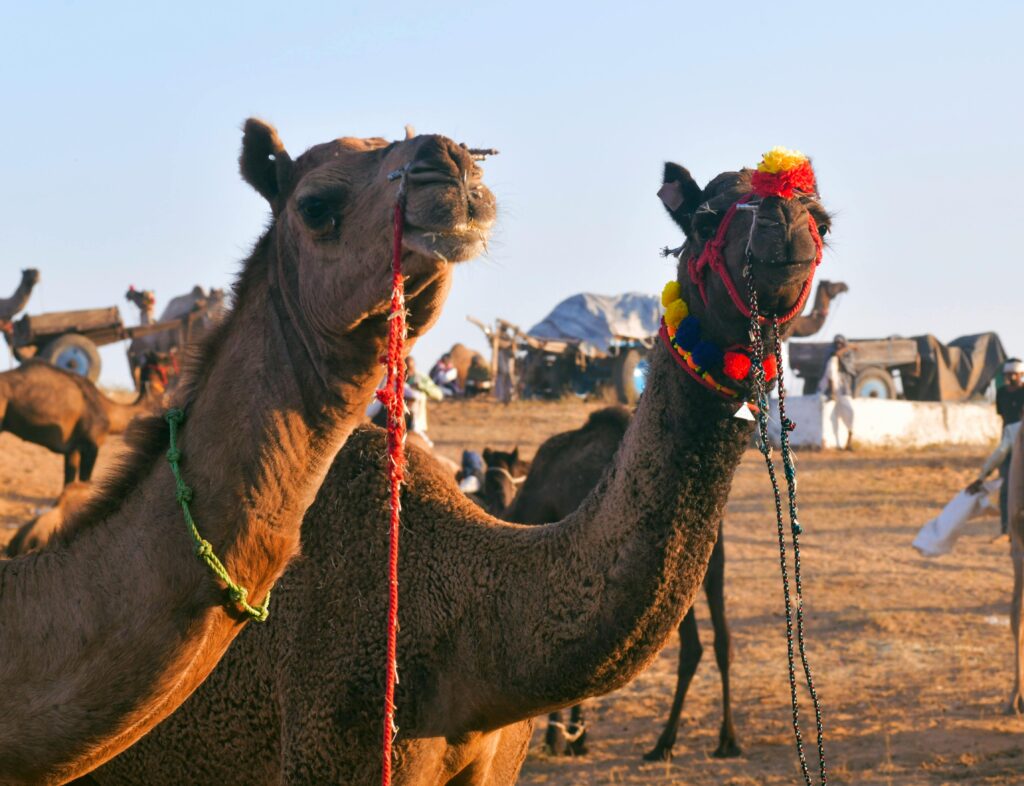
Picture this. Over 50,000 camels converging on a small desert town. Their necks adorned with colorful tassels and bells that jingle with every step. Traders haggling in Marwari dialect while folk dancers twirl in vibrant ghagras. The aroma of dal baati churma mixing with incense from nearby temples. And somewhere in the background, the haunting melody of a ravanhatha filling the desert air.
This isn’t a movie set. This is Pushkar Camel Fair 2025, it’s happening from October 30 to November 5. If you’ve been scrolling through Instagram reels of Rajasthan, wondering when you’ll actually experience it instead of just double-tapping, this is your moment.
The Pushkar Camel Fair (or Pushkar Mela as locals call it) isn’t your typical tourist festival. It started centuries ago as a simple livestock trading event during Kartik Purnima, the full moon in the Hindu month of Kartik. Camel herders from across Rajasthan would converge to buy and sell their animals. But over time, what was purely commercial transformed into a spectacular cultural carnival that now attracts over 200,000 visitors annually.
And here’s the best part. Unlike many festivals that have become overly commercialized, Pushkar Mela retains its authentic soul. Yes, there are tourists. Yes, there are cameras everywhere. But the core remains unchanged. Real traders still bring their livestock. Real devotees still take holy dips in Pushkar Lake. Real competitions determine which camel wears the most magnificent decorations.
Why Pushkar Camel Fair 2025 Deserves Your Attention
Let’s be honest. India has hundreds of festivals. So what makes this one special? Three things: authenticity, diversity, and timing.
First, the authenticity. The Pushkar Fair isn’t staged for tourists. It’s a working livestock fair where actual trading happens. You’ll see weathered desert traders examining camels with the practiced eye of generations. You’ll witness transactions that follow traditions older than your grandparents. And you’ll experience Rajasthani culture not as a performance but as a living, breathing reality.
Second, the diversity. Where else can you watch camel beauty pageants in the morning, witness longest mustache competitions in the afternoon, attend mesmerizing folk dance performances in the evening, and participate in sacred aartis at sunset? Pushkar Mela packs more experiences into one week than most destinations offer in a month.
Third, the timing. November in Rajasthan is perfect. The scorching summer heat has passed. The winter chill hasn’t arrived yet. Temperatures hover between a comfortable 15-28°C. You can explore the mela grounds without melting or freezing. And the clear desert skies make for stunning sunrises and sunsets.
The 2025 Schedule: When to Visit
Table 1: Pushkar Camel Fair 2025 Complete Timeline
| Dates | Phase | Main Activities | Best For |
| Oct 30 – Nov 1 | Livestock Trading | Camel, cattle, horse trading at peak | Witnessing authentic commerce |
| Nov 2 – Nov 4 | Cultural Festival | Folk dances, competitions, government events | Cultural immersion & photography |
| Nov 5 (Kartik Purnima) | Grand Finale | Holy bath, final aarti, closing ceremonies | Spiritual experiences |
The fair operates in two distinct phases. The first three days focus on actual livestock trading. This is when you’ll see the maximum number of animals and the most authentic business transactions. Traders set up camps, display their camels, and negotiate deals that might take days to finalize.
From November 2 onwards, the cultural festivities intensify. The Rajasthan Tourism Department organizes competitions, folk performances, and cultural programs. This is when the fair transforms into a carnival atmosphere with something happening every hour.
November 5, Kartik Purnima, is the spiritual climax. Thousands of devotees take holy dips in Pushkar Lake before sunrise, believing it washes away sins and brings blessings. The morning aarti ceremony on the ghats creates an atmosphere so spiritually charged that even skeptics feel something profound.

Getting to Pushkar: The Smart Way
Pushkar is a small town (population barely 20,000) that suddenly hosts hundreds of thousands of visitors during the fair. The nearest airport is Jaipur (150 km away), but let’s talk about the most practical and economical way to reach: by bus.
Jaipur to Pushkar: Your Gateway Route
The journey from Jaipur to Pushkar via Ajmer is the most popular route. Here’s why it makes perfect sense. Delhi to Jaipur buses run multiple times daily, covering approximately 280 km in about 5-6 hours. Once in Jaipur, you can catch connecting buses to Ajmer (135 km, 2-3 hours), and from Ajmer, Pushkar is just 11 km away.
Alternatively, the Delhi to Ajmer bus route covers approximately 400 km in about 6-7 hours, making it a direct option. From Ajmer, frequent local buses, taxis, and auto-rickshaws ferry visitors to Pushkar every 15-20 minutes.
Figure 1: Route Options to Pushkar
| Route | Distance | Duration | Best For |
| Delhi to Jaipur to Pushkar | 430 km total | 8-9 hours | Exploring Jaipur first |
| Delhi to Ajmer to Pushkar | 411 km total | 6-7 hours | Direct, fastest option |
| Jaipur to Ajmer to Pushkar | 146 km total | 3-4 hours | Already in Rajasthan |
The Jaipur to Delhi bus route and Ajmer to Delhi bus route ensure comfortable return journeys with multiple departure times throughout the day.
Why Bus Travel Makes Sense
During festival season, Jaipur airport sees inflated ticket prices (often 3-4x normal fares). Train tickets get waitlisted weeks in advance. But bus services maintain regular schedules with the flexibility to accommodate last-minute bookings.
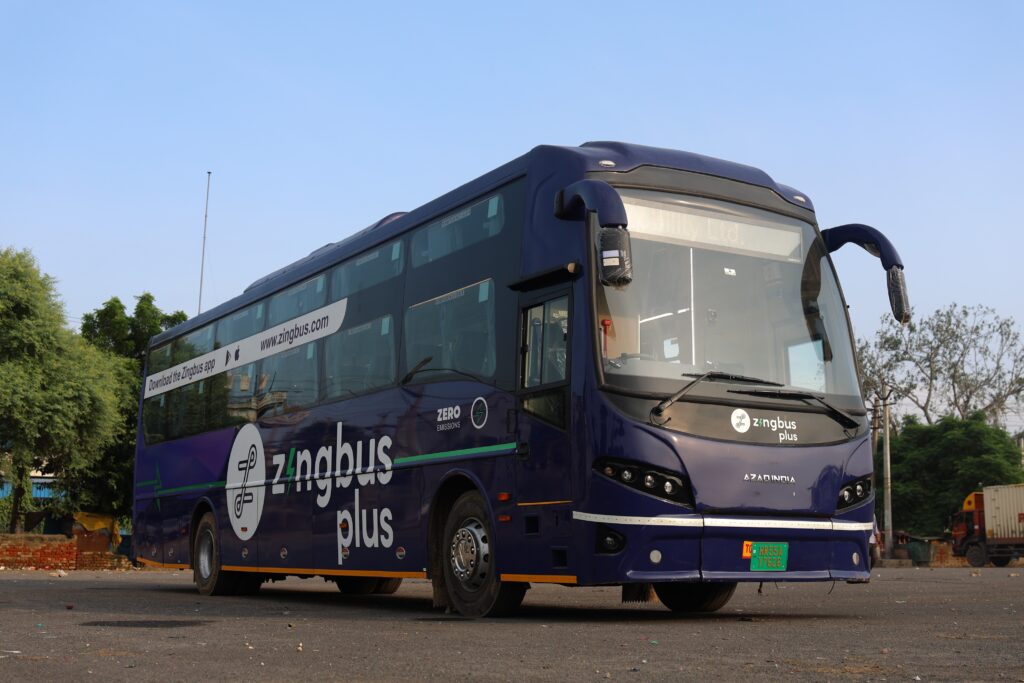
Modern AC buses offer comfortable sleeper berths, charging points, clean washrooms, and experienced drivers familiar with Rajasthan’s highways. The overnight journey from Delhi means you board in the evening, sleep through the trip, and wake up in Rajasthan ready to explore.
The Unmissable Experiences
Camel Competitions: Beauty, Brawn, and Quirkiness
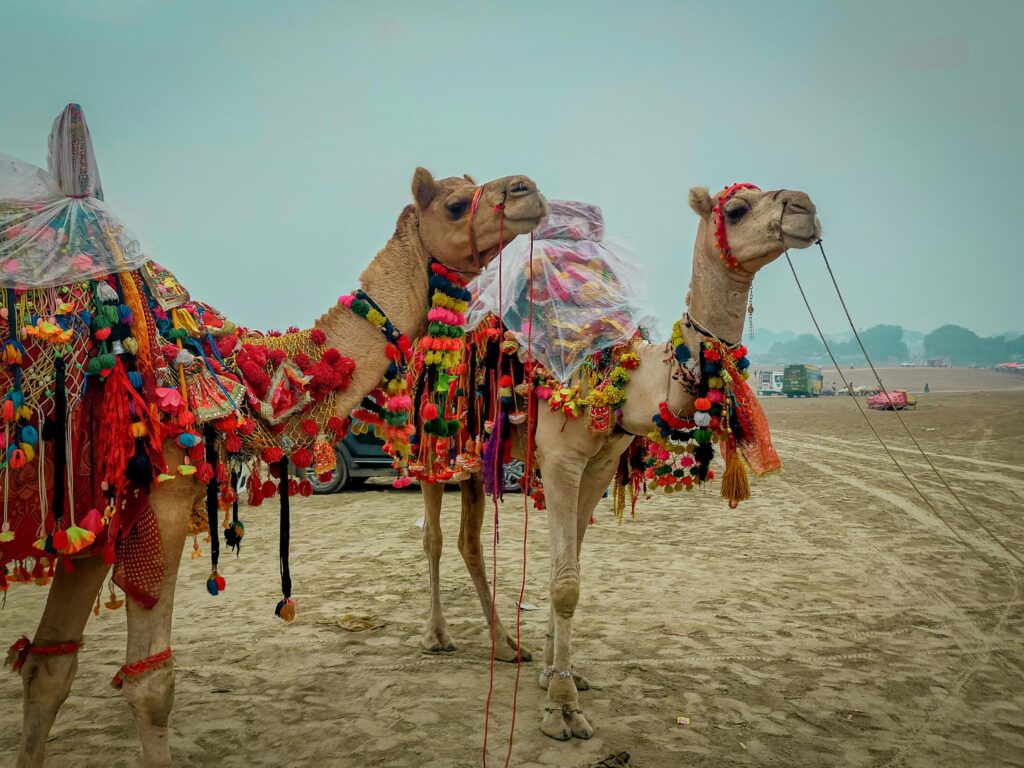
The camel competitions are legendary. Owners spend months preparing their animals, decorating them with intricate patterns painted on their shaved fur, adorning them with colorful saddles and ornate necklaces. The beauty pageant judges camels on decoration, grooming, and even their gait.
Then there’s the camel race. Watching these massive creatures gallop across sandy tracks while riders desperately cling on is hilarious and thrilling simultaneously. The most entertaining moment? The camel acrobatics where camels perform tricks, and the one carrying the maximum number of people without throwing them off wins.
Folk Performances: Rajasthan’s Cultural Soul
Every evening, the main stage comes alive with performances. The Kalbeliya dancers, recognized by UNESCO as intangible cultural heritage, mesmerize audiences with their serpentine movements. Ghoomar dancers spin endlessly in their flowing ghagras, creating a hypnotic visual effect. Fire dancers perform death-defying acts. And folk musicians play traditional instruments like the ravanhatha and algoza, creating melodies that seem to capture the desert’s very essence.
Quirky Competitions: Beyond the Obvious
Pushkar Mela celebrates quirkiness. The longest mustache competition sees men with facial hair stretching over a meter competing for glory. The turban-tying contest tests speed and style. The matka phod (pot-breaking) competition involves blindfolded participants trying to smash suspended clay pots. And yes, there’s even a bride competition where women in traditional attire compete on various parameters.
Spiritual Experiences: The Sacred Side
Pushkar holds immense religious significance. It houses the only Brahma temple in India, making it an important pilgrimage site. During Kartik Purnima, taking a dip in Pushkar Lake is considered highly auspicious. The evening aarti ceremony at the ghats, with hundreds of diyas floating on water, creates an atmosphere of profound tranquility amidst the fair’s chaos.
Shopping Paradise: Treasures to Take Home
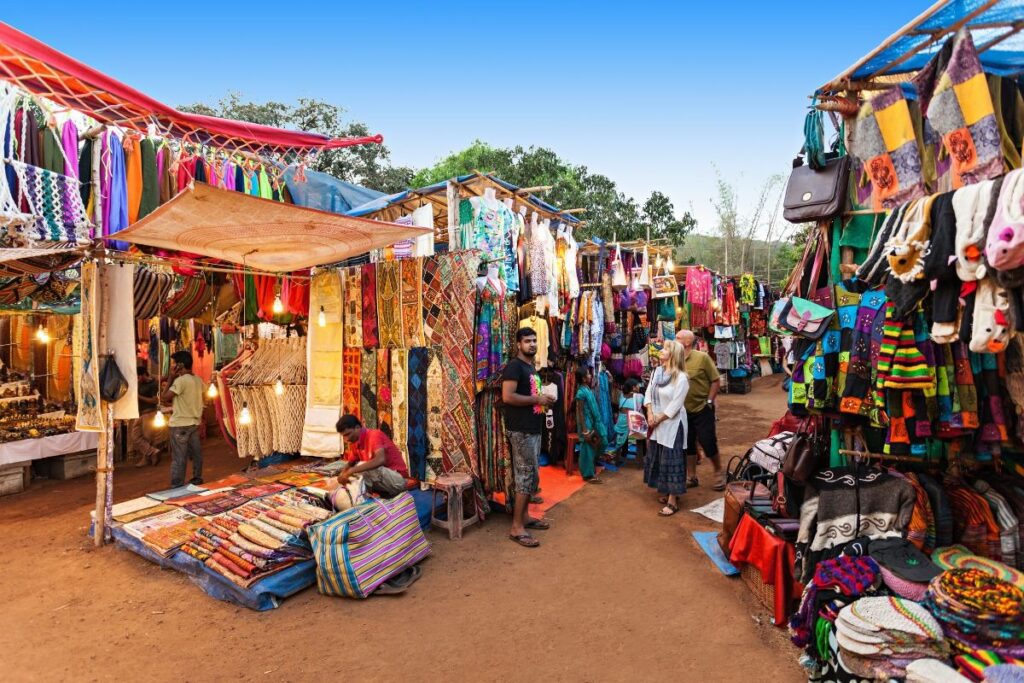
The mela grounds transform into a massive marketplace. Stalls sell everything from Rajasthani jewelry (silver anklets, colorful bangles, traditional necklaces) to leather goods (mojris, bags, belts), from vibrant textiles (tie-dye dupattas, block-printed fabrics) to handicrafts (wooden camels, miniature paintings, brass artifacts).
Pro tip: bargaining isn’t just expected, it’s part of the experience. Start at 40-50% of the quoted price and negotiate. Sellers respect good haggling and often throw in extras for persistent buyers who maintain good humor.

Food Adventures: Rajasthani Flavors
Pushkar Mela is a food lover’s dream. Start your day with kachori and jalebi. For lunch, indulge in dal baati churma, the quintessential Rajasthani dish. Evening snacks could include mirchi bada (chili fritters) or mawa kachori (sweet pastry). And don’t miss the malpua with rabri for dessert.
Since Pushkar is a vegetarian town (non-veg and alcohol are prohibited), you’ll find innovative vegetarian preparations everywhere. The paneer tikka, stuffed parathas, and various chaats are particularly outstanding.
The street food scene around the fairgrounds is equally vibrant. Try the local lemon tea (nimbu chai), freshly squeezed sugarcane juice, and kulhad lassi served in traditional clay cups.
Practical Tips for First-Timers
Accommodation Strategy: Book at least 6-8 weeks in advance. Hotels, guesthouses, and even homestays fill up fast. During the fair, many operators set up luxury tent accommodations near the mela grounds, offering a unique glamping experience.
What to Pack: Comfortable walking shoes (you’ll cover kilometers daily), light cotton clothes for daytime, light woolens for early mornings and evenings, sunscreen and hat (desert sun is intense), camera with extra batteries (charging points can be scarce), and a good backpack for carrying essentials.
Money Matters: While some vendors accept digital payments, cash is king at the fair. ATMs in Pushkar often run out during the fair, so withdraw sufficient cash in Ajmer or Jaipur before arriving.
Respect Local Culture: Pushkar is a holy town. Dress modestly, especially near temples. Remove shoes before entering temples and ghats. Ask permission before photographing people, especially sadhus and tribal women. And please, don’t feed or disturb the animals.
Timing Your Visit: Arrive by November 1 or 2 to experience both the livestock trading and cultural festivities. Staying until November 5 lets you witness Kartik Purnima, the spiritual highlight.
Beyond the Fair: Exploring Pushkar
When you need a break from the mela’s intensity, Pushkar town itself offers plenty. The Brahma Temple, with its distinctive red spire, is architecturally fascinating. The numerous ghats surrounding Pushkar Lake, each with its own legend, are perfect for peaceful contemplation.
Savitri Temple, atop a hill overlooking Pushkar, offers spectacular panoramic views, especially at sunset. The climb takes about 45 minutes (or you can take the ropeway), but the vista of the entire town, the lake, and the surrounding Aravalli hills makes it worthwhile.
For adventure seekers, hot air balloon rides over Pushkar during the fair provide a bird’s eye view of the entire spectacle. Watching thousands of camels, colorful tents, and the bustling fair from above is an unforgettable perspective.
Making the Booking
Online bus booking for Rajasthan routes is straightforward. Select your route, choose your travel date (book 2-3 weeks ahead for festival season), pick your preferred bus type and seat, and complete payment. Your e-ticket arrives instantly.
For maximum flexibility, consider booking separate tickets for different legs (Delhi to Jaipur, Jaipur to Ajmer) rather than waiting for direct connections. This gives you the option to explore Jaipur before heading to Pushkar.
Why This Year Is Special
Pushkar Camel Fair 2025 arrives at the perfect time. Post-Diwali (October 20, 2025), when pollution subsides but festive energy remains high. The dates (October 30 – November 5) fall perfectly for a long weekend escape. And with improved infrastructure and connectivity, experiencing this iconic fair has never been easier.
This isn’t about checking off a bucket list item. It’s about experiencing something genuinely extraordinary. Where else can you witness centuries-old traditions, interact with desert nomads, photograph decorated camels, dance to folk music, shop in vibrant markets, and participate in sacred rituals, all in one place?
The buses are running. The camels are getting decorated. The ghats are being prepared. The question isn’t whether you should go.
The question is: which date are you booking?







Leave a Reply Cancel reply