September is one of the most misunderstood travel months in India. A lot of people assume it is still monsoon season everywhere and either stay home or head to the same overused shortlist. The reality is more interesting. In September, the high Himalayan passes are open and at their best, the Western Ghats are at their most dramatic, South India’s temperatures are manageable, and Ganesh Chaturthi brings one of the country’s most extraordinary public festivals to life. The month sits right at the transition point between monsoon and autumn, and the destinations that work in September are genuinely different from what works in May or December.
Best Places to Visit in September in India: A Complete Overview
This guide covers the best places to visit in September in India organized by travel type: high-altitude mountain destinations, festival cities, and post-monsoon destinations across South and Central India. Each destination has a specific reason why September is the right time for it, not just a general claim that it is a good place to visit. September requires different planning from peak season, and this guide includes those practical details.
Whether you are planning a weekend escape from Delhi on the Delhi to Manali bus, or a longer journey south through the Western Ghats from Bangalore, the specific timing and destination combination matters more in September than in any other month.
Best Places to Visit in September in India: The Complete Seasonal Guide
September is not one travel season. It is three overlapping ones simultaneously: the mountains are at their clearest and most accessible, the plains are cooling down and the festivals are beginning, and the Western Ghats and South India are at their most lush and green. Understanding which travel type you are planning for shapes the entire experience.
Why September Is Different from Every Other Travel Month in India
Most months in India fit neatly into a category. October to March is the peak season. April to June is summer. July and August are monsoons. September is the exception because it belongs to all of them and none of them simultaneously.
In the Himalayas, September is the last reliable window before October snow begins to close the high passes. In the Western Ghats, the monsoon is still active enough to keep the waterfalls full and the landscape intensely green. In Rajasthan, the monsoon has retreated, the heat is gone, and the lakes are brimming. In Mumbai and Pune, Ganesh Chaturthi dominates the calendar for eleven days from September 14.
Knowing which category your destination belongs to, and therefore what to expect when you arrive, is the most important planning decision for a September trip.
Best Places to Visit in September in India: Quick Reference
| Destination | Category | Why September | Travel Time from Hub |
| Spiti Valley | Mountain | Peak season, roads clear, starry skies | Delhi to Manali 12 hrs, then Spiti ~8 hrs |
| Ladakh | Mountain | Clear skies, last month before heavy snow | Delhi to Leh ~20 hrs by road/air |
| Valley of Flowers | Mountain | Final weeks of bloom season | Delhi to Govindghat – 15 hrs |
| Mumbai | Festival | Ganesh Chaturthi Sep 14 to Sep 25 | Delhi to Mumbai overnight bus |
| Varanasi | Festival / Culture | Monsoon Ganga, fewer crowds | Delhi to Varanasi overnight bus |
| Coorg | Western Ghats | Full waterfalls, cool misty coffee country | Bangalore to Coorg 5-6 hrs |
| Munnar | Kerala | Lush tea estates, cooler than coastal Kerala | Kochi to Munnar: 3-4 hrs |
| Alleppey Backwaters | Kerala | Green, full canals, quieter season | Kochi to Alleppey: 1.5 hrs |
| Udaipur | Rajasthan | Lakes at their fullest, Aravallis green | Delhi to Udaipur overnight bus |
| Goa | Coastal | Full-flow waterfalls, fewer crowds, off-season rates | Mumbai to Goa: 9-12 hrs |
| Shillong | Northeast | Pleasant, green, waterfalls active | Guwahati to Shillong: 2-3 hrs |
Mountain Destinations: September Is the Last Best Window
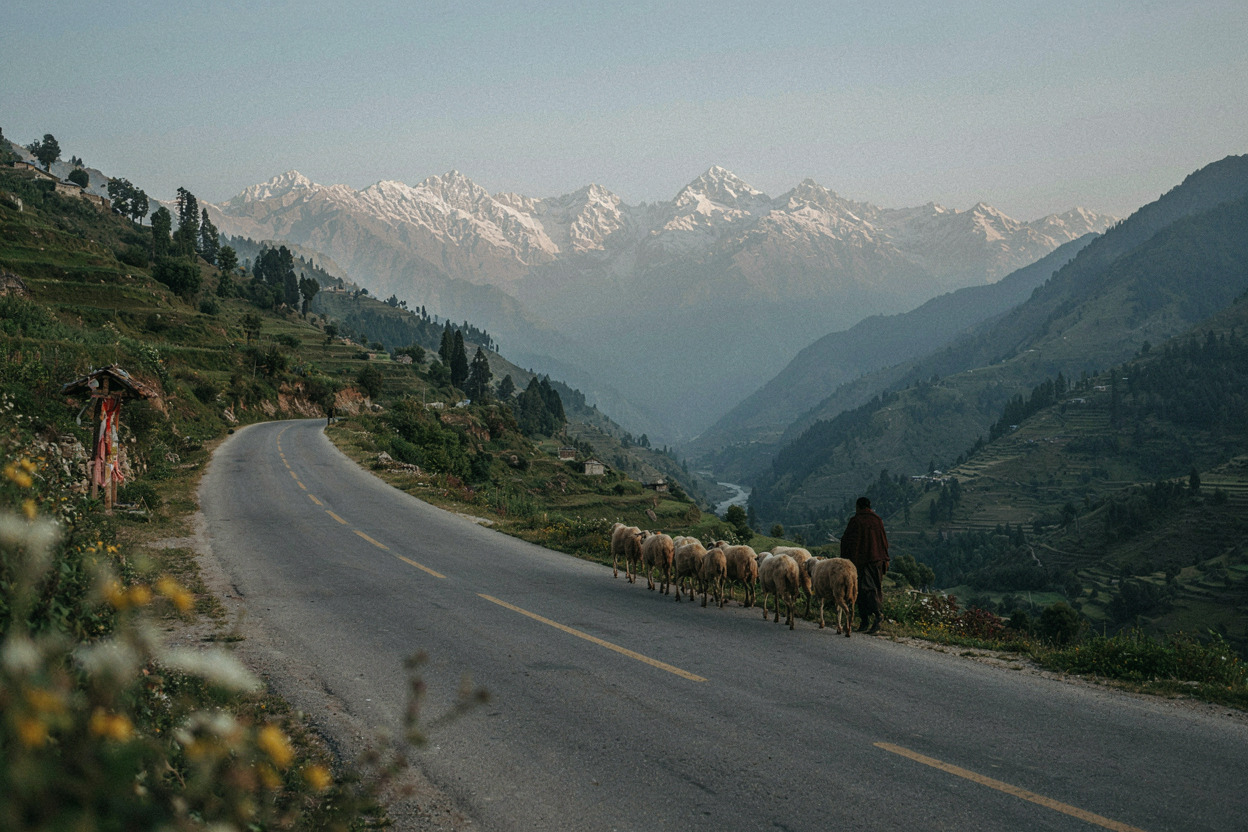
For anyone considering the high Himalayan destinations, September requires a specific understanding: it is the final reliable month before October begins closing the passes with snow. This is not a reason to avoid these destinations. It is the reason to prioritise them in September over any other month.
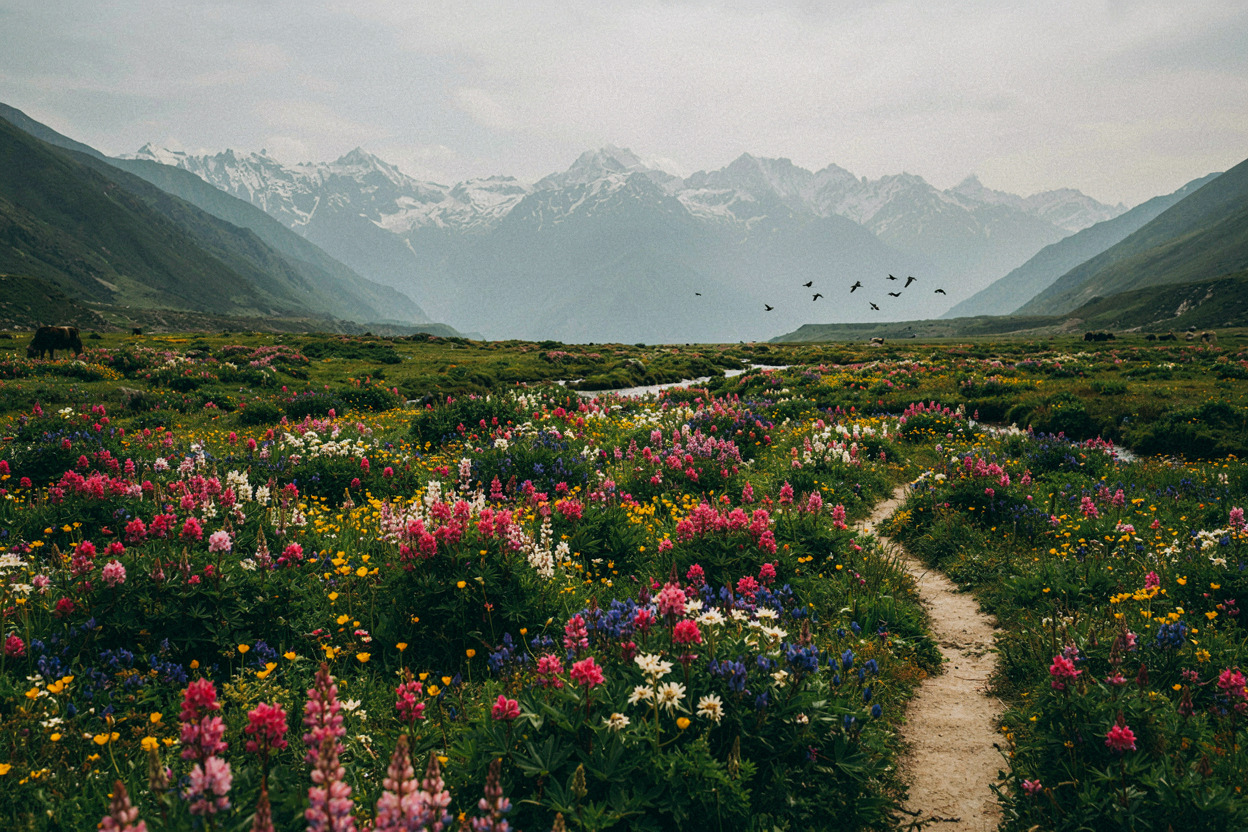
Roads that were slippery with monsoon rainfall in August have recovered. Skies that were cloud-covered in July are clear. The barley harvest is complete, the monasteries are active, and the landscape has a specific quality: clear air, green valleys at lower elevations, grey-white peaks above, that does not exist at any other time of year.
Spiti Valley (Himachal Pradesh)
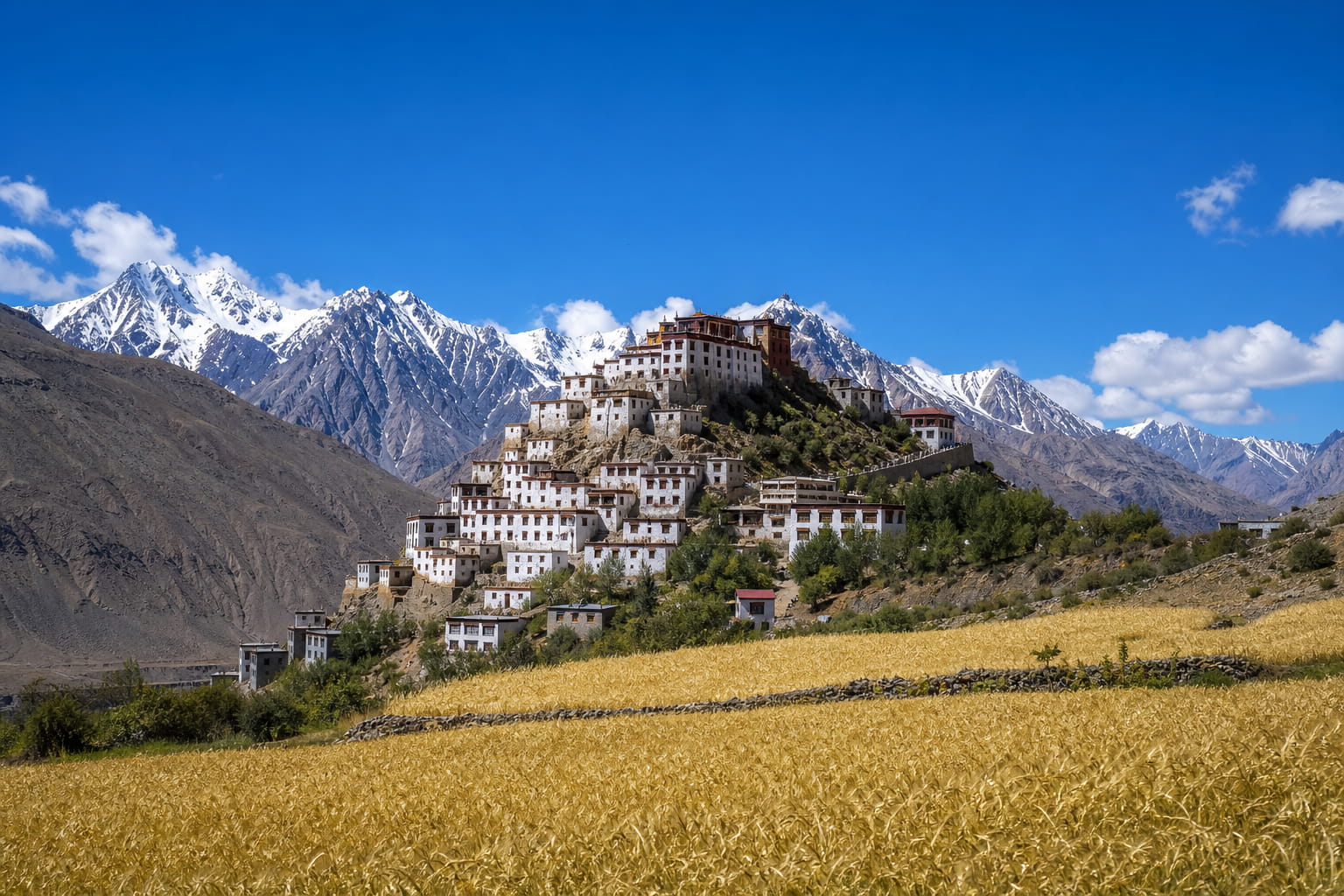
Spiti Valley in September offers the clearest version of the cold desert landscape that makes it one of India’s most compelling destinations. Temperatures in September sit between 8 and 20 degrees Celsius, cold enough to need layers but warm enough to make outdoor exploration comfortable across a full day. The Spiti River runs turquoise against the grey granite, the monasteries at Key, Dhankar, and Tabo are accessible, and Chandratal Lake, the moon-shaped alpine lake at 4,300 metres, is reachable for for the last weeks before the road to the lake is closed for the season.
Spiti receives almost no monsoon rainfall, sitting in the rain shadow of the main Himalayan range. This means September gives you clear skies even as the rest of North India is still dealing with the end of monsoon. The night sky at this altitude and with this atmospheric clarity is among the best stargazing available in India.
Best time within September: The first two to three weeks of September, before road conditions on the Kunzum Pass and the Manali-Kaza road become unpredictable.
Getting There: The route via Delhi to Manali (overnight bus) and then onward through the Rohtang Pass into Spiti Valley is the most common approach. The Shimla-Kinnaur route via Reckong Peo is a longer but more scenic alternative.
Ladakh (Leh and Surroundings)
September in Ladakh has a specific title among serious travellers: the best month of the year. The justification is straightforward. July and August see the highest tourist volumes. October brings the first heavy snowfall and the beginning of pass closures. September gives you the landscape at its most accessible with significantly fewer people.
The Pangong Tso at 4,350 metres, the Nubra Valley, the Khardung La pass (one of the world’s highest motorable roads), and the monasteries of Thiksey, Hemis, and Alchi are all fully accessible in September. The light in September has a specific quality too: low-angled, golden, and long in the evening hours, which makes the landscape photography that has defined Ladakh’s reputation genuinely achievable for regular travellers.
Getting There: Flights from Delhi to Leh are the fastest option. The Delhi-Manali-Leh road journey (approximately 1,000 km) is possible in September and is one of India’s great road trip experiences, though it requires a two to three day commitment and the right vehicle.
Valley of Flowers (Uttarakhand)
September is the final month of the blooming season in the Valley of Flowers, a UNESCO World Heritage Site in the Chamoli district of Uttarakhand. The bloom is past its peak July intensity, but the valley in September holds late-blooming species and the landscape is still in full colour with high-altitude meadow wildflowers. The major advantage of September over July and August is the trail conditions: the trekking path (12 km each way from Govindghat) is less muddy and the sky is clearer.
Getting There: Bus from Delhi to Govindghat (approximately 15 hours) via Haridwar and Joshimath.
Festival Destinations in September
The second reason September is a remarkable travel month in India is Ganesh Chaturthi. In 2026, the festival begins on September 14 and the immersion (Anant Chaturdashi) is on September 25. These eleven days are some of the most visually spectacular in Indian public life.
Mumbai for Ganesh Chaturthi (September 14 to September 25, 2026)
Mumbai’s Ganesh Chaturthi is the largest public festival in India by participation and by scale. The pandals of Lalbaugcha Raja (established 1934, which routinely sees 1.5 million visitors daily during peak days), Ganesh Galli Mumbai Cha Raja, Khetwadicha Ganraj, and Andhericha Raja are the specific names worth building an itinerary around. Each has a distinct identity and history.
The experience of Ganesh Chaturthi in Mumbai is unlike anything available to a visitor at any other point in the year: the processions, the music, the scale of the installations, the public energy. The immersion day procession through Mumbai on September 25 is the culmination, and the crowds along the route from the major pandals to Girgaon Chowpatty are extraordinary.
The Mumbai bus booking page covers intercity connections into Mumbai from Pune, Nashik, and other cities within the Maharashtra and wider western corridor if you are planning to attend the festival from a nearby base.
Varanasi (The Monsoon Ganges in September)
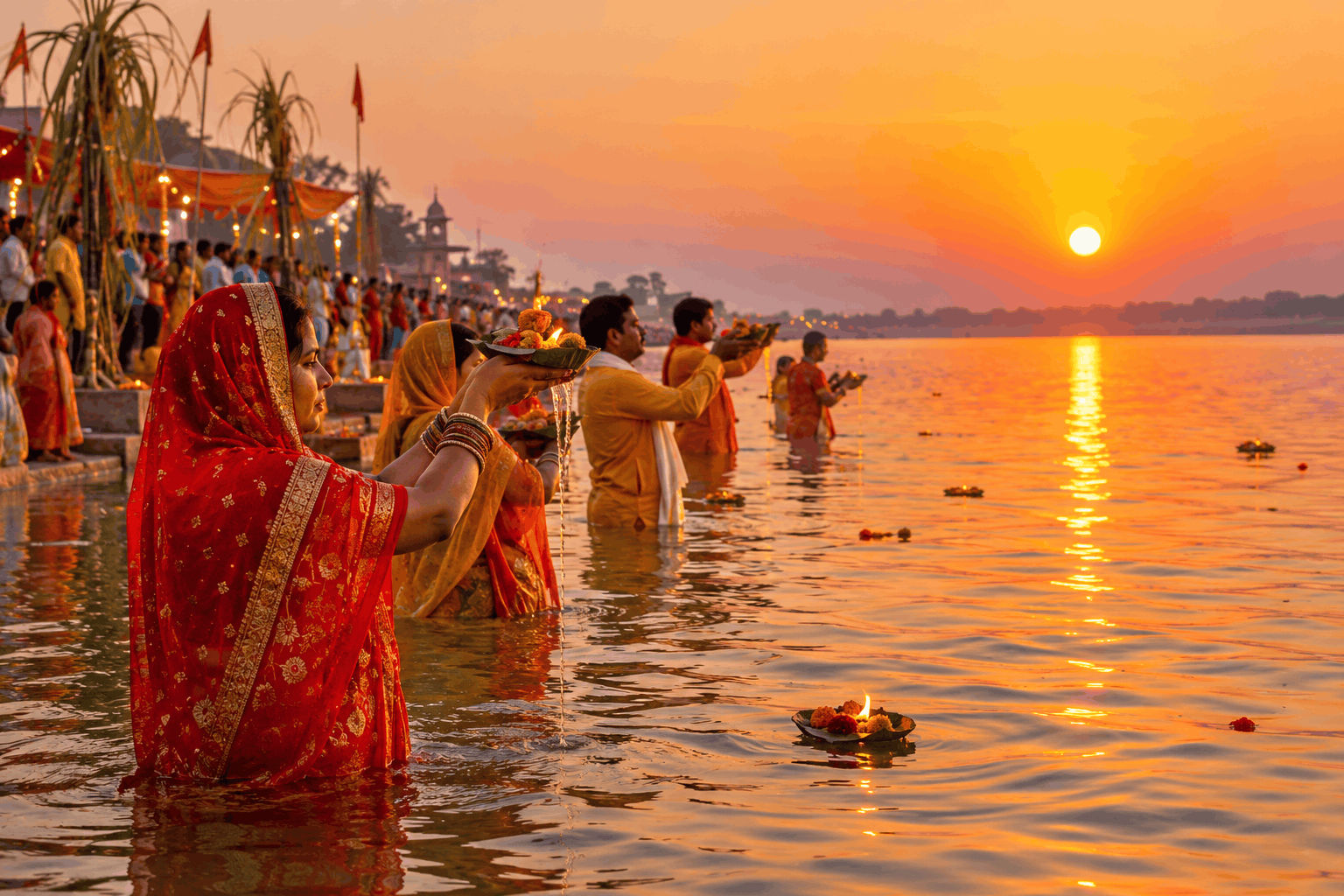
The Ganga in September, carrying the full volume of the post-monsoon river, is visually different from the Ganga in winter. The water is broader, faster, and carries a particular energy that the ghats reflect. The morning Ganga Aarti at Assi Ghat and the evening Maha Ganga Aarti at Dashashwamedh Ghat are the anchor experiences.
September has fewer international tourists than October through February, which means the ghats are noticeably quieter in the mornings and the boat rides on the river have a less commercial quality. For travellers who want Varanasi with its daily life intact rather than as a backdrop for tour groups, September is one of the better months.
Getting There: Delhi to Varanasi Overnight bus from covers approximately 800 km.
Post-Monsoon South and Western India in September
South India in September occupies a specific position: the monsoon is still active in the Western Ghats and Kerala, which makes the landscape extraordinarily green, the waterfalls are at full or near-full flow, and the temperatures are manageable compared to the summer months. The crowd levels are at their lowest, and the accommodation rates reflect this.
Coorg (Karnataka)
Coorg in September is the coffee country at its most intensely green. The Sahyadri hills that surround the plateau are covered in a canopy that the monsoon brings to its peak in September, and the waterfalls around Abbey Falls and Iruppu Falls are at their most dramatic. The coffee estates, which cover much of the plateau and define the character of the place, are in full leaf.
September in Coorg is not for travellers who want dry outdoor weather. It is for travellers who want the specific atmosphere of a hill district at the height of its wet season: mist, green, the sound of water, cool temperatures, and quietude.
Getting There: Bangalore to Coorg bus covers approximately 260 km in 5 to 6 hours.
Kerala: Munnar, Alleppey, and the Backwaters
September in Kerala covers two distinct experiences.
Munnar at 1,600 metres is past the peak of its June-July rainfall and into the clearing tail of the monsoon. The tea estate landscape of the Nilgiri foothills is intensely green, the Eravikulam National Park is accessible, and the waterfalls at Athirappilly (at their maximum flow in September) are at their most compelling. Temperatures stay between 15 and 25 degrees Celsius.
Alleppey and the backwaters in September operate in the tail of the Kerala monsoon. The canals are full, the palm-lined waterways are lush, and the houseboat experience, more atmospheric than in the dry season, has a distinctly different character at this time of year.
Udaipur (Rajasthan’s Lake City at Its Most Photogenic)
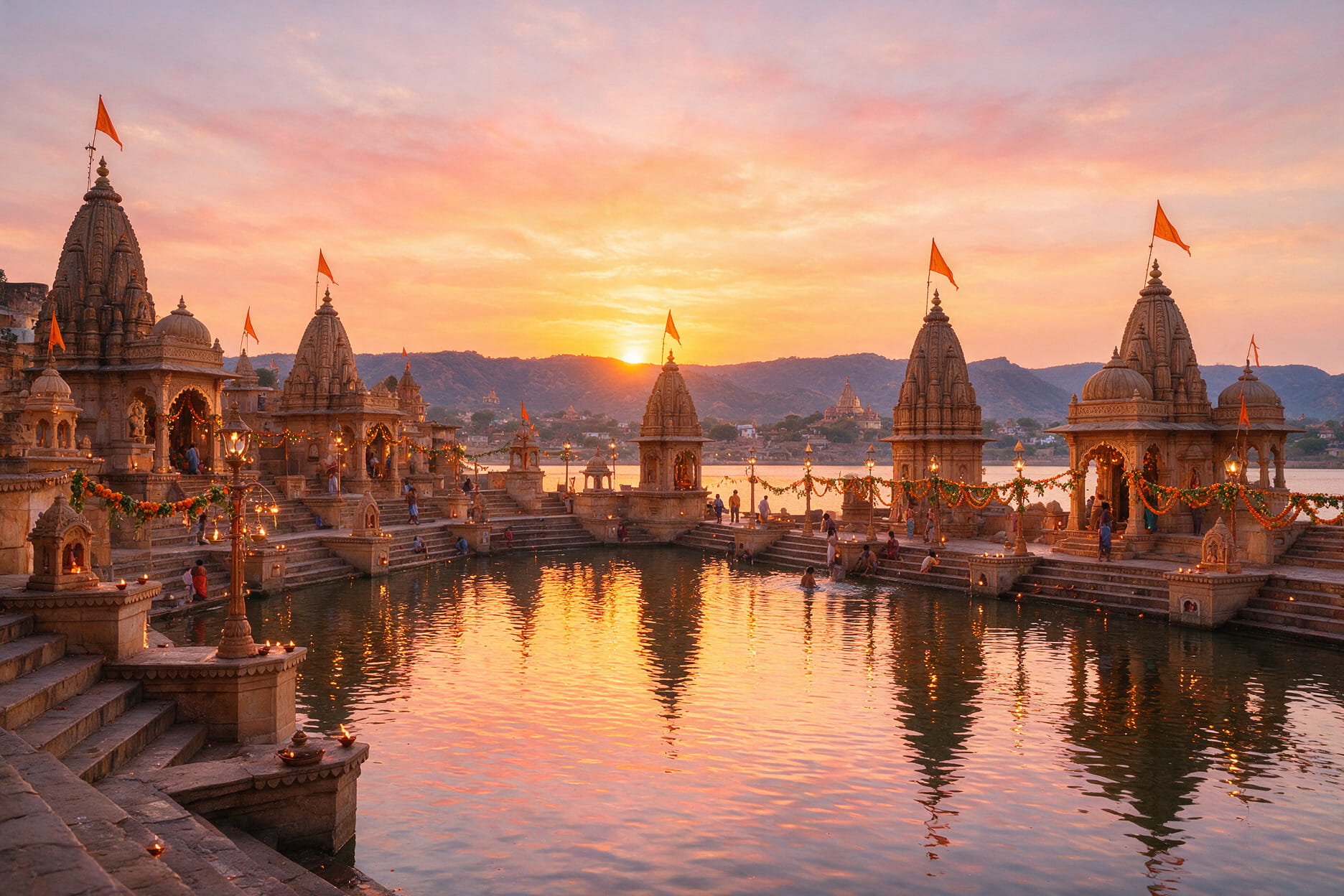
September is when the lakes of Udaipur are at their absolute fullest after months of Rajasthan rainfall. The Aravallis turn green, Lake Pichola reflects City Palace at its most cinematic, and Monsoon Palace earns its name, the Aravalli ridgeline visible from the hilltop is green in September in a way it is not for the rest of the year.
September is also the beginning of Rajasthan’s pleasant weather window. The heat that makes summer visits uncomfortable has broken. October and November are the most popular months, which means September gives you the landscape at its best with the crowds of peak season not yet arrived.
Goa in September: The Waterfall Version
Goa in September is not the Goa of peak season and it should not be treated as one. Beach watersports are paused for the monsoon. The beaches themselves are empty or nearly so. Hotels are at their lowest rates of the year.
What Goa offers in September that it does not offer in December is its waterfalls at full flow. Dudhsagar Falls, which drops over 300 metres in four stages along the Goa-Karnataka border, is at its most spectacular in September. Tambdi Surla Waterfall and the smaller forest falls in the Bhagwan Mahaveer Sanctuary are similarly active.
Goa in September is the correct destination for travellers who want the landscape without the crowd, who are interested in the waterfalls rather than the beaches, and who are comfortable with afternoon rain that the mornings and evenings remain clear.
Northeast India: Shillong and Ziro Valley
September is a workable month for the northeast with the right expectations. The monsoon is easing but not yet finished.
Shillong, at 1,525 metres in the Khasi Hills, is greener and wetter than almost anywhere else in India in September. The full-flow Elephant Falls and the quieter lifestyle of a hill town that is genuinely different from any other Indian city make it a rewarding destination for travellers going off the standard circuit.
Ziro Valley in Arunachal Pradesh is one of India’s most recently discovered offbeat destinations. A UNESCO Tentative World Heritage Site, the valley holds the rice field landscape of the Apatani tribe and the annual Ziro Music Festival, which typically runs in late September. The festival draws indie and folk musicians from across India and has built a specific following among music-interested travellers.
Planning Your September Trip from Your City
The zingbus network covers several of the best September corridors directly. The Delhi to Manali overnight bus for Spiti Valley, the Bangalore to Coorg bus for the Western Ghats, and the Mumbai city hub for Ganesh Chaturthi festival connections are the most relevant intercity options.
Book bus tickets for September departures at least 5 to 7 days in advance for weekday travel. The September long weekends (particularly the ones that coincide with Ganesh Chaturthi) book up several weeks ahead on popular routes.
You Might Also Like
- Best Overnight Bus Routes in India 2026: A comprehensive guide to overnight bus corridors across India, including the Delhi-Manali and Mumbai-Goa routes most relevant for September travel.
- Best Hill Stations to Visit in Summer in India: For comparison, how the same hill destinations are different in peak summer versus September.
- Places to Visit in India in August 2026: The preceding month’s guide for travellers who want to understand how September differs from August for the same destinations.
September Travel Planning Tips
- For Spiti Valley and Ladakh, confirm road conditions in the last week of August before finalising a September departure. The Rohtang Pass and Kunzum Pass can close earlier than expected in years with heavy early snowfall.
- Ganesh Chaturthi pandal visits in Mumbai are best in the early morning (before 9 AM) and late evening (after 9 PM) when the major pandals are less crowded. The afternoon hours on weekends during the festival see the highest footfall.
- Coorg, Munnar, and Goa in September require waterproof footwear and a light rain jacket. Afternoon showers are common even when mornings are clear.
- September is one of the best months to book hotel stays in South India. The off-season rates at many Coorg and Munnar properties are 30 to 50 percent lower than December through February.
- Valley of Flowers trekking permits need to be arranged at Govindghat. The trek is accessible from early June through the end of October, but September specifically means fewer other trekkers and clearer skies.
- For the backwater houseboat experience in Alleppey, September means the canal water is full and the surrounding paddy fields are green, but check ahead for any flooding advisories that monsoon rainfall may create on the network.
Frequently Asked Questions
These questions reflect the most common searches around the best places to visit in September in India.
What are the best places to visit in September in India?
The best places to visit in September in India include Spiti Valley and Ladakh (last reliable mountain window), Mumbai for Ganesh Chaturthi, Coorg and Munnar for post-monsoon green landscapes, Udaipur for the fullest lakes and Goa for waterfall season.
Is September a good time to visit India?
Yes, September is one of India’s most rewarding travel months because the monsoon is retreating in many regions, the high Himalayan passes are clear and accessible, and the Western Ghats and South India are at their most lush and green.
Which hill stations are best to visit in September in India?
Spiti Valley, Ladakh, Coorg, and Munnar are the best hill station and mountain destinations to visit in September in India, each offering specific reasons why September gives a better experience than peak summer or winter seasons.
When is Ganesh Chaturthi 2026 in India?
Ganesh Chaturthi 2026 falls on September 14, with the 11-day festival concluding with Anant Chaturdashi on September 25; Mumbai is the most significant destination for experiencing the festival at its full scale.
Is Goa worth visiting in September?
Goa in September offers full-flow waterfalls including Dudhsagar Falls, off-season hotel rates, and empty beaches, but beach watersports are paused for monsoon; it is best for travellers who specifically want Goa’s natural landscapes rather than its peak-season beach activities.
Is September a good time for Ladakh?
September is widely regarded as the best month to visit Ladakh, offering clear skies after the July-August peak crowds, all major routes and attractions still accessible, and the beginning of the quieter autumn period before October snowfall begins closing the high passes.
What is the weather like in India in September?
Weather in India in September varies significantly by region: the Himalayas are clear and dry (8 to 20 degrees Celsius), the Western Ghats still see afternoon rainfall, Rajasthan is cooling after monsoon, and South India has manageable temperatures with occasional rain.