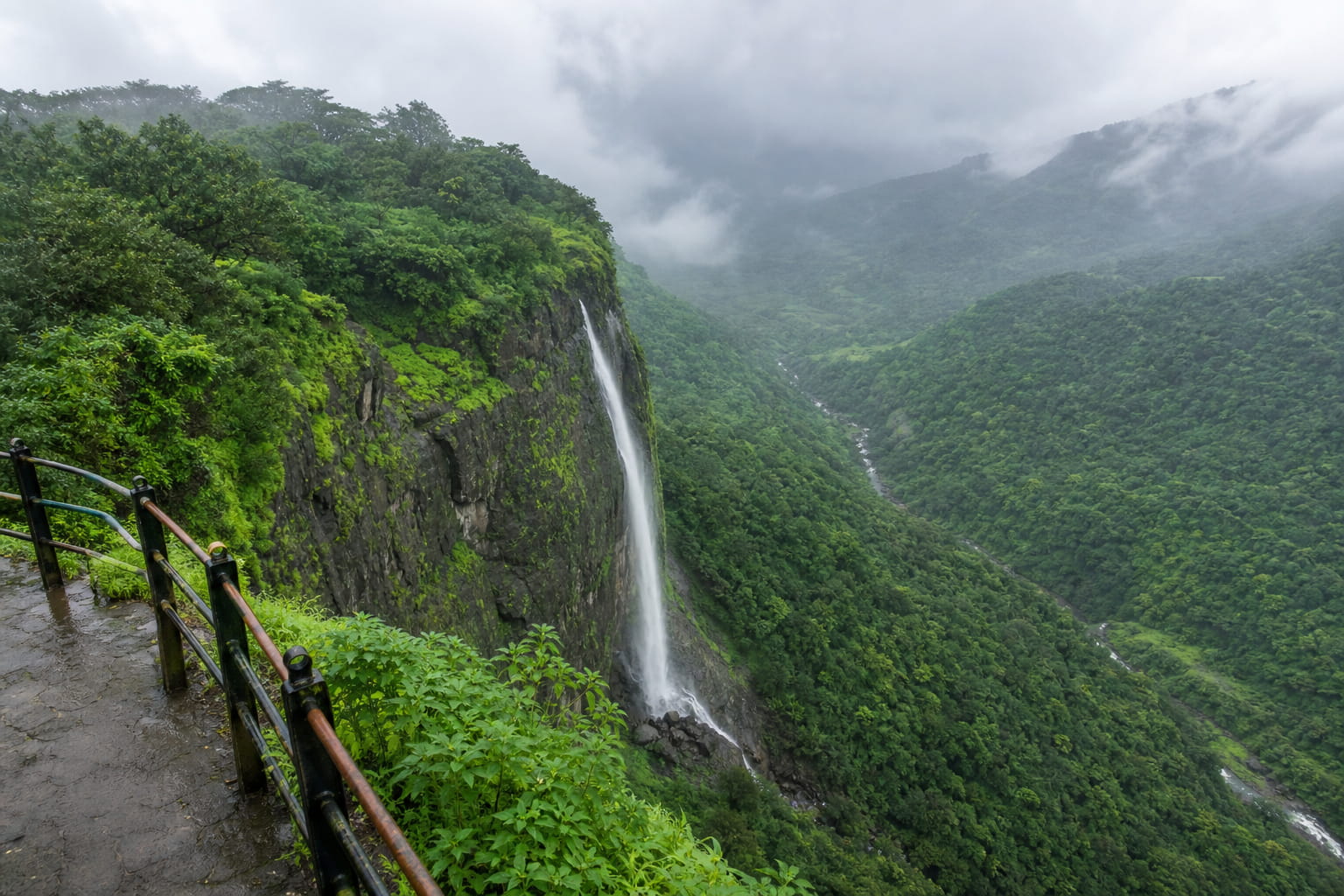
During monsoon, Lonavala becomes unrecognisable from its summer self. Waterfalls appear on cliff faces that were bare two months ago. The Bhushi Dam overflows onto its stepped masonry and hundreds of people wade in the current. Tiger’s Leap, usually a clear viewpoint over the valley, sits in clouds for hours at a time. The Sahyadri hills turn the kind of green that makes every photograph look edited.
This is the most visited version of Lonavala, and the places to visit in Lonavala work differently in rain than they do the rest of the year. This guide covers the viewpoints, the water, the ancient caves, the forts, and everything practical you need to plan the trip from Pune or Mumbai. Book your Lonavala bus on zingbus before the weekend slots sell out.
Places to Visit in Lonavala: The Monsoon Getaway Guide
Lonavala is 76 km from Pune and 64 km from Mumbai, which makes it the most accessible hill station for both cities. It sits in the Sahyadri range at about 625 metres and has been a weekend escape for the Mumbai-Pune corridor since the British colonial era. What it offers now is what it has always offered: cool air, dramatic terrain, and a complete break from the flatland heat below.
The Viewpoints: Where Lonavala Earns Its Reputation
The viewpoints around Lonavala and Khandala are the reason most first-time visitors come. In monsoon, when clouds sit in the valleys and waterfalls run off the ridges, they deliver something genuinely dramatic.
Tiger’s Leap
Tiger’s Leap, also called Tiger Point, sits at the edge of a 650-metre cliff overlooking the Sahyadri valley. On a clear day you can see the plains below stretching far beyond the range. During monsoon, the more common experience is watching cloud fill the valley below you from above, with waterfalls visible on the far cliff faces when the mist briefly clears.
The viewpoint gets very crowded on monsoon weekends. Arrive before 8 AM if you want to see the valley before the parking lot fills and the snack stalls set up. Entry is free, though unofficial parking charges apply if you arrive by vehicle. The short walk from the parking area to the cliff edge takes about 10 minutes.
Lion’s Point and Other Viewpoints
Lion’s Point, between Aamby Valley and Bhushi Dam, gives a 180-degree view of the surrounding hills and the Tungarli Lake below. It is slightly less crowded than Tiger’s Leap and has a specific acoustic quality: the curved valley returns a clear echo. Amrutanjan Point, near Khandala, is another viewpoint worth adding if you have the time and prefer a quieter spot over the most visited ones.
Most of these viewpoints are free to enter. The experience is heavily dependent on timing and weather. Cloud cover can make or break any viewpoint visit during monsoon, which is both the disappointment and the charm of coming in July or August.
Water Is the Reason Most People Come
Two water destinations define what Lonavala is during monsoon.
Bhushi Dam
Bhushi Dam is about 6 km from Lonavala town on the Indrayani River. During heavy monsoon months, the dam overflows and water rushes across its stepped masonry spillway, creating a natural cascade that people wade into and sit on. The scene during peak monsoon, with fast-flowing water, a crowd of visitors, and the surrounding green hills, is the image most associated with the Lonavala weekend.
A direct safety note: Bhushi Dam during heavy flow is genuinely dangerous. Every monsoon season, accidents occur here. The current on the steps is stronger than it appears, and standing in the overflow area during heavy discharge carries real risk. Check local conditions before visiting, avoid standing on the lower steps when the flow is strong, and keep children away from the water’s edge. The dam is best visited on lighter rain days rather than during peak discharge.
Entry: Free.
Timings: 9 AM to 5 PM.
Lonavala Lake and Kune Falls
Lonavala Lake, within the town, is a seasonal lake that fills during monsoon and is largely empty in summer. The lakeside is pleasant for a morning walk in the rain. It is not a destination in itself but a good orientation point when you first arrive.
Kune Falls, about 12 km from Lonavala, is a three-tiered waterfall that runs at its best between July and September. The falls have a drop of roughly 200 metres. The approach involves a walk through the Kune Forest, and the viewing area gives a direct face-on view of the cascade. It is significantly less crowded than Bhushi Dam and more visually dramatic during peak monsoon.
The Caves: A Different Kind of Lonavala
The ancient Buddhist rock-cut caves near Lonavala are among the most significant archaeological sites in Maharashtra. They predate anything you will see in the town by almost two thousand years.
Karla Caves
Karla Caves are about 12 km from Lonavala and contain one of the largest and best-preserved rock-cut Buddhist Chaitya halls in India. The main prayer hall, which dates to roughly the 2nd century BCE, has a carved wooden toran (gateway) at the entrance and a vaulted interior supported by rows of carved pillars leading to a stupa at the far end. The scale of what was carved from solid rock in the 2nd century CE is the thing that most visitors are unprepared for.
The approach to the caves is a climb of several hundred steps, and the path is partially lined with stalls selling chai and snacks. At the base sits the Ekvira Devi temple, a significant Hindu pilgrimage site that draws large crowds on festival days, particularly during Navratri. The combination of Buddhist and Hindu sacred sites at the same location reflects how the site evolved across different periods.
Entry fee: ₹25 to ₹50 (Archaeological Survey of India, modest nominal charge).
Timings: 9 AM to 6 PM daily.
Bhaja Caves
Bhaja Caves are about 11 km from Lonavala and are older and less visited than Karla. The complex has 28 rock-cut caves and is notable for its viharas (monk residential cells) and a well-preserved relief carving inside Cave 19 that depicts a royal procession, one of the earliest such narrative carvings in Indian rock-cut art. The caves are quieter and more contemplative than Karla, and the path to them ends near a seasonal waterfall during monsoon that makes the visit particularly good between July and September.
Entry fee: ₹25 to ₹40.
Timings: 9 AM to 5 PM daily.
Forts and Treks Near Lonavala
The Sahyadri range around Lonavala has several Maratha-era forts within trekking range. Most are best visited between October and February; monsoon treks are possible but require experience on slippery rock trails.
Lohagad Fort
Lohagad Fort is about 20 km from Lonavala and sits at 3,400 feet with views across the Indrayani valley and the surrounding range. The fort played a significant role in the Maratha empire and was used by Shivaji Maharaj as a treasury. The trek from the base village of Malavli or Bhaje takes about 45 minutes to an hour and is classed as moderate, with wide stone paths for most of the route. The upper sections have some narrow sections and exposed ridges.
In monsoon, the fort and the grassland around it are dramatically green and often partly in cloud. The trek is doable in moderate rain but should not be attempted during active heavy rainfall when the rocks become very slippery.
Entry fee: ₹10 approximately.
Timings: 8 AM to 5 PM.
Pawna Lake and the Fort Ring
Pawna Lake is about 30 km from Lonavala and is surrounded by four forts: Lohagad, Tikona, Tung, and Visapur. The lake itself is a large reservoir and the most popular camping destination in the Lonavala-Pune area. Tented camp sites are operated by private operators throughout the year, and the experience of waking up by the lake with fog on the water and the fort silhouettes behind it is the specific reason people return.
Tikona Fort, rising steeply from the lake’s edge, is the most photogenic of the four and takes about 2 to 3 hours to return to trek. The trail is steep and requires some confidence on exposed rock near the summit.
Pawna Lake is a standalone day trip or overnight plan from Lonavala. It is not a viewing spot you pass through; it is a destination in itself.
What to Eat in Lonavala
Lonavala’s food identity comes from one product: chikki, the hard, brittle sweet made from jaggery and groundnuts, cashews, almonds, or other nuts. Maganlal Chikki is the most established brand name, but dozens of shops on the main market road sell similar products in a range of nut combinations. Buy a few varieties directly from different shops to compare.
Fudge is the other Lonavala sweet specialty, sold alongside chikki at the market stalls.
At the viewpoints during monsoon, the standard experience is hot Maggi noodles and bhutta (roasted corn on the cob) from the stalls that are set up near Tiger’s Leap and the dam. It is a specific and enjoyable combination in rain.
For a sit-down meal, the town has several mid-range restaurants along the main road catering to the Mumbai-Pune visitor base.
How Long Do You Need in Lonavala?
One day covers Tiger’s Leap, Bhushi Dam, and the main town market area. Two days adds Karla Caves, Bhaja Caves, and a morning at Pawna Lake. Three days allows for the Lohagad trek and a proper unhurried visit to each place.
Monsoon weekends are heavily crowded. A weekday visit to Bhushi Dam and Tiger’s Leap gives a completely different experience from a Saturday visit.
Best Time to Visit Lonavala
Monsoon (June to September) is when Lonavala is most dramatic. Waterfalls run, the dam overflows, and the hills are at their greenest. It is also the most crowded period and requires the most caution at water sites.
October to February is comfortable and clear, with excellent trekking conditions for Lohagad and Rajmachi. Viewpoints are crisp and long. The forts are at their best.
March to May is hot and dry. The waterfalls have stopped and the lake is empty, but the caves and forts can still be visited comfortably in the early morning.
How to Reach Lonavala
From Pune, the Pune to Lonavala bus on zingbus covers 76 km in approximately 1 hour 26 minutes, with 5 daily services and fares starting from approximately ₹247.
From Mumbai, the Mumbai to Lonavala bus covers 64 km in approximately 1 hour 10 minutes, with fares also starting from approximately ₹247. All prices are approximate and vary by bus type and booking date; confirm current rates on the zingbus app.
The Lonavala Bus Stand is centrally located. From the bus stand, Tiger’s Leap, the market area, and Bhushi Dam are all accessible by auto-rickshaw or taxi.
Book monsoon weekend buses in advance. Lonavala-bound buses from both Pune and Mumbai fill fast on Friday evenings and Saturday mornings between June and September.
You Might Also Like
- Monsoon Destinations in South India to Travel by Bus: A broader monsoon travel guide covering other excellent rainy-season destinations across South India.
- How to Plan a Road Trip in India: Useful if Lonavala is one stop on a longer Pune-to-Goa or Mumbai-to-Nashik circuit.
- 25 Must-Visit Places in India: National travel reference covering Lonavala alongside other bus-accessible hill stations and weekend destinations.
Tips for Visiting Lonavala
- Arrive at Tiger’s Leap and other viewpoints before 8 AM on weekends, especially during monsoon. The crowd and the parking situation both become difficult by 10 AM.
- Bhushi Dam during peak monsoon is a safety risk. Do not stand in the overflow area when the water flow is strong. Check local conditions before the trip.
- The Karla Caves entry fee is paid at the base, not at the top. The Ekvira Devi temple is free.
- Bhaja Caves are less crowded than Karla and worth visiting on the same day since they are close to each other.
- For Lohagad Fort, wear grip-soled footwear. The stone trail becomes slippery in rain and the upper section has exposed sections that require care.
- Pawna Lake camping sites book out on monsoon weekends. Reserve a spot at least a week ahead if you plan to stay overnight.
- Lonavala chikki tastes best fresh. Buy from shops that are making it on-site rather than pre-packaged versions. The market area near the bus stand has multiple active kitchens.
- Unofficial parking charges exist at most viewpoints. These are collected by locals at the entry point and range from ₹20 to ₹100.
- Cell signal is good in Lonavala town and at the main viewpoints. The Lohagad trek route loses signal in stretches.
- Return buses to Mumbai and Pune on Sunday evenings fill very fast during monsoon. Book the return leg when you book the outbound ticket.
The Places to Visit in Lonavala Work Best With the Weather
A clear winter day at Tiger’s Leap gives you the view. A monsoon morning at Tiger’s Leap with cloud in the valley gives you something that photographs do not capture well and that you tend to think about afterward. The places to visit in lonavala are not passive sights; they change with the season and respond to how you engage with them.
The caves are always there, cool and quiet, regardless of the rain. The forts are most rewarding when the hills around them are green and the valleys below are filled with cloud. Bhushi Dam is only itself in July and August. Come in the right season for what you want to see, and Lonavala delivers precisely that.
Frequently Asked Questions
What are the best places to visit in Lonavala?
The best places to visit in lonavala include Tiger’s Leap, Bhushi Dam, Karla Caves, Bhaja Caves, Lohagad Fort, Lion’s Point, Pawna Lake, and Lonavala Lake.
Is Lonavala good for a monsoon trip?
Yes, monsoon from June to September is when Lonavala is most dramatic, with full waterfalls, the overflowing Bhushi Dam, lush green hills, and misty viewpoints; it is the busiest season and requires safety precautions at water sites.
Is Bhushi Dam safe to visit during monsoon?
Bhushi Dam is safe to visit with proper precautions; the overflow steps are risky during heavy water flow and you should not stand in the fast current; check local conditions and water flow status before visiting.
How far are the Karla Caves from Lonavala?
Karla Caves are approximately 12 km from Lonavala, accessible by auto-rickshaw or taxi; entry involves climbing several hundred steps to reach the main cave complex.
How long does the Lohagad Fort trek take?
The Lohagad Fort trek from the base village takes approximately 45 minutes to 1 hour one way on a moderate trail with stone steps; allow 3 to 4 hours in total for the round trip including time at the summit.
How long do you need in Lonavala?
One day covers the viewpoints and Bhushi Dam, two days adds Karla and Bhaja Caves plus Pawna Lake, and three days allows for Lohagad Fort trek at a comfortable pace.
What is Lonavala famous for?
Lonavala is famous for its monsoon waterfalls, ancient Buddhist caves at Karla and Bhaja, Lohagad Fort trekking, Bhushi Dam, scenic viewpoints, and its local specialty of chikki, a hard brittle sweet made with jaggery and nuts.
What is the best time to visit Lonavala?
Monsoon (June to September) for dramatic waterfalls and lush scenery, and October to February for comfortable weather and clear trekking conditions; both seasons offer a good version of Lonavala depending on what you want.