India doesn’t just store its history in textbooks. It stores it in stone, marble, sandstone, and gold. The famous monuments in India were built by emperors, dynasties, and colonial powers, each leaving behind a structure that tells you more about their era than any classroom ever could. Some were built for love. Some for power. Some for faith. All of them have survived centuries and still stand tall enough to stop you mid step.
These monuments aren’t just tourist places on a checklist. They’re living records of art, architecture, and ambition from periods most of us can barely imagine. Whether you’re a history enthusiast or just someone looking for a solid India travel itinerary, this guide covers the ones that genuinely deserve your time. Locations, entry fees, best time to visit, activities, and practical tips for each one.
1. Taj Mahal, Uttar Pradesh
| Detail | Information |
| District | Agra |
| Climate | Mild winters, hot and dry summers, monsoon from July to September |
| Best Time to Visit | October to March |
| Activities | Sunrise photography, Mehtab Bagh sunset view, Old Bazaar walk, Agra Fort combo visit |
| Nearest Airport | Agra Airport (Kheria) |
| Ticket Fee | Approximately Rs 50 for Indians, approximately Rs 1,100 for foreign nationals |
| Built By | Shah Jahan (1632 to 1653) |
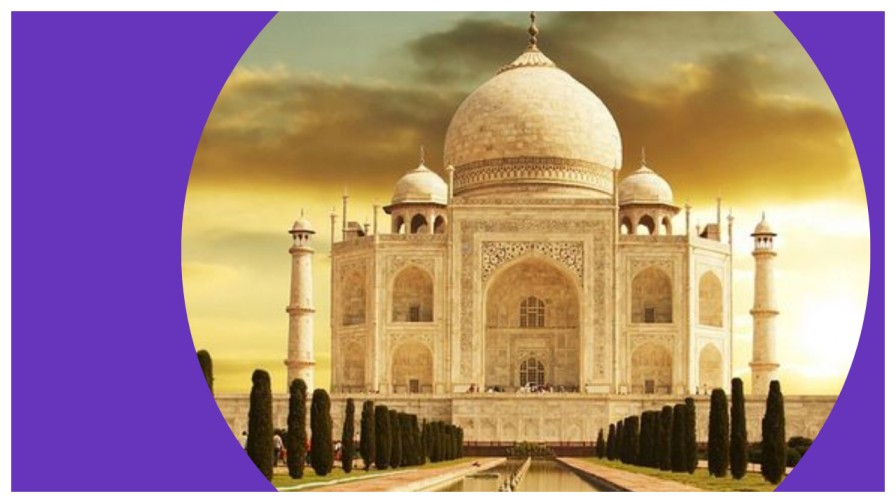
The Taj Mahal is the monument the entire world knows by name. Shah Jahan commissioned it after the death of his wife Mumtaz Mahal, and 20,000 workers spent 22 years turning white Makrana marble into what became one of the Seven Wonders of the World. The design blends Mughal, Persian, and Indian architectural styles into something that none of those traditions could have created alone.
Seven million visitors come here annually, and most arrive between 10 AM and 2 PM. That’s the wrong window. Sunrise is when the Taj earns its reputation. The marble shifts from pink to gold to pure white as the light climbs. And the reflection pool doubles everything in perfect symmetry. Get there at 6 AM. You’ll have the frames and the silence to yourself.
- Sunrise entry for the best light and the smallest crowds.
- Friday closed for regular tourists due to mosque prayers.
- Mehtab Bagh across the river for the finest free sunset view.
Inlay work on the interior walls uses 28 types of precious and semi precious stones. You can’t feel the joints with your fingertips. That’s 17th century craftsmanship at a level modern tools struggle to match. Stand close and look carefully. The details are where this monument goes from impressive to almost unbelievable.
Note: Prices are approximate and may change based on season, demand, and availability.
2. Golden Temple, Punjab
| Detail | Information |
| District | Amritsar |
| Climate | Short humid summers, cold dry winters |
| Best Time to Visit | November to March |
| Activities | Darshan at the sanctum, Langar hall community meal, Sarovar walk, Evening Palki Sahib ceremony |
| Nearest Airport | Sri Guru Ram Dass Jee International Airport, Amritsar |
| Ticket Fee | Free |
| Built By | Guru Arjan (original construction, later rebuilt by Maharaja Ranjit Singh) |
Golden Temple, also known as Harmandir Sahib, is the holiest shrine in Sikhism and one of the most visited religious sites in the world. The temple sits in the centre of a sacred pool called the Amrit Sarovar. Inside, the Guru Granth Sahib is kept with continuous readings happening 24 hours a day. The upper half of the structure was covered in approximately 400 kg of gold leaf by Maharaja Ranjit Singh, giving the temple its iconic name.
Langar hall here is the largest free community kitchen in the world. Over 100,000 people eat here every single day regardless of caste, religion, or background. Volunteers cook, serve, and clean on a rolling schedule that never stops. Sitting on the floor and eating with strangers from every walk of life is an experience no restaurant can replicate.
- Darshan at the sanctum for the spiritual centrepiece of the visit.
- Langar hall for the world’s largest free community kitchen experience.
- Early morning Palki Sahib ceremony for the most moving ritual.
Here’s the thing about the Golden Temple. Most guides tell you to visit during the day. The night visit is what the locals recommend. The gold reflects in the Sarovar under floodlights, the marble pathway is cool under your feet, and the Gurbani playing over the speakers fills the silence completely. Go at 11 PM if you can. You won’t forget it.
3. Red Fort, New Delhi
| Detail | Information |
| District | New Delhi |
| Climate | Extreme summers (up to 45°C), cold dry winters |
| Best Time to Visit | October to March |
| Activities | Sound and Light show, Diwan i Khas visit, Chandni Chowk food walk, Photography |
| Nearest Airport | Indira Gandhi International Airport |
| Ticket Fee | Approximately Rs 35 for Indians, approximately Rs 500 for foreign nationals |
| Built By | Shah Jahan (1638 to 1648) |
Red Fort is a UNESCO World Heritage Site and the structure that appears on India’s Rs 500 note. Shah Jahan built it as his imperial residence when he shifted the Mughal capital from Agra to Delhi. The massive red sandstone walls stretch over 2 km, and the Lahori Gate entrance is where India’s Prime Minister hoists the national flag every Independence Day. That single image defines this monument in the national imagination.
Inside, the Diwan i Aam and Diwan i Khas still carry the scale of an empire that ruled most of the subcontinent. The Nahr i Behisht, an artificial stream that once cooled the private chambers, is a detail most visitors walk right past. Look for the marble channels in the floor near the royal apartments. The timings are 9:30 AM to 4:30 PM, and the nearest metro station is Chandni Chowk on the Yellow Line.
- Evening Sound and Light show for a quieter, atmospheric experience.
- Combine with a Chandni Chowk street food walk right outside the gate.
- Lal Qila Metro on the Violet Line provides direct access too.
Red Fort is one of those famous monuments in India where a guide genuinely changes the experience. Without context, its walls and arches. With someone explaining which emperor sat where and what decisions shaped history in which hall, the stones start talking.
Note: Prices are approximate and may change based on season, demand, and availability.
4. Gateway of India, Maharashtra
| Detail | Information |
| District | Mumbai |
| Climate | Tropical, humid, wet monsoons from June to September |
| Best Time to Visit | November to February |
| Activities | Photography, Ferry to Elephanta Caves, Colaba Causeway shopping, Waterfront walk |
| Nearest Airport | Chhatrapati Shivaji Maharaj International Airport |
| Ticket Fee | Free |
| Built By | George Wittet (1913 to 1924) |
The Gateway of India stands on Mumbai’s Apollo Bunder waterfront as the city’s most recognisable landmark. The Indo Saracenic arch was built to commemorate the visit of King George V in 1911 and completed in 1924. It carries a historical irony worth knowing: the arch built to welcome the British Empire is also where the last British troops departed India in 1948. That single structure holds both arrival and departure.
The monument is free and accessible 24 hours. Weekends and evenings get packed with locals and tourists sharing the same waterfront space. Early mornings on weekdays give you the cleanest frames for photography. The Taj Mahal Palace Hotel sits right behind the arch, and the contrast between the two structures makes for iconic shots.
- Free entry, best visited early morning for clean photography frames.
- Ferry to Elephanta Caves from the jetty right next to the arch.
- Colaba Causeway nearby for street shopping, cafes, and evening walks.
A ferry from the Gateway to Elephanta Caves takes about an hour and adds a UNESCO World Heritage site to your trip. The 6th century Shiva sculptures carved into basalt rock on the island are extraordinary. Most visitors skip Elephanta entirely. That’s a mistake worth correcting.
5. Victoria Memorial, West Bengal
| Detail | Information |
| District | Kolkata |
| Climate | Tropical wet and dry, average annual temperature around 27°C |
| Best Time to Visit | October to March |
| Activities | Museum visit, Garden walk, Evening illumination, Son et Lumiere show, Photography |
| Nearest Airport | Netaji Subhas Chandra Bose International Airport |
| Ticket Fee | Approximately Rs 30 for Indians, approximately Rs 500 for foreign nationals |
| Built By | William Emerson, designed in 1901, completed 1921 |
Victoria Memorial was built using white Makrana marble as a tribute to Queen Victoria of Britain. Today it functions as one of the finest museums in India, housing colonial era paintings, manuscripts, rare books, and artefacts from the British period. The Indo Saracenic architecture blends Mughal, British, and Venetian influences into a structure that looks like it belongs in London but sits firmly in the heart of Bengal.
The evening light on the white marble creates a glow that photographs simply cannot capture faithfully. The surrounding gardens are Kolkata’s favourite walking destination. Families, couples, joggers, and photographers all share the same green space around a monument that rewards every kind of visitor at every time of day.
- Evening visits for the best light on the white marble exterior.
- Museum inside for rare paintings, manuscripts, and historical artefacts.
- Combine with a Maidan walk and dinner on Park Street after.
The Son et Lumiere show runs in the evening and covers Kolkata’s history through the lens of the memorial. It’s a well produced show that gives the building its proper context. Most daytime visitors miss it entirely. Time your visit to stay for the show. It changes how you see the building.
Note: Prices are approximate and may change based on season, demand, and availability.
6. Agra Fort, Uttar Pradesh
| Detail | Information |
| District | Agra |
| Climate | Mild winters, hot and dry summers, monsoon from July to September |
| Best Time to Visit | October to March |
| Activities | Diwan i Khas exploration, Musamman Burj visit, Photography, Yamuna view walk |
| Nearest Airport | Agra Airport (Kheria) |
| Ticket Fee | Approximately Rs 35 for Indians, approximately Rs 550 for foreign nationals |
| Built By | Akbar (16th century, later additions by Shah Jahan) |
Agra Fort is a UNESCO World Heritage Site built in the 16th century by the Mughal emperor Akbar. The red sandstone walls enclose an entire city within a city, with palaces, audience halls, and mosques spread across the complex. Shah Jahan later added white marble structures inside, including the Musamman Burj, the octagonal tower where he spent his final years as a prisoner, gazing across the Yamuna at the Taj Mahal he built for his wife.
That detail alone makes Agra Fort one of the most emotionally powerful famous monuments in india. The man who built the Taj Mahal died locked in a tower with nothing but a distant view of it. The fort is open from 6 AM to 6 PM, seven days a week, and pairs naturally with a Taj Mahal visit on the same day.
- Musamman Burj for the spot where Shah Jahan viewed the Taj Mahal.
- Combine with Taj Mahal on the same day for the complete Agra experience.
- Morning visits for the best light on the red sandstone interiors.
Walk to the Yamuna side of the fort and look across the river. The Taj Mahal sits directly in your line of sight, framed by the arches of the fort’s upper level. That view is free, uncrowded, and gives you a perspective of the Taj that most tourists never see from the main complex.
Note: Prices are approximate and may change based on season, demand, and availability.
7. Qutub Minar, Delhi
| Detail | Information |
| District | Mehrauli, Delhi |
| Climate | Extreme summers, cold dry winters |
| Best Time to Visit | October to March |
| Activities | Iron Pillar viewing, Alai Darwaza visit, Photography, Mehrauli Park walk |
| Nearest Airport | Indira Gandhi International Airport |
| Ticket Fee | Approximately Rs 35 for Indians, approximately Rs 550 for foreign nationals |
| Built By | Started by Qutb ud Din Aibak, extended by Iltutmish and Firoz Shah Tughlaq |
Qutub Minar stands at 73 metres and has held the title of the tallest brick minaret in the world since 1193. Three different rulers built it across three centuries, and you can see the style differences in the stonework as your eye moves from the base to the top. The carvings on the lower sections combine Quranic inscriptions with floral and geometric patterns. The detail is extraordinary when you stand close enough.
The surrounding Qutub Complex is where the real surprises sit. The Iron Pillar has resisted rust for over 1,600 years, and metallurgists still debate exactly how. The ruined Quwwat ul Islam Mosque behind it was Delhi’s first mosque. The Alai Darwaza gateway and the unfinished Alai Minar are both within the same ticket.
- Weekday mornings before 10 AM for the least crowded experience.
- Iron Pillar’s 1,600 year rust resistance remains an unsolved mystery.
- Mehrauli Archaeological Park next door for extended heritage sightseeing.
Most visitors photograph the tower, glance at the Iron Pillar, and leave within 30 minutes. That undersells the complex completely. Give it at least 90 minutes. The tomb of Iltutmish, the ruined mosque pillars showing Hindu and Jain carvings, and the Alai Minar stump all sit within the same enclosure and deserve your attention.
Note: Prices are approximate and may change based on season, demand, and availability.
8. Hawa Mahal, Rajasthan
| Detail | Information |
| District | Jaipur |
| Climate | Hot and dry through most of the year, pleasant winters |
| Best Time to Visit | October to March |
| Activities | Upper floor window views, Jaipur bazaar walk, Photography, Small museum inside |
| Nearest Airport | Jaipur International Airport |
| Ticket Fee | Approximately Rs 50 for Indians, approximately Rs 200 for foreign nationals |
| Built By | Maharaja Sawai Pratap Singh (1799) |
Hawa Mahal is the most photographed facade in Rajasthan and one of the most recognisable famous monuments in india. Built in 1799, the pink sandstone structure has 953 windows designed so that royal Rajput women could observe street festivals and processions without being seen in public. The building is essentially a screen wall. From the front, it looks massive. From the side, it’s shockingly narrow. That architectural trick is what makes it brilliant.
There’s also a small museum within the complex that holds miniature paintings and ceremonial armour from the Rajput era. It takes about 20 minutes and adds genuine historical context to the structure itself.
- Entry from the side lane, not the main road everyone photographs.
- Climb to the upper floors for the original wind ventilation experience.
- Early morning when the sun hits the facade for the best golden light.
Most tourists stand across the road, take a facade photo, and leave. That misses the entire point. Walk inside. Climb up. The breeze through those 953 jharokha windows is exactly why they named it the Palace of Winds. The cross ventilation worked as a natural air conditioning system two centuries before electricity reached Jaipur.
Note: Prices are approximate and may change based on season, demand, and availability.
How to Reach India’s Monument Cities
By Bus
Bus travel india on heritage corridors has become genuinely comfortable. Delhi serves as the gateway for Agra, Jaipur, and the Delhi monuments. From Bangalore, buses to Hyderabad connect south India’s heritage circuit. zingbus operates AC sleeper buses on popular zingbus routes with GPS tracking, CCTV, and two driver policies on long routes.
The north india Golden Triangle (Delhi, Agra, Jaipur) connects entirely by overnight buses. Book at least a week ahead during peak travel 2026 holiday windows for better fares and seat selection.
By Train
Every monument city connects via Indian Railways. Delhi to Agra takes about 100 minutes by Gatimaan Express. Delhi to Jaipur takes 4 to 5 hours by Shatabdi. Mumbai, Kolkata, and Amritsar connect from Delhi daily.
By Air or Road
Airports at Delhi, Jaipur, Agra, Mumbai, Kolkata, and Amritsar serve domestic flights. The Golden Triangle road trip covers Delhi, Agra, and Jaipur in 4 to 5 days and is one of the best india travel heritage itineraries for first time visitors.
You Might Also Like
- zingbus Maxx: 7 Star Luxury Bus Travel in India
- Overnight Sleeper Buses: Everything You Need to Know
- How to Choose the Best Seat in a Bus for a Safe and Comfortable Journey
Tips Before You Visit India’s Monuments
- Carry a valid photo ID because ASI monuments require it strictly.
- Visit between October and March for comfortable weather across India.
- Reach at opening time for the smallest crowds at every monument.
- Hire local guides for context that signboards cannot provide.
- Wear comfortable walking shoes because monument complexes are large.
- Carry water and sunscreen for open air heritage sites in summer.
- Book buses and trains a week ahead during peak holiday seasons.
These Stones Have Been Waiting Long Enough
The famous monuments in india on this list span centuries of ambition, art, and empire. From the Taj Mahal’s marble inlay to Hawa Mahal’s 953 windows, each one rewards the traveller who shows up early, stays curious, and looks closely at the details everyone else walks past. These aren’t just buildings. They’re proof that people built extraordinary things with bare hands, basic tools, and an ambition that modern budgets can barely match.
Start with the monuments closest to you. If you’re in Delhi, Red Fort and Qutub Minar are a metro ride away. If you’re planning a trip, the Golden Triangle covers three monument cities in under a week. zingbus makes the intercity travel part easy with AC sleepers, live tracking, and overnight routes that let you sleep through the journey and wake up at your next monument. The history is already built. You just need to show up.
Frequently Asked Questions
Ques. Which Is the Most Visited Monument in India?
Ans. The Taj Mahal is the most visited. It attracts approximately 7 million visitors from across the world every year.
Ques. What Is the Best Time to Visit Historical Monuments?
Ans. October to March offers the most comfortable weather across most monument cities in India for sightseeing.
Ques. Is the Golden Temple Free to Visit?
Ans. Yes. Entry to the Golden Temple in Amritsar is completely free. Langar meals are also served free to everyone.
Ques. How Much Does a Taj Mahal Ticket Cost for Indians?
Ans. Indian citizens pay approximately Rs 50 for entry. Mausoleum access inside the main tomb costs an additional fee.
Ques. Can I Cover Red Fort and Qutub Minar in One Day?
Ans. Yes. Both are in Delhi and connected by metro. An early start covers both comfortably within a single day.
Ques. Are Guides Available at Major Indian Monuments?
Ans. Yes. ASI certified guides are available at most monuments. Fees range from approximately Rs 200 to Rs 500.
Ques. How Do I Travel Between Monument Cities on a Budget?
Ans. Overnight AC sleeper buses on zingbus connect Delhi, Agra, Jaipur, and other cities. Book early for best fares.