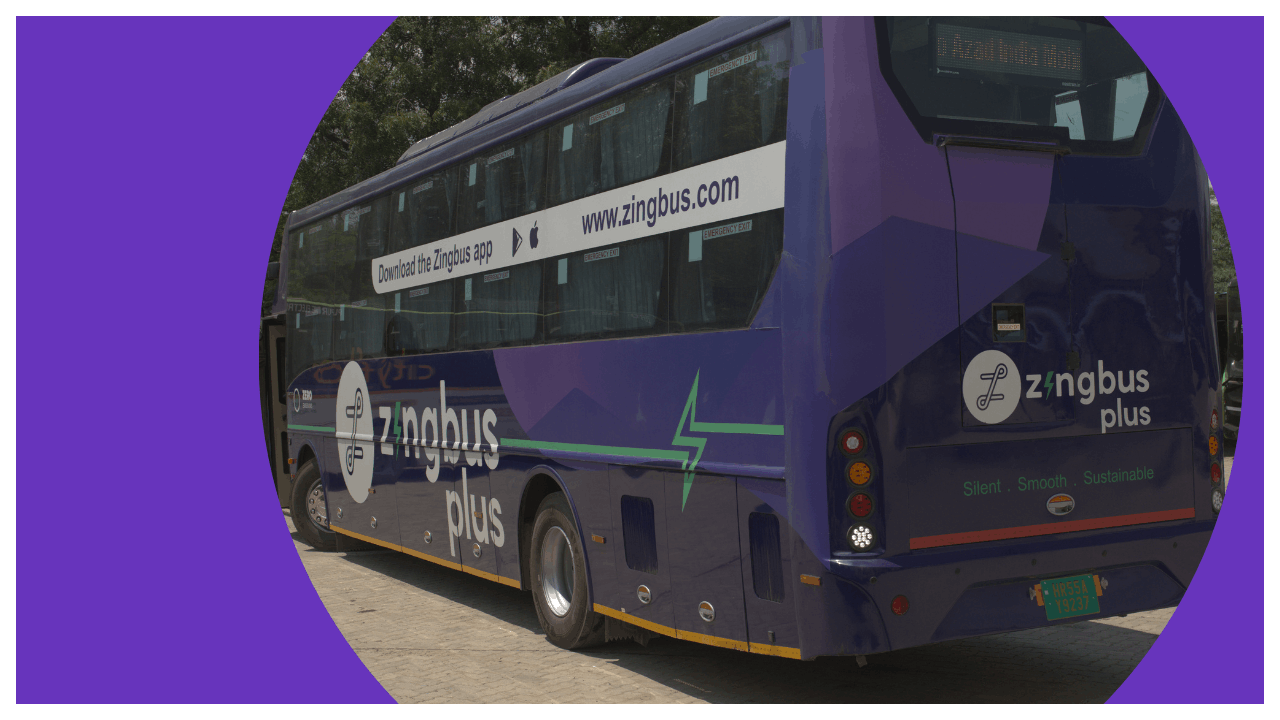
Electric bus prices in India have shifted dramatically. Nine-meter models now start at ₹1 crore while twelve-meter buses range between ₹1.5 crore and ₹2.2 crore depending on battery capacity and specifications. Government subsidies under the new PM E-Drive scheme reduce effective purchase costs by up to ₹35 lakhs per bus.
The real economic advantage emerges from total cost of ownership analysis. When calculated across a twelve-year operational lifespan, electric buses deliver financial returns that diesel alternatives cannot match. This comprehensive guide examines current 2026 pricing, explains what drives costs, and reveals why transport operators increasingly select electric buses as superior long-term investments.
Understanding Electric Bus Price Dynamics in 2026
Electric bus pricing varies significantly based on manufacturer, specifications, and battery capacity. Understanding what factors influence cost helps transport operators make informed procurement decisions aligned with their operational requirements.
Multiple factors drive final electric bus price in India. Vehicle size represents the primary cost determinant, with battery capacity creating the second major cost variable. Manufacturer selection affects pricing 10-20% through technological differences and production scale efficiencies.
Current Pricing by Bus Size
Nine-meter buses cost ₹1.0 crore to ₹1.25 crore for standard models. These compact vehicles serve dense urban routes effectively, fitting narrow streets and frequent stops. Twelve-meter buses command ₹1.5 crore to ₹2.2 crore for standard specifications. This size dominates Indian city fleets, seating 40-60 passengers comfortably.
Extended-range twelve-meter models with larger battery packs reach ₹2.3 crore to ₹2.5 crore. These vehicles support mixed urban-intercity operations, managing daily 250+ kilometer distances. Premium intercity models from specialized manufacturers exceed ₹2.5 crore but deliver maximum comfort and advanced features.
| Bus Size | Standard Price | Extended Range | Best Use Case |
| 9-meter | ₹1.0-1.25 Cr | ₹1.3-1.5 Cr | Dense urban routes |
| 12-meter | ₹1.5-2.2 Cr | ₹2.3-2.5 Cr | Mixed operations |
| Intercity | ₹2.0-2.5 Cr | ₹2.6-3.0 Cr | Long-distance travel |
Major Manufacturers and 2026 Pricing
Tata Motors leads the Indian electric bus market with competitive pricing and proven operational track record. Tata Starbus Urban electric models start at ₹2.03 crore for nine-meter variants. Extended versions reach ₹2.2 crore with improved battery capacity and range specifications.
Ashok Leyland positions itself as the affordability leader in the electric bus segment. Circuit S electric models launch at ₹1.5 crore with swappable battery technology. This feature improves operational flexibility for operators managing diverse route requirements.
Olectra Greentech delivers premium options with 300-kilometer range capabilities. X2 models start at ₹1.6 crore to ₹1.75 crore. JBM Auto competes aggressively with prices beginning at ₹1.8 crore for specialized variants. Switch and EKA Mobility offer emerging options at ₹1.0 crore to ₹1.25 crore with improving specifications.
Battery Pack: The Cost Driver Behind Electric Bus Pricing
Battery packs represent 30-40% of total electric bus cost. Understanding battery pricing dynamics clarifies why electric bus costs remain higher than diesel counterparts. Battery technology continues improving while costs decline steadily.
Current battery costs in India range from ₹10,000 to ₹15,000 per kilowatt-hour depending on chemistry and supplier. Standard LFP (Lithium Iron Phosphate) batteries cost ₹10,000-12,000 per kWh. Advanced NMC (Nickel Manganese Cobalt) batteries reach ₹12,000-15,000 per kWh with superior energy density and faster charging capabilities.
A typical 300 kWh battery pack translates to ₹30-45 lakhs in battery cost alone. Larger 350-400 kWh packs suitable for intercity operations exceed ₹50 lakhs. Battery lifespan typically reaches 7-8 years under normal operating conditions. Warranty coverage usually spans 5-6 years, protecting operators during peak revenue-generating years.
Battery Cost Breakdown
Standard 200 kWh batteries cost ₹20-30 lakhs. Medium 300 kWh packs reach ₹30-45 lakhs. Extended-range 350-400 kWh batteries cost ₹35-60 lakhs. Very large 450+ kWh specialty batteries exceed ₹60 lakhs. Battery costs represent the single largest expense category, explaining the price difference between electric and diesel buses.
Government Subsidies Transform Electric Bus Economics
India’s government has committed substantial resources to electric bus adoption. PM E-Drive scheme allocates ₹4,391 crores specifically for electric buses. This represents the single largest government investment category in the subsidy program.
PM E-Drive replaces the earlier FAME II scheme with enhanced support structure. Current subsidies reach ₹10,000 per kWh of battery capacity capped at ₹35 lakhs per bus. For most operators, this means effective purchase price reduction of ₹40-55 lakhs. Additional charging infrastructure subsidies reach ₹50 lakhs per depot charging location.
Subsidy Eligibility and Application
State transport undertakings and registered public transport agencies qualify for subsidies immediately. The scheme prioritizes nine major metros: Delhi, Mumbai, Bangalore, Hyderabad, Ahmedabad, Chennai, Kolkata, Surat, and Pune. Bengaluru has already secured subsidies for 7,000 buses. Hyderabad follows with 2,800 bus subsidies approved.
Private operators increasingly gain subsidy eligibility through operational contracts with municipalities. Payment security mechanisms ensure financial viability even when authorities delay disbursements. The scheme continues through March 2028, providing multi-year budget certainty for fleet operators.
Total Cost of Ownership: Where Advantages Materialize
The initial electric bus price seems prohibitive compared to diesel alternatives. However, comprehensive financial analysis across a twelve-year vehicle lifespan reveals electric buses deliver 10-15% cost advantage. This mathematical reality transforms procurement decisions for cost-conscious operators.
Most transport authorities now evaluate investments using total cost of ownership spanning ten to twelve years. This comprehensive approach captures purchase costs, financing charges, operations, maintenance, and infrastructure together. When analyzed this way, electric buses deliver superior financial outcomes across almost all scenarios.
Operational Cost Advantage
Electric buses cost ₹35-45 per kilometer to operate versus ₹50-75 per kilometer for diesel alternatives. This dramatic 30-40% reduction flows directly to operator profit margins. Electricity prices remain relatively stable compared to volatile diesel markets. Bulk power purchase agreements lock electricity rates for extended periods, providing budget certainty impossible with fuel pricing.
A twelve-meter electric bus operating 200 kilometers daily generates annual operational savings of ₹25-30 lakhs compared to diesel. Over twelve-year lifespan, operational savings reach ₹3-3.6 crores. These figures exclude diesel price volatility and environmental compliance cost penalties applied to diesel operators.
Maintenance Cost Superiority
Electric buses require 30-40% less maintenance than diesel counterparts. Fewer moving parts eliminate many failure modes entirely. Electric motors operate with 2-3 critical components compared to 40+ moving parts in diesel engines. Traditional oil changes, spark plugs, timing belts, and numerous engine service requirements disappear entirely.
Annual maintenance costs for electric buses reach ₹8-12 lakhs versus ₹15-20 lakhs for diesel buses. Brake wear reduces substantially due to regenerative braking systems. Transmission fluid changes, coolant flushes, and fuel system servicing become unnecessary. Preventive maintenance becomes more predictable and manageable.
Real-World Financial Analysis: Electric vs. Diesel
Detailed TCO modeling demonstrates electric bus superiority quantitatively. Real-world deployments across Indian cities provide actual performance validation supporting theoretical calculations.
Electric bus twelve-meter model costs ₹1.8 crore pre-subsidy. Government subsidy reduces effective cost to ₹1.25-1.35 crore. Equivalent diesel bus costs ₹1.2 crore initially. This changes the narrative—electric buses after subsidies approach diesel pricing.
Operating 200 kilometers daily across twelve years drives approximately 8.76 lakh kilometers. Electricity costs a total ₹30-36 lakhs. Equivalent diesel costs reach ₹90-100 lakhs. Operational fuel savings achieve ₹60-65 lakhs. Maintenance costs for diesel reach ₹1.4-1.6 crores. Electric bus maintenance stays under ₹0.9 crores. Maintenance advantage reaches ₹45-55 lakhs.
Complete Twelve-Year TCO Summary
| Cost Category | Electric Bus | Diesel Bus | Difference |
| Purchase (post-subsidy) | ₹1.25 Cr | ₹1.20 Cr | +₹5 L |
| Electricity/Fuel | ₹35 L | ₹95 L | -₹60 L |
| Maintenance | ₹90 L | ₹145 L | -₹55 L |
| Infrastructure (amortized) | ₹15 L | ₹0 | +₹15 L |
| Total Cost | ₹2.35 Cr | ₹2.50 Cr | -₹15 L |
Electric buses achieve 6% TCO advantage at current pricing. Battery cost improvements forecast 12-18% advantage by 2028. This economic reality supports government subsidies and operator confidence.
Breakeven Analysis and Payback Periods
Transport authorities commonly evaluate when electric bus investment recovers capital costs. Real-world experience reveals surprisingly rapid payback periods across deployment scenarios. High-utilization urban fleets achieve capital recovery in 3-4 years. Mixed urban-intercity operations require 4-5 years. Lower-utilization intercity services extend to 5-6 years.
Government subsidies under PM E-Drive dramatically accelerate payback. With ₹35-40 lakh subsidy assistance, effective payback periods compress to 2-3 years for high-utilization fleets. By year 8, cumulative operational savings exceed battery replacement costs entirely. Subsequent vehicle years generate pure margin improvement on growing fleet investments.
People Also Look For
Understanding Electric Bus Charging Infrastructure Requirements
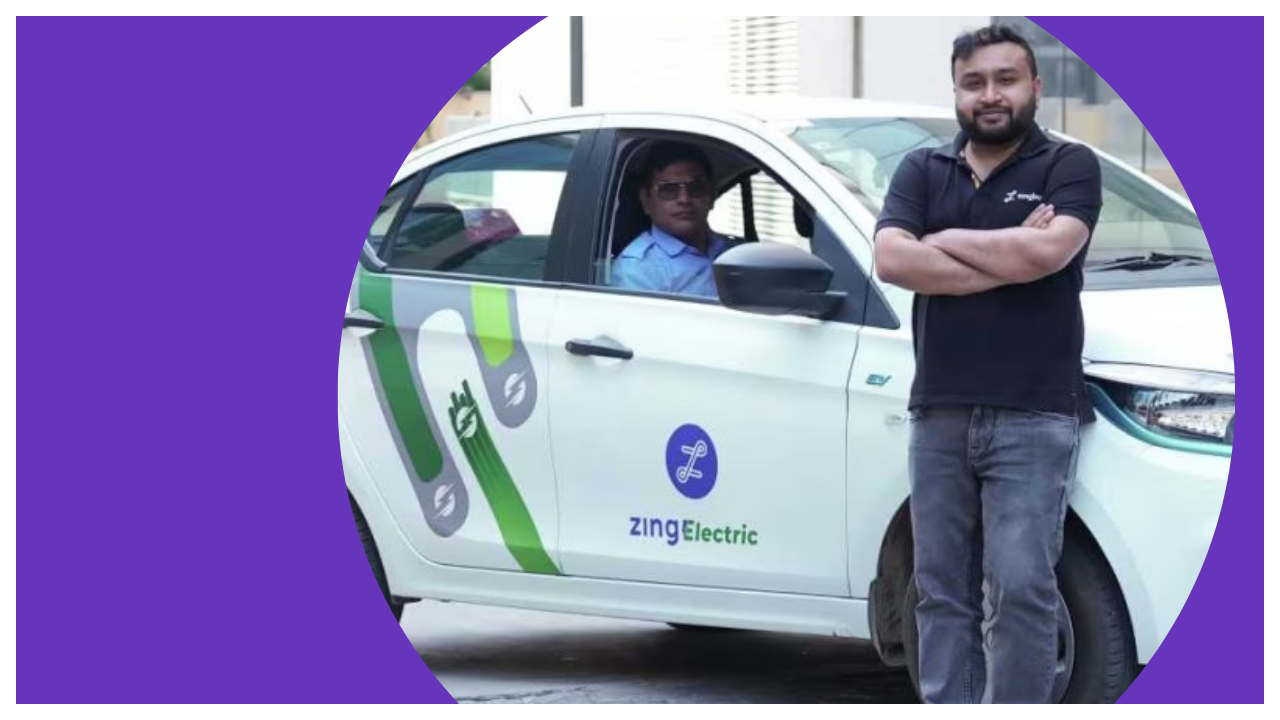
Depot charging infrastructure involves significant investment but generates substantial long-term value. Explore zingbus Electric’s successful intercity operations demonstrating practical electric vehicle deployment proving daily infrastructure viability for transport operators.
Comparing Luxury and Standard Bus Operations
Premium service standards remain fully achievable with electric technology. Discover zingbus Maxx premium standards showing how luxury passenger experience combines with electric sustainability.
Charging Infrastructure: Building Supporting Ecosystem
Electric bus economics depend critically on supporting charging infrastructure. Without adequate charging availability, vehicles sit idle destroying utilization. Charging infrastructure investment represents necessary ecosystem development rather than optional enhancement.
Current charging infrastructure across India supports approximately 5,000-6,000 electric buses. This grows monthly as new depots activate. However, gaps remain between current and required infrastructure supporting 50,000+ electric bus target by 2028. Strategic deployment planning must align infrastructure with fleet expansion timing.
Depot Charging Economics
Depot charging dominates current infrastructure investment. Most buses spend nights at central depots, providing extended charging windows. Slow charging at 30-60 kW matches typical overnight availability. Investment per bus reaches ₹5-10 lakhs for charging points plus civil works. Fast charging (120-150 kW) installations cost ₹20-30 lakhs. Ultra-fast charging exceeding 150 kW demands ₹40-50 lakhs per point.
Civil works including electrical upgrades and grid connections add ₹10-20 lakhs typically. This infrastructure investment serves dozens of vehicles across complete lifespan. Annual maintenance costs approximate 3-5% of installation cost. Operators recover infrastructure investment within 4-5 years through cumulative operational savings.
Opportunity Charging Advances
Recent technology advances enable rapid charging during route operations. Fifteen-minute fast charging technology supports intercity operations across 1,000+ kilometer distances. Fresh Bus partnership with Exponent Energy exemplifies emerging intercity solutions. zingbus Electric validates this approach with operational services on Delhi-Amritsar and Delhi-Dehradun routes demonstrating commercial viability.
Environmental and Financial Benefits Combined
Financial analysis understates electric bus value. Environmental and public health benefits create substantial additional societal value deserving recognition in comprehensive cost assessment.
A single electric bus eliminates approximately 100 tons of carbon dioxide annually compared to diesel. Across India’s projected 50,000 electric bus fleet by 2028, annual CO2 reduction totals 5 million tons. This substantial greenhouse gas reduction directly advances India’s net-zero 2070 commitment. Particulate matter, nitrogen oxides, and other harmful pollutants decline by 90-95% with electric deployment.
Noise pollution reduction reaches 50% compared to diesel buses. Quieter urban environments improve quality of life, particularly near transit corridors. Schools, hospitals, and residential areas experience substantial noise relief. Research quantifies environmental health benefits as equivalent to ₹2-5 per kilometer of operation. Over a twelve-year lifecycle, health benefits reach ₹40-75 lakhs per vehicle. Combined with operational savings, total economic benefit becomes compelling.
Addressing Deployment Challenges Practically
Electric bus adoption encounters real obstacles despite strong economics. Understanding challenges helps operators plan effectively and anticipate solutions.
Range limitations remain the primary concern. Typical electric buses travel 150-250 kilometers on single charge. Daily routes exceeding this range require mid-route charging infrastructure. Extended-battery options reach 300+ kilometers but add substantial costs. Effective workarounds involve optimizing route planning for electric capabilities. Two-bus systems with opportunity charging enable continuous operations.
Driver training requires attention. Regenerative braking demands smooth deceleration technique understanding. Battery management requires monitoring state-of-charge and thermal conditions. Maintenance personnel need electrical system expertise. Training programs are now widely available through manufacturers. Government programs provide subsidized certification. Knowledge gaps represent transition challenges, not fundamental barriers.
Supply chain constraints ease gradually. Manufacturing capacity grows across India. Lead times for vehicle delivery remain extended at 8-12 months but normalize with scaling. Battery supply represents the current bottleneck improving quarterly. Local manufacturing expansion addresses capacity constraints systematically.
Smart Investment Framework for Operators
Electric bus investment decisions should follow structured financial analysis. Total cost of ownership spanning twelve years reveals economic reality clearly. PM E-Drive subsidies improve project viability significantly. Financing options have expanded substantially. Lease structures offer alternatives to ownership. Operating expense contracts transfer financial risk to specialized operators.
Transport authorities should evaluate specific conditions including daily utilization kilometers, charging infrastructure feasibility, available subsidies, and long-term demand sustainability. Pilot deployments on high-utilization routes provide confidence before fleet-wide commitments. Government support continues through 2028, providing decision certainty.
The Business Case for Electrification
Electric buses represent optimal investment for transport operators seeking profitability and sustainability simultaneously. Comprehensive economic analysis increasingly validates what environmental necessity demands. Operators delaying decisions face higher upfront costs and longer payback periods. Early movers capture greatest financial advantages.
Battery technology continues improving while costs decline steadily. Charging infrastructure expands monthly. Manufacturing capacity increases substantially. Each factor strengthens electric bus economics continuously. zingbus Electric demonstrates successful intercity electric operations currently, validating technology and operator economics. Government support extends through 2028.
Evaluating Your Electrification Timeline
Consider your city’s specific conditions, utilization patterns, and subsidy eligibility carefully. Work with experienced consultants modeling precise TCO based on local parameters. Engage government support programs maximizing available incentives. Plan charging infrastructure systematically. Train operators comprehensively. Then execute confidently.
For intercity operations, zingbus Electric routes provide proven benchmarks for planning. Zero tailpipe emissions combine with economic viability on actual high-demand corridors. Operator partnerships leverage existing infrastructure and expertise. Routes like Delhi-Amritsar and Delhi-Dehradun demonstrate commercial success currently operational.
Electric buses deliver financial returns, operational efficiency, and environmental responsibility together. The transition accelerates systematically. Cities implementing aggressive electrification now position themselves as innovation leaders capturing maximum economic advantage from emerging technology maturity. Financial fundamentals support the transition decisively.
Frequently Asked Questions
Ques: What is the current average electric bus price in India 2026?
Ans: Nine-meter buses cost ₹1.0-1.25 crore while twelve-meter models range ₹1.5-2.2 crore. Government subsidies reduce effective purchase costs by ₹35-40 lakhs per bus.
Ques: How much can electric buses save on operational costs annually?
Ans: Annual operational savings reach ₹25-30 lakhs per bus. Electricity costs ₹35-45 per km versus ₹50-75 per km for diesel buses.
Ques: What is the total cost of ownership for electric buses?
Ans: Twelve-year TCO averages ₹2.3-2.5 crore including purchase, operations, and maintenance. This provides 6-10% advantage over equivalent diesel bus costs.
Ques: How long is the battery lifespan in electric buses?
Ans: Battery lifespan reaches 7-8 years with degradation increasing gradually. Warranty coverage spans 5-6 years protecting peak revenue-generating years.
Ques: Which government schemes provide electric bus subsidies?
Ans: PM E-Drive scheme offers ₹10,000 per kWh subsidy capped at ₹35 lakhs. Additional infrastructure subsidies reach ₹50 lakhs per charging depot.
Ques: What is the payback period for electric bus investment?
Ans: High-utilization urban buses achieve payback in 3-4 years. With subsidies, effective payback compresses to 2-3 years for intensive operations.
Ques: Can electric buses handle long-distance intercity routes?
Ans: Yes, with proper charging infrastructure. zingbus Electric operates successfully on Delhi-Amritsar and Delhi-Dehradun routes. Fifteen-minute fast charging enables continuous operations.
Ques: How much maintenance do electric buses require annually?
Ans: Annual maintenance averages ₹8-12 lakhs versus ₹15-20 lakhs for diesel buses. Fewer moving parts reduce service frequency and downtime substantially.
Ques: Which manufacturers offer the most affordable electric buses?
Ans: Ashok Leyland Circuit S starts at ₹1.5 crore. Tata Starbus Urban begins at ₹2.03 crore. Switch and EKA models launch at ₹1.0-1.25 crore with improving specifications.
Ques: What is the range of electric buses per full charge?
Ans: Standard models achieve 150-200 km range. Extended-battery variants reach 250-300 km. Intercity models with largest batteries exceed 300 km capacity.
Ques: How does total cost of ownership compare to diesel buses?
Ans: Electric buses achieve 6-15% TCO advantage across twelve-year lifespan. Advantages increase with battery cost reductions forecast for 2027-2028.
Ques: Are there financing options available for electric bus purchase?
Ans: Yes, specialized green finance channels offer favorable terms. Lease structures provide alternatives to ownership. Government subsidies improve project economics substantially.