Jammu Kashmir is India’s spiritual powerhouse. Hidden in snow-covered mountains, ancient valleys, and serene lakes are temples that have stood for thousands of years. These aren’t just buildings of stone; they’re places where pilgrims have sought blessings across generations.
Whether you’re trekking to a cave temple high in the Himalayas or walking through historic shrines in the city, Jammu & Kashmir offers spiritual experiences you’ll never forget. This guide covers 15 major temples with practical information: timings, how to reach them, best seasons, and what to expect.
Vaishno Devi Temple – The Most Visited
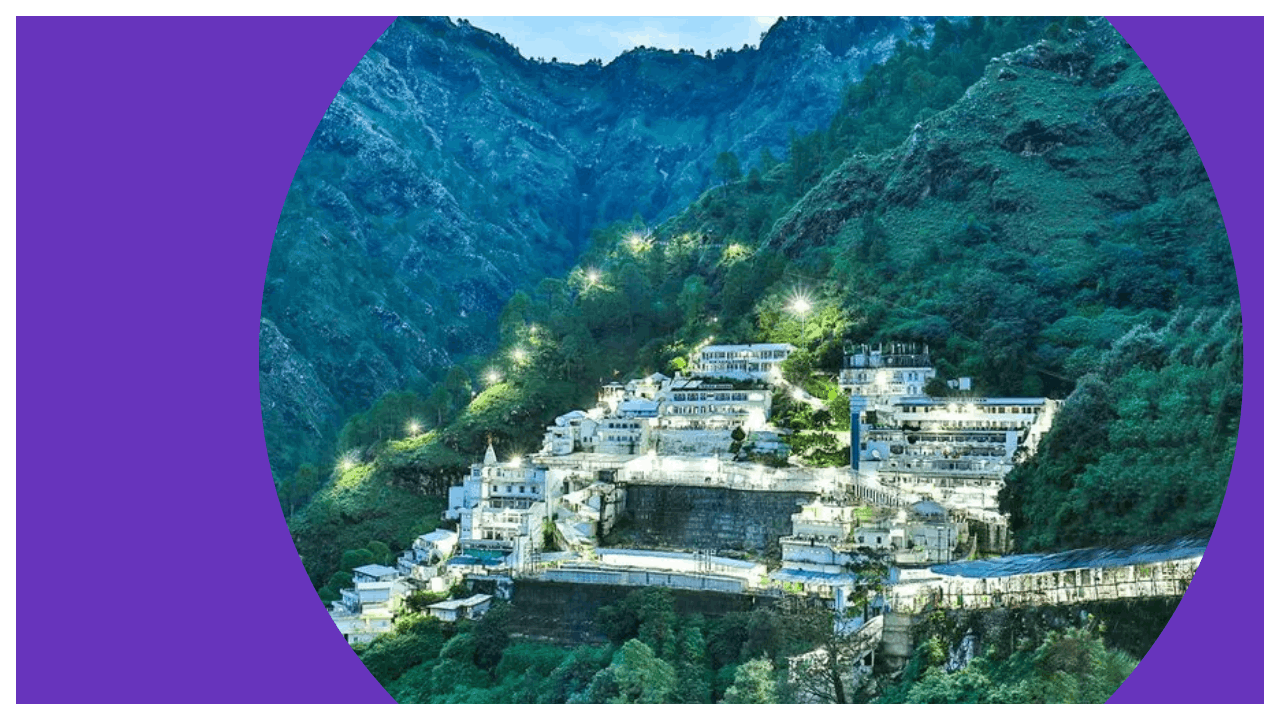
One of Hinduism’s holiest shrines. Located high in the Trikuta Mountains near Katra, about 48 km from Jammu city. Each year, millions of devotees trek to reach the sacred cave where three rock formations represent the Goddess in her three divine forms.
What You Need to Know:
- Location: Katra, Jammu district
- Trek Distance: 12 km from Katra to temple
- Trek Duration: 5–8 hours on foot
- Timing: 24 hours (darshan queues long during peak)
- Best Time to Visit: March to June, September to November
- Season to Avoid: July–August (monsoon makes paths slippery); December–February (extreme cold)
How to Reach Katra:
From Jammu city, take bus or taxi (1 hour drive). Katra has train station (Shri Mata Vaishno Devi Katra Railway Station) with direct trains from Delhi, Mumbai.
Registration (Important):
Mandatory yatra slip registration before trekking. Register online at www.maavaishnodevi.org or offline at Katra (available 24/7). Registration is free. You’ll get an RFID card for tracking.
Trek Options from Katra:
- On foot (traditional, spiritual)
- Pony rides (easier)
- Palki (palanquin, most comfortable)
- Helicopter (fastest; costs ₹3,500–₹4,500 from Katra to Sanjichhat)
Inside the Cave:
The actual temple is small; just 30 meters long. Pilgrims enter from one side, touch the sacred rock formations (pindis) representing the Goddess, and exit from the other. The experience lasts 2–3 minutes but is deeply emotional.
Additional Temple: Bhairavnath Temple is 2.5 km uphill from the main temple. Pilgrims believe visiting both completes the pilgrimage. A ropeway connects the main temple to Bhairavnath (₹100 per person).
Amarnath Cave – The Ice Lingam Wonder
One of the most challenging and revered pilgrimages in Hinduism. Located at 3,888 meters altitude in the Kashmir mountains. The main attraction: a naturally forming ice lingam (representation of Lord Shiva) that grows and shrinks with the moon cycle.
What You Need to Know:
- Yatra Dates 2026: July 1 to August 28 (approximately 45 days)
- Location: Kashmir Valley (Anantnag district)
- Base Camps: Two routes; Pahalgam (traditional, longer) or Baltal (shorter, steeper)
- Trek Distance: Pahalgam route: 48 km; Baltal route: 28 km
- Trek Duration: 3–4 days
Pahalgam Route:
Gentler climb, more water sources, better for average trekkers. Passes through Chandanwari, Sheshnag Lake, Panchtarni, then Amarnath Cave.
Baltal Route:
Shorter but steeper, mostly mountain climbing. Faster but more physically demanding.
Registration (Mandatory):
- Register online at www.shrineboard.com or through designated bank branches
- Provide health certificate (CHC) from authorized doctor
- Registration fee: ₹100
- Daily quota: 10,000 pilgrims (excluding helicopter yatris)
- Book early: Slots fill quickly
Travel Options:
- On foot (full trek experience)
- Pony/Palanquin hire (comfortable but expensive; ₹1,500–₹3,000 per day)
- Helicopter (from Baltal to cave and back; ₹5,000–₹8,000; takes 8–10 minutes)
How to Reach Base Camps:
From Srinagar, bus to Pahalgam (2.5 hours) or Baltal (2 hours). Stay 1–2 nights to acclimatize before starting trek.
Ice Lingam Peak Season:
Ice formation is best in mid-July to mid-August. Peak crowds and temperature above 0°C cause melting. Best time: early July or late August when weather is cool and formation is stable.
Physical Fitness Required:
This trek is challenging; altitude of 3,888 meters causes breathing difficulty. Acclimatize 1–2 days before starting. Carry warm clothes even in summer; nights below 0°C.
Raghunath Temple – Jammu’s Spiritual Heart
Located in Jammu city center, dedicated to Lord Rama. Built in the 19th century, features seven interconnected shrines (shikaras) with intricate stone carvings. One of Jammu’s most important temples and a key pilgrimage site for Ram devotees.
Details:
- Location: Raghunath Mandir Chowk, Jammu City
- Timing: 6 AM to 8 PM daily
- Architecture: Seven interconnected shrines with intricate carvings
- Special Features: On-site museum with ancient sculptures
- Time Needed: 2–3 hours to explore properly
- Festival: Rama Navami (March–April) is the main festival
How to Reach:
Jammu is well-connected by rail, road, and air. From Jammu Railway Station or airport, auto/taxi to temple (10 minutes). Jammu city is gateway to many J&K temples.
Shankaracharya Temple – Dal Lake Beauty
Ancient temple perched on a hilltop overlooking Srinagar’s Dal Lake. Dedicated to Lord Shiva. The temple dates back to 200 BC and offers panoramic views of Kashmir Valley; perfect for photography.
Details:
- Location: Durgjan (hilltop), Srinagar
- Timing: 7:30 AM to 5:00 PM
- Altitude: Hill requires moderate climb
- Views: 360-degree views of Dal Lake and Zabarwan mountains
- Best Time: September to November (clear skies, cool weather)
- Entry Fee: Free
How to Reach:
From Srinagar city center, auto/taxi to temple base (15 minutes), then climb or take vehicle up the hill.
Inside the Temple:
Small cave chamber with circular architecture. Inside is a Shiva Lingam installed centuries ago. The setting; surrounded by mountains and water; makes it spiritually powerful.
Martand Sun Temple – Ancient Glory in Ruins
One of Kashmir’s most important archaeological monuments. Built in the 8th century by King Lalitaditya of the Karkota Dynasty. Dedicated to the Sun God (Surya). Though in ruins, the intricate stone carvings showcase masterful ancient engineering.
Details:
- Location: Anantnag district (65 km from Srinagar)
- Timing: Open 24 hours
- Best Time: September to November (pleasant weather, no snow)
- Architecture: Blend of Hindu and Central Asian styles
- Historical Significance: Oldest sun temple in India; architectural gem
What to Expect:
Extensive stone ruins, partial structures remaining. No active worship happens here, but pilgrims and history lovers visit to witness ancient craftsmanship. Photography is excellent; the ruins against mountain backdrop are stunning.
Sharika Devi Temple – Srinagar’s Protector
Located on Hari Parbat hill overlooking Srinagar. Dedicated to Goddess Sharika, believed to be the presiding deity protecting Srinagar city. An important pilgrimage for local people and visitors.
Details:
- Location: Hari Parbat hill, Srinagar
- Timing: 6 AM to 8 PM
- Best Time: September to November
- Hill Climb: Moderate
- Views: Entire Srinagar city from the top
How to Reach:
From Srinagar city, auto/taxi to Hari Parbat base, then walk or vehicle up the hill (10 minutes).
Peer Kho Cave Temple – Mystical Mountain Cave
Natural cave temple dedicated to Lord Shiva, situated on banks of the Tawi River in Jammu. Believed to be several centuries old. Local legend says the sage Jamwant meditated inside this cave. The cave passages are narrow and mysterious; an adventure in itself.
Details:
- Location: Tawi River banks, Jammu City
- Timing: 5 AM to 7 PM
- Special Feature: Natural cave with natural Shiva Lingam
- Festival: Shivratri (February–March) brings thousands of devotees
- Cave Experience: Narrow passages, cave exploration adventure
Safety Note:
The cave is narrow. Crawling required in some sections. Not suitable for claustrophobic people or those with mobility issues.
Ranbireshwar Temple – The 12-Lingam Wonder
Built in 1883 by Maharaja Ranbir Singh. Dedicated to Lord Shiva. Houses 12 remarkable Shiva Lingams, each made from black marble and standing 12–18 feet tall. The main lingam is particularly famous.
Details:
- Location: Shalamar Road, Jammu (near Civil Secretariat)
- Timing: 5 AM to 9 PM
- Festival: Maha Shivaratri (February–March) celebrated grandly
- Architecture: 19th-century temple design
Best For:
Shiva devotees, especially during Maha Shivaratri festival.
Kheer Bhawani Temple – The Prophecy Spring
Located in Srinagar, surrounded by ancient chinar trees. Dedicated to Goddess Ragnya Devi. The main attraction is a small pond with sacred spring water. Local belief: the color of the spring water indicates the region’s fortune; clear water means prosperity, while cloudy water suggests tough times ahead.
Details:
- Location: Tulmulla village, Srinagar
- Timing: 7 AM to 5 PM
- Special Feature: Sacred spring water in courtyard
- Best Time: September to November
- Festival: Jyeshtha Ashtami (May–June) is main pilgrimage season
Avantipur Temple – Greek-Inspired Ancient Architecture
Built by King Avantivarman (ruled 855–883 AD). Dedicated to Sun God (Surya Dev). Unique because its architecture blends Hindu temple design with Greek architectural influence; unusual for a temple of that era. Though partially in ruins, the remaining structure is impressive.
Details:
- Location: Awantipora, Anantnag district (40 km from Srinagar)
- Timing: Open 24 hours
- Historical Period: 9th century
- Architectural Style: Hindu-Greek fusion
- Best For: History enthusiasts, photography
Shiv Khori Cave Temple – The Mysterious Passage
A hidden gem few know about. Shiv Khori means “Shiva’s cave” in Kashmiri. Located in a natural cave with narrow passages that open into a chamber housing a naturally formed Shiva Lingam. Pilgrims believe this lingam is a manifestation of the deity itself.
Details:
- Location: Reasi district (remote area)
- Timing: Open 24 hours
- Best Time: September to November
- Cave Adventure: Narrow passages, steep descents
- Physical Requirement: Moderate climbing, cave navigation
What Makes It Special:
The cave passages are tight and require crawling. Inside, a stalactite formation naturally resembles a Shiva Lingam. The spiritual atmosphere is intense; something about being deep inside a mountain cave with sacred formations touches the soul.
Stok Monastery – Buddhist Spiritual Center
Located near Leh in Ladakh region of J&K. A prominent Buddhist monastery housing valuable artifacts; thangkas (religious paintings), sculptures, manuscripts. The monastery sits on a hill with panoramic views of surrounding mountains and agricultural fields.
Details:
- Location: Stok, Leh district
- Timing: 6 AM to 1 PM, 1:30 PM to 6 PM (Closed on Sundays during winter)
- Best Time: May to September (clear weather, roads accessible)
- Museum: Religious artifacts, thangkas, sculptures
- Views: Apricot orchards and barley farms in valleys
How to Reach:
From Leh city, auto/taxi to Stok (30 minutes). Requires flight to Leh first (from Srinagar or other cities).
Sudh Mahadev Temple – The Sacred Trident
Ancient temple complex dedicated to Lord Shiva in Chenani area. The main attraction is a naturally occurring Shiva Lingam. The temple hosts annual fairs attracting thousands of devotees. Nearby flows Pap Nashni river; believed to cleanse sins for those who bathe.
Details:
- Location: Sudhmahadev, Chenani Tehsil (80 km from Jammu)
- Best Time: September to November
- Special Feature: Naturally formed Shiva Lingam
- Festival: Annual fair brings massive crowds
- Sacred River: Pap Nashni river nearby
Sharada Mataji Temple – The Refugee Temple
Built by refugees after India’s partition. Located on Kishanganga River banks. Dedicated to Maa Saraswati (Goddess of Knowledge). Though young in history (established post-1947), it holds deep spiritual and political significance for Hindus of Kashmir.
Details:
- Location: Sharada village, Neelam Valley
- Timing: 7 AM to 8 PM
- Significance: Symbol of Hindu presence in Kashmir
Best Time to Visit J&K Temples
March to May (Spring):
- Temperature: 10–25°C
- Weather: Pleasant, flowers blooming
- Crowds: Moderate to high
- Best for: All temples except high-altitude ones (Amarnath still snowy)
June to August (Summer):
- Temperature: 15–30°C (lower in mountains)
- Weather: Clear, accessible
- Crowds: Very high (Amarnath Yatra peak season)
- Best for: Amarnath pilgrimage, high-altitude temples
September to November (Autumn):
- Temperature: 10–20°C
- Weather: Clear skies, comfortable, golden Chinar trees
- Crowds: Moderate
- Best season overall – ideal for most pilgrimages
December to February (Winter):
- Temperature: Below 0°C (severe in mountains)
- Weather: Heavy snow, roads can close
- Crowds: Low
- Best for: Only low-altitude temples (Jammu area); high-altitude temples inaccessible
Practical Travel Tips
Getting Around:
Use zingbus for comfortable, affordable intercity travel between Jammu and Srinagar. Buses connect major cities and towns across J&K, making it easy to visit multiple temples.
What to Carry:
- Comfortable walking shoes (temple areas involve climbing)
- Warm clothes (even summer nights are cool)
- Water bottle, basic medicines
- Modest dress code (respect temple customs)
- Registered mobile number (some temples use SMS confirmation)
Physical Fitness:
Vaishno Devi and Amarnath require fitness. Consult doctor before attempting high-altitude treks.
Budget Estimate:
- Low budget: ₹3,000–₹5,000 per day (bus travel, basic food, free temple entries)
- Mid-range: ₹6,000–₹10,000 per day (decent accommodation, good meals)
- Premium: ₹12,000+ per day (hotels, guides, helicopter services)
Jammu & Kashmir’s temples aren’t just religious sites; they’re windows into centuries of faith, history, and spirituality. Each temple tells a different story: ancient engineering (Martand), natural wonders (Amarnath’s ice lingam), modern devotion (Ranbireshwar), and spiritual depths (Shiv Khori).
Plan your pilgrimage wisely. Choose the right season, respect local customs, and approach these sacred places with reverence. The mountains of J&K have guided millions toward inner peace; let them guide you too.
Ready for a spiritual journey? Book your zingbus ticket and discover the sacred lands of Jammu Kashmir.