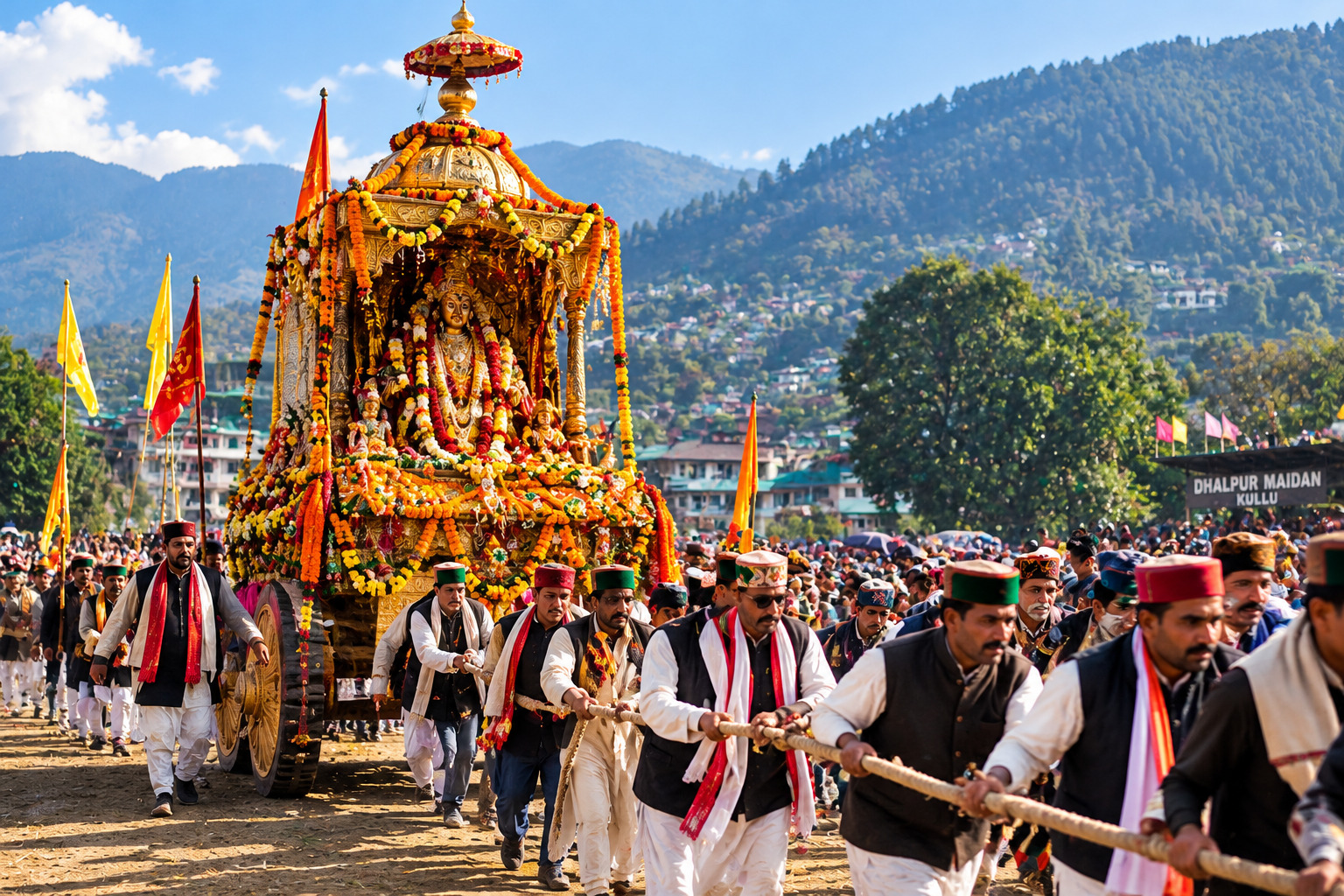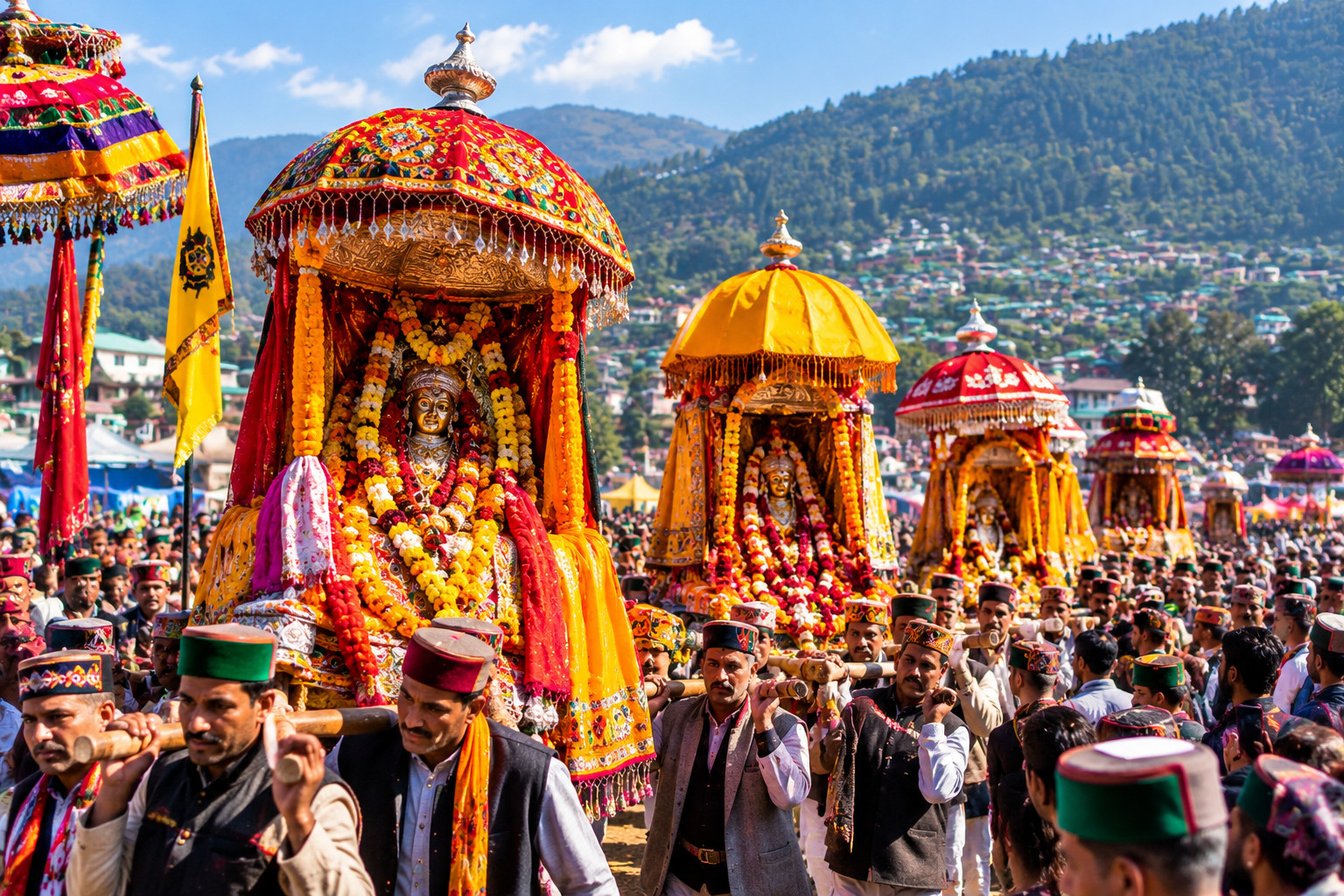
Most of India celebrates Dussehra by burning giant statues. Kullu does the opposite. On the morning of October 20, while Delhi’s Ravana ash is still being cleared, over 200 village deities will arrive at Dhalpur Maidan in Kullu on wooden palanquins, each accompanied by its own drumming band and a trail of devotees who have walked down from every side valley in the district. That arrival is not the end of anything. It is Day 1.
Kullu Dussehra 2026 runs from October 20 to October 26. Seven days. It was declared an International Festival in 1972, and the tradition traces back to the 17th century reign of Raja Jagat Singh, who established Lord Raghunath as the presiding deity of the valley after a sequence of events that the local legend ties to remorse over a Brahmin’s death.
What Makes Kullu Dussehra Different From Every Other Dussehra
The structural difference matters. Every other Dussehra in India marks the end of Navratri with a final-day celebration. Kullu Dussehra starts on Vijayadashami and runs an additional seven days. No other place in the country follows this format.
Kullu Dussehra 2026: Dates, the Seven Day Programme and Complete Travel Guide
The festival breaks down into three distinct phases: the opening procession, the five-day fair, and the closing Lanka Dahan ceremony on the banks of the Beas.
The Opening Procession: Day 1, October 20
The centrepiece is the arrival of Lord Raghunath’s chariot from the Sultanpur temple, pulled by devotees through the town to Dhalpur Maidan. Alongside the main chariot, over 200 village deities from temples across the Kullu valley arrive on decorated wooden palanquins.
Each deity travels with its own entourage: a band of traditional drummers, a group of devotees, and the pujari from the home temple. The arrivals are staggered through the day, and the sequence has a hierarchy rooted in the valley’s temple politics. The arrival of Goddess Hadimba from Manali carries particular significance and traditionally happens early in the proceedings.
The scale of this single-day event is what separates Kullu Dussehra from a standard festival gathering. The sight of dozens of palanquins moving simultaneously through the town, each with its own music, is the defining image of the festival.
The Five Day Fair: Days 2 to 6
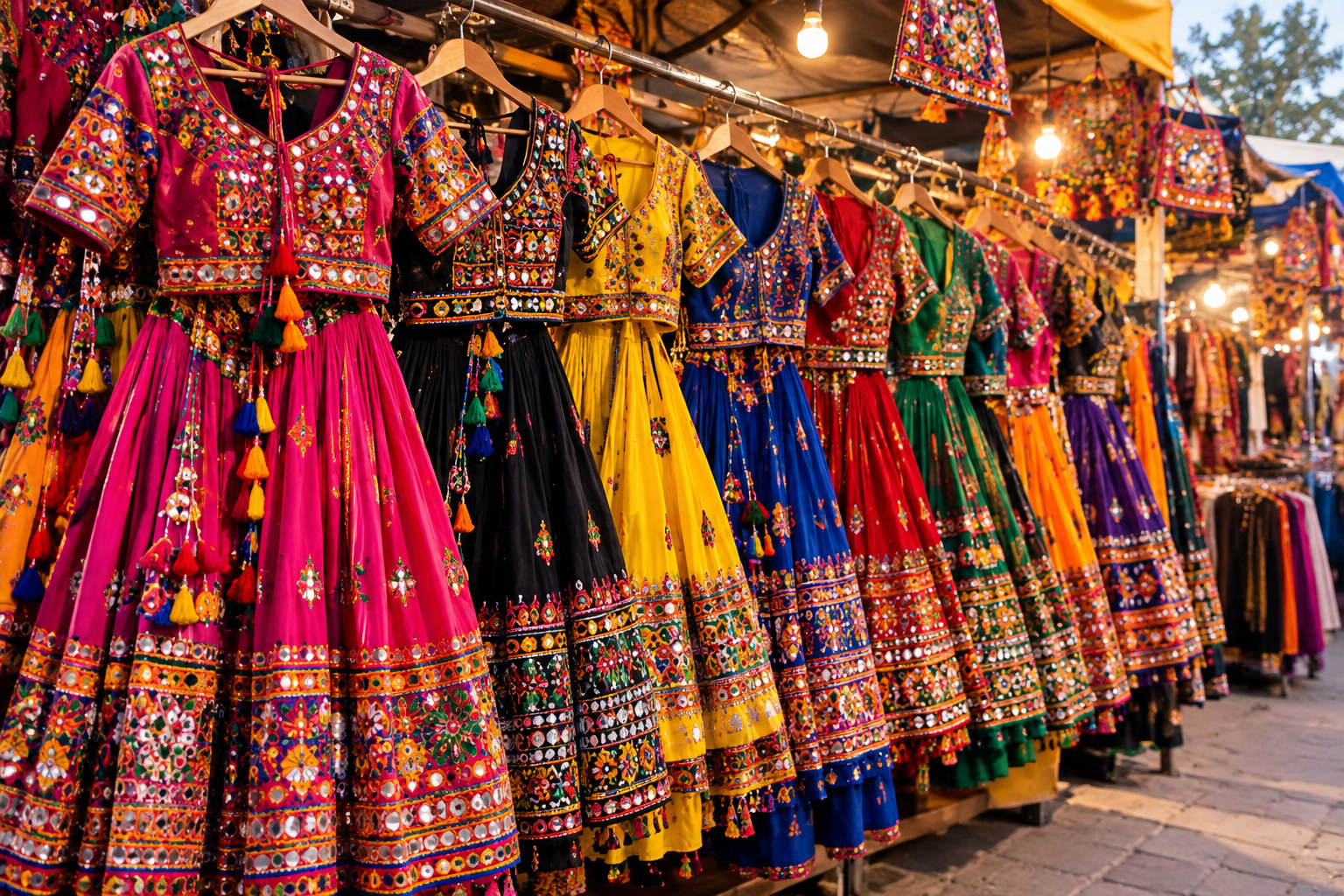
Once the deities are installed in their camps on the Dhalpur ground, the fair begins. Market stalls sell Kullu shawls, handicrafts, local produce and street food. Folk performances and cultural programming run on the stadium stage every evening.
The fair days are less intense than Day 1 and Day 7. The ground is busy but not overwhelmed. Day 6 is Mohalla, a tradition where the deities visit one another’s camps in a ceremonial sequence that reflects the alliances and relationships between the valley’s temples.
For travellers, the fair days are the most relaxed window. The procession crowds have thinned, and the market and evening programmes are accessible without the density of the first and last days.
Lanka Dahan: Day 7, October 26
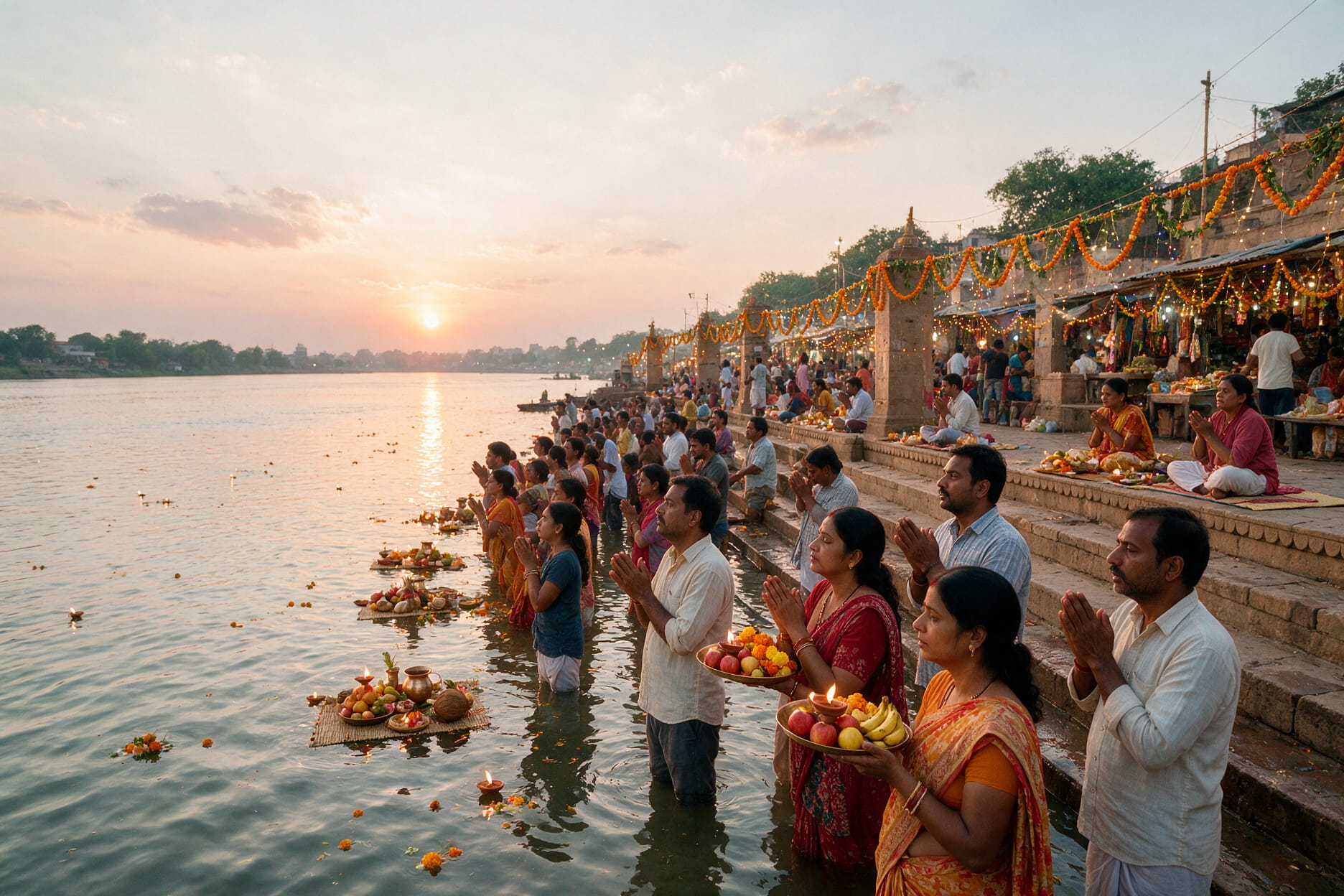
On the final day, the procession leaves Dhalpur Maidan and moves to the banks of the Beas River. A symbolic Lanka Dahan ceremony marks the close. The deities then begin their return journeys to their respective temples, on foot, up every side valley. Some of the more distant temples take two or three days to walk back.
This departure is itself a visual event. The palanquins heading up different valleys, each with their drumming bands, spread across the landscape as the festival dissolves back into daily life.
Where It Happens: Dhalpur Maidan
Dhalpur Maidan is the main ground in Kullu town, located near the banks of the Beas River. The ground is open access during Dussehra. No ticket is required. The chariot procession route runs through the town from Sultanpur to the maidan.
Kullu itself sits at roughly 1,200 metres elevation in the Beas Valley, about 40 km south of Manali and 10 km from Bhuntar airport.
How to Reach Kullu for Dussehra 2026
From Delhi
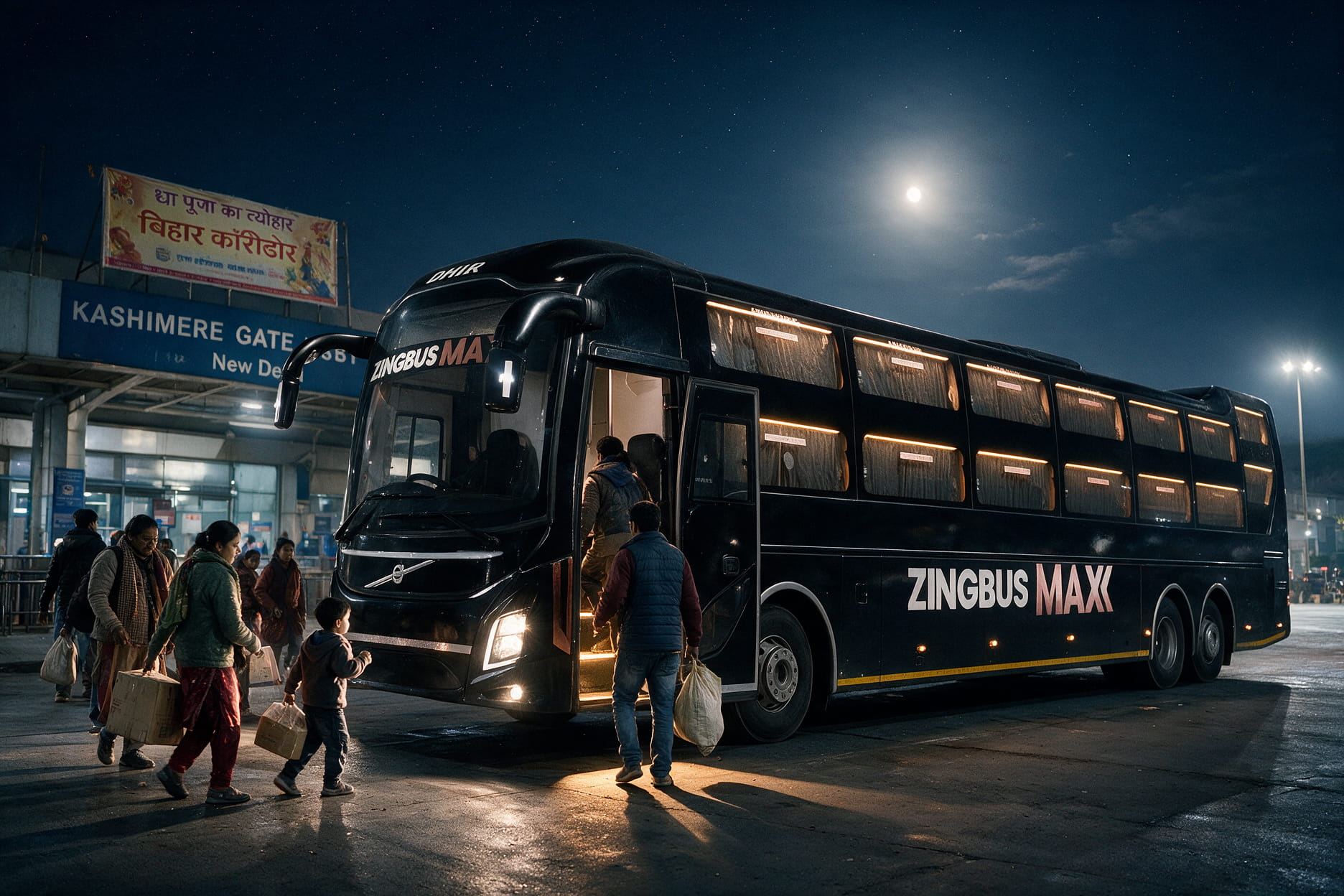
- The overnight bus to Manali via the Delhi to Manali bus route is the most common approach. The bus drops at Manali, and Kullu is 40 km south, roughly an hour by local transport. Some services stop at Kullu directly. Alternatively, drive via Chandigarh on NH3, roughly 10 to 12 hours from Delhi.
From Chandigarh
- About 270 km, roughly 6 to 7 hours by road through Mandi. Chandigarh has the nearest airport with wide flight connectivity.
From Bhuntar
- The Kullu-Manali airport at Bhuntar is 10 km from Kullu. Flight availability is limited and weather-dependent, with cancellations common.
Where to Stay
Kullu town has a limited hotel inventory compared to Manali. During Dussehra week, occupancy is very high. Options include hotels along the Beas riverfront and guesthouses near the maidan. Many travellers stay in Manali and drive down for the key events, particularly the Day 1 procession and the Day 7 Lanka Dahan.
Book accommodation at least 2 to 3 weeks before the festival. Rates during Dussehra week are typically 30 to 50 percent above the off-season.
What to Carry
October in the Kullu valley is cool. Daytime temperatures sit between 15 and 22 degrees Celsius. Evenings drop to 5 to 10 degrees. Carry warm layers, a jacket for the evenings, and comfortable walking shoes for the maidan and the procession route. The ground at Dhalpur is uneven and can be dusty.
Combining Kullu Dussehra With Manali
Manali is 40 km north. Most travellers combine the Dussehra visit with 2 to 3 days in Manali. October is the last comfortable month in Manali before winter sets in. Rohtang Pass may be accessible or closing depending on early snowfall, and Solang Valley is in its clearest viewing conditions.
Prices are approximate and may vary based on season, demand, and availability.
Common Questions About Kullu Dussehra 2026
When is kullu dussehra 2026?
Kullu Dussehra 2026 runs from Tuesday, October 20 to Monday, October 26, starting on Vijayadashami and lasting seven days.
Why does Kullu Dussehra start when other cities finish celebrating?
Kullu’s tradition begins on Vijayadashami as a gathering of valley deities to honour Lord Raghunath, rather than marking the end of Navratri.
How many deities gather at Kullu Dussehra?
Over 200 village deities from temples across the Kullu valley arrive on wooden palanquins, each with its own drumming band.
Do I need a ticket for Kullu Dussehra?
Dhalpur Maidan is open access during the festival. No ticket is required for the procession, fair or any public ceremony.
How do I reach Kullu from Delhi?
Take the overnight bus to Manali via the Delhi to Manali route and connect to Kullu, about 40 km south and roughly one hour by road.
What is the best day to visit Kullu Dussehra?
Day 1 (October 20) for the deity procession and Day 7 (October 26) for the Lanka Dahan at the Beas River are the two highlights.
What should I wear to Kullu Dussehra?
Warm layers and a jacket for evenings when temperatures drop to 5 to 10 degrees. Comfortable walking shoes for the uneven maidan ground.
Can I stay in Manali and visit Kullu for Dussehra?
Many travellers base themselves in Manali and drive 40 km to Kullu for the key events, particularly the first and last day processions.
When was Kullu Dussehra declared an International Festival?
Kullu Dussehra was declared an International Festival in 1972, recognising its unique format and cultural significance.
What is Lanka Dahan at Kullu Dussehra?
Lanka Dahan is the symbolic closing ceremony on Day 7, held at the banks of the Beas River, after which the deities return to their villages.
You Might Also Like
- Explore Upcoming Festivals in India 2026: Full Guide: The complete festival calendar for every major celebration and holiday in India for 2026.