Madurai has been a continuous city for over 2,500 years. The places to visit near Madurai under 100 km extend that history outward: ancient rock-cut shrines, an archaeological site that revised Tamil civilization’s timeline, and Chettinad’s merchant mansions, which have no equivalent in South Asia.
This guide covers eight destinations starting from the city’s edge and working outward to the 96 km boundary. Whether traveling to Madurai from another city or already staying here, book your Madurai bus on zingbus before heading to these sites.
Places to Visit Near Madurai Under 100 km
The character of this list is determined by Madurai’s position within Tamil Nadu’s temple landscape. Unlike the Nilgiri circuit near Coimbatore or the forest reserves near Nagpur, the places to visit near madurai under 100 km are concentrated in religious heritage, Dravidian archaeology, and one distinct culinary culture. There is limited wildlife and no hill station within this range. What exists instead is a density of historical significance that few other 100 km radii in India can match.
Sacred Sites Near Madurai
The first 25 km from Madurai holds three of the most historically significant temples in the Murugan and Vishnu traditions of Tamil Nadu.
Thiruparankundram
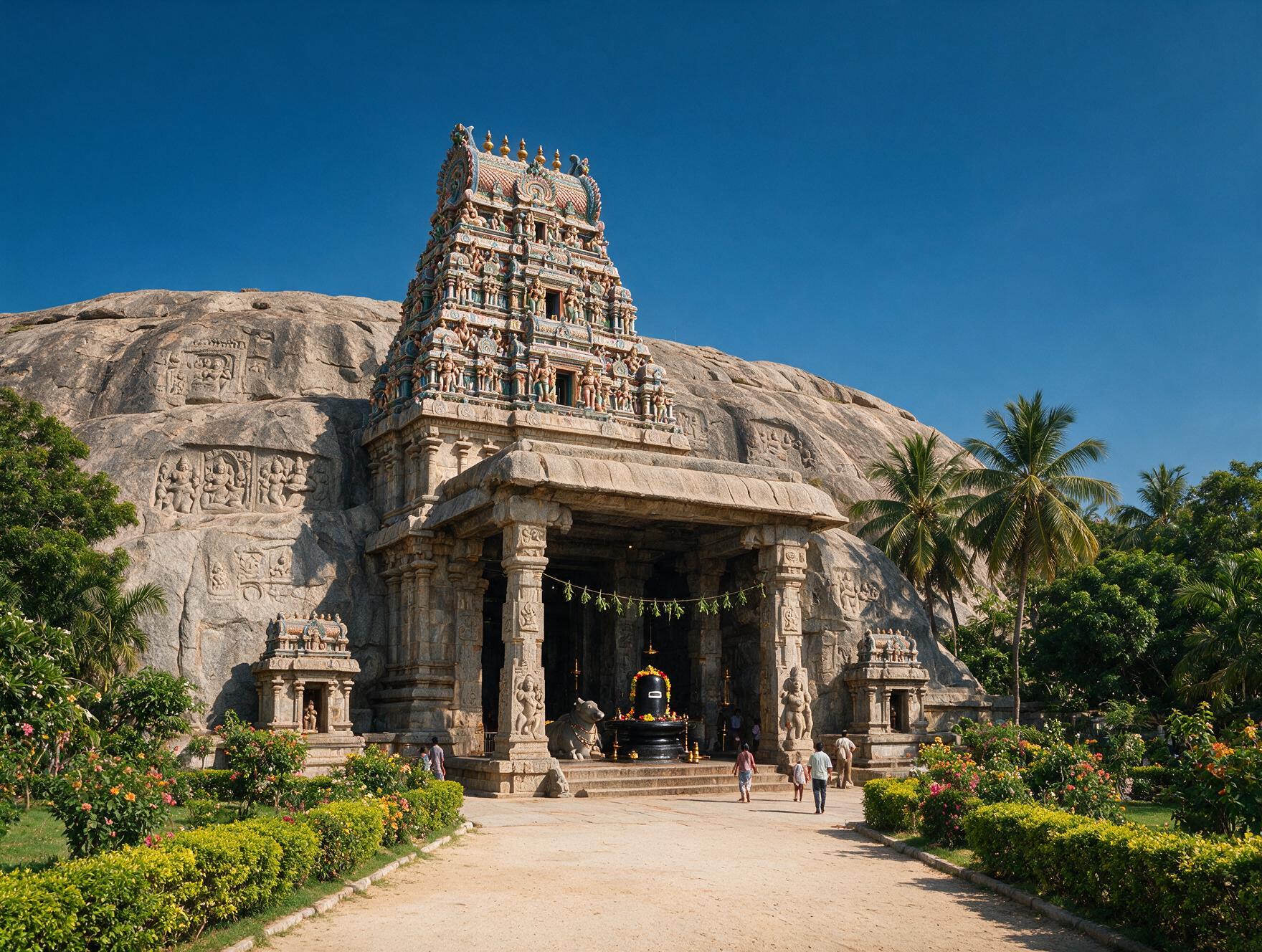
Thiruparankundram is 8 km from Madurai and is one of the six principal Arupadaiveedu, the canonical abodes of Lord Murugan in Tamil Nadu. What makes the site architecturally unusual is that it is not built on a rock: it is carved from one. The 8th century temple is a rock-cut structure, with its inner sanctum, corridors, and gopuram shaped directly from the granite hill. The stone has not been assembled. It has been removed.
The climb to the upper sections of the complex gives a view across the Madurai plain. The inner corridors carry carved figures and inscriptions that reward close attention on a weekday morning when the shrine is not at pilgrimage capacity. Navratri and Thaipusam draw very large crowds. A regular Tuesday or Wednesday morning gives you the inner chambers at a pace that lets you actually look.
Alagar Kovil
Alagar Kovil, 22 km from Madurai, is the temple of Kallalagar, a form of Vishnu, set in the Alagar Hills in a low forested range northeast of the city. The approach road passes through the Alagar Forest Reserve: dry deciduous vegetation with a resident wildlife population that includes peacocks, spotted deer, and monkeys visible from the road. The temple’s main gopuram is visible from several kilometers away.
The Chithirai festival each April, during which Kallalagar processes on horseback to the Vaigai River to attend his sister Meenakshi’s wedding, centers on this temple and is the most significant annual cultural event in the Madurai region. The processional route and its cultural weight make Alagar Kovil more than a religious destination; it is a node in the city’s ceremonial life.
Pazhamudircholai
Pazhamudircholai, 19 km from Madurai in the same Alagar Hills, is the third of the six Arupadaiveedu within reach of this guide. The name translates roughly as “the garden where fruits are always ripe” and the temple here is set within a sacred grove rather than on an open hill. The forested surroundings give the site a different atmosphere from Thiruparankundram’s carved grandeur, and the combination of pilgrimage significance and intact natural environment is relatively rare for a temple of this importance.
The Archaeology of Madurai’s Hinterland
Keeladi
Keeladi is approximately 65 km from Madurai, near Sivagangai, and is where Tamil history was revised. Archaeological excavations beginning in 2015 have produced artifacts dated to the Sangam period, approximately 600 BCE to 300 CE: terracotta figurines, copper objects, iron implements, spindle whorls, and pottery carrying Tamil Brahmi script. The significance is specific. The findings pushed the evidence for organized, literate urban civilization in Tamil Nadu back by at least 300 years beyond previous scholarly consensus, establishing a Sangam-era city contemporaneous with the Mauryan Empire.
The site museum holds original finds. The excavation itself is ongoing, with new findings announced periodically. A guide from the entrance area provides the 45-minute context that makes the physical remains legible. Without background, the excavation sections read as marked trenches. With context, you are standing in the foundation plan of a city that existed before the common era.
Entry carries a nominal Tamil Nadu Archaeology Department fee. The site is best visited in the cooler months between October and February. The museum is a necessary companion to the excavation walk.
Dindigul
Dindigul is 65 km from Madurai and is known for two things that do not obviously belong together: a medieval fort and a specific preparation of biryani.
The fort itself is built on top of a single granite boulder that rises 90 metres above the surrounding plain. The boulder is the monument. The fort was held in succession by the Madurai Nayaks, Hyder Ali, Tipu Sultan, and the British East India Company, and each occupation has left structural evidence inside the perimeter. The Archaeological Survey of India maintains the site. The climb to the ramparts, under 30 minutes, gives panoramic views of the agricultural plains in all directions.
Dindigul biryani is a distinct regional preparation using seeraga samba rice rather than the basmati used in most North Indian preparations. Seeraga samba is shorter-grained, more aromatic, and cooks differently. The Dindigul preparation, made with mutton and the local rice, has sufficient regional identity that it is now recognized as a geographical marker for the town. Eating it at an established restaurant in Dindigul, rather than at a Madurai restaurant selling the same name, is the correct way to try it.
Vaigai Dam
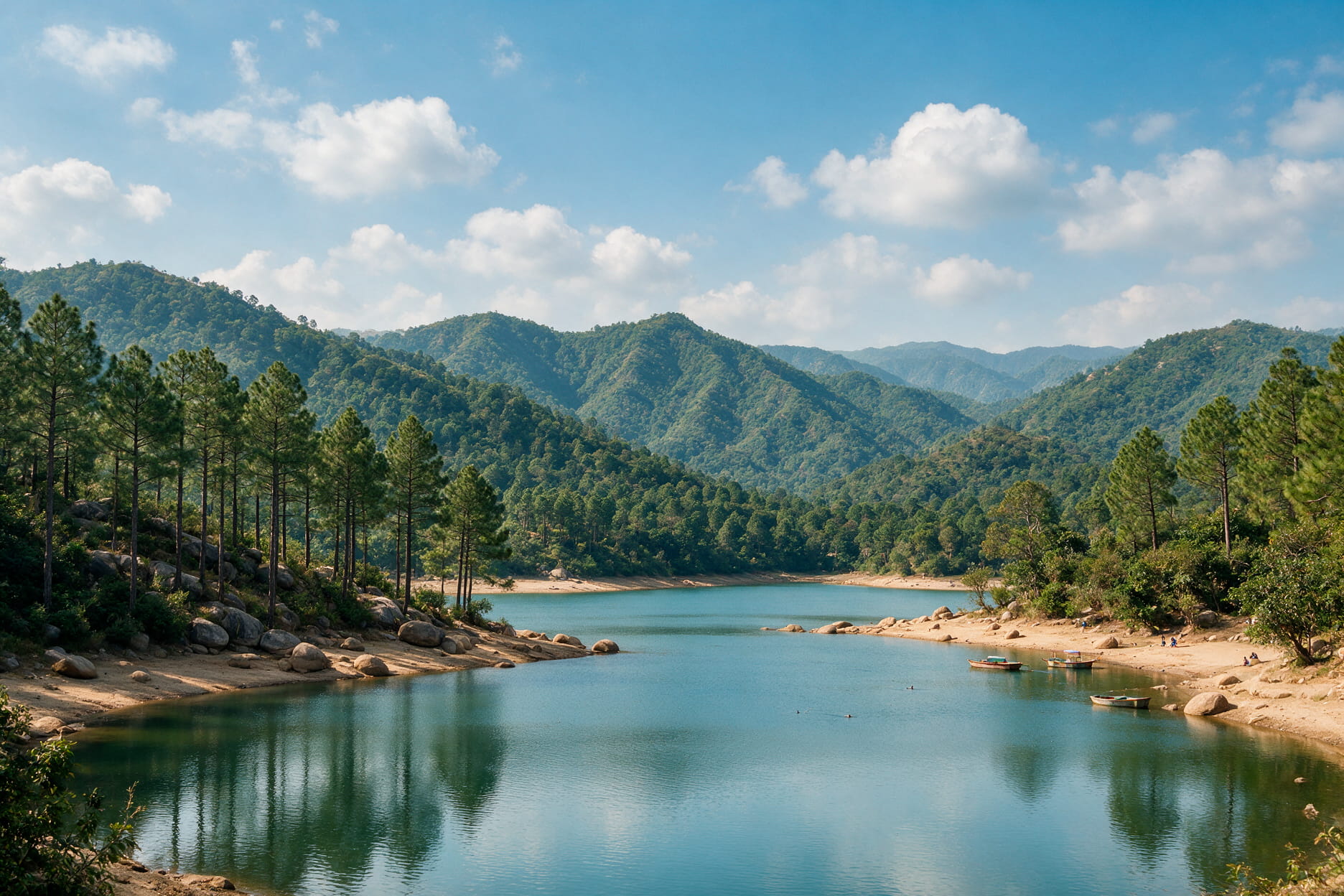
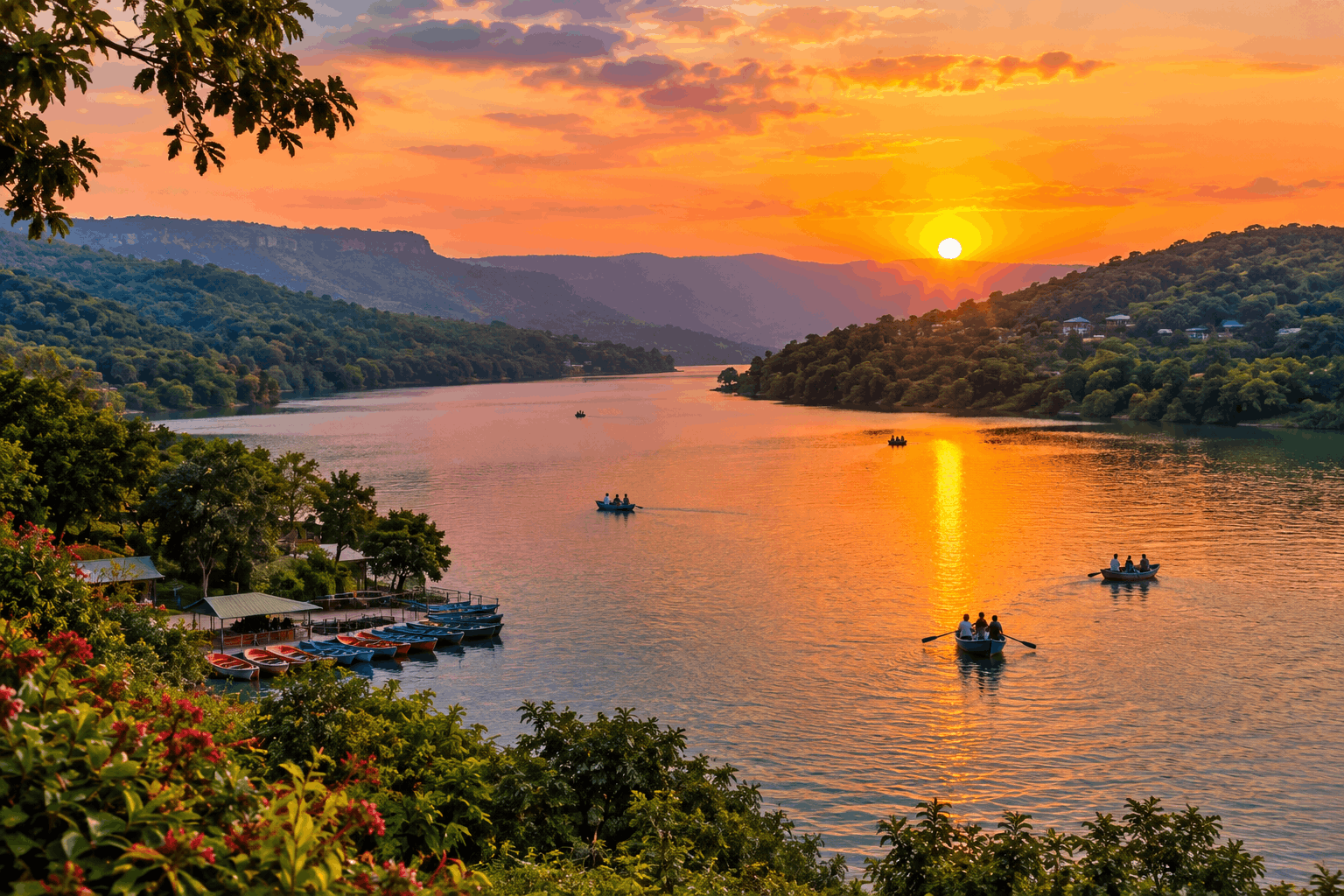
Vaigai Dam, 70 km from Madurai, was built in 1959 across the Vaigai River and serves as both agricultural irrigation and part of Madurai district’s drinking water supply. The public area adjacent to the dam includes the Little Brindavan garden, a landscaped zone with walking paths and a boating area on the reservoir.
The dam works best as an add-on stop on the drive toward Andipatti or Keeladi rather than a standalone trip from Madurai. The garden is pleasant in winter and the reservoir view is calm. It is not a destination that justifies a dedicated trip, but it extends a day that already includes Keeladi or the southern temple circuit.
Pillaiyarpatti Temple
Pillaiyarpatti, approximately 80 km from Madurai in Sivagangai district, is an ancient Ganesha temple whose principal idol is a self-manifested figure carved directly from rock. Karpaga Vinayagar, the deity here, is one of the most important Ganesha shrines in Tamil Nadu. The temple draws large pilgrim gatherings during Vinayaka Chaturthi. Outside major festival periods, access is straightforward and the surrounding town is quiet. The temple architecture and the rock-carved idol format place it in the same tradition as Thiruparankundram.
Chettinad
Chettinad, approximately 96 km from Madurai in Sivagangai district, is the most complex destination in this guide and the one that requires the most time to give it what it is worth.
The Nattukotai Chettiars were a merchant and banking community whose trade in Burma, Ceylon, Malaya, and Southeast Asia through the 19th and early 20th centuries produced extraordinary wealth. That wealth was invested in houses: more than 11,000 mansions built across the small towns of the Chettinad region, using Burmese teak, Italian marble, Belgian glass, and Athangudi handmade tiles. Most of these mansions are now either abandoned or maintained by absentee families. Some have been converted to heritage homestays. The scale of the remaining ones, even in partial disrepair, is staggering once you understand the context.
Kanadukathan village outside Karaikudi has the most intact mansion cluster. Walking the lanes here between houses the size of small hotels, most with gates shut and interiors visible only through iron grillwork, gives the region’s history a physical legibility that no museum could replicate.
The Karaikudi antique market deals in furniture, tile work, structural elements, and decorative pieces removed from Chettinad houses whose families have decided to sell. It is one of the larger concentrations of Indian domestic antiques in active circulation and worth a deliberate morning.
Chettinad cuisine at its source is different from the versions served in Madurai restaurants carrying the name. The spice profiles rely on fresh-ground masalas from the local market, the cooking techniques are specific to the community’s tradition, and the accompaniments are different from what most Tamil Nadu restaurants serve. Small family lunch houses in Karaikudi are the right venue.
When to Visit Places Near Madurai
October through February is the most comfortable window for the places to visit near madurai under 100 km. Outdoor sites like Keeladi, Dindigul Fort, and the Chettinad village lanes are genuinely pleasant in this range of temperatures. March through May heats up significantly; Madurai sits in one of Tamil Nadu’s hotter zones and the plains destinations become difficult in afternoon heat from April onward.
Alagar Kovil and Thiruparankundram are accessible year-round because their inner sanctums stay cool. The Chithirai festival in April brings large crowds to the Alagar Kovil processional route and is the most culturally significant time to visit, despite the heat.
How to Reach Madurai
zingbus connects Madurai to Coimbatore, Bangalore, Chennai, Salem, and other South Indian cities. Book your Madurai bus on the zingbus website or app. From Madurai, Thiruparankundram and Alagar Kovil have local bus connectivity. Keeladi, Dindigul, Chettinad, and Vaigai Dam are more practically reached by hired cab, particularly if combining two stops in a single day.
You Might Also Like
- 25 Must-Visit Places in India: A broader India travel reference for readers building a South India circuit beyond Madurai’s radius.
- How to Plan a Road Trip in India: Planning guidance relevant to the Chettinad day or a Madurai-Dindigul-Chettinad loop.
- Hidden and Unexplored Places in India to Visit in 2026: Keeladi and Chettinad both qualify as significantly undervisited given their historical importance.
Practical Notes for Madurai Day Trips
Thiruparankundram and Pazhamudircholai are busiest on Fridays and during Tamil festival periods. Weekday morning visits give you the inner sanctums without tour group pressure.
The Keeladi site is an active excavation. Some zones are periodically closed during active dig seasons. Confirm access before the trip by checking the Tamil Nadu Archaeology Department site. The museum on-site opens from morning and closes in the afternoon.
For Chettinad, many of the larger mansions are private property. Entry to occupied or maintained houses requires prior arrangement through a local guide or the heritage homestay you are staying at. Do not assume that walking up to a mansion gate will result in entry.
Dindigul Fort’s climb involves uneven stone steps. Flat-soled closed shoes work better than sandals. The biryani restaurants near the fort area are busiest at lunch from noon to 2 PM; plan the fort visit to end before noon.
Cash is more reliable than digital payments at the smaller temple stops and the Keeladi entrance. The Chettinad market area has better ATM availability.
The Places to Visit Near Madurai Under 100 km Reward Depth Over Speed
Keeladi is not readable in a 20-minute visit. Neither is Chettinad in a two-hour loop. The places to visit near Madurai under 100 km are sites of significant historical and cultural density, and most of them have been understudied by mainstream tourism long enough that the infrastructure for quick visits does not exist here in the way it does at more famous heritage destinations.
That is an advantage. Chettinad’s mansions are not surrounded by commentary boards. Keeladi’s excavation requires you to ask questions. Thiruparankundram’s inner corridors reward the visitor who slows down enough to trace the carved panels. These places to visit near madurai under 100 km give more when you arrive knowing what they are.
Frequently Asked Questions
What are the best places to visit near Madurai within 100 km?
The best places to visit near Madurai within 100 km include Thiruparankundram at 8 km for its rock-cut Murugan temple, Alagar Kovil at 22 km, Keeladi at 65 km for Sangam-era archaeology, Dindigul at 65 km for the fort and biryani, and Chettinad at 96 km for mansion heritage and cuisine.
What is Thiruparankundram near Madurai?
Thiruparankundram is one of the six principal Murugan temples in Tamil Nadu, 8 km from Madurai, notable for being a rock-cut structure where the shrine is carved directly from a granite hill rather than built on top of one.
What is Keeladi and why is it significant?
Keeladi is an ongoing archaeological excavation site about 65 km from Madurai where Sangam-period artifacts dated to 600 BCE to 300 CE were found, pushing evidence of literate urban Tamil civilization 300 years earlier than previously established.
Is Chettinad worth a full-day visit from Madurai?
Yes, Chettinad at 96 km deserves a full day to walk the Kanadukathan mansion lanes, browse the Karaikudi antique market, and eat a proper Chettinad meal at a family lunch house.
What is Alagar Kovil near Madurai?
Alagar Kovil is an ancient Vishnu temple in the Alagar Hills, 22 km from Madurai, known for its forested hillside setting and its role in the Chithirai festival processional that connects it to the Meenakshi Amman Temple in Madurai.
What is Dindigul famous for near Madurai?
Dindigul at 65 km is known for its fort built on a single granite boulder and for Dindigul biryani, a distinct regional preparation using seeraga samba rice that is different from most other biryani styles in Tamil Nadu.
What is the best time to visit Chettinad from Madurai?
October through February is the best time for Chettinad, when the weather is comfortable for walking the village lanes and exploring the outdoor sections of the Karaikudi market area.
Is Vaigai Dam worth visiting from Madurai?
Vaigai Dam at 70 km is worth a stop on the way to Keeladi or the Andipatti area, but it is a supplementary destination rather than a standalone day trip from Madurai.
How far is Pillaiyarpatti from Madurai?
Pillaiyarpatti Karpaga Vinayagar Temple is approximately 80 km from Madurai in Sivagangai district, with a self-manifested rock-carved Ganesha idol that is one of the more important Ganesha shrines in Tamil Nadu.
What is Pazhamudircholai near Madurai?
Pazhamudircholai is one of the six Arupadaiveedu of Lord Murugan, 19 km from Madurai in the Alagar Hills, set within a sacred grove that gives it a forested, quieter atmosphere compared to the other Murugan shrines near the city.
Does zingbus connect Madurai to nearby heritage destinations?
zingbus connects Madurai to Coimbatore, Bangalore, Chennai, and other South Indian cities; for local day trip destinations like Dindigul, Chettinad, and Keeladi, a hired cab from Madurai is the practical option.
What is the Chithirai festival and how does it connect to places near Madurai?
The Chithirai festival in April celebrates the celestial wedding of Goddess Meenakshi at Madurai’s temple; Kallalagar from Alagar Kovil, 22 km away, processes on horseback to the Vaigai River as part of the festival, making Alagar Kovil central to the event.