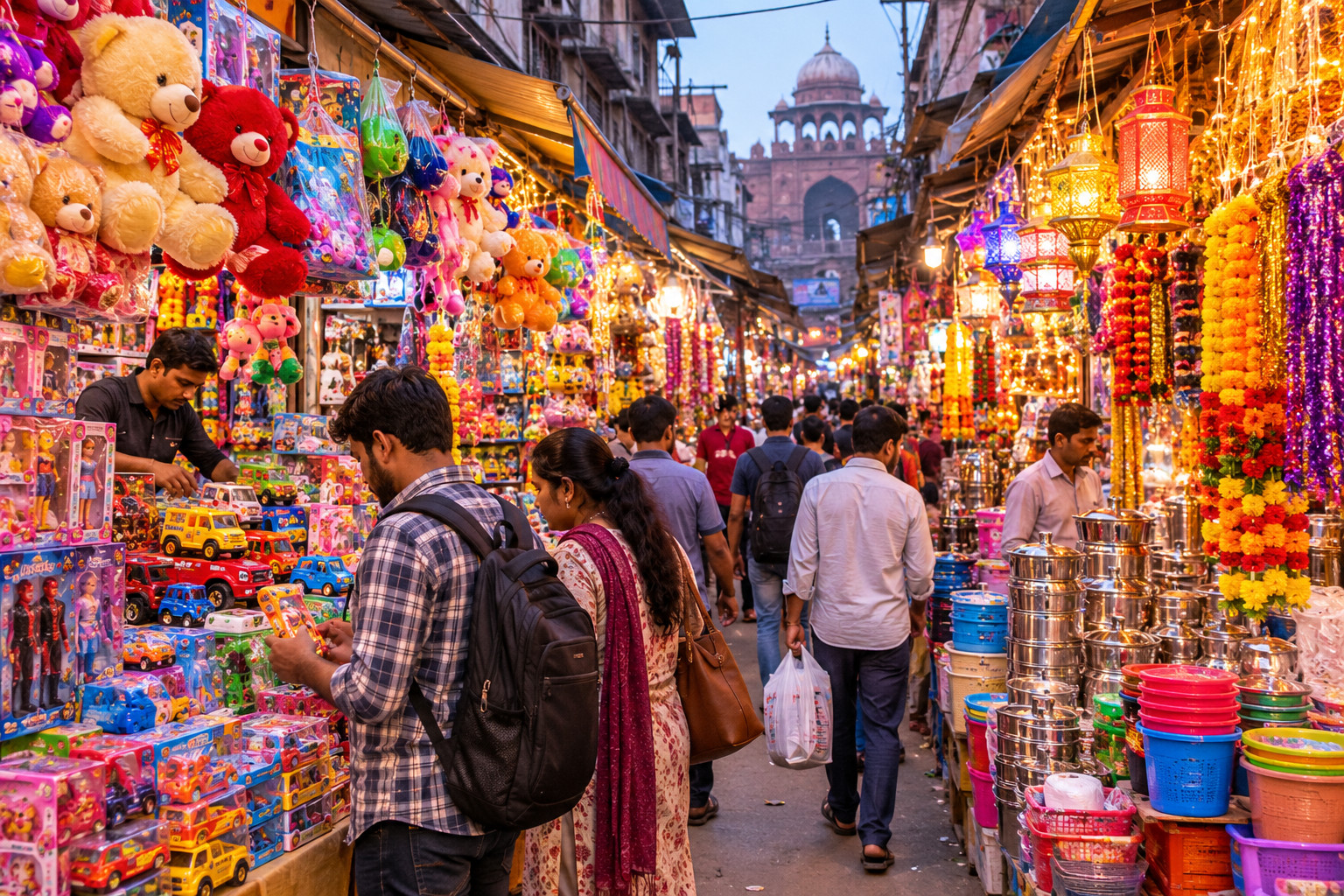
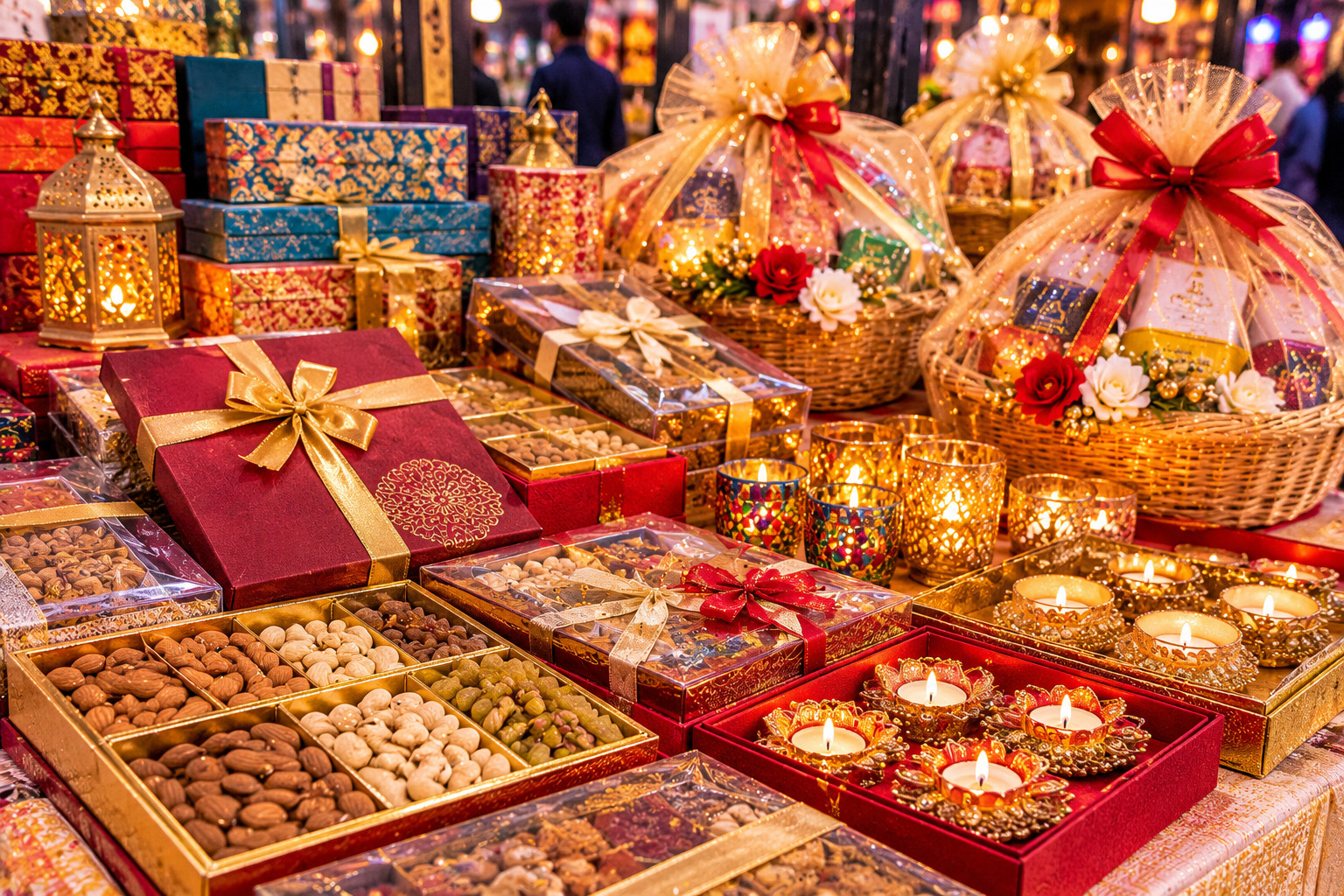
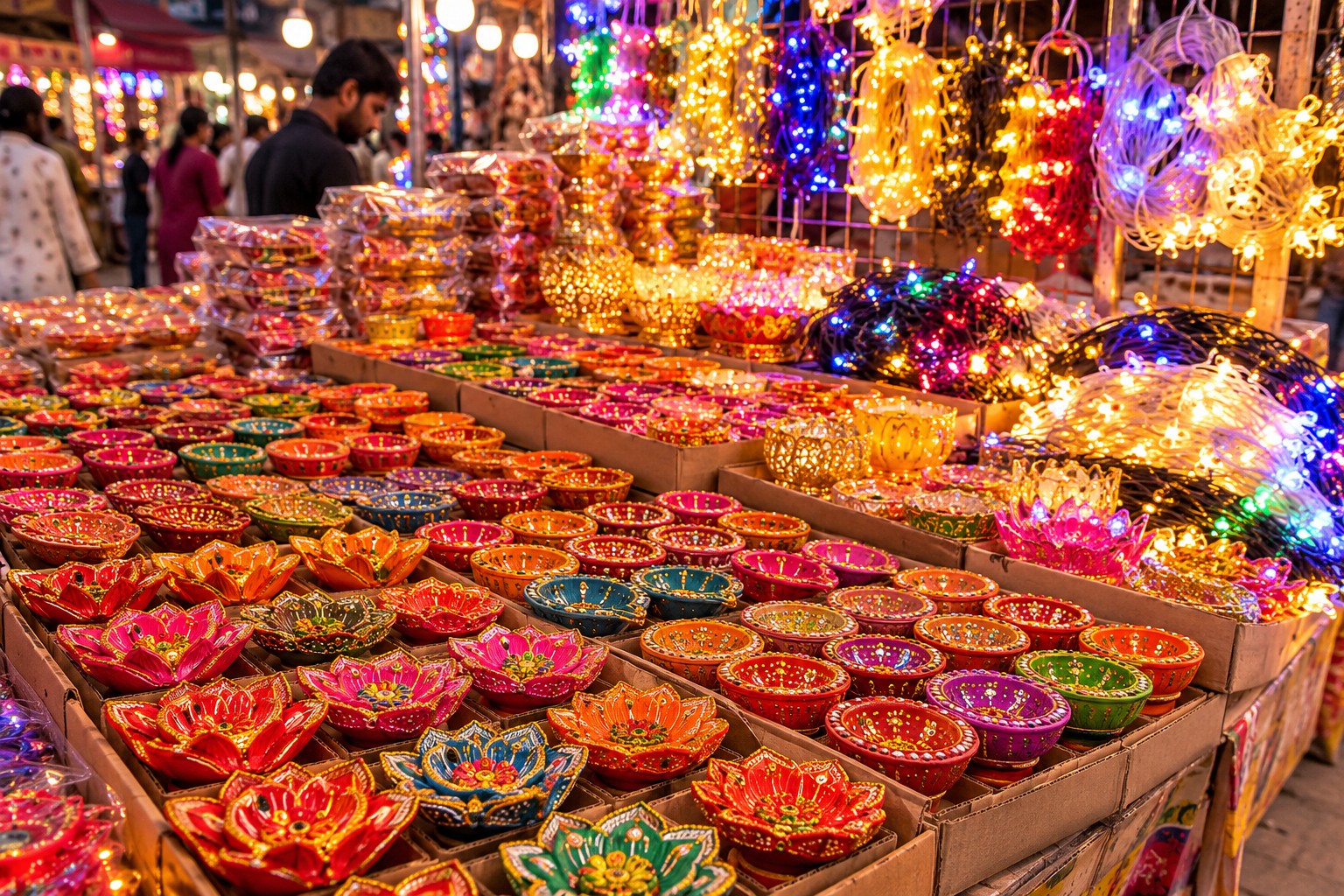
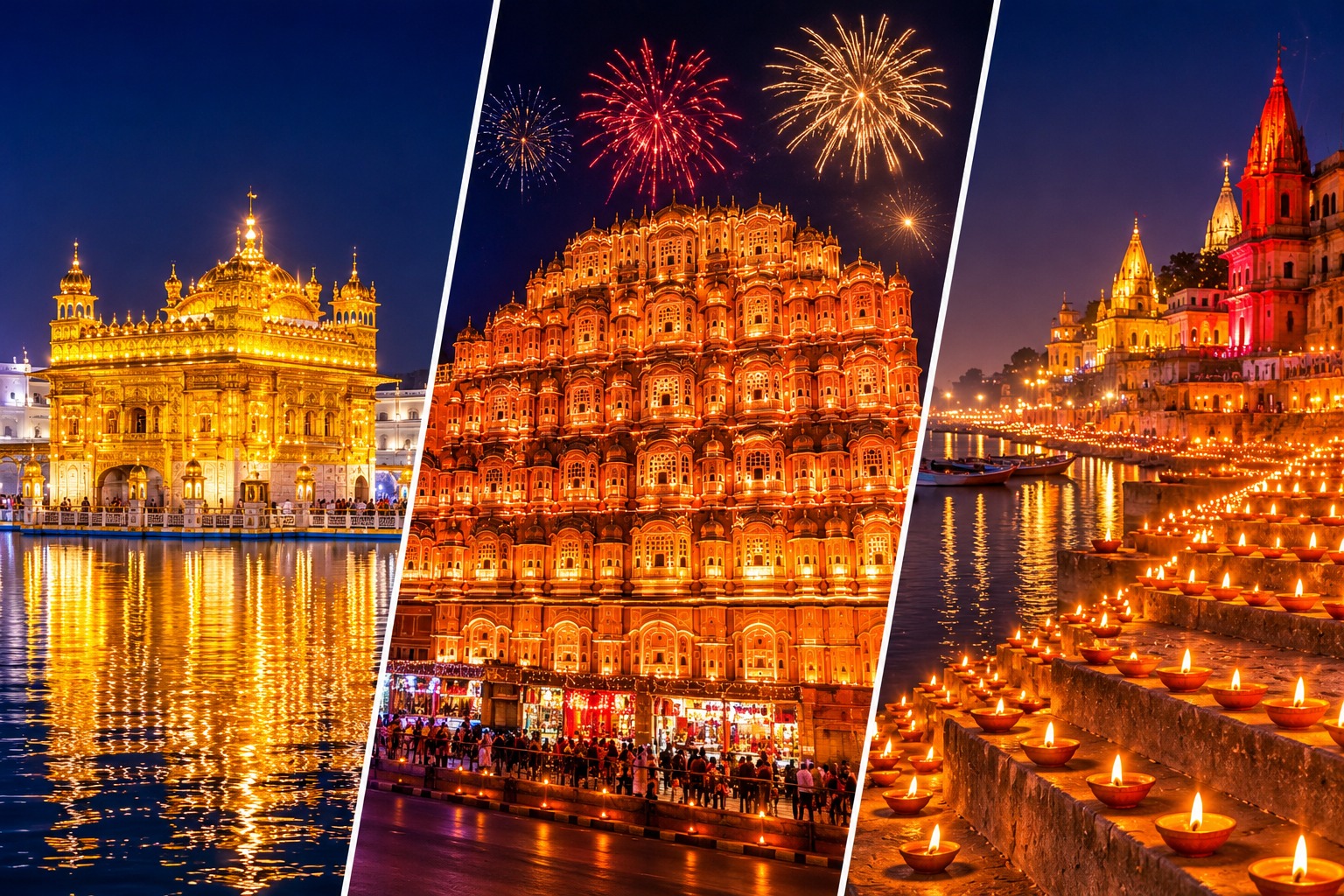
Jaipur does something during Diwali that no other Indian city does at this scale. The municipal government runs an official illumination competition between the merchant associations of the four main walled-city bazaars: Johari, Bapu, Tripolia and Kishanpole. Each association competes to produce the most decorated stretch of market. The result is that the entire old city, inscribed as a UNESCO World Heritage Site in July 2019, turns into a continuous corridor of light.
This is not a ticketed event or a controlled venue. It is a city you walk through. The illumination covers every shop front, every archway and every lane junction across the walled city. Hawa Mahal is fully lit. Nahargarh Fort on the Aravalli ridge is visible against the night sky. And the entire experience is available to anyone standing on the street, any evening from Dhanteras through Diwali night.
Day-by-Day: How Jaipur’s Diwali Unfolds
The celebration builds over three evenings, and each evening has a slightly different character.
Dhanteras Evening: November 6 (Friday)
Dhanteras is the biggest commercial day of the Diwali cluster in Jaipur. The focus is Johari Bazaar, the jewellery market.
Gold and silver buying peaks from late afternoon. The shops illuminate their frontages to draw foot traffic, and the Johari Bazaar stretch from Hawa Mahal junction northward becomes one unbroken corridor of light. The crowd builds from around 5 PM and stays past 10 PM.
Tripolia Bazaar also sees heavy Dhanteras footfall. Buying brass and metal utensils on this day is traditional, and the brassware shops put out their best stock.
For those not shopping for jewellery or metal, Dhanteras evening is still worth the walk simply for the lighting. The illumination competition kicks off visibly on this night.
Choti Diwali Evening: November 7 (Saturday)
This is the visual peak of Jaipur’s Diwali. The bazaar illumination is now fully installed across all four bazaar stretches. Fireworks begin after sunset and the sound continues through the night.
The walk from Hawa Mahal through the old city lanes, with Johari Bazaar on one side and Bapu Bazaar on the other, the lit heritage architecture overhead and Nahargarh Fort visible on the ridge above, is the specific Jaipur Diwali experience that makes the trip worth planning.
Diwali Night: November 8 (Sunday)
Diwali morning is for temple visits and family puja. Most shops in the old city close by early afternoon for Lakshmi Puja preparations. The puja muhurat in Jaipur for 2026 is approximately 6:03 PM to 7:59 PM (verify from Drik Panchang closer to the date), after which the fireworks intensify and the city settles into the evening celebration.
For visitors, the morning is best used for heritage sights (Amber Fort, City Palace museum). The afternoon is quiet. The evening is festive.
What to See Beyond the Bazaars
The Diwali illumination is the draw, but Jaipur has a depth of sights that make a 2 to 3 day visit worthwhile even without the festival.
Nahargarh Fort After Dark
Nahargarh Fort sits on the Aravalli ridge above the walled city. During Diwali, the fort itself is lit, and its silhouette against the night sky with the illuminated city below is one of the defining views of Jaipur. The fort is accessible by road (roughly 20 minutes from the old city centre). Check whether the road is open for vehicles after dark during the festival.
Amber Fort
Amber Fort, part of the Hill Forts of Rajasthan UNESCO World Heritage inscription of 2013, sits about 11 km from the old city. November temperatures make the full exploration comfortable. The Sheesh Mahal (Hall of Mirrors) and the Diwan-e-Aam are the highlights. Visit in the morning before heading into the bazaars for the evening.
City Palace and Jantar Mantar
City Palace sits within the walled city, a short walk from Johari Bazaar. The Mubarak Mahal courtyard and the Chandra Mahal facade photograph well in November light. Jantar Mantar, the astronomical observation site built by Sawai Jai Singh II, sits adjacent and is a separate UNESCO World Heritage inscription (2010).
Birla Mandir
Birla Mandir, built in white marble below Moti Dungri hill, is illuminated during Diwali. The evening aarti draws a larger-than-usual congregation during the festival week.
Rooftop Views and Where to Watch the Fireworks
Several rooftop restaurants and heritage hotel terraces in the walled city offer elevated views across the illuminated bazaars. The fireworks on Choti Diwali and Diwali night are visible from these terraces, with the lit old city spreading out below and Nahargarh Fort on the horizon.
The restaurants along Tripolia Road and near the Hawa Mahal junction are the most popular viewing spots. Some heritage hotels inside the walled city open their terraces for Diwali evening events with Rajasthani food and folk music.
Book rooftop dining well in advance. Tables with views are the first to fill during Diwali week.
Where to Stay
Hotels in the walled city area give the closest access to the illumination and the walking route. Heritage havelis converted into boutique hotels along Johari Bazaar and near City Palace offer the most atmospheric Diwali stay.
The broader Jaipur hotel market (MI Road, Tonk Road, Vaishali Nagar) is more affordable and widely available. Auto-rickshaws connect these areas to the old city in 15 to 20 minutes.
Book at least 2 to 3 weeks before Diwali. Walled-city properties fill first, and rates during festival week run 30 to 50 percent above the October baseline.
How to Reach
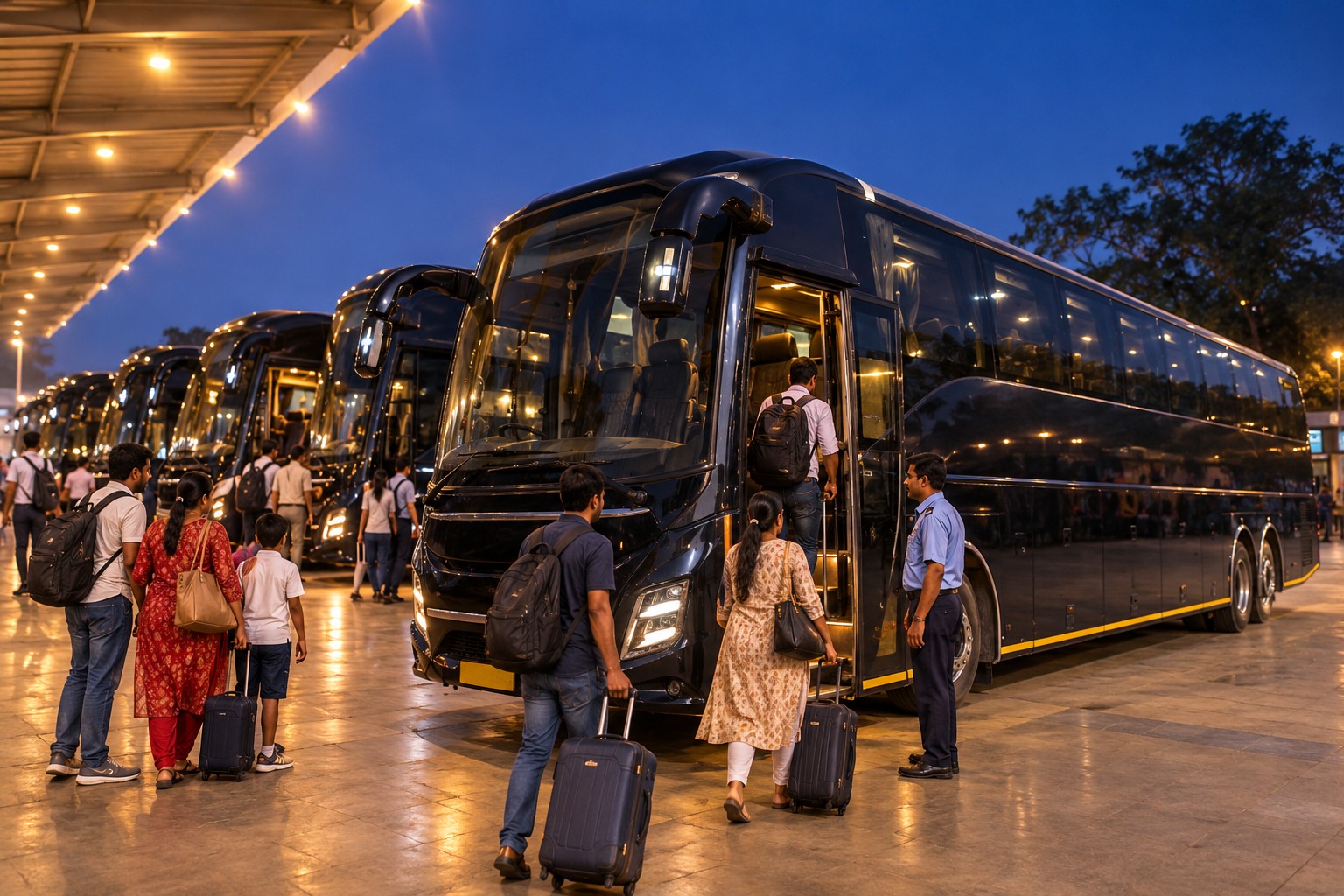
Jaipur is about 280 km from Delhi, roughly 5 to 6 hours by bus. The Jaipur bus booking page shows current schedules and fares. A Friday evening departure from Delhi arrives by late night, giving the full Dhanteras-to-Diwali window.
Jaipur’s railway station is about 4 km from the walled city. The airport is about 13 km from the city centre.
Note: Prices are approximate and may vary based on season, demand, and availability.
Frequently Asked Questions
When is diwali in jaipur 2026?
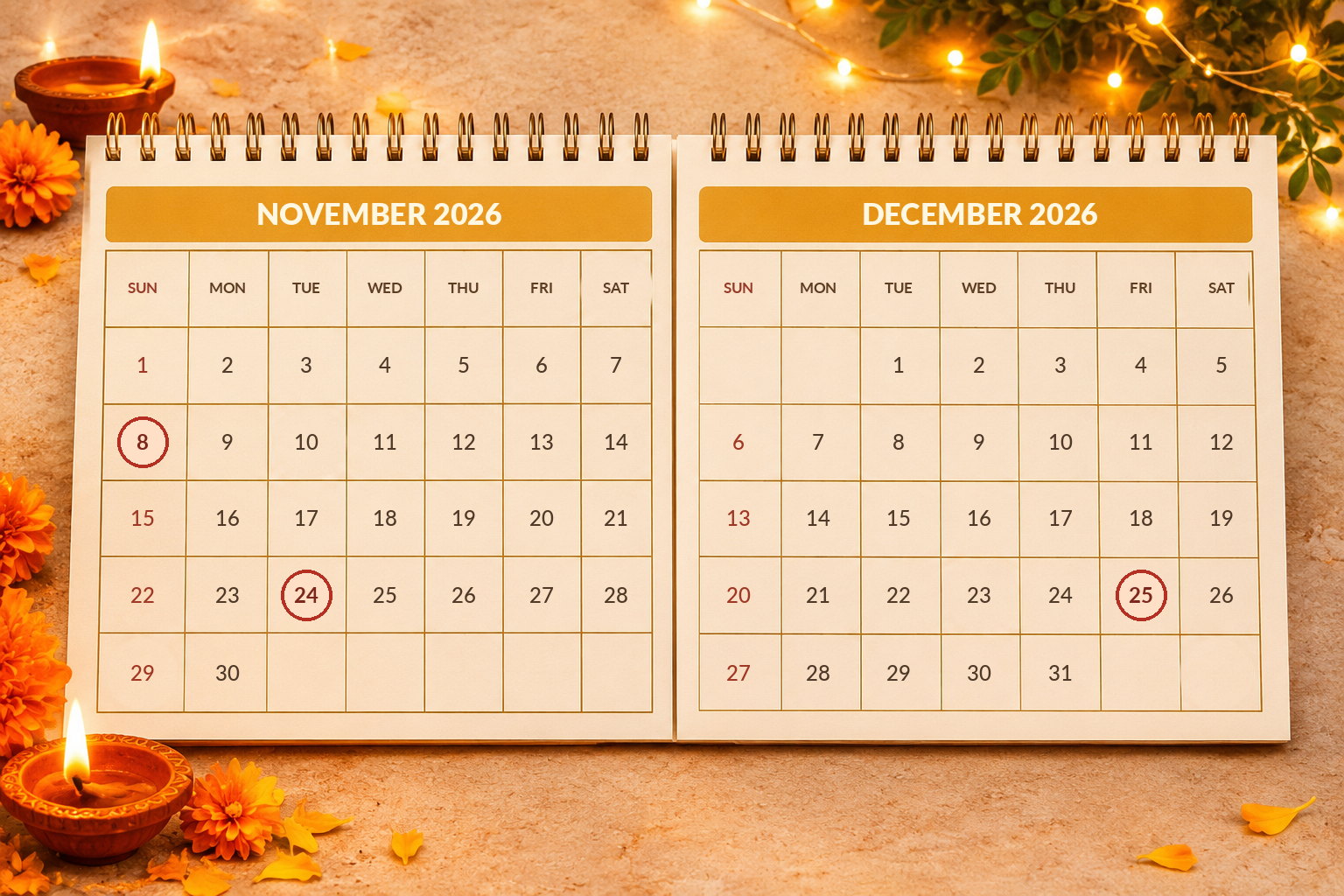
Diwali falls on Sunday, November 8, with the celebration window running from Dhanteras on November 6 through Diwali night.
What is the bazaar illumination competition?
The municipal government runs a competition between Johari, Bapu, Tripolia and Kishanpole bazaar merchant associations for the best Diwali lighting.
Is Hawa Mahal illuminated during Diwali?
Hawa Mahal is fully illuminated during the festival period and serves as the visual anchor of the walled city’s lighting.
Can I see Nahargarh Fort lit up during Diwali?
Nahargarh Fort is lit during Diwali. Its silhouette above the illuminated walled city is one of the most photographed views of Jaipur.
Which evening is best for Diwali photography in Jaipur?
Choti Diwali evening (November 7) is the visual peak, when the bazaar illumination is complete and fireworks begin.
Where should I stay for Diwali in Jaipur?
Heritage havelis in the walled city near Johari Bazaar or City Palace give the closest access to the illuminated bazaar route.
How do I reach Jaipur from Delhi for Diwali?
Bus from Delhi takes roughly 5 to 6 hours. A Friday evening departure arrives in time for Dhanteras celebrations.
Is Amber Fort worth visiting during Diwali?
Amber Fort is best visited on the morning of Diwali day, when bazaar shops are closed for puja. November weather makes the walk comfortable.
What time is Lakshmi Puja in Jaipur 2026?
The Lakshmi Puja muhurat in Jaipur is approximately 6:03 PM to 7:59 PM on November 8. Verify closer to the date.
How early should I book hotels for Diwali in Jaipur?
Book at least 2 to 3 weeks ahead. Walled-city properties fill first. Festival-week rates run 30 to 50 percent above the October baseline.
You Might Also Like
- Diwali Shopping in Jaipur: What Johari, Bapu and Tripolia Bazaar Sell: The bazaar-by-bazaar product guide for Diwali and Dhanteras shopping.
- Bapu Bazaar Jaipur: Timings, What to Buy, Tips: The full Bapu Bazaar guide for textiles, mojari and Rajasthani prints.
- Places to Visit in Jodhpur: The Blue City Guide: Extend the Rajasthan trip with Mehrangarh Fort and the blue city walk.